Share
Inside Politics with Hugh Linehan
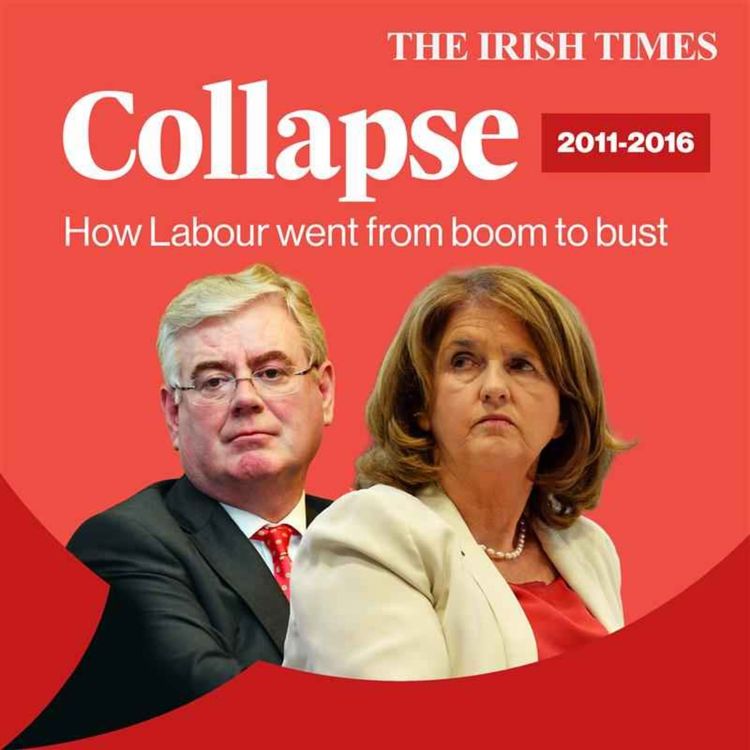
Pressure builds on Labour as austerity bites: Collapse, part two
Inside Politics is coming to Galway in May for a live recording. Get your tickets here.
In part two of this three-part series on Labour's harrowing experience in government from 2011 to 2016, Pat Leahy and Hugh Linehan follow the story of the first three years of that austerity-delivering coalition.
As punishing budget after punishing budget was delivered, Labour struggled to retain its political identity and principles while working with Fine Gael to present a united front to a world that saw Ireland as an economic basket case. Successes - exiting the EU-IMF bailout programme, securing legislation on abortion - are completely overshadowed by the harshness of austerity. For Labour and its party leader Eamon Gilmore, the political damage mounts.
Listen to part one here.
Would you like to receive daily insights into world events delivered to your inbox? Sign up for Denis Staunton's Global Briefing newsletter here: irishtimes.com/newsletters/global-briefing/
More episodes
View all episodes
Where Anthony Scaramucci and America went wrong
45:19|Anthony Scaramucci is a successful Wall Street financier, a recovering Republican, a famously short-lived communications director in the first Trump administration and co-presenter with Katty Kay of The Rest is Politics US. His new book All the Wrong Moves chronicles his time within the Maga movement and diagnoses where America took a wrong turn. He talks to Hugh about three “catastrophic” policy errors he believes gave rise to the populist anger that propelled Trump to power.What is driving the abuse and intimidation of politicians here?
49:46|Ellen Coyne and Jack Horgan-Jones join Hugh Linehan to look back on the week in politics:The unprovoked attack on Kerry TD Michael Healy-Rae this week highlighted how vulnerable public representatives can be. But when did criticism of Irish politicians turn into abuse and physical violence? Is it the long tail of the financial crash or simply a shift from online discourse to something far more sinister? Donald Trump’s thoughts on a united Ireland grabbed the headlines during his visit last week, but the image of cheering golf fans at the Irish Open at his Doonbeg resort as he announced he was lifting tariffs on Irish whiskey, that he himself imposed, feels uncomfortable for a variety of reasons.European Commission president Ursula von der Leyen pitched the idea of Canada as an “associate member” of the EU during her annual State of the Union address on Wednesday – an idea roundly embraced by Canada PM Mark Carney who was in attendance.The Sinn Féin Bill to remove the three-day abortion wait looks like it will pass despite dissenting voices in Government.And Aontú and Independent Ireland are open to discussing a vote transfer pact.Sweden's political shift and Germany's electoral shock
42:48|Derek Scally talks to Hugh about the aftermath of two elections that have recently taken place: the Swedish general election and regional elections in the Gerrman region of Saxony-Anhalt. Each offers some fascinating insights into current trends and future directions in Germany and Scandinavia, and perhaps more broadly in Europe.What's the best way to make Ireland more equal?
43:44|Left-leaning think-tank Tasc has published a new report to mark its 25th year. the report (The State We Are In - Inequality in Ireland 2026) suggests that the redistribution of wealth via the tax system is struggling to keep inequality under control and argues for greater provision of services. It also warns that the rapid development of artificial intelligence could deepen inequality in Ireland and around the world. Tasc director Dr Shana Cohen talks to Hugh about her organisation's history, the new report and the peculiarities that give rise to Ireland's high pre-tax inequality and its precarious wealth. They also talk about the impact of AI.Trump's support for reunification grabs the headlines on a colourful day
26:33|President Trump and his vast, costly entourage have rolled through Dublin on the way to his golf course, meeting with the Taoiseach and President Connolly along the way. As with other recent encounters between representatives of the State and Trump, there were no major diplomatic incidents for Irish officials to worry about. But Trump did ruffle some feathers with his comments on Irish reunification. "The Weave", as Trump calls his signature style of oratory, was on full display, by turns baffling, witty and terrifying. Pat Leahy and Jack Horgan-Jones were present at the various set-pieces and they join Hugh to recap on a colourful day.Why has Occupied Territories legislation taken so long?
52:34|Inside Politics Live is coming to Cork on September 30th. Get your tickets here.Pat Leahy and Harry McGee join Hugh Linehan to look back on the week in politics:Green leader Roderic O'Gorman has proposed a one-off €2.5bn energy fund, split between targeted energy credits and investment in grants for solar panels and EVs. It is one of few genuinely good ideas that emerged from the political party think-in season. Following Wednesday’s interview with Minister for Public Expenditure Jack Chambers on the podcast, Pat assesses Chambers' political positioning in the run-up to Budget day. Minister for Justice Jim O'Callaghan's tightening of naturalisation rules imposes a range of new requirements on those seeking citizenship. Are they fair? The UK is now leading the way on sanctions against illegal West Bank settlements. The haste is in contrast with Ireland's slow progress since 2018. Plus, what we now know about the timing and choreography of Donald Trump’s weekend visit. And finally the panel pick their favourite Irish Times pieces of the week.'Disruptive' Jack Chambers talks tough on HSE overspending and budget negotiations
48:14|Inside Politics Live is coming to Cork on September 30th. Get your tickets here.Minister for Public Expenditure Jack Chambers talks to Jack Horgan-Jones about pre-Budget negotiations, HSE overspending, childcare, infrastructure and more.He reveals that he intends to strip power over day-to-day spending from four HSE regions in response to what he describes as a "really poor performance" when it comes to controlling costs.He also responds to critical comments reportedly made by Cabinet colleagues over his unwillingness to grant their spending wishes.Then Hugh and Jack analyse the Minister's comments.P aul Mason on communism, China and the crisis of the left
45:57|British journalist Paul Mason talks to Hugh about his new book Reds: A Global History of Communism.The book traces communism’s story from early human egalitarian impulses to modern China’s controlled capitalist system. Mason talks to Hugh about what drew him to Trotskyism as a young man, his current politics as a left-wing social democrat and his concerns about democracy under threat. He explains his own break with Corbynism.What will President Connolly say to president Trump?
53:30|Inside Politics Live is coming to Cork on September 30th. Get your tickets here.Pat Leahy and Cormac McQuinn join Hugh Linehan to look back on the week in politics:Labour’s annual think-in is happening in Galway and Pat is there to find out what the party is thinking up. The mood is positive. But with the rival Soc Dems riding high, Labour faces an uncertain future.One new measure being proposed by party finance spokesman Ged Nash is a €100 “shopping supplement” targeted at families over the winter months. Expect many more such proposals between now and Budget Day.Ireland’s skies and seas are being monitored by France and the UK while we hold the EU presidency. The Triple Lock, with legislation due to move through the Dáil, is a more pressing political issue - but the question of our meagre defence budget is another that will not go away. We still don’t have much detail on US president Donald Trump’s imminent visit to Dublin, but it seems the majority of his time will be spent at Trump Doonbeg or within the confines of the Phoenix Park. Opportunities for diplomacy may be limited by the fact that the trip is largely a US-taxpayer-funded marketing exercise for a golf course. But there are still risks and opportunities. Across the Irish Sea a Channel 4 News sting has exposed senior Reform UK officers allegedly scheming to get around campaign finance laws. The report dropped just in time to spoil the party’s conference and will add to the existing whiff of financial scandal around Nigel Farage’s political project. How much did Farage himself know and what impact will it have? Plus the panel pick their favourite Irish Times stories of the week.