Share
The BelTel
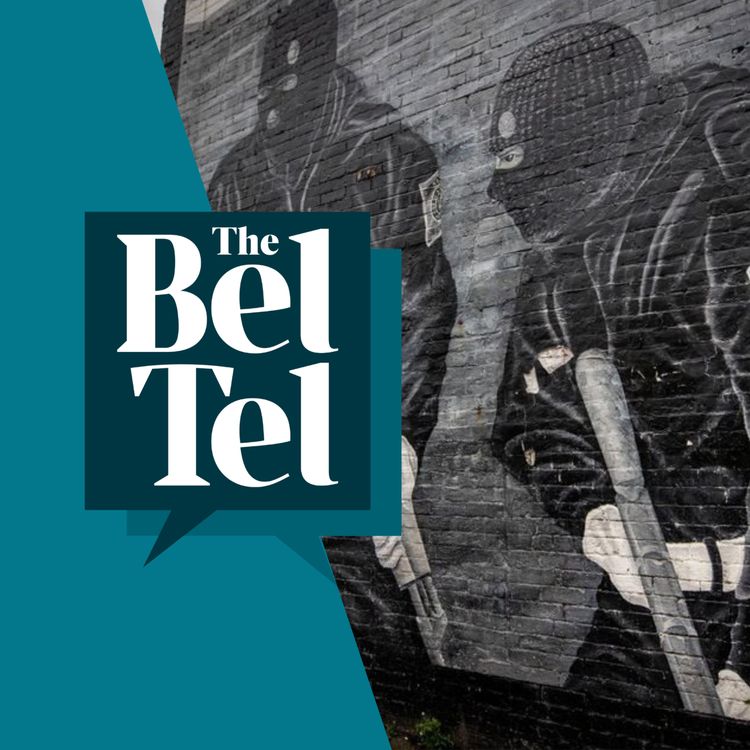
What disbandment would mean for the UVF | Allison Morris explains
•
Senior loyalists and Key members of the Northern Ireland office have dismissed allegations that The UVF are on the verge of disbanding. One reported condition for the group’s disbandment was the formation of a 240-strong armed 'close protection team' to provide security for its ageing leadership - that suggestion has been branded 'farcical'. How close really are the UVF to disbanding, why are figures like Lord Alderdice saying its time to stop transition talks, and what would a transition look like?
Belfast Telegraph’s Allison Morris joins Olivia Peden to answer some of the big questions.
More episodes
View all episodes
Jeffrey Donaldson: Dark questions over ex-DUP leader’s curious African shadow career
40:45|Jeffrey Donaldson was doing paid work for the ministry of defence in Africa even as acute political turmoil was engulfing his party at home in Northern Ireland. Why was the then DUP leader undertaking sensitive work in dictator-led Cameroon just a week after he himself collapsed Stormont in 2022? Why was he helping sell arms in Egypt alongside a British general? Why did a special forces officer say he’d worked with Donaldson before? Profound political questions remain over who all the now convicted paedophile was working for – alongside concerns about whether he had access to children in developing countries. Sam McBride joined Ciarán Dunbar.
Jeffrey Donaldson: Former MP being investigated over alleged Westminster rape.
22:25|The Metropolitan Police in London are investigating Jeffrey Donaldson over a rape allegationIt is alleged to have happened in the former MP's Westminster office. Donaldson is currently serving a prison sentence in Maghaberry for 18 counts of child sex abuse, including the rape of a child.The former DUP leader Donaldson was sentenced last week to 15 years but will serve just half of that term in prison.Ciarán Dunbar is joined by Allison Morris.
Portadown District’s offers to secure Drumcree parade deal revealed in court
28:22|Offers made by Portadown District to allow Orangemen to walk the Garvaghy Road have been revealed in court – including a 4AM march, accompanied by a residents’ protest.The court has finished hearing submissions during the legal challenge to the Secretary of State’s ban on the Drumcree parade, with Mr Justice Scoffield due to deliver his judgement next week. On Monday the court heard the security risks that were taken into account, with it being “almost certain” that dissident republicans had attended the protest, and “possible” that they had access to firearms.Olivia Peden is joined by Allison Morris who was in court.
Give My Head Peace: Comedies axed as BBC makes deep cuts
27:16|Perforated Ulster, Give My Head Peace, and The Long and the Short of it, all produced by the Hole in the Wall gang are being axed by the BBC.The Blame Game has also been culled.The BBC is making major cuts across the corporation as budget cuts take hold.BBC bosses say they have to make difficult decisions – but the cuts mean there will be no more local comedy on our screens.Ciarán Dunbar is joined by Tim McGarry and Damon Quinn and Michael McDowell from the Hole in the Wall Gang.
Ammi Burke: Solicitor's legal showdown with her former employer
22:17|The Burkes are back, but this time it's not Enoch grabbing the headlines, it's his sister Ammi.In 2019, Ammi Burke was dismissed from her role at one of Ireland’s most prestigious law firms, Arthur Cox, after just over three years with the company.Seven years, multiple legal battles and countless court appearances later, Ms Burke wants her job back. She and her former employer are facing off at the Workplace Relations Commission.So, what exactly happened between the two sides? And why is a dispute that began years ago still rumbling on in court today? Tessa Fleming is joined by court reporter Seán McCárthaigh as Ammi Burke takes on her old employer.
Jeffrey Donaldson’s victims in their own words
37:28|The PSNI has released the audio statements of Jeffrey Donaldson’s victims, Victim A and Victim B.Their voices have been artificially generated to protect the victims’ identity.On Thursday, the former DUP leader was sentenced to 15 years in prison after being found guilty of 18 charges of child sex abuse.
Jeffrey Donaldson given 15 years - but will be out in seven
16:31|Jeffrey Donaldson received a 15 year sentence in prison for his crimes. He was given 11 years for rape against Victim B and four years for all offences against Victim A, to be served consecutively.The former MP and ex-DUP leader was sentenced in Newry Courthouse on Thursday morning.However, later on Thursday after the Lady Chief Justice confirmed Donaldson will actually walk free in seven-and-a-half years.That is because the crimes were committed before the law changed in 2008, so he will automatically be entitled to 50pc remission of his sentence.He was found guilty of 18 child sex abuse charges, including rape, in June.Donaldson is trying to win an appeal, and his denials were an aggravating factor in the sentencing.However, as it stands, the 63-year-old will emerge from prison as a 78-year-old pensioner.Ciarán Dunbar spoke to Allison Morris outside Newry Crown Court.
Missing for 34 years: Patsy O’Sullivan and the secret family no one knew about
29:06|It was in April 1992 when Patrick 'Patsy' O'Sullivan called into his brother Jerry's home like it was any other day, but it’s a day that will forever remain etched in Jerry’s memory. Patrick went missing from his home in Co Kerry that year, and despite extensive searches and emotional appeals, efforts to find him proved fruitless. It would take the O'Sullivan family 34 years to find out the truth.Tessa Fleming is joined by Kerryman journalist Sinead Kelleher and by Jerry O'Sullivan, Patsy’s brother, to discuss his disappearance and how they eventually found out what happened to him.This episode of The BelTel was produced by our sister podcast, The Indo Daily.
Drumcree: Garvaghy Residents’ challenge dismissed, dispute rumbles on despite parade ban
22:53|The parading crisis in Portadown seems over on the ground, but it is very much alive in the courts, on the airwaves, and in politics. The Northern Ireland Secretary of State Chris Bryant stepped in on Friday to ban the Portadown Orange lodge from marching down the Garvaghy Road, now the Orange Order is challenging that decision in the courts. On Monday afternoon, the Court of Appeal dismissed a challenge from Garvaghy residents to the Parades Commission’s decision to allow the parade. In Stormont, First Minister Michelle O’Neill will face a confidence motion after taking part in a protest backing the Garvaghy Road residents, while the TUV demands the DUP take Emma Little-Pengelly out of the Executive. Ciarán Dunbar is joined by Allison Morris.