Share
This Week in Business
The Customer Centricity Playbook: Implement a Winning Strategy Driven by Customer Lifetime Value
Not all customers are the same, regardless of how they appear on the surface. The most successful companies, from Amazon to Best Buy, understand their best customers are their most valuable asset, and they tailor their acquisition, development, and retention efforts to those customers. Host Dan Loney talks with Peter Fader, Professor of Marketing at the Wharton School, and Sarah Toms, Executive Director of Wharton Interactive at the Wharton School, to discuss their new book "The Customer Centricity Playbook: Implement a Winning Strategy Driven by Customer Lifetime Value," which addresses how companies can help see their customers as individuals rather than a monolith on Knowledge@Wharton. Rachel Kipp, Associate Director of Knowledge@Wharton, joins us in conversation.
More episodes
View all episodes
AI Is Changing Jobs Not Eliminating Them
19:49|AI was supposed to eliminate huge numbers of jobs. So far, the reality looks much more complicated.Peter Cappelli, Wharton Professor of Management, discusses new research on how AI is actually affecting the workplace and why the technology is changing tasks more than eliminating entire jobs.The conversation explores AI agents, workplace management, programmers, organizational change, data management and why some of AI’s most valuable applications may involve work that companies simply could not afford to do before.
Why More Americans Are Filing for Bankruptcy
11:15|Consumer bankruptcies are rising, but does that mean Americans are facing a worsening economy? The answer is more complicated than you might think.Sasha Indarte, Wharton Associate Professor, joins the show to explain what is driving the increase in personal bankruptcies and why today's numbers may actually represent a return toward more normal levels.She discusses the stigma and misconceptions surrounding bankruptcy, the impact on credit scores, what the filing process looks like, and why bankruptcy can ultimately serve as an important financial safety valve for people overwhelmed by debt.
The FDNY's Transformation After 9/11
15:26|What happens when one of the world’s busiest fire departments faces a catastrophe unlike anything it has experienced before?Gregory P. Shea, Wharton Adjunct Professor of Management, and Author of Rising from Ground Zero, examines how the FDNY responded to the unprecedented challenges of 9/11.Shea explains how the department transformed its psychological support, leadership training, incident management, and collaboration with outside agencies. The conversation explores how the FDNY turned lessons from Ground Zero into lasting organizational change and became an all hazards department.
The Business of Shared Scooters
12:36|Shared bikes and scooters have transformed how people move through cities, but can the business model actually work?Gad Allon, Wharton Professor of Operations, Information and Decisions, explores the economics behind companies like Lime, including subscriptions, pay per trip models, utilization, and the challenges of operating across different cities.Allon also explains why cities have embraced and restricted scooters, how Lime emerged as a dominant player, and why building a culture around shared transportation may be just as important as the technology itself.
The Hidden Financial Risks of the AI Boom
12:59|The AI boom could transform the economy, but who is financing it and where the risks are building may matter just as much as the technology itself.Joao Gomes, Wharton Professor of Finance and Senior Vice Dean of Research, Centers, and Academic Initiatives, argues that the Federal Reserve is too focused on inflation and not focused enough on financial stability.Gomes discusses the opaque role of private credit, lessons from the housing crisis and internet boom, the potential impact of AI investment on long term productivity, and why the Fed needs better models for understanding the financial risks surrounding AI.
When Teammates Become Competitors
17:18|We often think of competition and collaboration as opposites. But in reality, we frequently do both at the same time. Henning Piezunka, Wharton Associate Professor of Management, explains why competing with someone can fundamentally change how we view and work with them.Piezunka uses World Cup soccer to examine what happens when teammates become opponents, finding that players collaborated less after competing against one another. The research offers surprising lessons for managers dealing with promotions, bonuses and other competitive workplace dynamics.
Why Bond Yields Are Warning Washington
12:40|What do rising bond yields, new tariffs and soaring AI investment mean for the U.S. economy and financial markets?Wharton Emeritus Professor of Finance and WisdomTree Senior Economist Jeremy Siegel joins the conversation to assess the latest economic and market developments.Siegel discusses the impact of higher tariffs on Canada and Mexico, why rising Treasury yields are signaling concern about U.S. deficits, and why he believes Washington may eventually be forced to take action on fiscal policy.He also weighs in on the resilience of the stock market, the extraordinary performance of AI-related companies, and what could determine whether equities reach new highs in the months ahead.
The Bond Market Is Losing Confidence in the Fed
11:23|The bond market is sending a warning to the Federal Reserve. With long-term yields climbing to levels not seen in decades, questions are mounting about the Fed’s ability to control inflation while maintaining market confidence.Wharton Finance Professor Nikolai Roussanov explains why Kevin Warsh’s recent messaging has unsettled investors and why the Fed’s reaction function may matter more than its guidance on the path of interest rates.Roussanov also examines the tension between monetary and fiscal policy, including whether Treasury efforts to push down long-term yields could undermine the Fed’s strategy.As inflation, energy prices and fiscal pressures evolve, the Fed faces a critical test: preserve its 2% inflation target—or risk losing credibility with the bond market.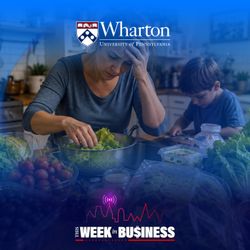
When Food Safety Becomes the Family’s Responsibility
11:33|What happens when the systems designed to keep our food safe start to break down?Corinne Low, Wharton Associate Professor of Business Economics and Public Policy, argues that food safety is a public good—one that individuals and families simply can't provide for themselves.She explains how reduced staffing, weakened inspections and changes to disease surveillance can leave consumers more vulnerable to foodborne illness.Low also examines what happens when that responsibility gets pushed onto parents, and why trusting companies to regulate themselves isn't enough.The result is a larger question about government, business and the basic protections consumers should be able to count on.