Share
This Week in Business
Let's Talk Bitcoin with Wharton's Kevin Werbach and MIT's Christian Catalini
•
Bitcoin rose to an astonishing $11,000 value last week (and is now sitting around $17,000) - astonishing for a currency which had a $1 value just six years ago. The decentralized payment network has seen ups and downs before, leading some to ask whether it's a good investment. Host Dan Loney speaks with Kevin Werbach, Professor of Legal Studies and Business Ethics at the Wharton School, and Christian Catalini, Assistant Professor of Technological Innovation, Entrepreneurship, and Strategic Management at the MIT Sloan School of Management, to discuss why Bitcoin has hit this high mark and what this means for investors on Knowledge@Wharton.
More episodes
View all episodes
The Hidden Cost of Competition in the Workplace
12:28|Competition can bring out the best in individuals, but can it actually make an entire team worse? New research suggests that rivalry may come with an unexpected cost.Henning Piezunka, Associate Professor of Management at the Wharton School, joins the show to discuss his research examining rivalry and performance through the lens of professional basketball.Using examples like Larry Bird versus Magic Johnson and Kobe Bryant versus Michael Jordan, Piezunka explains why players facing individual rivals may score more while making their teams less effective. He also explores what these findings mean for workplace competition, employee incentives, and managers trying to build successful teams.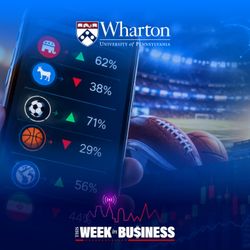
The Surveillance Challenge Facing Prediction Markets
15:40|Prediction markets are exploding beyond elections into sports, geopolitics and major cultural events. But as these markets grow, so does the challenge of detecting insider trading and manipulation.Daniel Taylor, Wharton Finance Professor and Director of the Forensic Analytics Lab, explains how prediction markets have evolved and why their different types of contracts require different approaches to surveillance. The conversation explores sports betting, geopolitical markets, insider information, market manipulation and the role regulators should play in making prediction markets work over the long term.
What Strong Growth Means for the Fed and Markets
15:11|The economy remains strong, but inflation and higher energy prices could keep the Federal Reserve on alert.Jeremy Siegel, Wharton Emeritus Professor of Finance, discusses the Fed's latest rate increase and why additional hikes may still be ahead. He explores strong GDP and wage data, the effect of rising oil and diesel prices on inflation, and what the bond market is signaling about monetary policy.Siegel also examines U.S.-China trade negotiations, the potential market impact of a reopening of the Strait of Hormuz, and why continued investment in AI could shape corporate earnings and market performance.
Why Retailers Are Rethinking Risk
11:29|Retailers face a fundamental problem: they often have to bet on what consumers will want before they actually buy it. Could changing who takes that risk transform the industry?John Zhang, Professor of Marketing at the Wharton School, explains why the traditional merchant model puts so much risk on retailers and how the store in store model changes that equation.Zhang discusses how manufacturers can take ownership of inventory, why this model has been widely used in Asia, and how platforms such as Amazon and Alibaba have adapted similar approaches.
AI Is Changing Jobs Not Eliminating Them
19:49|AI was supposed to eliminate huge numbers of jobs. So far, the reality looks much more complicated.Peter Cappelli, Wharton Professor of Management, discusses new research on how AI is actually affecting the workplace and why the technology is changing tasks more than eliminating entire jobs.The conversation explores AI agents, workplace management, programmers, organizational change, data management and why some of AI’s most valuable applications may involve work that companies simply could not afford to do before.
Why More Americans Are Filing for Bankruptcy
11:15|Consumer bankruptcies are rising, but does that mean Americans are facing a worsening economy? The answer is more complicated than you might think.Sasha Indarte, Wharton Associate Professor, joins the show to explain what is driving the increase in personal bankruptcies and why today's numbers may actually represent a return toward more normal levels.She discusses the stigma and misconceptions surrounding bankruptcy, the impact on credit scores, what the filing process looks like, and why bankruptcy can ultimately serve as an important financial safety valve for people overwhelmed by debt.
The FDNY's Transformation After 9/11
15:26|What happens when one of the world’s busiest fire departments faces a catastrophe unlike anything it has experienced before?Gregory P. Shea, Wharton Adjunct Professor of Management, and Author of Rising from Ground Zero, examines how the FDNY responded to the unprecedented challenges of 9/11.Shea explains how the department transformed its psychological support, leadership training, incident management, and collaboration with outside agencies. The conversation explores how the FDNY turned lessons from Ground Zero into lasting organizational change and became an all hazards department.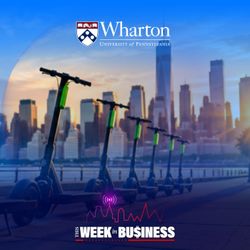
The Business of Shared Scooters
12:36|Shared bikes and scooters have transformed how people move through cities, but can the business model actually work?Gad Allon, Wharton Professor of Operations, Information and Decisions, explores the economics behind companies like Lime, including subscriptions, pay per trip models, utilization, and the challenges of operating across different cities.Allon also explains why cities have embraced and restricted scooters, how Lime emerged as a dominant player, and why building a culture around shared transportation may be just as important as the technology itself.
The Hidden Financial Risks of the AI Boom
12:59|The AI boom could transform the economy, but who is financing it and where the risks are building may matter just as much as the technology itself.Joao Gomes, Wharton Professor of Finance and Senior Vice Dean of Research, Centers, and Academic Initiatives, argues that the Federal Reserve is too focused on inflation and not focused enough on financial stability.Gomes discusses the opaque role of private credit, lessons from the housing crisis and internet boom, the potential impact of AI investment on long term productivity, and why the Fed needs better models for understanding the financial risks surrounding AI.