Share
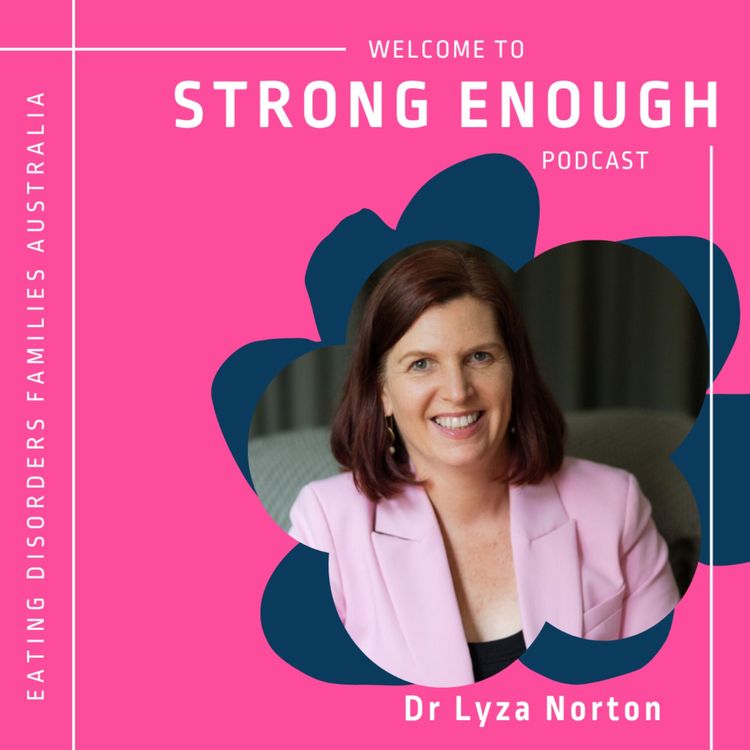
Strong Enough by Eating Disorders Families Australia
Early signs of an eating disorder with Paediatric Dietitian Lyza Norton
When the subtle signs of disordered eating sneak into a home parents and carers often wonder: when should I worry? When is disordered eating serious? What should I do first if I suspect an eating disorder?
Paediatric Dietitian Lyza Norton shares her years of experience with thousands of families navigating disordered eating. She gives us some insights into the different kinds of disordered diets, even “clean eating” or only eating healthy food can become an issue. She also lists some of the most common early signs and symptoms to watch out for and it may not be what you expect.
Dr Norton is also involved in the Nourish Nurture Notice program, Australia’s first ever online eating disorder prevention program for parents focused on early identification and intervention in disordered eating in young people.
The Nourish Nurture Notice program, which includes drop-in sessions and a special Masterclass, was developed by Eating Disorders Families Australia along with The Embrace Collective and is supported by the Queensland Government. It is specifically designed for parents and carers of school-aged children and adolescents.
Nourish Nurture Notice Masterclass link: https://edfa.org.au/nourish-nurture-notice/masterclass/
The Embrace Hub link: https://theembracehub.com/
Need more help? Join EDFA's Carer Support groups or contact EDFA's Fill the Gap counselling service - it's FREE!
#arfid
#signsofeatingdisorders
#edfa
#eatingdisordersfamiliesaustralia
#anorexia
#helpforeatingdisorder
#embracekids
#lyzanorton
More episodes
View all episodes
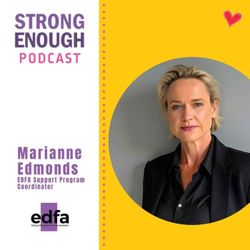
5. What happens when someone is hospitalised for an eating disorder?
51:50||Season 5, Ep. 5When a loved one is diagnosed with an eating disorder it can throw ordinary people into a chaotic medical world and often times into the hospital system for what can be life or death treatment. It can be daunting and distressing.It was why EDFA created the Hospital Liaison Program to provide support, information and education for carers of loved ones admitted into hospital for eating disorder treatment.The pilot program run in Brisbane was headed up by Marianne Edmonds as the first Hospital Liaison Officer. There have been a lot of learnings (as they say) and a lot of insights so we thought we would ask Marianne for her top tips when navigating the hospital system as a carer.There are so many questions: when to go to hospital for an eating disorder? What happens in hospital during ED treatment? How to support someone with an eating disorder in hospital? What to take and even what to leave at home.Download the full checklist with advice and tips for carers of loved ones hospitalised for eating disorder treatment.EDFA’s pilot program was funded by a grant from Women and Change and the feedback we had was incredible. If you would like to see more programs like this one funded in your state or region then contact your local Member of Parliament. At the very bottom of the Advocacy page on EDFA's website you can find a template for a letter as well as some tips on how to approach your local member (and even find your electoral seat).Want more access to resources and regular webinars? Become an EDFA Member: https://edfa.org.au/become-a-member/ It costs less than a cup of coffee a month.Website: https://edfa.org.au/Join EDFA's eating disorder support groups and eating disorder support forums: https://edfa.org.au/parents-and-carer-support/eating-disorder-support-groups/Book a free counselling session with EDFA’s Fill The Gap program: https://edfa.org.au/counselling-service/Find out more ways to help here: https://edfa.org.au/donation/https://edfa.org.au/get-involved/volunteer/ #edfa#eatingdisorderhospital#hospitalwitheatingdisorder#edhospitaladvice#edtreatment#eatingdisordersfamiliesaustralia#hospitalchecklisteatingdisorder#adviceforedcarers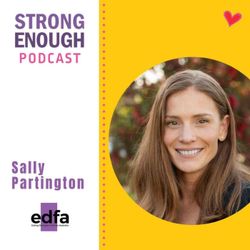
4. Why do you need a physiotherapist on your eating disorder recovery team?
33:22||Season 5, Ep. 4Physios might not be the first profession that comes to mind when you are thinking about eating disorder care but in this latest episode of Strong Enough Senior Physiotherapist Sally Partington explains the unique set of skills that can aid recovery.Sally will be talking about how to identify problem exercise levels, the links between eating disorders and pelvic floor problems as well as issues with bone density after disordered eating. Sally also explains how changing exercise routines can change the feelings or emotions that movement can trigger.Sally is the founder of Movement Physio Perth and also works at the Perth Children’s Hospital.It is important to acknowledge there are lots of different pathways to recovery and we urge you to seek your own professional advice. If you would like to hear more from lived experience carers then buy the new Strong Enough book.This is an edited version of a member webinar. If you join #EDFA - which costs as little as a cup of coffee a month - you would have early and full access to resources including 160+ hours of recorded education webinars.This is a Question and Answer style session lead by EDFA’s Education co-ordinator Coran Johnson. We join the webinar with a question about how to spot the signs of compulsive exercise when we live in a culture where we are taught that all exercise is good.Don’t forget you can access EDFA’s FREE Fill the Gap one-on-one counselling support any time you need it along the way. Website: https://edfa.org.au/Contact: 1300 195 626 Want more? Become an EDFA Member: https://edfa.org.au/become-a-member/ It costs less than $5 a month.Join Eating Disorders Families Australia support groups: https://edfa.org.au/parents-and-carer-support/eating-disorder-support-groups/ Visit EDFA resources library: https://edfa.org.au/video-resource-library/ For more information click on these links to the EDFA website:Anorexia NervosaBulimia NervosaBinge Eating DisorderARFID - Avoidant/Restrictive Food Intake DisorderOSFED - Other Specified Feeding & Eating Disorders#strongenoughedfa#eatingdisorderrecovery#eatingdisorder care team#eatingdisordersfamiliesaustralia#whatisdisorderedeating#adviceforcarers#edadvice#eatingdisorder#ARFID#bulimia#anorexia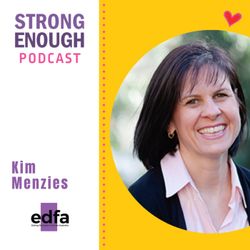
3. The link between eating disorders, stomach problems and gut issues.
01:05:37||Season 5, Ep. 3Have you ever heard the expression I’ve had a gutful or I’ve got a gut feeling about this? Or maybe the adage you are what you eat?Well like many old sayings there’s a real world link and today’s guest Accredited Practising Dietitian Kim Menzies is going to unpack for us the incredible connection between the brain and the gut - in fact the gut is now often called our ‘second brain’.There are often gastrointestinal problems linked to eating disorders. Some common gut issues can trigger disordered eating and in turn disordered eating can cause gut or stomach problems. Digestive issues during and after eating disorders are very common.This episode is an edited version of a special EDFA member webinar – if you’d like to access more resources like this then join EDFA or you can buy the new Strong Enough book written by carers just like you, who share lived experience tips and advice.We join the webinar as Kim, who’s business is called What’s Your Gut Feeling?, starts to explain the link between the brain and the gastrointestinal tract, discussing the key GI diseases, the impacts and links to eating disorders.Don’t forget you can access EDFA’s FREE Fill the Gap one-on-one counselling support any time you need it along the way. Website: https://edfa.org.au/Contact: 1300 195 626 Want more? Become an EDFA Member: https://edfa.org.au/become-a-member/ It costs less than $5 a month and in some States it is free!Join Eating Disorders Families Australia support groups: https://edfa.org.au/parents-and-carer-support/eating-disorder-support-groups/ Visit EDFA resources library: https://edfa.org.au/video-resource-library/ For more information click on these links to the EDFA website:Anorexia NervosaBulimia NervosaBinge Eating DisorderARFID - Avoidant/Restrictive Food Intake DisorderOSFED - Other Specified Feeding & Eating Disorders#edfa#eatingdisordersfamiliesaustralia#eatingdisorders#anorexia#bulimia#arfid#gutproblemseatingdisorders#gastrointestinalexperteatingdisorder#edgut#stomachissuesaftereatingdisorder#carersupporteatingdisorder#strongenoughedfa#eatingdisoderrecovery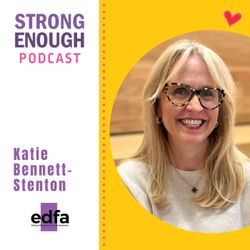
2. Advice on how to survive the caring role and support someone with an eating disorder
54:23||Season 5, Ep. 2Katie Bennett Stenton is the kind of powerhouse you want in your orbit. This is a woman who manages crisis issues for a living so she’s cool, collected and compassionate. Deeply optimistic, she is a firm believer that grit and perseverance will overcome anything.But just a few years ago the crisis was happening in her family home and she was struggling to manage it.Katie’s daughter was diagnosed with an eating disorder and, as it took over her once loving teen, Katie wondered if her eldest child would escape its death grip, if her marriage would survive and if she could pull everyone of out of the darkness including herself.If you are wondering what to do when someone is diagnosed with an eating disorder or how to help someone with an eating disorder then this is the podcast episode you’ll want to download.In it Katie has shared her story and her “playbook” of lessons she learnt, eating disorder carer tips and parent advice. It is based on a chapter she has written for the new book “Strong Enough”, which is written by carers in the Eating Disorders Families Australia community and is now available on the EDFA website or in book shops across the country. You can buy it here: https://edfa.org.au/strong-enough-book/ - it is a great resource if you want some advice on how to navigate being a carer for someone with an eating disorder or you are looking for ways to help someone with an eating disorder or ways to support carers of someone with an eating disorder.This is her best advice if you’re caring for a loved one with an eating disorder.Don’t forget you can access EDFA’s FREE Fill the Gap one-on-one counselling support any time you need it along the way. Website: https://edfa.org.au/Contact: 1300 195 626 Want more? Become an EDFA Member: https://edfa.org.au/become-a-member/ It costs less than $5 a month.Join Eating Disorders Families Australia support groups: https://edfa.org.au/parents-and-carer-support/eating-disorder-support-groups/ Visit EDFA resources library: https://edfa.org.au/video-resource-library/ For more information click on these links to the EDFA website:Anorexia NervosaBulimia NervosaBinge Eating DisorderARFID - Avoidant/Restrictive Food Intake DisorderOSFED - Other Specified Feeding & Eating Disorders#eatingdisordercarersupport#edfa#eatingdisorderrisktakingbehaviour#eatingdisordercareradvice#anorexiaadviceforparents#edfa#eatingdisoderfamiliesaustralia#eatingdisorderisitmyfault#strongenoughpodcast#careradviceeatingdisorders#strongenoughbook#edfastrongenoughbook#edcarersupport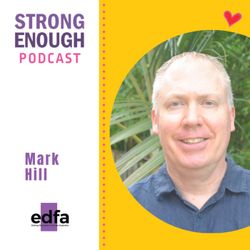
1. What kind of therapies treat eating disorders – with EDFA Counsellor Mark Hill
50:08||Season 5, Ep. 1Eating disorder recovery can be a complex rollercoaster with many moving parts. And treatment can include a mix of medical monitoring, nutrition, medicine and most often some kind of therapy.But let’s face it – the kinds of therapies available can be a confusing soup of acronyms CBT, ECBT, FBT, AFT to name a few. And we often hear carers asking - what is the best therapy to treat eating disorders?We thought we’d get EDFA Fill the Gap Counsellor Mark Hill to help us break down the main types of therapy commonly used in eating disorder recovery, to discuss what each involves and how it works, so you can make informed choices when it comes to therapy for your loved one, your family or yourself.Mark has an interesting background: a native Canadian he’s worked in everything from high schools to addiction services, in domestic violence settings helping survivors AND perpetrators, as well as roles in mental health services helping carers and kids.And if you are looking for more great insights into managing the caring role and hearing from others who are on the other side then EDFA has just launched a new book called Strong Enough. It’s been written by carers in the community and it is a mix of encouragement, insight and inspiration. It’s available online at https://edfa.org.au/strong-enough-book/ and in bookstores.In this episode we discuss the common types of treatment and therapies used in eating disorder recovery including the Maudsley Method, Family Based Treatment, (FBT) Cognitive Behavioural Therapy (CBT), Enhanced Cognitive Behavioural Therapy (CBT-E), Adolescent-Focussed Therapy (AFT), Dialectical Behaviour Therapy (DBT), and Interpersonal Psychotherapy for Eating Disorders (IPT-ED).Mark also answers questions like:How do you choose the best eating disorder therapy?If we change the type of therapy or therapy modality will recovery go backwards?Should carers do therapy too? (*TIP – the answer is YES!)There is a quick wrap up of all these therapies around five minutes from the end so you can jump to that point if you need a quick refresh or a reminder. Buy the Strong Enough book here: https://edfa.org.au/strong-enough-book/Want more? Become an EDFA Member: https://edfa.org.au/become-a-member/ It costs less than $5 a month.Don’t forget you can access EDFA’s FREE Fill the Gap one-on-one counselling support any time you need it along the way. Website: https://edfa.org.au/Contact: 1300 195 626 Join Eating Disorders Families Australia support groups: https://edfa.org.au/parents-and-carer-support/eating-disorder-support-groups/ Visit EDFA resources library: https://edfa.org.au/video-resource-library/ For more information click on these links to the EDFA website:Anorexia NervosaBulimia NervosaBinge Eating DisorderARFID - Avoidant/Restrictive Food Intake DisorderOSFED - Other Specified Feeding & Eating Disorders#edcarerstories#eatingdisordercarerstories#eatingdisordertherapy#eatingdisodertherapies#EDFA#eatingdisordersfamiliesaustralia#anorexia#bulimia#arfid#mentalhealtheatingdisorders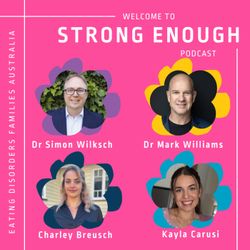
BONUS EP: Social Media Reset
01:11:58|In a world first Australia is raising the age of access to social media from 13 to 16.And there are plenty of questions:Why are we changing the age of access to social media?What are the impacts of social media on the brain?Why should parents support the social media ban for teens?How can we help young people with social media withdrawal symptoms?“The current 13 year old minimum age isn’t based on any meaningful development appropriateness for social media. There is not evidence that 13 year olds are in fact ready for social media. The 13 year old minimum came from a law in the US from 1996, which was actually well before smartphones or social media was even fully developed.” – Dr Simon WilkschThis podcast is an edited version of one of EDFA’s live webinar series. It was held just a couple of weeks before the introduction of the social media restrictions.In it we take a closer look at how social media affects the brain, from falling IQ and eating-disorder risk, to what withdrawal can look like when access to social media platforms is restricted. We also hear powerful insights from social media users who’ve been caught up in the algorithms themselves. “We know that when you're on a device you're not socialising, when you're on a device you are not using your working memory in the same way, you're not actually coming up with new ideas or your curiosity and those things are what is really affected in the IQ test as well.” – Dr Mark WilliamsThe panel includes:Dr Simon Wilksch, a leading Australian researcher and psychologist at Advanced Psychology Services. He explains how social media harms mental health, and why these new laws and stronger restrictions really matter, plus has great practical advice about how we can support our young people.Dr Mark Williams, a leading cognitive neuroscientist and author of Screen Smart Children. He’ll unpack how social media is reshaping our brains and how we can reverse some of the damage that been done, not only inside our heads, but to our real life relationships too.We’re also joined by two young women, Kayla Carusi and Charley Breusch, who know firsthand just how powerful and overwhelming social media can be when it comes to disordered eating. These young women share how they believe social media contributed to the development of their eating disorders and also how it hindered their recovery.#edfa#eatingdisordersfamiliesaustralia#socialmediareset#letkidsbekids#socialmediaagerestrictions#socialmediaagechange#socialmediabrain#arfid#eatingdisorders#anorexia#bulimia#eatingdisorderrecovery
5. Brain chemistry, bacteria and best nutrients for eating disorder recovery with Dr Leanne Barron
39:51||Season 4, Ep. 5“Causes of an eating disorder” would have to be one of the most searched questions by carers wanting to understand or find a solution to their loved one’s eating disorder.But could it be that disordered eating is caused by a perfect storm of brain chemistry?Our guest on Strong Enough Dr Leanne Barron believes with the right interventions, including the introduction of the right gut bacteria and even just trace nutrients, we can restore the delicate balance to jump start recovery after an eating disorder.Dr Barron is a GP and clinical researcher, with a special interest in eating disorders, working at The Banyans Medical Centre and the QUT Eating Disorder Clinic.She is full of practical advice for carers of a loved one with an eating disorder on repairing the mind and body. She also has tips on nutrition, waking the body from its triggered hibernation and even reading blood tests properly. **DISCLAIMER: it is important you speak to your loved one’s medical team about any treatments, blood tests or supplements because every case is unique. Underlying medical conditions, like coeliac disease should also be investigated.Dr Barron will also walk us through the biology we need to understand how brain chemistry impacts both our mental AND physical health. It might surprise you to find that old foe cholesterol is actually an important friend to those with eating disorders.Some of the products Dr Barron recommends in this podcast - please check with your own GP and treatment team before use - include:S Bifido Biotic: Orthoplex White S.Bifido Biotic 60c - BioConceptsMultiGen Bioti: Orthoplex White MultiGen Biotic 60c - BioConceptsUltra GG Immune: Orthoplex White Ultra GG Immune 60c - BioConceptsPentavite multi gummies #eatingdisorderrecovery#edrecovery#leannebarron#edfa#eatingdisordersfamiliesaustralia#anorexiatreatment#eatingdisorderbrainchemisty#causesofeatingdisorders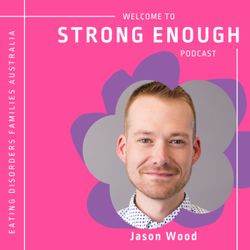
4. Orthorexia: My obsession with healthy eating nearly cost me my life
48:03||Season 4, Ep. 4When you hear from your loved one the words “I want to be more healthy” – it’s not what think of as a potential red flag for disordered eating or even something to worry about.But for Jason Wood this desire to improve his health started his obsession with only eating healthy food, choosing the healthiest options and exercising, which escalated into an eating disorder that nearly killed him.What is an obsession with eating health called?It’s known as Orthorexia and it is fixation with eating “clean” or only eating food the person considers healthy.“What had started as an innocent thing - I thought I was just going to eat healthy and take care of myself and prevent disease - very rapidly turned into something that nearly cost me my life,” explains Jason.This is an edited version of a presentation Jason did for eating disorder carers as part of a webinar series run by Eating Disorders Families Australia. If you’d like to access more content like this then join EDFA, it costs as little as a cup of coffee a month.Jason has also written a book called Starving for Survival.If you have concerns and want more information about this or other early signs of disordered eating, then download the free Nourish Nurture Notice Masterclass.#orthorexia#obsessedwithhealthyeating#edfa#disorderedeating#anorexia#worriedabouthealthyeating#bulima#carersupportanorexia#eatingtoohealthy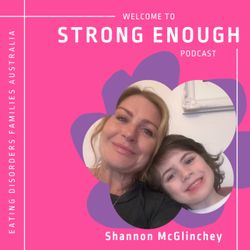
3. ARFID - Avoidant Restrictive Food Intake Disorder: Shannon and Jasper's story
43:48||Season 4, Ep. 3It’s been just over a decade since AFRID or Avoidant Restrictive Food Intake Disorder was officially identified as an eating disorder. ARFID is not about dieting or body image or weight loss, but the symptoms and signs of ARFID can often be mistaken for anorexia or bulimia It is more than being a fussy eater or a picky eater. There can be a fear of food, anxiety around swallowing or chewing or eating in public, or an extreme sensitivity to taste, texture or smell. Sometimes it might be related to a trauma, such as a hospital stay or emotional event around food or to neurodivergence. Another sign of ARFID might be the reduction in the variety of foods someone might eat.Shannon’s 5 year old son Jasper was diagnosed with ARFID after a series of unrelated events – a choking incident, a vomiting bug, tonsilitis, then the death of a loved one. It was a slow progressive issue with food and then he didn’t eat for weeks.A reminder that this podcast is about one family’s experience with ARFID - it’s important you also seek your own professional help for your loved one as every individual case is different.#arfid#arfidsigns#AvoidantRestrictiveFoodIntakeDisorder#arfideatingdisorder#eatingdisorders#edfa#eatingdisordersfamiliesaustralia#eatingdisordercarertips