Share
Podcast Like It's ...
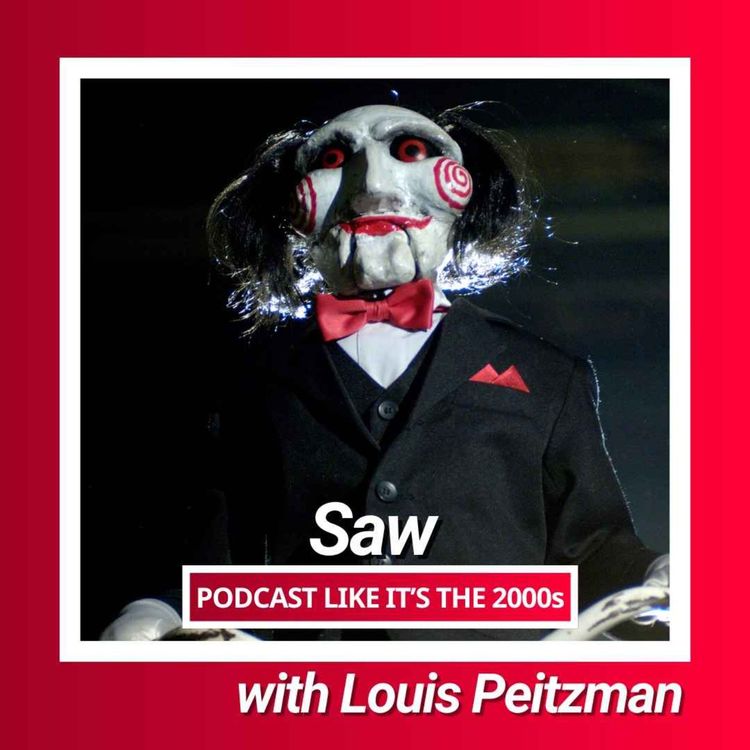
65: Saw with Louis Peitzman
This week on Podcast Like It’s The 2000s, hosts @pmiscove and @emilystjams kick off a brand new Halloween miniseries, Somebody Scare Phil, with guest Louis Peitzman (Chasing Amy Adams). Together, they dive into the bloody brilliance and DIY spirit of James Wan and Leigh Whannell’s 2004 indie phenomenon Saw a film that reshaped horror on a shoestring budget and gave rise to a genre-defining franchise.
The trio break down Saw’s grimy aesthetics, moral puzzles, and the line between psychological thriller and full-blown torture horror. Plus, Phil reveals how the franchise both terrifies and fascinates him (and why Emily might just make him watch all nine sequels).
Recorded as part of the Somebody Scare Phil miniseries where Emily forces Phil to face his horror movie blind spots this episode’s a twisted treat for cinephiles who love a good scream and a good think.
More episodes
View all episodes

109: Aeon Flux with Kristen Lopez
01:27:20|Phil and Emily are joined by film critic and historian Kristen Lopez to break down Karyn Kusama's Æon Flux (2005). Charlize Theron plays the title assassin, sent by the rebel Monicans to kill the ruling Chairman of the last walled city on Earth (Marton Csokas), only to find a conspiracy about cloning and memory that goes back generations (Frances McDormand, Sophie Okonedo, Jonny Lee Miller). What starts as a straightforward hit spirals into questions about who's actually still human under all that latex.The three dig into adapting a cult MTV animated series for a studio tentpole, the mid-2000s dystopian sci-fi boom, and how much style a blockbuster can get away with before critics turn on it. There's a real case here for reading Æon Flux as a genuinely strange studio experiment that got buried by its own rushed release. Sleek, weird, and a little sad, same as the movie.Follow the show & guest:Podcast Like It's... - https://www.instagram.com/podcastlikeitsPhil Iscove - https://www.instagram.com/pmiscoveEmily St. James - https://www.instagram.com/emilystjamsKristen Lopez - https://www.instagram.com/kristenlopez88💜 Patreon (bonus episodes & video): http://patreon.com/Podcastlikeits
108: Dogville with Lucia Aniello
01:26:55|Phil and Emily are joined by Emmy-winning Hacks creator Lucia Aniello for Lars von Trier's Dogville (2003). Nicole Kidman's fugitive Grace hides out in a Depression-era Rocky Mountain town staged entirely with chalk outlines on a bare soundstage, and the townsfolk's charity slowly curdles into something monstrous. Paul Bettany, Lauren Bacall, Chloë Sevigny, Patricia Clarkson, and James Caan fill out von Trier's three-hour moral experiment, narrated with dry glee by John Hurt.The three dig into the chalk-outline staging as both radical theater and pure provocation, Kidman spending her post-Hours Oscar heat on the least commercial project imaginable, and where the film's brutal final turn lands two decades on. There's a real case here for reading Dogville as the most savage thing ever built to look like a filmed stage play. Cruel, funny, and unlike anything else same as the movie.Follow the show & guest:Podcast Like It's... - https://www.instagram.com/podcastlikeitsPhil Iscove - https://www.instagram.com/pmiscoveEmily St. James - https://www.instagram.com/emilystjamsLucia Aniello - https://www.instagram.com/luciaaniellosetfits💜 Patreon (bonus episodes & video): http://patreon.com/Podcastlikeits
107: Die Another Day with Brooke Solomon and Jordan Gustafson
01:58:36|Phil and Emily are joined by Brooke Solomon and Jordan Gustafson, hosts of The Queer Quadrant, for Lee Tamahori's Die Another Day (2002). Pierce Brosnan's last outing as James Bond runs from a North Korean prison to an Icelandic ice palace, with Halle Berry surfacing as NSA agent Giacinta "Jinx" Johnson in the follow-up to her Monster's Ball Best Actress win. Rosamund Pike (in her screen debut), Toby Stephens, a Madonna theme song, and a famously invisible Aston Martin fill out the most gadget-drunk Bond of the early CGI era.The four dig into Jinx as the almost-spinoff that never happened, how a 40th-anniversary Bond tips all the way into digital excess, and why this particular entry burned itself so vividly into their childhood memories. There's a real case here for reading Die Another Day as the exact moment the Brosnan era buckles under its own kitesurfing, para-sailing weight. Gaudy, campy, and gloriously overblown same as the movie.Follow the show & guests:Podcast Like It's... - https://www.instagram.com/podcastlikeitsPhil Iscove - https://www.instagram.com/pmiscoveEmily St. James - https://www.instagram.com/emilystjamsBrooke Solomon - https://www.instagram.com/brookebsolomonJordan Gustafson - https://www.instagram.com/jordan_gustafsonThe Queer Quadrant - https://www.instagram.com/queerquadrant💜 Patreon (bonus episodes & video): http://patreon.com/Podcastlikeits
106: America's Sweethearts with Katharine LaRonde
01:44:37|Phil and Emily are joined by writer and podcaster Katharine LaRonde to dig into Joe Roth's America's Sweethearts (2001). Julia Roberts plays the overlooked assistant stuck managing the press junket for her superstar sister (Catherine Zeta-Jones) and her sister's washed-up, soon-to-be-ex-husband (John Cusack), whose divorce turns out to be the only story the reporters actually want. It spirals into a movie that can't decide if it's mocking the junket circus or just running one.The three dig into the film's Hollywood-satire instincts that never quite land a punch, John Cusack playing a guy who's spent a year and a half hiding from his own life at Alan Arkin's wellness retreat, and Roger Ebert's read on the movie as a watered-down Singin' in the Rain. There's a real case here for reading America's Sweethearts as the movie that wanted to skewer Hollywood but fell in love with it instead. Promising, self-conscious, and never quite committed, same as the movie.Follow the show & guest:Podcast Like It's... - https://www.instagram.com/podcastlikeitsPhil Iscove - https://www.instagram.com/pmiscoveEmily St. James - https://www.instagram.com/emilystjamsKatharine LaRonde - https://www.instagram.com/katlaronde/💜 Patreon (bonus episodes & video): http://patreon.com/Podcastlikeits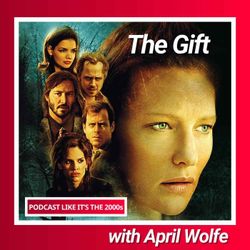
105: The Gift with April Wolfe
01:26:15|Phil and Emily are joined by writer and critic April Wolfe for Sam Raimi's The Gift (2000). Cate Blanchett plays a widowed Georgia fortune teller who reads cards to keep her family afloat and gets pulled into a murder when a local woman (Katie Holmes) goes missing. Giovanni Ribisi, Keanu Reeves, Hilary Swank, and Greg Kinnear round out a stacked Southern-gothic ensemble.The three dig into Raimi working in a minor key between the Evil Dead films and Spider-Man, Blanchett anchoring a lurid pulp thriller with total conviction, the movie's very year-2000 ideas about class and the South, and the simple pleasure of a mid-budget, star-packed genre picture that basically nobody makes anymore. April brings a horror writer's eye to what works, what's silly, and what quietly holds up.Follow the show & guest:Podcast Like It's... - https://www.instagram.com/podcastlikeitsPhil Iscove - https://www.instagram.com/pmiscoveEmily St. James - https://www.instagram.com/emilystjamsApril Wolfe - https://www.instagram.com/awolfeful💜 Patreon (bonus episodes & video): http://patreon.com/Podcastlikeits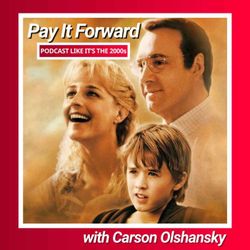
104: Pay It Forward with Carson Olshansly
01:38:25|Phil and Emily are joined by comedian Carson Olshansky for Mimi Leder's Pay It Forward (2000). Haley Joel Osment plays a seventh-grader who answers a social-studies assignment think of a way to change the world by inventing a simple chain reaction: do a big favor for three people, and ask each of them to "pay it forward." Kevin Spacey and Helen Hunt orbit as the scarred teacher and the struggling single mom the plan quietly sets out to fix.The three get into how a movie this earnest slowly curdles into something else, the infamous ending and whether it earns a single second of it, Spacey and Hunt doing an enormous amount of Very Serious Acting, and what it's like to revisit a turn-of-the-millennium prestige weepie with fresh, unsentimental eyes. Affectionate and merciless in roughly equal measure.Follow the show & guest:Podcast Like It's... - https://www.instagram.com/podcastlikeitsPhil Iscove - https://www.instagram.com/pmiscoveEmily St. James - https://www.instagram.com/emilystjamsCarson Olshansky - https://www.instagram.com/carsonolshansky💜 Patreon (bonus episodes & video): http://patreon.com/Podcastlikeits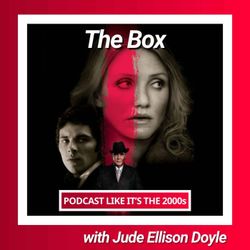
103: The Box with Jude Ellison Doyle
01:53:17|Phil and Emily are joined by writer Jude Ellison Doyle to open up Richard Kelly's The Box (2009). Cameron Diaz and James Marsden play a cash-strapped 1976 couple handed a simple, horrible deal by a scarred stranger (Frank Langella): press the button on the box, collect a million dollars, and somebody you don't know dies. What starts as a Twilight Zone morality test (via Richard Matheson's "Button, Button") spirals into NASA, Mars, and a very literary sense of damnation.The three dig into Kelly's whole deranged sensibility after Donnie Darko and Southland Tales, whether he's fully in on his own material, how he writes women, and why a studio thriller this strange even got made. There's a real case here for reading The Box as a big, glossy panic attack about being broke in America. Heady, funny, and a little unhinged same as the movie.Follow the show & guest:Podcast Like It's... - https://www.instagram.com/podcastlikeitsPhil Iscove - https://www.instagram.com/pmiscoveEmily St. James - https://www.instagram.com/emilystjamsJude Ellison Doyle - https://www.instagram.com/byjudedoyle💜 Patreon (bonus episodes & video): http://patreon.com/Podcastlikeits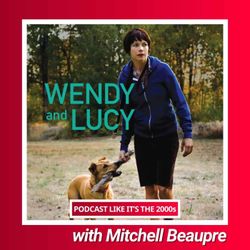
102: “Wendy & Lucy” with Mitchell Beaupre
01:33:03|Phil and Emily are joined by Mitchell Beaupre, editor and podcast host at Letterboxd, to dig into Kelly Reichardt's Wendy and Lucy (2008). Michelle Williams stars as a woman driving to Alaska for work who gets stranded in a small Oregon town when her car dies and she loses her dog, and the film turns that small catastrophe into one of the quietest, most devastating portraits of American poverty the 2000s gave us.The three of them get into why Reichardt is so good at trapping her characters, and us, in situations that tighten without anyone noticing, how the movie looks at the unhoused with a clear eye instead of pity, and where it lands in the show's Reichardt run. There's a detour into Richard Kelly and The Box, a bit on how Williams does more with a single look than most actors manage with a monologue, and Mitchell's case for why this one stays with you long after the credits.Follow the show & guests:Podcast Like It's... - https://www.instagram.com/podcastlikeitsPhil Iscove - https://www.instagram.com/pmiscoveEmily St. James - https://www.instagram.com/emilystjamsMitchell Beaupre - https://www.instagram.com/mitchellbeaupre💜 Patreon (bonus episodes & video): http://patreon.com/Podcastlikeits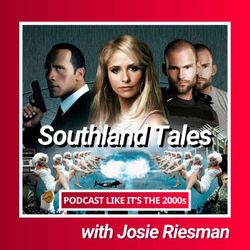
101: Southland Tales with Josie Riesman
01:37:50|Phil and Emily are joined by journalist and author Josephine Riesman to continue their Richard Kelly Reichardt mini-series with the magnificent disaster that is Southland Tales (2006). And there is no better guest for it: Josie wrote the definitive deep-dive on this movie and once spent three hours walking Venice Beach interviewing Richard Kelly himself.Set in an alternate 2008 where nuclear attacks on Texas have tipped America into a surveillance-state apocalypse, Southland Tales unleashes Dwayne Johnson, Sarah Michelle Gellar, Justin Timberlake, and a cast of SNL alumni across a sprawling, end-of-days Los Angeles on the Fourth of July. It premiered at Cannes as an unfinished cut on DVD, got booed into oblivion, made a legendary $374,000 against a $17 million budget, and then quietly became the cult object that fans swear is more true than the reality we actually got..The gang digs into why a movie this incoherent is also this irresistible. Emily makes her case that it is what you would get if Philip K. Dick novelized Robert Altman's Nashville, while Phil counters with "Magnolia with a head injury." Josie reveals what Kelly told her about that surreal Justin Timberlake lip-sync to The Killers, the tie-in graphic novels, the Cannes catastrophe, and why he has a reason for every baffling choice, even the ones that never made the final cut. Plus its eerie kinship with Children of Men and The Handmaid's Tale, and the thin line between satire and prophecy.Misunderstood masterpiece or beautiful trainwreck? On America's 250th birthday, it might be the only movie that fits. This is the way the world ends.Follow the show & guests:Podcast Like It's... - https://www.instagram.com/podcastlikeitsPhil Iscove - https://www.instagram.com/pmiscoveEmily St. James - https://www.instagram.com/emilystjamsJosephine Riesman - https://www.instagram.com/josie.zone💜 Patreon (bonus episodes & video): http://patreon.com/Podcastlikeits