Share
Legacy
Inbox: The Bayeux Tapestry and the Arrow Nobody Can Prove | Sue Brunning
Why are a million people about to queue at the British Museum for a strip of embroidered linen?
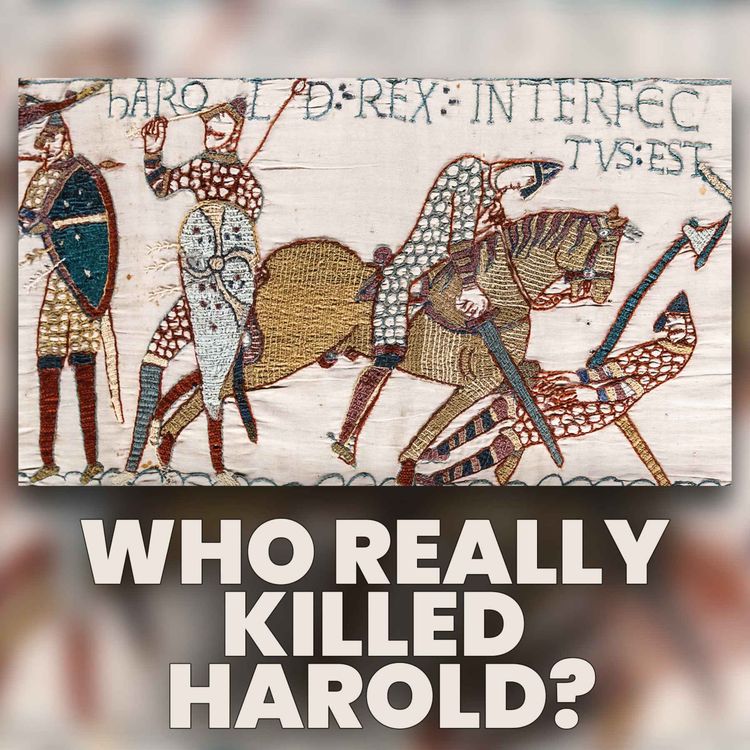
What if the most famous picture of 1066 isn't a tapestry, was probably stitched in England, and treats the losing king as a hero?
And, if the arrow in Harold's eye was stitched back in by 19th-century restorers, how sure are we of the one thing everyone knows about 1066?
With the Bayeux Tapestry in Britain for the first time in nearly a thousand years, Peter Frankopan and Afua Hirsch sit down with Sue Brunning, the British Museum curator who helped bring it here and waved Sutton Hoo off to France in exchange.
Sue takes them through the bishop who probably paid for it and gave himself a starring role, the English women who likely stitched it, and a Harold who looks nothing like a villain. Then come six women in 68 metres, three of them naked; a cleric, a woman called Ælfgyva and a slap nobody can explain; and a battle sequence brutal enough to send visitors out shaken. And then there's the arrow.
Join Legacy Plus for bonus episodes, early access, Q&A's, fewer adverts and more.
legacy.supportingcast.fm
[0:00] 68 metres of linen, home after nearly a thousand years
[3:33] From a Sandhurst summit to Bloomsbury, with Sutton Hoo sent the other way
[7:53] Why it isn't a tapestry, and why 1066 changed everything
[11:55] Harold the hero, hauling Normans out of the quicksand
[13:14] Bishop Odo, Canterbury and the women with the needles
[17:39] Six women, three naked, and a slap nobody can explain
[21:43] The battle that leaves visitors shaken
[26:44] Restorers, fading dyes and the arrow in Harold's eye
Stay connected with Legacy:
Instagram: @originallegacypodcast
TikTok: @legacy_productions
Explore more from Peter and Afua — essays, sources, and ideas:
Substack: peterfrankopan.substack.com | afuahirsch.substack.com
Join Legacy+ for bonus episodes, early access, Q&A's, fewer adverts and more.
legacy.supportingcast.fm
Stay connected with Legacy:
Instagram: @originallegacypodcast
TikTok: @legacy_productions
Explore more from Peter and Afua — essays, sources, and ideas: Substack: peterfrankopan.substack.com | afuahirsch.substack.com
More episodes
View all episodes
Inbox: Pericles and the Limits of Democracy | Paul Cartledge
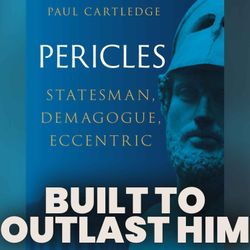
41:52|How did Pericles become the most powerful voice in Athens without a political party? Who got a say in the democracy he championed? And what happened when his own citizenship law shut out his son?Peter Frankopan and Afua Hirsch speak to historian Paul Cartledge about his new book, Pericles: Statesman, Demagogue, Eccentric.From the Parthenon to the plague that killed him, Cartledge traces the choices that shaped Athens’s golden age. He also makes the case that the most famous speech attributed to Pericles owes more to the historian Thucydides than to the man who delivered it.Join Legacy Plus for bonus episodes, early access, Q&As, fewer adverts and more.legacy.supportingcast.fm00:00 - The man who made Athens04:40 - Who had a say in Athenian democracy?12:43 - Power without a party24:43 - The Parthenon and Athens’s golden age29:02 - War with Sparta and the plague30:36 - Who wrote the funeral speech?36:08 - Aspasia and the citizenship lawStay connected with Legacy:Instagram: @originallegacypodcastTikTok: @legacy_productionsExplore more from Peter and Afua — essays, sources, and ideas:Substack: peterfrankopan.substack.com | afuahirsch.substack.com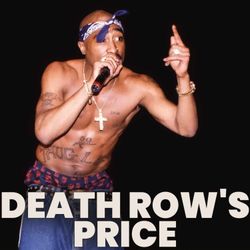
182. Tupac Shakur | Me Against the World | 3
35:20||Ep. 182How did Tupac Shakur end up at number one in the charts while serving a prison sentence? Why did a shooting in New York convince him that people close to him wanted him dead? And, how did a deal to secure his freedom lead him towards a fatal confrontation in Las Vegas?Peter Frankopan and Afua Hirsch follow Tupac through the most turbulent and dangerous years of his extraordinary life.As Tupac faces a sexual abuse conviction, Afua reflects on the darker side of 1990s hip-hop culture and her own experiences as a young music journalist. A shooting at a Manhattan recording studio fuels Tupac's suspicions about his former friends, while his music reaches new heights from behind bars. Then Death Row Records boss Suge Knight offers him a way out of prison. Peter and Afua trace the explosive success that follows, the escalating feud with Biggie Smalls and the events of September 1996 that leave Tupac dead at just 25.Join Legacy Plus for bonus episodes, early access, Q&As, fewer adverts and more.legacy.supportingcast.fm00:00 - Five shots in New York02:00 - Tupac's sexual abuse conviction04:08 - Celebrity, power and hip-hop culture08:15 - How hip-hop became big business11:35 - Success from behind bars14:22 - The shooting at Quad Studios17:15 - Life in prison19:40 - Tupac and Machiavelli20:38 - Suge Knight and Death Row Records22:40 - All Eyez on Me24:37 - The East Coast–West Coast feud27:31 - The fight at the MGM Grand29:09 - The Las Vegas shooting30:45 - Tupac's final days33:35 - The questions surrounding his murderStay connected with Legacy:Instagram: @originallegacypodcastTikTok: @legacy_productionsExplore more from Peter and Afua — essays, sources, and ideas:Substack: peterfrankopan.substack.com | afuahirsch.substack.com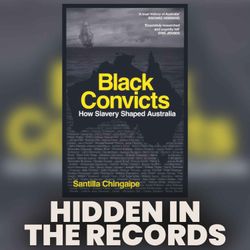
Inbox: The People Australia Forgot | Santilla Chingaipe
41:03|What did one line on a gallery label reveal about Britain’s First Fleet? How did people who resisted slavery in the Caribbean end up in Australian penal colonies? And, what happens to Australia’s founding story when you put those people back into it?Afua Hirsch and Peter Frankopan talk to filmmaker and author Santilla Chingaipe about her book Black Convicts.At the National Gallery of Victoria, Chingaipe read that people of African descent had been aboard the First Fleet. The exhibition gave her no names, so she went looking. In the ship registers she found hundreds of people whose journeys took her from Jamaica and the Cape to the Australian penal colonies. She explains what those journeys reveal about Britain’s empire and shares the words of a ten-year-old boy she found in the archive.Join Legacy Plus for bonus episodes, early access, Q&As, fewer adverts and more.legacy.supportingcast.fm00:00 - The First Fleet’s missing history02:21 - Meet Santilla Chingaipe03:33 - The gallery label06:31 - Who was transported?12:38 - The names become a pattern14:43 - Women and the female factories23:57 - A boy’s last words32:01 - Following the money34:18 - Who gets remembered?39:28 - Where to find Black ConvictsStay connected with Legacy:Instagram: @originallegacypodcastTikTok: @legacy_productionsExplore more from Peter and Afua — essays, sources, and ideas:Substack: peterfrankopan.substack.com | afuahirsch.substack.com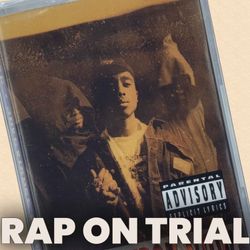
181. Tupac Shakur | Poet and Provocateur | 2
31:58||Ep. 181Why did the US vice president want Tupac’s debut album pulled from shops? What did Tupac see in a newspaper that made him write ‘Brenda’s Got a Baby’? And, what happened when the persona he built began to take over?In Part 2 of the Tupac Shakur series, Peter Frankopan and Afua Hirsch trace his rise from young rapper to film star and a target in America’s culture wars.After a Texas state trooper is killed, the defence points to a cassette of Tupac’s debut album. Vice President Dan Quayle calls for the record to be withdrawn. As the backlash grows, Tupac is making films with Janet Jackson and writing songs about Black women whose stories rarely make the headlines. Peter and Afua ask what his Thug Life tattoo was meant to say, and how much of the character he created he could leave behind.Join Legacy Plus for bonus episodes, early access, Q&As, fewer adverts and more.legacy.supportingcast.fm00:00 The cassette at the centre of a murder case01:29 How Tupac’s debut became a national controversy03:46 The story behind ‘Brenda’s Got a Baby’09:23 Tupac goes to Hollywood18:39 The women Tupac wrote about20:55 What Thug Life meant to Tupac27:24 The confrontations that followed fame30:21 The case that leads into Part 3Stay connected with Legacy:Instagram: @originallegacypodcastTikTok: @legacy_productionsExplore more from Peter and Afua — essays, sources and ideas:Substack: peterfrankopan.substack.com | afuahirsch.substack.com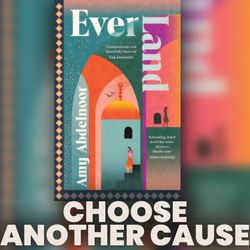
Inbox: A Ghost Story for Palestine | Amy Abdelnoor
39:00|Content warning: this episode includes discussion of war, killing and the ongoing violence in Gaza.Why did a cactus in an empty Palestinian village become the start of a novel?What happens when the ghost of a girl killed in 1967 asks a teenager from North London for help?And, why did Amy's tutor tell her, aged 20, to choose another cause?Peter and Afua talk to novelist Amy Abdelnoor about her debut, Ever Land.Amy volunteered in Palestinian refugee camps in Lebanon and lived in Ramallah during the Second Intifada. Ever Land follows two girls. Safa is a Palestinian girl killed in the 1967 Six-Day War, who can't move on until she finds her little sister. Dinah is a Jewish teenager from London who moves to Israel decades later. Amy talks about the cactus plants that still mark emptied villages, why she chose fiction over non-fiction, the email that told her there are "two sides to every story", writing grief, and her Lebanese grandfather.Join Legacy Plus for bonus episodes, early access, Q&A's, fewer adverts and more.legacy.supportingcast.fm00:00 Introduction03:07 What Ever Land is about03:56 Why a ghost? The cactus in the empty village08:25 Why fiction, not history11:16 "Two sides to every story"15:30 Writing as the world changed20:46 Writing grief24:05 Ghosts in the landscape27:31 Is Safa every ghost?30:30 Amy's Lebanese roots33:40 "Choose another cause"Stay connected with Legacy:Instagram: @originallegacypodcastTikTok: @legacy_productionsExplore more from Peter and Afua — essays, sources, and ideas:Substack: peterfrankopan.substack.com | afuahirsch.substack.com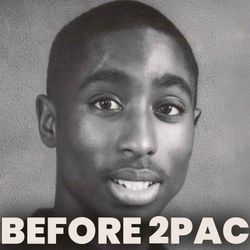
180. Tupac Shakur | Born Into the Struggle | 1
35:13||Ep. 180Content warning: this episode includes violence, drug addiction and references to sexual abuse.How did a pregnant Black Panther with no legal training defend herself against 156 charges, and win?Why did she name her son after the last Inca ruler, executed in Cusco in 1572?And, how did a ballet-dancing theatre kid become the rapper a US vice president said should never have been released?In the first of four episodes, Peter and Afua begin the story of Tupac Shakur.Thirty years after the shooting in Las Vegas, a jury has finally reached a verdict. But Tupac's story begins much earlier, in a Manhattan courtroom in 1971. His mother, Afeni Shakur, is on trial as one of the Panther 21. She is pregnant, she has sacked her lawyer, and she is facing life in prison. Peter and Afua follow her from North Carolina to the Black Panthers, and through the FBI's war on the movement. Then they follow her son. He grows up through New York, Baltimore and Marin City, and the episode ends with his first album.Join Legacy Plus for bonus episodes, early access, Q&A's, fewer adverts and more. In this series, members also get bonus interviews with a former member of Tupac's crew and a filmmaker.legacy.supportingcast.fm00:00 Las Vegas, 30 years on03:26 Afeni Shakur joins the Panthers06:34 Hoover, COINTELPRO and the Panther 2110:46 Pregnant in jail11:39 Afeni defends herself15:23 Why "Tupac"?20:47 A revolutionary family24:11 Baltimore and the School for the Arts29:46 Marin City32:36 "Same Song" and the first albumStay connected with Legacy:Instagram: @originallegacypodcastTikTok: @legacy_productionsExplore more from Peter and Afua — essays, sources, and ideas:Substack: peterfrankopan.substack.com | afuahirsch.substack.com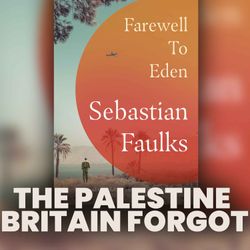
Inbox: Oranges, Sunshine and a Storm Coming | Sebastian Faulks
40:43|What were British soldiers doing in Palestine in 1945, between the oranges, the swimming and the bombs?Why does the Christmas show in Sebastian Faulks's Jerusalem swap Gilbert and Sullivan for Oscar Wilde?And, how did a novelist who plans everything end up with a twist he never saw coming?Sebastian Faulks tells Peter Frankopan and Afua Hirsch how his father's posting, hundreds of hours of soldiers' memories and a much-missed friend became his new novel, Farewell to Eden.His father was sent from Italy in late 1945 for what the army called "rest and peacekeeping", and was there when the King David Hotel was bombed. Sebastian built the book from the Imperial War Museum's sound archive, a 1949 diary kept by the Uruguayan member of the UN committee that drew the borders, and the memory of his closest friend, the Guardian's Middle East editor Ian Black, who first explained it all to him in their first week at Cambridge. Plus Amos Oz's grandparents, who thought Palestine was "too Asian", a padre's vision on Easter Saturday, the grey "tundra" of post-war Britain, and why Sebastian had to unlearn the idea that happy endings are vulgar.Join Legacy Plus for bonus episodes, early access, Q&A's, fewer adverts and more.legacy.supportingcast.fm[0:00] Oranges, sunshine and a storm coming[2:22] A boarding school, October 2023 and an old friend[5:52] His father's "rest and peacekeeping" in 1945[15:17] The Irgun, a bombing in Rome and no easy sides[18:53] Faith in the Holy Land, and a Christmas show in Jerusalem[24:51] The twist even he didn't plan[26:56] How grim post-war Britain really was[29:43] Why happy endings aren't vulgar[33:04] Crosswords, coffee and 1,000 words a day[38:14] A diary from 1949 and the UN's impossible jobStay connected with Legacy:Instagram: @originallegacypodcastTikTok: @legacy_productionsExplore more from Peter and Afua — essays, sources, and ideas:Substack: peterfrankopan.substack.com | afuahirsch.substack.com
Legacy Live: Elif Shafak | 16 November, Kings Place
02:16|Come and join us live! On Monday 16 November, Peter Frankopan and Afua Hirsch will be on stage at Kings Place in London with the wonderful Elif Shafak.Her extraordinary new novel, In One Brief Moment All Eternity, tells the story of Gustave Flaubert, the creator of Madame Bovary, through the eyes of the women whose lives shaped his, and whose stories have largely been forgotten. It's about who gets to tell history, whose voices are silenced, and why literature matters, especially in times of turmoil.The book comes out the day before, so this is a rare chance to hear Elif talk about it, and about history and memory, with us.Tickets:https://www.eventbrite.co.uk/e/legacy-live-elif-shafak-in-conversation-with-afua-hirsch-peter-frankopan-tickets-2003929321545Or through the Kings Place box office.More Legacy Live events are on the way in late 2026 and 2027. To hear about them first, join Legacy Plus for bonus episodes, early access, Q&A's, fewer adverts and more.legacy.supportingcast.fmStay connected with Legacy:Instagram: @originallegacypodcastTikTok: @legacy_productionsExplore more from Peter and Afua — essays, sources, and ideas:Substack: peterfrankopan.substack.com | afuahirsch.substack.com
179. The Earth Transformed | The Eye of the Storm | 4
33:18||Ep. 179What did a run of terrible Caribbean hurricanes have to do with American independence?How did a volcano in Indonesia help give us Frankenstein?And, why were so many of the people fighting for civil rights also fighting for the planet?In the next part of The Earth Transformed, Peter Frankopan and Afua Hirsch follow the storms, eruptions and campaigners that changed the course of history.Why Europeans didn't just build their plantations in West Africa, and how mosquitoes helped draw the line between America's North and South. Hurricane-wrecked islands desperate for food, rope and wood, and American merchants furious that London decided who they could sell to. Then the year without a summer: Mary Shelley's rain-soaked holiday at Lake Geneva, soldiers home from the Napoleonic Wars with no work, and the massacre at Peterloo. Plus a jumbo jet that flew into volcanic ash, Frankenstein at Cold War disarmament talks, and why Coretta Scott King, Rachel Carson and Greta Thunberg belong in the same story.Join Legacy Plus for bonus episodes, early access, Q&A's, fewer adverts and more.legacy.supportingcast.fm[0:00] Hurricanes, volcanoes and the women who fought for the planet[1:49] Founding mothers, and history without the weather[3:34] Why not build plantations in West Africa?[9:29] The hurricanes behind American independence[13:07] Frankenstein and a gothic childhood[14:22] Mount Tambora and the year without a summer[18:02] A jumbo jet, an ash cloud and nuclear winter[23:38] Civil rights and the climate[26:55] Rachel Carson and Silent Spring[27:57] Why women led the fightStay connected with Legacy:Instagram: @originallegacypodcastTikTok: @legacy_productionsExplore more from Peter and Afua — essays, sources, and ideas:Substack: peterfrankopan.substack.com | afuahirsch.substack.com