Share
Legacy
Legacy Live: Elif Shafak | 16 November, Kings Place
Come and join us live! On Monday 16 November, Peter Frankopan and Afua Hirsch will be on stage at Kings Place in London with the wonderful Elif Shafak.
Her extraordinary new novel, In One Brief Moment All Eternity, tells the story of Gustave Flaubert, the creator of Madame Bovary, through the eyes of the women whose lives shaped his, and whose stories have largely been forgotten. It's about who gets to tell history, whose voices are silenced, and why literature matters, especially in times of turmoil.
The book comes out the day before, so this is a rare chance to hear Elif talk about it, and about history and memory, with us.
Tickets:
https://www.eventbrite.co.uk/e/legacy-live-elif-shafak-in-conversation-with-afua-hirsch-peter-frankopan-tickets-2003929321545
Or through the Kings Place box office.
More Legacy Live events are on the way in late 2026 and 2027. To hear about them first, join Legacy Plus for bonus episodes, early access, Q&A's, fewer adverts and more.
legacy.supportingcast.fm
Stay connected with Legacy:
Instagram: @originallegacypodcast
TikTok: @legacy_productions
Explore more from Peter and Afua — essays, sources, and ideas:
Substack: peterfrankopan.substack.com | afuahirsch.substack.com
Join Legacy+ for bonus episodes, early access, Q&A's, fewer adverts and more.
legacy.supportingcast.fm
Stay connected with Legacy:
Instagram: @originallegacypodcast
TikTok: @legacy_productions
Explore more from Peter and Afua — essays, sources, and ideas: Substack: peterfrankopan.substack.com | afuahirsch.substack.com
More episodes
View all episodes
Inbox: Oranges, Sunshine and a Storm Coming | Sebastian Faulks
40:43|What were British soldiers doing in Palestine in 1945, between the oranges, the swimming and the bombs?Why does the Christmas show in Sebastian Faulks's Jerusalem swap Gilbert and Sullivan for Oscar Wilde?And, how did a novelist who plans everything end up with a twist he never saw coming?Sebastian Faulks tells Peter Frankopan and Afua Hirsch how his father's posting, hundreds of hours of soldiers' memories and a much-missed friend became his new novel, Farewell to Eden.His father was sent from Italy in late 1945 for what the army called "rest and peacekeeping", and was there when the King David Hotel was bombed. Sebastian built the book from the Imperial War Museum's sound archive, a 1949 diary kept by the Uruguayan member of the UN committee that drew the borders, and the memory of his closest friend, the Guardian's Middle East editor Ian Black, who first explained it all to him in their first week at Cambridge. Plus Amos Oz's grandparents, who thought Palestine was "too Asian", a padre's vision on Easter Saturday, the grey "tundra" of post-war Britain, and why Sebastian had to unlearn the idea that happy endings are vulgar.Join Legacy Plus for bonus episodes, early access, Q&A's, fewer adverts and more.legacy.supportingcast.fm[0:00] Oranges, sunshine and a storm coming[2:22] A boarding school, October 2023 and an old friend[5:52] His father's "rest and peacekeeping" in 1945[15:17] The Irgun, a bombing in Rome and no easy sides[18:53] Faith in the Holy Land, and a Christmas show in Jerusalem[24:51] The twist even he didn't plan[26:56] How grim post-war Britain really was[29:43] Why happy endings aren't vulgar[33:04] Crosswords, coffee and 1,000 words a day[38:14] A diary from 1949 and the UN's impossible jobStay connected with Legacy:Instagram: @originallegacypodcastTikTok: @legacy_productionsExplore more from Peter and Afua — essays, sources, and ideas:Substack: peterfrankopan.substack.com | afuahirsch.substack.com
179. The Earth Transformed | The Eye of the Storm | 4
33:18||Ep. 179What did a run of terrible Caribbean hurricanes have to do with American independence?How did a volcano in Indonesia help give us Frankenstein?And, why were so many of the people fighting for civil rights also fighting for the planet?In the next part of The Earth Transformed, Peter Frankopan and Afua Hirsch follow the storms, eruptions and campaigners that changed the course of history.Why Europeans didn't just build their plantations in West Africa, and how mosquitoes helped draw the line between America's North and South. Hurricane-wrecked islands desperate for food, rope and wood, and American merchants furious that London decided who they could sell to. Then the year without a summer: Mary Shelley's rain-soaked holiday at Lake Geneva, soldiers home from the Napoleonic Wars with no work, and the massacre at Peterloo. Plus a jumbo jet that flew into volcanic ash, Frankenstein at Cold War disarmament talks, and why Coretta Scott King, Rachel Carson and Greta Thunberg belong in the same story.Join Legacy Plus for bonus episodes, early access, Q&A's, fewer adverts and more.legacy.supportingcast.fm[0:00] Hurricanes, volcanoes and the women who fought for the planet[1:49] Founding mothers, and history without the weather[3:34] Why not build plantations in West Africa?[9:29] The hurricanes behind American independence[13:07] Frankenstein and a gothic childhood[14:22] Mount Tambora and the year without a summer[18:02] A jumbo jet, an ash cloud and nuclear winter[23:38] Civil rights and the climate[26:55] Rachel Carson and Silent Spring[27:57] Why women led the fightStay connected with Legacy:Instagram: @originallegacypodcastTikTok: @legacy_productionsExplore more from Peter and Afua — essays, sources, and ideas:Substack: peterfrankopan.substack.com | afuahirsch.substack.com
Inbox: Barbara Cartland, The Great Dictator | Matthew Sweet
43:41|How did a woman lying on a sofa with a Pekingese on her lap write 723 books?Why did the queen of pink chiffon put shoe polish on her eyelashes?And, if she sold around 750 million copies, why can't you find her books in a shop today?Matthew Sweet, author of the first biography to take Barbara Cartland seriously, tells Peter Frankopan and Afua Hirsch how a Doctor Who audio play about alien bookworms led him to her private papers.A house left almost untouched since she died in 2000. A father killed in the Great War, two brothers lost at Dunkirk, and two suitors who threatened to shoot themselves if she said no. Then the paradox: a woman who told readers to put their husbands first while working six days a week, a Tory councillor who fought for travellers' rights, and the author of sex advice manuals. Plus Private Eye's cruellest cartoons, bought and hung in her downstairs loo, the Nigerian romance writers who name her as their inspiration, and why Matthew will never sit on her sofa.Join Legacy Plus for bonus episodes, early access, Q&A's, fewer adverts and more.legacy.supportingcast.fm[0:00] 723 books, a Pekingese and shoe polish on her lashes[4:14] Alien bookworms: the strangest way into a biography[7:00] Why "The Great Dictator": a lost fortune and a family rebuilt by work[9:41] Writing from the couch: war, grief and the women left behind[17:37] The Tory councillor who fought for travellers' rights[21:21] Nigerian romance writers, and her plan to conquer the world[25:12] War paint: the lashes, the hair and the dog[28:33] Private Eye cartoons in the downstairs loo[31:00] Motherhood, and a family where everyone had to confess[37:53] Third best-selling author ever, so why has she vanished?Stay connected with Legacy:Instagram: @originallegacypodcastTikTok: @legacy_productionsExplore more from Peter and Afua — essays, sources, and ideas:Substack: peterfrankopan.substack.com | afuahirsch.substack.com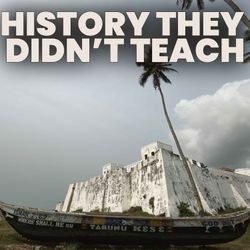
178. The Earth Transformed | Africa and Us | 3
37:14||Ep. 178Why were the first cowboys in the Americas from West Africa?What does it mean in Akan culture when a man "eats from another woman's pot"?And, could a mosquito be the reason Ghana never became a settler colony like South Africa or Kenya?In the next part of The Earth Transformed, Peter Frankopan and Afua Hirsch put Africa at the centre of the story, and find it at the centre of ours too.West African villages with no walls and no kings, because there was enough for everyone. An ancient Ghana nowhere near modern Ghana, and Mansa Musa's gold. Then food: why a Ghanaian host will never let you leave hungry, the European visitors who resented Africa's abundance, a colleague in Senegal who thought the perfect birthday present was a goat, and the jollof wars. Plus the genetic resistance to malaria that shaped the slave trade, and how the mosquito kept European settlers out of West Africa and sent Afua's grandfather to Cambridge.Join Legacy Plus for bonus episodes, early access, Q&A's, fewer adverts and more.legacy.supportingcast.fm[0:00] Land, food and race: three ways Africa shaped the world[2:01] Is "Africa" even the right word?[7:22] Villages with no walls and no kings[11:01] Two Ghanas, and Mansa Musa's gold[13:08] Why you'll never leave a Ghanaian home hungry[17:04] The first cowboys in the Americas[21:56] A goat for a birthday, and the jollof wars[25:57] Malaria, genes and the slave trade[29:50] How the mosquito kept settlers out of West Africa[32:56] Africans telling their own storiesStay connected with Legacy:Instagram: @originallegacypodcastTikTok: @legacy_productionsExplore more from Peter and Afua — essays, sources, and ideas:Substack: peterfrankopan.substack.com | afuahirsch.substack.com
Inbox: Six Men, Three Vans and a US Air Base | Iran, Putin and Oil
22:41|How do six men in three vans outside a Cotswolds air base end with America flying its bombers home?What can 300,000 tonnes of Russian diesel actually do for American drivers?And, are a quiet corner of England, an airport in Riyadh and the war in Ukraine all part of the same story?In this Legacy Inbox episode, Peter Frankopan and Afua Hirsch try to work out how the week's biggest stories fit together.A farmer who spotted men in balaclavas, a suspect who rang the police on himself, and Peter's three theories for what really happened at RAF Fairford. Then Houthi missiles hitting King Khalid Airport, the long war in Yemen the world stopped watching, and a diesel deal with Putin that covers roughly one American morning. Plus Trump's call for Ukraine to find a new leader, the Nobel Peace Prize he didn't win, and a rare moment when Afua changes Peter's mind about how Americans see Russia.Join Legacy Plus for bonus episodes, early access, Q&A's, fewer adverts and more.legacy.supportingcast.fm[0:00] Iran, Saudi, Ukraine and the Cotswolds, all in one week[1:05] Men in balaclavas outside RAF Fairford[3:53] Three theories: diesel thieves, an Iranian plot, or a US exit plan[9:20] Houthi missiles hit Riyadh, and the war in Yemen nobody watched[12:06] Trump, Putin and a diesel deal worth one American morning[14:36] The Nobel Peace Prize, and the court under threat[16:38] Do Americans still see Russia as the bad guy?[21:05] Is it all connected?Stay connected with Legacy:Instagram: @originallegacypodcastTikTok: @legacy_productionsExplore more from Peter and Afua — essays, sources, and ideas:Substack: peterfrankopan.substack.com | afuahirsch.substack.com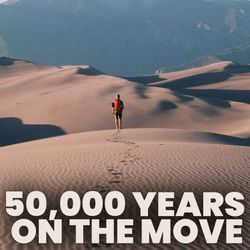
177. The Earth Transformed | The World in Motion | 2
41:15||Ep. 177If almost every early migration out of Africa failed, how did any of us get here?Why does an Akan word that once meant "person from beyond the cornfields" now mean a white person?And, when British politicians talk about net migration, who are they leaving out?Peter Frankopan takes Afua Hirsch through 50,000 years of people on the move, using the new illustrated edition of The Earth Transformed.A green Sahara full of lakes. Romans who conquered half the world but didn't spread their genes. Huns and Mongols running empires like a business that had to grow every year. Then the long scars the slave trade left on trust in West Africa, and the Gold Coast students who came to Britain long before Windrush. Plus 150 million people on the move in a single century, and Afua's prediction for 2050. And a school where Wednesday homework was translating Sanskrit into Urdu, and why speaking five Ghanaian languages never earns the respect that French does.Join Legacy Plus for bonus episodes, early access, Q&A's, fewer adverts and more.legacy.supportingcast.fm[0:00] 50,000 years of people on the move[2:07] The surest way to lose an election, and Vikings who are fine in hindsight[8:19] Almost every early migration out of Africa failed[13:23] Skin colour, vitamin D and why race is a social construct[16:47] Rome, the Huns and empire as a business model[20:22] The Mongols in Hungary, and the Greek idea of the stranger[24:23] "Beyond the cornfields": the scars you can still hear in a word[28:11] The migration nobody counts: Britons leaving[31:44] 2050: will Britain wish it had immigration?[36:04] Languages, Sanskrit homework, and which ones count as "sophisticated"Stay connected with Legacy:Instagram: @originallegacypodcastTikTok: @legacy_productionsExplore more from Peter and Afua — essays, sources, and ideas:Substack: peterfrankopan.substack.com | afuahirsch.substack.com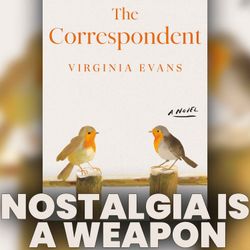
Inbox: The Correspondent | The Power of Letter Writing | Book Club
01:03:08|What happens when an author gets rejected eight times, writes a ninth novel in hand-written letters, and ends up at number one on the New York Times bestseller list? Why are we so drawn to storytellers, tradwives, and 73-year-old law clerks who reject email in favor of pen and paper? And, what does a 73-year-old fictional letter-writer have in common with the rise of the AfD in Germany and the political power of nostalgia? Afua Hirsch brings her summer read — Virginia Evans’s Women’s Prize-winning novel The Correspondent — to Peter Frankopan, and what starts as a book review turns into a deep dive into rejection, class, ageism, and the performance of identity. A 73-year-old former lawyer firing off petty grievances to her gardening club while hiding her deepest heartbreaks; Marlon James demanding his friends destroy his rejected manuscript; and why late-stage capitalism makes everyone treat their personal identity like a brand. Plus: why both Peter and Afua write their best work between midnight and 4:00 AM. Join Legacy Plus for bonus episodes, early access, Q&A's, fewer adverts and more.legacy.supportingcast.fmStay connected with Legacy:Instagram: @originallegacypodcast TikTok: @legacy_productions Explore more from Peter and Afua — essays, sources, and ideas:Substack: peterfrankopan.substack.com | afuahirsch.substack.com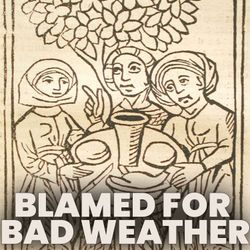
176. The Earth Transformed | Her Story and the Natural World | 1
38:56||Ep. 176Why does the ancient Greek word for bravery come from the word for man, and what did bronze spears have to do with it?How does one of the coldest decades in 2,000 years end with around 100,000 women on trial for meddling with the weather?And, what links a woman blamed for a hailstorm in the 1590s to ten young protesters superglued to an oil company's headquarters in London?Afua Hirsch reads Peter Frankopan's The Earth Transformed for the women in it, from Bronze Age weapons to the police station where she once defended those ten protesters.Part one of Her Story and the Natural World. Hunter-gatherer women with the bone strength of Olympic athletes, Akan market women who still run the trade, and the scapegoat logic that turns a bad harvest into a witch trial. Plus the women written out of the civil rights story, and why everyone who dreams of being a Spartan pictures themselves next to Leonidas, never as the cook at the back with no teeth.Join Legacy Plus for bonus episodes, early access, Q&A's, fewer adverts and more.legacy.supportingcast.fm[0:00] Weapons, magic spells and superglue: what do they have in common?[1:07] Why the word "herstory" still rattles people[7:49] The Bronze Age losers, and how bravery became a man's word[12:38] Tradwives, Spartans and the history nobody actually wants to live[16:20] Curses, churches and witchcraft in West Africa[21:53] A freezing decade, 100,000 trials and the women blamed for the storms[27:41] Coretta Scott King, Amy Ashwood Garvey and the women written out[31:32] Afua's first case: ten women glued to a buildingStay connected with Legacy:Instagram: @originallegacypodcastTikTok: @legacy_productionsExplore more from Peter and Afua — essays, sources, and ideas:Substack: peterfrankopan.substack.com | afuahirsch.substack.com