Legacy
All Episodes
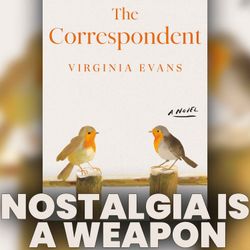
Inbox: The Correspondent | The Power of Letter Writing | Book Club
01:03:08|What happens when an author gets rejected eight times, writes a ninth novel in hand-written letters, and ends up at number one on the New York Times bestseller list? Why are we so drawn to storytellers, tradwives, and 73-year-old law clerks who reject email in favor of pen and paper? And, what does a 73-year-old fictional letter-writer have in common with the rise of the AfD in Germany and the political power of nostalgia? Afua Hirsch brings her summer read — Virginia Evans’s Women’s Prize-winning novel The Correspondent — to Peter Frankopan, and what starts as a book review turns into a deep dive into rejection, class, ageism, and the performance of identity. A 73-year-old former lawyer firing off petty grievances to her gardening club while hiding her deepest heartbreaks; Marlon James demanding his friends destroy his rejected manuscript; and why late-stage capitalism makes everyone treat their personal identity like a brand. Plus: why both Peter and Afua write their best work between midnight and 4:00 AM. Join Legacy Plus for bonus episodes, early access, Q&A's, fewer adverts and more.legacy.supportingcast.fmStay connected with Legacy:Instagram: @originallegacypodcast TikTok: @legacy_productions Explore more from Peter and Afua — essays, sources, and ideas:Substack: peterfrankopan.substack.com | afuahirsch.substack.com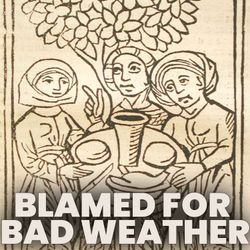
176. The Earth Transformed | Her Story and the Natural World | 1
38:56||Ep. 176Why does the ancient Greek word for bravery come from the word for man, and what did bronze spears have to do with it?How does one of the coldest decades in 2,000 years end with around 100,000 women on trial for meddling with the weather?And, what links a woman blamed for a hailstorm in the 1590s to ten young protesters superglued to an oil company's headquarters in London?Afua Hirsch reads Peter Frankopan's The Earth Transformed for the women in it, from Bronze Age weapons to the police station where she once defended those ten protesters.Part one of Her Story and the Natural World. Hunter-gatherer women with the bone strength of Olympic athletes, Akan market women who still run the trade, and the scapegoat logic that turns a bad harvest into a witch trial. Plus the women written out of the civil rights story, and why everyone who dreams of being a Spartan pictures themselves next to Leonidas, never as the cook at the back with no teeth.Join Legacy Plus for bonus episodes, early access, Q&A's, fewer adverts and more.legacy.supportingcast.fm[0:00] Weapons, magic spells and superglue: what do they have in common?[1:07] Why the word "herstory" still rattles people[7:49] The Bronze Age losers, and how bravery became a man's word[12:38] Tradwives, Spartans and the history nobody actually wants to live[16:20] Curses, churches and witchcraft in West Africa[21:53] A freezing decade, 100,000 trials and the women blamed for the storms[27:41] Coretta Scott King, Amy Ashwood Garvey and the women written out[31:32] Afua's first case: ten women glued to a buildingStay connected with Legacy:Instagram: @originallegacypodcastTikTok: @legacy_productionsExplore more from Peter and Afua — essays, sources, and ideas:Substack: peterfrankopan.substack.com | afuahirsch.substack.com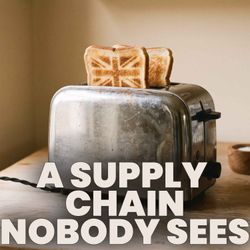
Inbox: The Invisible Machine Behind Everything | Ed Conway
38:59|Why did the cod in your fish fingers go to China and back before it reached your freezer?What does a medieval king blocking English wool from Flanders have to do with Xi Jinping's grip on rare earths?And, if China can now build cars far more cheaply than Europe or America, could the West lose its car industry altogether?Ed Conway, Sky News economics and data editor and Times columnist, takes Peter Frankopan and Afua Hirsch down the hidden supply chains behind everyday life with his new book, Trade World.The sliced white loaf that can't be made without wheat from the far side of the world. The cotton fields of Gujarat, where farmers have no idea where their crop ends up. The Corn Laws as the original Brexit, the West African cocoa farmers who've never tasted chocolate, and what David Ricardo really thought about free trade. Then comes the warning about cars that Afua hopes is wrong, and suspects isn't.Join Legacy Plus for bonus episodes, early access, Q&A's, fewer adverts and more.legacy.supportingcast.fm[0:00] North Sea, Shandong, back again: the fish finger's secret round trip[2:48] The invisible network beneath everything you own[8:29] Edward III, Flemish wool and Xi Jinping's rare earths[13:10] Why your toast depends on wheat from the other side of the world[17:21] The Corn Laws, free trade and the Brexit echo[21:03] Gujarat's cotton fields, and a farmer who never asks where it goes[26:51] Was Ricardo right, and what did he actually say?[32:09] The car industry Europe and America could loseStay connected with Legacy:Instagram: @originallegacypodcastTikTok: @legacy_productionsExplore more from Peter and Afua — essays, sources, and ideas:Substack: peterfrankopan.substack.com | afuahirsch.substack.com
175. Dolly Parton | Unproblematic White Queen | Feat. Kelechi Okafor |2
32:12||Ep. 175What were the taxi drivers of 1990s Accra playing on repeat?How does a woman who swore she was "not a bit political" write a hit about being used up and spat out by the system?And, what does it take for the most unmistakably white icon in American country music to become the unproblematic queen of a Nigerian girl growing up in Peckham?Afua Hirsch hands the Dolly Parton question to her friend Kelechi Okafor — author, podcaster, voice artist and pole studio owner — and Peter Frankopan discovers he is the last to know that West Africa loves country music.Part two of two. Missionaries, a banjo with West African roots and a grandfather in cowboy boots in Lagos; the royalties, the military and the art of choosing your hypocrisies; and the day Dolly Parton's Imagination Library asked for Kelechi's own picture book, then came back for it a second year. Underneath it all, the question part one left hanging: did everyone give Dolly a pass that Beyoncé never gets?Join Legacy Plus for bonus episodes, early access, Q&A's, fewer adverts and more.legacy.supportingcast.fm[0:00] The tribute that travelled furthest didn't come from Nashville[2:40] Patsy Cline, Jim Reeves and a cassette player in the headboard[4:20] Accra taxis, the banjo, and a secret hundreds of millions already knew[8:41] Unpicking "unproblematic white queen", and choosing what you're a hypocrite for[11:37] The Imagination Library comes calling for Kelechi's picture book[14:35] Dumb Blonde as a business plan, all the way to the bank[18:09] Church ladies, queer fans, and the pass Beyoncé never gets[23:24] Peckham, Yoruba, and why a songwriter chose booksStay connected with Legacy:Instagram: @originallegacypodcastTikTok: @legacy_productionsExplore more from Peter and Afua — essays, sources, and ideas:Substack: peterfrankopan.substack.com | afuahirsch.substack.com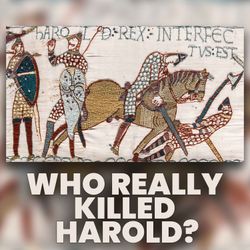
Inbox: The Bayeux Tapestry and the Arrow Nobody Can Prove | Sue Brunning
40:05|Why are a million people about to queue at the British Museum for a strip of embroidered linen?What if the most famous picture of 1066 isn't a tapestry, was probably stitched in England, and treats the losing king as a hero?And, if the arrow in Harold's eye was stitched back in by 19th-century restorers, how sure are we of the one thing everyone knows about 1066?With the Bayeux Tapestry in Britain for the first time in nearly a thousand years, Peter Frankopan and Afua Hirsch sit down with Sue Brunning, the British Museum curator who helped bring it here and waved Sutton Hoo off to France in exchange.Sue takes them through the bishop who probably paid for it and gave himself a starring role, the English women who likely stitched it, and a Harold who looks nothing like a villain. Then come six women in 68 metres, three of them naked; a cleric, a woman called Ælfgyva and a slap nobody can explain; and a battle sequence brutal enough to send visitors out shaken. And then there's the arrow.Join Legacy Plus for bonus episodes, early access, Q&A's, fewer adverts and more.legacy.supportingcast.fm[0:00] 68 metres of linen, home after nearly a thousand years[3:33] From a Sandhurst summit to Bloomsbury, with Sutton Hoo sent the other way[7:53] Why it isn't a tapestry, and why 1066 changed everything[11:55] Harold the hero, hauling Normans out of the quicksand[13:14] Bishop Odo, Canterbury and the women with the needles[17:39] Six women, three naked, and a slap nobody can explain[21:43] The battle that leaves visitors shaken[26:44] Restorers, fading dyes and the arrow in Harold's eyeStay connected with Legacy:Instagram: @originallegacypodcastTikTok: @legacy_productionsExplore more from Peter and Afua — essays, sources, and ideas:Substack: peterfrankopan.substack.com | afuahirsch.substack.com
174. Dolly Parton | It's Dolly Parton's World and We're Living In It | 1
31:31||Ep. 174Who says no to Elvis Presley — and is proved right eighteen years later?How does a girl from a one-room cabin with no electricity work out the economics of music publishing before most of Nashville has?And, in an age that agrees on almost nothing, how did Dolly Parton end up claimed by drag queens, evangelicals and everyone in between?Peter Frankopan opens on the phone call that cost Dolly Parton an Elvis record, and Afua Hirsch traces what that refusal was really protecting.Part one of two. Locust Ridge to Nashville, the Porter Wagoner years, and the moment a songwriter worked out that the leverage was never in the performance. Along the way: a theme park propping up one of Tennessee's poorest counties, a book scheme built for a father who never learned to read, and a working women's anthem that half the people singing it have never thought about. Underneath it all, a harder question — whether being loved by everybody is a strategy, and what it costs to hold on to.Join Legacy Plus for bonus episodes, early access, Q&A's, fewer adverts and more.legacy.supportingcast.fm[0:00] Elvis wants the song. Then the phone rings.[2:08] One room, twelve children, and a childhood with its own acronym[5:33] Nashville the day after school finishes, and no plan B[8:05] The double act that made her, and the goodbye song that ended it[12:55] Half the publishing, one sleepless night, and a fortune left on the table[15:11] 9 to 5: the most political song she never called political[18:35] A theme park, 4,000 jobs and billions into East Tennessee[26:07] Dixie, Black Lives Matter, and the edges of staying out of itStay connected with Legacy:Instagram: @originallegacypodcastTikTok: @legacy_productionsExplore more from Peter and Afua — essays, sources, and ideas:Substack: peterfrankopan.substack.com | afuahirsch.substack.com
Inbox: The Falklands Campaign | Milei, Trump and Oil | Book Club
26:04|Why is a war fought 44 years ago back on the front pages?What happens when a combative president in Buenos Aires, a friend in the White House and an oil field due online in 2028 all point at the same islands?And, when 99.8% of the people who live there have already voted, whose islands are they to argue over?Fresh from Sir Lawrence Freedman's two-volume official history of the Falklands campaign, Peter Frankopan takes on the question Afua Hirsch can't let go: whose rights come first?The official record reads like a detective story: the orders, the officers' doubts, and a Prime Minister who went against some of her own senior ministers. But the argument behind it never went away. Afua sets out why the politics look upside down to someone who opposes colonialism. Peter traces Argentina's claim back to a 15th-century treaty. Then come Chagos, Guam and the British Virgin Islands, and the question of whether Britain applies its own principle consistently. There's also the odd matter of why Yair Netanyahu weighed in at all.Join Legacy Plus for bonus episodes, early access, Q&A's, fewer adverts and more.legacy.supportingcast.fm[1:15] A summer with Sir Lawrence Freedman's official history of the Falklands[2:34] Milei, Trump and oil: why a 1982 war is live again[7:18] Inside the official records, and Thatcher's gamble[10:54] Afua's question: whose rights?[14:08] 99.8%, and the islanders who've been there for 200 years[16:48] Chagos, Guam, the British Virgin Islands: is Britain consistent?[19:47] Two wrongs, red post boxes and the Victory Pub[24:44] Why Yair Netanyahu picked a sideStay connected with Legacy:Instagram: @originallegacypodcastTikTok: @legacy_productionsExplore more from Peter and Afua — essays, sources, and ideas:Substack: peterfrankopan.substack.com | afuahirsch.substack.com
173. 9/11: 25 Years On | The Reckoning | 3
39:30||Ep. 173Content warning: this episode describes torture, civilian deaths and the 2021 Kabul airport attack.Bin Laden is dead, al-Qaeda is shattered, and there was never another 9/11 — so who won?What does a war cost once you count the hospitals that closed and the food that never arrived?And what does it mean that the United States signed an agreement with the people it went to war to destroy?Twenty-five years on, Afua Hirsch and Peter Frankopan add up the bill — and find that bin Laden had written the strategy down in advance.February 2020: the United States signs a deal with the Taliban in Doha. The government of Afghanistan is not in the room. Eighteen months later the Afghan state collapses in a matter of days, Kabul airport fills with people willing to cling to the undercarriage of a departing aircraft, and America's longest war ends almost exactly twenty years after it began. Then comes the audit. Brown University puts the direct death toll at more than 940,000, and the total — once you count the collapsed health systems, economies and food supplies — at somewhere near 4.7 million. The attack that started it cost around half a million dollars. The response cost eight trillion. Bin Laden had a phrase for that: he called it bleeding America. The final part of three.Join Legacy Plus for bonus episodes, early access, Q&A's, fewer adverts and more.legacy.supportingcast.fm[0:00] The uncomfortable question: how much of what he wanted did bin Laden actually get?[4:25] Doha, February 2020: the deal, and the government that wasn't invited to sign it[6:39] Not a gradual collapse — provincial capitals fall in a matter of days[11:53] The audit: $8 trillion, 940,000 killed directly, and 3.6 million more[14:56] "Bleeding America" — bin Laden wrote the plan down and said it out loud[19:29] Afghan women, and the argument nobody makes any more[30:23] What the rest of the world was doing while America looked the other way[36:09] The question neither of them wants to answer: whose fault is Afghanistan now?Stay connected with Legacy:Instagram: @originallegacypodcastTikTok: @legacy_productionsExplore more from Peter and Afua — essays, sources, and ideas:Substack: peterfrankopan.substack.com | afuahirsch.substack.com
Inbox: Yesteryear | Waking Up in 1855 | Book Club
23:21|What happens to a trad wife influencer when she wakes up in 1855 and has toactually do it?Why were film producers bidding on this novel four years before it wasfinished?And when a story about white homesteaders in pre-Civil War America contains noBlack people at all, what is it quietly telling you?Peter asks Afua what she read over the summer and gets a debut novel, afour-year-old email she'd forgotten about, and a criticism that has nothing todo with the plot.Caro Claire Burke's Yesteryear drops a trad wife influencer — sourdoughstarter, eight children, millions of followers — into an actual 1855 homesteadand makes her live there. Afua raced through it and gives it full marks for theidea. Her objection sits somewhere else entirely, and it's the kind of absenceyou can't unsee once someone points at it. Along the way: why publishers postbooks to your house forever once you've written one, why Peter keeps beingasked to read 550 pages in ten days, and how a novel now gets optioned for filmbefore it has been written.Join Legacy Plus for bonus episodes, early access, Q&A's, fewer adverts andmore.legacy.supportingcast.fm[0:26] The one thing Afua only lets herself read in summer[3:13] Books arrive forever once you're published, and the etiquette nobodyexplains[8:42] The novel Afua found sitting in her own inbox, four years early[12:47] Sourdough, eight children, and a fantasy of the American past[18:03] Peter on class and labour, and why Burke chose 1855[20:28] Afua's real objection, and it isn't the plot[21:13] The Legacy Book Club verdict, in three separate scoresStay connected with Legacy:Instagram: @originallegacypodcastTikTok: @legacy_productionsExplore more from Peter and Afua — essays, sources, and ideas:Substack: peterfrankopan.substack.com | afuahirsch.substack.com
loading...