Share

No Such Thing
Anya Kamenetz: "What The Times got wrong about kids and phones"
At the end of October, the New York Times ran a series of articles on kids, parents, and screentime. It looked at trends among parents, largely around the Silicon Valley in California. When I read Anya Kamenetz's response in the Columbia Journalism Review, titled What the Times Got Wrong About Kids and Phones, I had to reach out and see if she'd be willing to talk. I think her perspective on this issue is extremely important.
Anya Kamenetz is NPR's lead education blogger. She joined NPR in 2014, working as part of a new initiative to coordinate on-air and online coverage of learning.
Kamenetz is the author of several books. Her latest is The Art of Screen Time: How Your Family Can Balance Digital Media and Real Life (PublicAffairs, 2018).
Her previous books were Generation Debt; DIY U: Edupunks, Edupreneurs, and the Coming Transformation of Higher Education, and The Test.
Kamenetz covered technology, innovation, sustainability, and social entrepreneurship for five years as a staff writer for Fast Company magazine. She's contributed to The New York Times, The Washington Post, New York Magazine, Slate, and O, the Oprah Magazine, and appeared in documentaries shown on PBS and CNN.
It's worth noting that in addition to the rock stardom above, she's a parent, and someone who, admittedly, is dealing with the stuff in real time. If you take nothing else from this episode, if you don't read her book or the many links that I drop in the show notes for this episode (available on our facebook page facebook/nosuchthingpodcast) pretty please, use your instincts as a parent, consult educators and specialists who know technology on this topic, talk with doctors who really want to dig in about what's fears are real and which are not. Take the time to do your homework, and make plan that fits what you're looking to each achieve at home, in your classroom, or with the young people you serve, wherever that is. And talk to the young people in your life. Preaching tech abstinence comes from a good place - we want children safe and productive - but don't be suckered by the temptation to conflate all that's changing for us culturally, don't trust non-expert voices because they seem elite, and don't miss out on all that's there in the upside.
Links from this episode:
Columbia Journalism Review - What the Times got wrong about kids and phones: https://www.cjr.org/criticism/times-silicon-valley-kids.php
THE ART OF SCREEN TIME: HOW YOUR FAMILY CAN BALANCE DIGITAL MEDIA AND REAL LIFE: http://www.anyakamenetz.net/
NYTimes, A Dark Consensus Begins to Emerge About Kids and Phones in Silicon Valley: https://www.nytimes.com/2018/10/26/style/phones-children-silicon-valley.html
Silicon Valley Nannies Are Phone Police for Kids: https://www.nytimes.com/2018/10/26/style/silicon-valley-nannies.html?module=inline
Anya's Newsletter: https://tinyletter.com/AnyaKamenetz/subscribe
Anya on Twitter: https://twitter.com/anya1anya
More episodes
View all episodes
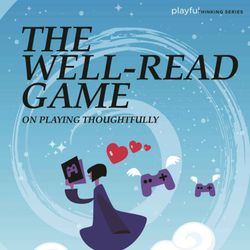
150. The Well-Read Game
01:03:19||Ep. 150Tracy Fullerton, M.F.A. is an experimental game designer, professor and director emeritus of the USC Games program. Her research center, the Game Innovation Lab, has produced several influential independent games, including Cloud, flOw, Darfur is Dying, The Night Journey, with artist Bill Viola and Walden, a game, a simulation of Henry David Thoreau’s experiment at Walden Pond which was named “Game of the Year” at Games for Change 2017 and “Developer Choice” at IndieCade 2017. Tracy is the author of “Game Design Workshop: A Playcentric Approach to Creating Innovative Games,” a design textbook used at game programs worldwide, and holder of the Electronic Arts Endowed Chair in Interactive Entertainment. In addition to her teaching and design, she is a member of the Board of Directors for Square Enix Holdings, Co. and Games for Change.Prior to joining the USC faculty, she was president and founder of the interactive television game developer, Spiderdance, Inc. Spiderdance’s games included NBC’s Weakest Link, MTV’s webRIOT, The WB’s No Boundaries, History Channel’s History IQ, Sony Game Show Network’s Inquizition and TBS’s Cyber Bond. Before starting Spiderdance, Tracy was a founding member of the New York design firm R/GA Interactive. As a producer and creative director she created games and interactive products for clients including Sony, Intel, Microsoft, AdAge, Ticketmaster, Compaq, and Warner Bros. among many others. Notable projects include Sony’s Multiplayer Jeopardy! and Multiplayer Wheel of Fortune and MSN’s NetWits, the first multiplayer casual game. Additionally, Tracy was Creative Director at the interactive film studio Interfilm, where she wrote and co-directed the “cinematic game” Ride for Your Life, starring Adam West and Matthew Lillard. She began her career as a designer at Bob Abel’s company Synapse, where she worked on the interactive documentary Columbus: Encounter, Discovery and Beyond and other early interactive projects.Tracy’s work has received numerous industry honors including an Emmy nomination for interactive television, best Family/Board Game from the Academy of Interactive Arts & Sciences, most “sublime experience,” the “Impact” and “Trailblazer” awards from the Indiecade Festival, ID Magazine’s Interactive Design Review, Communication Arts Interactive Design Annual, several New Media Invision awards, iMix Best of Show, the Digital Coast Innovation Award, IBC’s Nombre D’Or, Time Magazine’s Best of the Web and the Hollywood Reporter’s Women in Entertainment Power 100.Matthew Farber, Ed.D. is Associate Professor of Educational Technology and Codirector of the Gaming SEL Lab at the University of Northern Colorado. He is a play theorist who studies how games can foster empathy, compassion, perspective-taking, and ethical decision-making. He was a contributing writer for Origin101, the official learning companion for Ava DuVernay’s critically acclaimed film Origin. Author of several books and articles, Dr. Farber writes for Edutopia, has been invited to the White House and to keynote for UNESCO, and has been interviewed by NPR, The Washington Post, APA Monitor on Psychology, EdSurge, The Denver Post, Fast Company, USA Today, and The Wall Street Journal. He has codeveloped game-based lessons with Tracy Fullerton for her award-winning Walden, a game EDU. In The Well-Read Game: On Playing Thoughtfully, Fullerton and Farber explore how personal and subjective meanings are evoked through a new theory of player response.Links: https://matthewfarber.com/https://mitpress.mit.edu/9780262552233/the-well-read-game/https://www.tracyfullerton.com/https://www.gamesforchange.org/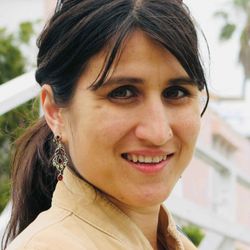
149. The Cross‑Cultural Parenting Playbook
57:06||Ep. 149Sangita Shresthova, PhD is a multilingual scholar specializing in civic participation, popular culture, and the intersections of digital media and intercultural communication. She leads a range of projects examining civic engagement in both digital and physical spaces. Shresthova’s expertise in designing and executing complex qualitative research is exemplified by her leadership in a multi-year study of youth activism in the digital age, which culminated in the publication of By Any Media Necessary: The New Youth Activism.Shresthova’s published works include Practicing Futures: The Civic Imagination Action Handbook and Popular Culture and the Civic Imagination: Case Studies of Creative Social Change, which explore how imaginative practices and popular culture can foster creative social transformation. She is also a co-creator of the Digital Civics Toolkit, a widely recognized resource designed to support educators and community leaders in guiding youth learning in digital environments. The toolkit was named one of the “Best Edtech of 2018” and continues to be a vital resource for fostering digital literacy and civic engagement.Her two recent books, We Are Civic Media (Northwestern University Press) and Connected Cultures: How to Parent Across Borders (Channel View Publications) further expand her contributions to civic media studies and cross-cultural communication.Links:www.sangitashresthova.comWe are Civic MediaTransformative Media PedagogiesPracticing Futures: A Civic Imagination Action HandbookPopular Culture and the Civic Imagination: Case Studies of Creative Social Changehttps://www.multilingual-matters.com/page/detail/the-cross-cultural-parenting-playbook/?SF1=work_id&ST1=CVIEW-684985269b12f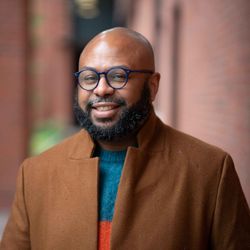
148. Decoding Language of Grief and Joy in Digital Life
56:09||Ep. 148Desmond Patton is the 31st PIK University Professor at the University of Pennsylvania, with joint appointments in the School of Social Policy & Practice and the Annenberg School for Communication, where he is the Waldo E Johnson Jr. Professor of Communication. He also holds secondary appointments in the Department of Psychiatry at Children’s Hospital of Philadelphia & Perelman School of Medicine. He is founding director of SAFElab, founding faculty director of the Penn Center for Inclusive Innovation & Technology, and Chief Strategy Officer for the School of Social Policy & Practice.Professor Patton’s groundbreaking research examines the relationship between social media and gun violence, grief, and loss, focusing on how online communities influence offline behavior. His work has made him the most cited and widely recognized scholar in this critical area of social science. Early research focused on detecting trauma and preventing violence on social media has evolved into broader investigations of language analysis and algorithmic bias in artificial intelligence. He currently serves as a member of Spotify’s Safety Advisory Council, the Ethics and Equity Advisory Council (EEAC) at Axon, TikTok’s U.S. Content Advisory Council, and is a trusted advisor to several AI startups.As a social work scientist, Patton identified that traditional data science methods often fail to capture the cultural and linguistic nuances of predominantly Black and Hispanic youth. In response, he developed the Contextual Analysis of Social Media (CASM) framework, which integrates culture, context, and inclusion into machine learning and computer vision analysis. He is also pioneering a new research agenda on joy, developing a practical and theoretical framework for integrating joy into AI model development as a tool for equity, imagination, and human connection.Dr. Patton is a member of the National Academy of Medicine, an Obama Foundation USA Leader, a Mozilla Rise 25 Change Agent, a Presidential Leadership Scholar, and one of RockHealth’s Top 50 in Digital Health.Links:https://sp2.upenn.edu/person/desmond-upton-patton/https://bsky.app/profile/did:plc:dxheqqkccc6z5kqgw34shta7https://www.linkedin.com/in/desmond-patton-49a7b59/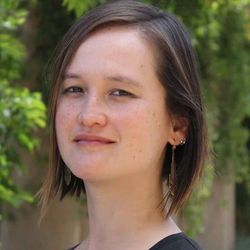
147. The Body Digital
43:27||Ep. 147Vanessa Chang builds communities and conversations about art, technology, people, and planet. She writes, curates, and teaches about new and old media, the history and philosophy of technology, design, disability and creative access, cities, comics, animation, circuses, and more. She is Director of Programs at Leonardo, the International Society for the Arts, Sciences, and Technology. She earned a Ph.D. in Modern Thought and Literature from Stanford University, where she was a Geballe Fellow at the Stanford Humanities Center and also ran the Graphic Narrative Project. She's also taught in Visual & Critical Studies at California College of the Arts and was lead curator with CODAME Art & Tech. She grew up in Singapore and Australia and is now based in San Francisco. Her first book, The Body Digital: A Brief History of Humans and Machines, from Cuckoo Clocks to ChatGPT, will be published on 4 November 2025.
146. The Case for Curiosity
56:14||Ep. 146Tinsley Galyean, Author of Reframe is a technologist, designer, and co-founder of Curious Learning, a global nonprofit dedicated to eradicating illiteracy. He holds a PhD from the MIT Media Lab and works at the intersection of education, storytelling, and digital innovation, creating interactive experiences for museums and programing for networks like Discovery Kids, Disney, and Warner Bros.Under Galyean’s leadership, Curious Learning has made its literacy apps available in 60 languages, reaching children in diverse communities worldwide, many with little or no access to formal schooling. By partnering with parents, educators, NGOs, and governments, the organization has helped children in some of the most resource-constrained settings begin their reading journey. Curious Learning’s work is recognized for its commitment to mother-tongue instruction and its focus on data-driven evaluation to ensure real, lasting impact.LInks:https://www.businessexpertpress.com/books/reframe-how-curiosity-and-literacy-can-redefine-us/https://www.curiouslearning.org/https://medium.com/authority-magazine/high-impact-philanthropy-tinsley-galyean-of-curious-learning-on-how-to-leave-a-lasting-legacy-with-1c9b04d7b6fc
145. If Everyone Is a Power User: Matt Dalio on Democratizing Technology
01:00:08||Ep. 145Matt Dalio is the founder of Endless, a visionary initiative dedicated to empowering youth to become creators of technology rather than passive consumers. His work spans three pillars: Endless Studios, a youth game-making studio; Endless Access, which tackles device affordability and connectivity; and Endless OS, an education-focused operating system designed to teach coding and digital skills through games.Matt’s journey began with formative experiences in China, where he founded the China Care Foundation as a teenager to support orphans—an early signal of his lifelong commitment to equity and empowerment. He’s also the son of Ray Dalio, founder of Bridgewater Associates, and credits his father’s ethos of purpose-driven work as a guiding influence, while forging his own path in education and technology.In 2024, Matt announced a major partnership with Arizona State University to launch the Endless Games and Learning Lab, a $5M initiative aimed at scaling personalized, game-based learning for millions of students worldwide.Links:Media Kit / Bio:https://kitcaster.com/matt-dalio/Social:https://www.linkedin.com/in/mattdalio/Website:https://www.endlessstudios.com/
144. Greedy Algorithms, Public Goods: Rethinking AI Regulation and Education
58:52||Ep. 144Dr. Julia Stoyanovich is Institute Associate Professor of Computer Science and Engineering, Associate Professor of Data Science, Director of the Center for Responsible AI, and member of the Visualization and Data Analytics Research Center at New York University. She is a recipient of the Presidential Early Career Award for Scientists and Engineers (PECASE) and a Senior member of the Association of Computing Machinery (ACM). Julia’s goal is to make “Responsible AI” synonymous with “AI”. She works towards this goal by engaging in academic research, education and technology policy, and by speaking about the benefits and harms of AI to practitioners and members of the public. Julia’s research interests include AI ethics and legal compliance, and data management and AI systems. Julia is engaged in technology policy and regulation in the US and internationally, having served on the New York City Automated Decision Systems Task Force, by mayoral appointment, among other roles. She received her M.S. and Ph.D. degrees in Computer Science from Columbia University, and a B.S. in Computer Science and in Mathematics & Statistics from the University of Massachusetts at Amherst.Links:https://engineering.nyu.edu/faculty/julia-stoyanovich https://airesponsibly.net/nyaiexchange_2025/
143. Debugging Efforts in CS Education
01:00:29||Ep. 143Guest Diane Levitt shares how Cornell Tech, in collaboration with the City of New York, is reimagining computer science education through an equity-first approach. From pilot programs that stumble to systems that scale, this episode explores how institutional iteration—especially when it fails—can lead to more inclusive and impactful CS learning.Links:https://www.prnewswire.com/news-releases/2024-state-of-computer-science-education-highlights-growing-investment-from-policymakers-continued-gaps-in-access-302282502.htmledc.nyc/press-release/nycedc-and-cornell-tech-advance-new-new-york-initiative-establish-new-york-cityedc.nyc/program/pilot-new-york-citypar.nsf.gov/servlets/purl/10101543https://tech.cornell.edu/about/https://www.linkedin.com/feed/update/urn:li:activity:7344464344660811780/https://csteachers.org/what-is-the-state-of-cs-education-in-2024/
142. The Data Beyond Seat Time
45:38||Ep. 142In this episode of No Such Thing, I talk with Laura Slover, Managing Director of the Skills for the Future initiative—a joint effort by ETS and the Carnegie Foundation. We explore what it means to move beyond the century-old Carnegie Unit and toward a system that captures the full spectrum of what learners know and can do.From internships to outdoor leadership, from dashboards to transcripts that actually reflect growth—this conversation is for anyone thinking about how we build a more human, equitable, and future-ready education system.Links:Sasha Bruce Youthwork https://www.sashabruce.org/https://aschoolwithoutwalls.org/https://www.hightechhigh.org/ETS's official Skills for the Future page – This outlines the initiative’s goals, including competency-based learning and skill recognition, backed by ETS’s expertise in educational measurement.Carnegie Foundation’s Skills for the Future initiative – A deep dive into how the program is shifting education from time-based to competency-based learning, with a focus on essential skills beyond traditional academics.Indiana State Board of Education report – A detailed research paper discussing the transition from time-based education models to skill-based insights, highlighting the empirical evidence supporting this shift.Explainer on modern skills-based assessment – A paper from Carnegie Foundation discussing the limitations of traditional assessments and how Skills for the Future is innovating measurement techniques.ETS & Carnegie’s framework for durable skills – A breakdown of the essential skills identified for success across life domains, emphasizing developmental skill progressions and personalized learning.https://www.carnegiefoundation.org/resources/publications/carnegie-unit/https://eric.ed.gov/?id=EJ1057177https://nces.ed.gov/fastfacts/display.asp?id=38https://www.nagb.gov/news-and-events/news-releases/2025/nations-report-card-decline-in-reading-progress-in-math.htmlhttps://christophegaron.com/articles/mind/how-do-kids-change-during-the-summer-insights-on-summer-growth-in-children/https://www.tulsakids.com/brains-on-break/