Share

No Such Thing
From an Unlikely CA Zipcode, A Digital Nest Emerges
Jacob Martinez is a social entrepreneur, tech educator, keynote speaker and cutting-edge community collaborator. Martinez believes technology has the potential to break down socioeconomic barriers and unlock economic growth for youth and their communities. As the founder and executive director of Digital NEST (Nurturing Entrepreneurial Skills with Technology), Martinez turned a vision into reality by creating a modern, collaborative workspace for local youth to receive high-tech training.
The opening of the first Digital NEST in 2014 garnered national attention as a model for bridging the digital divide experienced by youth living in low-income, rural communities. Today the NEST continues to expand, with more than 1200 members at two regional centers; its main location in Watsonville, CA and since April 2017, a Digital NEST pilot in Salinas, CA.
Martinez’s inspiration for Digital NEST is built on more than a dozen years of experience and research in teaching tech as a way to overcome economic disparities and achieve equity for Latinos and girls. His early work focused on promoting careers in STEM for youth through an award winning after-school program teaching middle-school girls to create computer games. The program serves hundreds of students in 15 Santa Cruz County schools.
Martinez has presented his work and research to the National Science Foundation, to technology companies Google, Mozilla, and Infosys; to the Computer Science Collaborative Project, the University of California, and the National Girls Collaborative Project. Martinez spoke in 2015 at the first White House Tech Meetup and was named by TechCrunch as one of 2014’s Top 10 Men in the Country Supporting Women in Technology.
Martinez has been widely recognized for his work as a community leader developing innovative approaches to solving social problems across diverse populations. Martinez founded the Santa Cruz County Ag-tech Meetup, co-founded the Watsonville Film festival, is a Community Advisor for Opportunity Fund and hosts a podcast focused on the intersection of agriculture and technology.
He is a frequent speaker at technology and educational conferences and symposia, and has been honored by business, community, and educational institutions for his innovation and leadership. He was named the 2015 Santa Cruz County Entrepreneur of the Year, has provided thought leadership on the impact of tech and underserved student populations, and also received a recommendation letter from former United States Secretary of Defense, Leon Panetta.
Martinez graduated from the University of California, Santa Cruz with a Bachelor of Science in Ecology and Evolutionary Biology, and received his Master’s in Instructional Science and Technology from California State University, Monterey Bay.
Links from this episode:
Digital Nest: https://digitalnest.org/
Jacob Martinez: https://digitalnest.org/oldsite/?page_id=2847
Better Schools Won't Fix America, Nick Hanauer, Atlantic Monthly: https://www.theatlantic.com/magazine/archive/2019/07/education-isnt-enough/590611/
More episodes
View all episodes

156. Why Kids Struggle to Talk Across Difference
59:35||Ep. 156Dr. Vikki Katz is Professor and Fletcher Jones Foundation Endowed Chair in Free Speech at Chapman University in Orange, CA. She is also Executive Director of Or Initiative, which is dedicated to developing evidence-based alternatives to how young people (dis)engage with each other over contentious and complex issues, including the Middle East conflict and rising U.S. antisemitism. Or Initiative develops civil discourse interventions specific to the needs of middle school, high school, and college-aged young people, with an emphasis on how to develop these crucial communication skills in an increasingly digital information environment.Dr. Katz’s research program has advanced equitable access to digital and educational opportunities for lower-income, working-class, and immigrant young people and families, with support from funders including Samueli Foundation, Bill & Melinda Gates Foundation, Carnegie Foundation, and Spencer Foundation. Prior to joining the Chapman University faculty in 2022, Dr. Katz was a professor at Rutgers University. She has also served as Visiting Scholar at the Russell Sage Foundation, Senior Research Fellow at the Joan Ganz Cooney Center at Sesame Workshop, and as Editor of the Journal of Children and Media.Links:https://www.chapman.edu/our-faculty/vikki-katz.aspxhttps://orinitiative.org/about/
155. A New Era for Learning Media
01:15:18||Ep. 155Spencer Striker, PhD is a digital learning designer, producer, and Professor of Digital Media Design at Northwestern University in Qatar. For more than two decades, he has led international creative teams producing award‑winning learning experiences across mobile games, interactive narratives, VR, and podcasts—supported by major funders including the NEH, NSF, QNRF, QRDI, and the Doha Film Institute. His work, released entirely free for anyone to use, includes Chaos Corp | Troll Farm Simulator, the History Adventures series, Dr. Sara | Disease Detective, and Plague of Athens | VR. His latest project, Al-Khwarizmi: Father of Algebra & the Algorithm, is a 30-episode, AI-animated docudrama series on the life of the ninth-century mathematician, funded by the Doha Film Institute and released free worldwide in summer 2026.Striker’s practice sits at the intersection of digital learning design and university‑level production teaching, spanning 2D/3D design, sound, web, podcasting, AI tools, and “vibe coding.” Before academia, he served as founding Creative Director of Galxyz, a Silicon Valley learning‑game studio backed by Andreessen Horowitz and Emerson Collective, and co‑founded the Media Arts & Game Development program at the University of Wisconsin‑Whitewater. His work reflects a core conviction: learning sticks when it is experienced—and relevance and context are the engine of game‑based learning.Links:https://www.spencerstriker.com/https://www.spencerstriker.com/al-khwarizmi
154. AI and Youth Sports: How Video Is Changing Coaching and Learning
59:56||Ep. 154Dr. Megan Buning is a sport psychology researcher, coach educator, and former Division I athlete whose work sits at the intersection of communication, motivation, and performance. Across her career she’s studied how coaches shape athlete experience — especially in softball — through expectations, tone, and the subtle cues that athletes interpret far more deeply than coaches often realize. Her research spans gendered communication, coach–athlete meaning‑making, and the ways video and reflective practice can help coaches see what they’re actually teaching. She’s presented internationally on coach communication, trained youth and collegiate coaches, and built programs that help coaches understand their impact with more clarity and intention.Beyond the field, Dr. Buning has applied her work to contexts like umpire development, faculty coaching, virtual training environments, and performance under pressure. Whether she’s helping an umpire analyze decision‑making on video or guiding instructors through reflective practice, her throughline is consistent — people learn best when they understand how their communication lands. Her work bridges lived experience, scientific rigor, and practical coaching wisdom, making her a rare voice who can speak fluently about athletes, educators, and emerging technologies like AI that are reshaping how we see and understand performance.Links:https://annescollege.fsu.edu/dr-megan-buninghttps://www.millioncoaches.org/resources/
153. Pop Culture Literacies with Mia Hood
48:59||Ep. 153Mia Hood is a curriculum designer, writing coach, and teacher educator based in New York. She has worked as a professor of literacy and secondary education at the City University of New York and a professor of professional writing at New York University. Mia received her doctorate in Curriculum and Teaching from Teachers College, where she studied sociocultural and critical perspectives on literacy. https://substack.com/@popstackhttps://www.routledge.com/Pop-Culture-Literacies-Teaching-Interpretation-Response-and-Composition-in-a-Digital-World/Hood/p/book/9781032667041Episode from Rosanne Season 2: https://youtu.be/tWf25CfjYx0?si=KdRU-M47hnTW-qkv
152. The Elective for Flourishing in the AI Era
01:13:26||Ep. 152Mike Taubman is a lifelong educator working at the intersection of AI literacy, career‑connected learning, purpose development, and moral inquiry — all in service of helping students flourish in a rapidly evolving world.As a teacher he is currently expanding his purpose development and career-connected learning program for upperclassmen into an Innovation Studio at Uncommon Schools that will explore and codify emerging pedagogies that support long‑term student success. This spring he also co‑taught an AI literacy pilot class built around an original “AI Driver’s License” framework, collaborating with a Stanford researcher to study the learning environment the curriculum creates. As an AI Innovation Lead, he helps steer Uncommon’s network‑wide instructional AI strategy, supporting 20,000 students and 2,000 teachers across 52 schools.Mike’s work has been featured in The New York Times, The Washington Post, Chalkbeat, and in education texts including Leverage Leadership, Teach Like a Champion, and Love and Literacy, as well as books by prominent education researchers.From 2022 to 2025, Mike was a Stanford Digital Education Fellow, supporting Stanford’s work bringing credit‑bearing hybrid courses to students in Title I high schools nationwide and helping develop and pilot an AI literacy curriculum for high schoolers.He is currently an AI fellow with the Center for Reinventing Public Education, AI for Equity, and Playlab. He writes a weekly Substack, “AI Waypoints,” to share what he’s thinking and learning as he explores the role of AI in education.Links:Uncommon: https://uncommonschools.org/Mike's Substack: https://aiwaypoints.substack.com/Ikigai: https://en.wikipedia.org/wiki/IkigaiStanford SLE: https://sis.stanford.edu/structured-liberal-education-sleIn Search of Deeper Learning: https://a.co/d/0407hHpXOn the Daily: https://www.nytimes.com/2026/02/23/technology/ai-literacy-newark-school-chatbots.html
151. The System We Never Built
50:25||Ep. 151Dr. Katie Brown has spent nearly three decades leveraging the science behind high-impact language instruction to create scalable, sustainable English learning solutions. As founder and chief education officer of EnGen, a Certified B Corporation, she is pioneering a personalized, career-aligned, mobile-first approach to English upskilling and is engaging cross-sector partners – Fortune 500 companies, regional employers, higher education institutions, apprenticeship programs, and government institutions – to connect workers with high-demand skills, credentials, and employment. An expert in adult learning, education technology, and instructional design, Katie has crafted numerous award-winning language courses and authored multiple technology patents to deliver high-impact language training to millions of learners. Katie holds a PhD in second language acquisition from the University of Maryland, and is a frequent speaker, author, and panel moderator. Find her work on LinkedIn.Links:https://getengen.com/teamhttps://www.chieflearningofficer.com/profiles/katie-brown/https://www.kenningassociates.com/katie-brown-of-engen/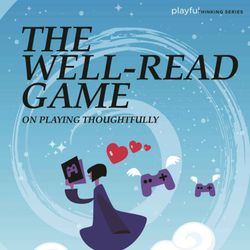
150. The Well-Read Game
01:03:19||Ep. 150Tracy Fullerton, M.F.A. is an experimental game designer, professor and director emeritus of the USC Games program. Her research center, the Game Innovation Lab, has produced several influential independent games, including Cloud, flOw, Darfur is Dying, The Night Journey, with artist Bill Viola and Walden, a game, a simulation of Henry David Thoreau’s experiment at Walden Pond which was named “Game of the Year” at Games for Change 2017 and “Developer Choice” at IndieCade 2017. Tracy is the author of “Game Design Workshop: A Playcentric Approach to Creating Innovative Games,” a design textbook used at game programs worldwide, and holder of the Electronic Arts Endowed Chair in Interactive Entertainment. In addition to her teaching and design, she is a member of the Board of Directors for Square Enix Holdings, Co. and Games for Change.Prior to joining the USC faculty, she was president and founder of the interactive television game developer, Spiderdance, Inc. Spiderdance’s games included NBC’s Weakest Link, MTV’s webRIOT, The WB’s No Boundaries, History Channel’s History IQ, Sony Game Show Network’s Inquizition and TBS’s Cyber Bond. Before starting Spiderdance, Tracy was a founding member of the New York design firm R/GA Interactive. As a producer and creative director she created games and interactive products for clients including Sony, Intel, Microsoft, AdAge, Ticketmaster, Compaq, and Warner Bros. among many others. Notable projects include Sony’s Multiplayer Jeopardy! and Multiplayer Wheel of Fortune and MSN’s NetWits, the first multiplayer casual game. Additionally, Tracy was Creative Director at the interactive film studio Interfilm, where she wrote and co-directed the “cinematic game” Ride for Your Life, starring Adam West and Matthew Lillard. She began her career as a designer at Bob Abel’s company Synapse, where she worked on the interactive documentary Columbus: Encounter, Discovery and Beyond and other early interactive projects.Tracy’s work has received numerous industry honors including an Emmy nomination for interactive television, best Family/Board Game from the Academy of Interactive Arts & Sciences, most “sublime experience,” the “Impact” and “Trailblazer” awards from the Indiecade Festival, ID Magazine’s Interactive Design Review, Communication Arts Interactive Design Annual, several New Media Invision awards, iMix Best of Show, the Digital Coast Innovation Award, IBC’s Nombre D’Or, Time Magazine’s Best of the Web and the Hollywood Reporter’s Women in Entertainment Power 100.Matthew Farber, Ed.D. is Associate Professor of Educational Technology and Codirector of the Gaming SEL Lab at the University of Northern Colorado. He is a play theorist who studies how games can foster empathy, compassion, perspective-taking, and ethical decision-making. He was a contributing writer for Origin101, the official learning companion for Ava DuVernay’s critically acclaimed film Origin. Author of several books and articles, Dr. Farber writes for Edutopia, has been invited to the White House and to keynote for UNESCO, and has been interviewed by NPR, The Washington Post, APA Monitor on Psychology, EdSurge, The Denver Post, Fast Company, USA Today, and The Wall Street Journal. He has codeveloped game-based lessons with Tracy Fullerton for her award-winning Walden, a game EDU. In The Well-Read Game: On Playing Thoughtfully, Fullerton and Farber explore how personal and subjective meanings are evoked through a new theory of player response.Links: https://matthewfarber.com/https://mitpress.mit.edu/9780262552233/the-well-read-game/https://www.tracyfullerton.com/https://www.gamesforchange.org/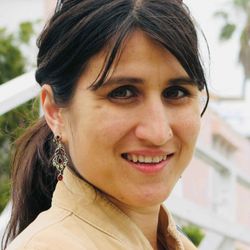
149. The Cross‑Cultural Parenting Playbook
57:06||Ep. 149Sangita Shresthova, PhD is a multilingual scholar specializing in civic participation, popular culture, and the intersections of digital media and intercultural communication. She leads a range of projects examining civic engagement in both digital and physical spaces. Shresthova’s expertise in designing and executing complex qualitative research is exemplified by her leadership in a multi-year study of youth activism in the digital age, which culminated in the publication of By Any Media Necessary: The New Youth Activism.Shresthova’s published works include Practicing Futures: The Civic Imagination Action Handbook and Popular Culture and the Civic Imagination: Case Studies of Creative Social Change, which explore how imaginative practices and popular culture can foster creative social transformation. She is also a co-creator of the Digital Civics Toolkit, a widely recognized resource designed to support educators and community leaders in guiding youth learning in digital environments. The toolkit was named one of the “Best Edtech of 2018” and continues to be a vital resource for fostering digital literacy and civic engagement.Her two recent books, We Are Civic Media (Northwestern University Press) and Connected Cultures: How to Parent Across Borders (Channel View Publications) further expand her contributions to civic media studies and cross-cultural communication.Links:www.sangitashresthova.comWe are Civic MediaTransformative Media PedagogiesPracticing Futures: A Civic Imagination Action HandbookPopular Culture and the Civic Imagination: Case Studies of Creative Social Changehttps://www.multilingual-matters.com/page/detail/the-cross-cultural-parenting-playbook/?SF1=work_id&ST1=CVIEW-684985269b12f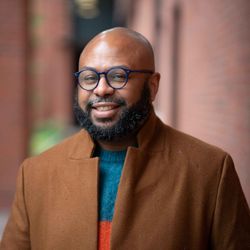
148. Decoding Language of Grief and Joy in Digital Life
56:09||Ep. 148Desmond Patton is the 31st PIK University Professor at the University of Pennsylvania, with joint appointments in the School of Social Policy & Practice and the Annenberg School for Communication, where he is the Waldo E Johnson Jr. Professor of Communication. He also holds secondary appointments in the Department of Psychiatry at Children’s Hospital of Philadelphia & Perelman School of Medicine. He is founding director of SAFElab, founding faculty director of the Penn Center for Inclusive Innovation & Technology, and Chief Strategy Officer for the School of Social Policy & Practice.Professor Patton’s groundbreaking research examines the relationship between social media and gun violence, grief, and loss, focusing on how online communities influence offline behavior. His work has made him the most cited and widely recognized scholar in this critical area of social science. Early research focused on detecting trauma and preventing violence on social media has evolved into broader investigations of language analysis and algorithmic bias in artificial intelligence. He currently serves as a member of Spotify’s Safety Advisory Council, the Ethics and Equity Advisory Council (EEAC) at Axon, TikTok’s U.S. Content Advisory Council, and is a trusted advisor to several AI startups.As a social work scientist, Patton identified that traditional data science methods often fail to capture the cultural and linguistic nuances of predominantly Black and Hispanic youth. In response, he developed the Contextual Analysis of Social Media (CASM) framework, which integrates culture, context, and inclusion into machine learning and computer vision analysis. He is also pioneering a new research agenda on joy, developing a practical and theoretical framework for integrating joy into AI model development as a tool for equity, imagination, and human connection.Dr. Patton is a member of the National Academy of Medicine, an Obama Foundation USA Leader, a Mozilla Rise 25 Change Agent, a Presidential Leadership Scholar, and one of RockHealth’s Top 50 in Digital Health.Links:https://sp2.upenn.edu/person/desmond-upton-patton/https://bsky.app/profile/did:plc:dxheqqkccc6z5kqgw34shta7https://www.linkedin.com/in/desmond-patton-49a7b59/