Share
Lifeworlds
28. Whale Dreaming & Ocean Songlines - with WHAIA
In this episode, we journey into the vibrational worlds of sound, ancestry, and deep listening with Whaia, a Ngāti Kahungunu woman of Māori descent and First Nations sonic weaver and multi-instrumentalist.
Raised between the salt of the Pacific and the red dust of the Australian desert, Whaia’s voice carries ancient songlines, blending traditional Māori instruments, crystalline singing bowls, and her original mother tongue, the language of Te Rā, the Sun. We explore her work singing with whales, reclaiming cultural instruments once left silent in museums, and remembering the sacred oceanic highways navigated by her Polynesian ancestors, guided by the stars and whale ancestors.
This is a conversation about song as medicine, the voice as ceremony, and reclaiming lineage through sound. We ask: what might the whales be singing to us now? What frequencies are we called to remember in order to heal ourselves and our waters?
Stay on after the episode wraps to hear a special feature from Whaia’s debut album WHAIA & WATER — the first of a twelve-part series known as her Sacred Sonic Sessions.
Episode Website Link
Show Links:
- Whaia website
- Whaia Water Album Download
- Wisdom Keepers Delegation
- Oceanic Global
- Australian Songlines
- The Pleiades
- Masaru Emoto: Messages in Water
Look out for meditations, poems, readings, and other snippets of inspiration in between episodes.
Music: Electric Ethnicity by Igor Dvorkin, Duncan Pittock & Ellie Kidd
Photo of Whaia: Chanel Baran Photo
More episodes
View all episodes
36. 36. Stingless Bees, Ancient Honey & the Amazon's Future – with Dr. Rosa Vasquez Espinosa
01:11:09||Season 4, Ep. 36What if one of the most powerful tools for saving the Amazon rain-forest was a bee most people have never heard of?Enter the stingless bee – a 65 million year old resident of Earth that produces honeys teeming with medicinal molecules and has co-evolved with indigenous Amazonian communities across millennia. Today, these bees are at the keystone species at the heart of a pioneering conservation movement spanning science, law, economics and Indigenous rights: one that recently secured the world's first legal recognition of the rights of an insect.Dr. Rosa Vásquez Espinoza is the National Geographic Explorer and conservation scientist whose NGO Amazon Research Internacional is spearheading these initiatives. In this episode we explore the life world of the bees themselves, the pioneering science and bio-economies emerging around their extraordinary honey, the deep co-evolutionary bond between stingless bees and Amazonian communities, and how bridging indigenous and Western knowledge is proving essential for the forest, for the communities who steward the bees and the legal frameworks being built to protect them.Episode Website Link: https://www.lifeworld.earth/episodes-blog/stinglessbeesamazonfutureLinks:Amazon Research International: Main SiteDr Rosa Vasquez EspinosaBook: The Spirit of the RainforestYoutube: STINGLESS BEES AND THE BIODIVERSITY OF OUR AMAZONIn Peru, a Mission to Save the Stingless BeeNat Geo: Stingless bees make ‘miracle liquid.’Guardian: Stingless bees from the Amazon granted legal rights in world firstLook out for meditations, poems, readings, and other snippets of inspiration in between episodes.Music: Electric Ethnicity by Igor Dvorkin, Duncan Pittock, Ellie Kidd & The Rising by Tryad CCPL.
35. 35. From Stardust To Sentience: Astrobiology & Life in the Cosmos – with Adam Frank
59:38||Season 4, Ep. 35What is life, and are we alone in the universe?In this episode I sit down with Adam Frank, Professor of Astrophysics at the University of Rochester, prolific science communicator, and author of five books including The Blind Spot and The Little Book of Aliens. Adam is one of the most compelling voices working at the intersection of astrobiology, philosophy, and the human future.We journey from the stunning variety of exoplanets we're only beginning to map, to the deep questions on detecting life in space. Adam argues that the search for extraterrestrial life can't be separated from the question of what life means here on Earth. Astrobiology, it turns out, may be our most useful mirror for understanding our own civilisational moment.We also get into the hard problem of consciousness, the blind spot at the heart of modern science, and how cosmology like art and myth - can be a gateway to awe. A conversation that leaves you more at home in the strangeness of the universe and probably less certain about what “alive” even means.Episode Website LinkLinks:Adam’s WebsiteAdam’s Podcast: The Blind SpotAdam’s InstagramNoema Magazine: Why Science Hasn’t Solved Consciousness (Yet)The Atlantic: The Truth Physics Can No Longer Ignore5 Sci FI Aliens articleBeyond Center at ASU on astrobiology and SETISarah Walker’s Assembly Theory in the NYT: A Test for Life Versus Non-LifeNature paper on Assembly TheorySchrodinger: What is Life?Information TheoryBook: Human Cosmos by Jo Marchant"Semantic information, autonomous agency and non-equilibrium statistical physics" by Artemy Kolchinsky and David WolpertLook out for meditations, poems, readings, and other snippets of inspiration in between episodes.Music: Electric Ethnicity by Igor Dvorkin, Duncan Pittock & Ellie KiddPhoto Credit: Hubble Space Telescope
34. 34. Black Mountains College: Rethinking Education for Our Times - with Ben Rawlence
58:12||Season 3, Ep. 34Today’s episode explores a simple but urgent question: is our education system still fit for the world we’re entering? Climate disruption, AI, and uncertainty demand new forms of education fit for complexity and change.A rich lineage of alternative and experimental education has been evolving for decades, seeking to make learning more holistic, place-based, creative, and ecologically grounded. The focus of today’s conversation is one of those institutions: Black Mountains College in Wales. BMC is building a university model explicitly designed for a warming world, where nature is often the classroom and curriculum blends ecology and climate science with the arts, systems thinking, and community-rooted practice.I’m joined by its co-founder and CEO, Ben Rawlence, award-winning writer and former human rights researcher, to explore:The historicity of Western educational systemsWhat the role of a university should be in societyBlack Mountains College as model of the future of education The role of ecological imaginationYouth, eco anxiety and the challenges of parenting in today’s planetary momentEpisode Website Links:Black Mountains CollegeThink Like a Forest by Ben RawlenceGuardian: ‘We create changemakers’: the new UK college dedicated to climate crisisBMC and ecological imagination by Joseph Rowntree FoundationList of alternative schools and earth centered curriculum centersThe Solutions are Already Here: Strategies of Ecological Revolution from BelowBritt Wray on Climate GriefFuture CouncilRe-imagining education conference Look out for meditations, poems, readings, and other snippets of inspiration in between episodes. Music: Electric Ethnicity by Igor Dvorkin, Duncan Pittock & Ellie Kidd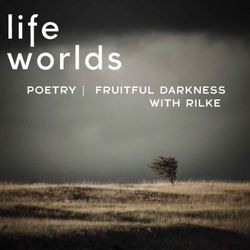
Poetry | Fruitful Darkness with Rilke
17:42||Season 3, Ep. 0This Lifeworlds episode is a devotional journey into the work of Rainer Maria Rilke, the lyrical German poet of thresholds and embracing transformations.Through readings of his most luminous poems and writings, we explore how Rilke guides us deliciously in reconciling suffering and turmoil with tremendous beauty. It’s an offering for anyone standing in the in-between, for those moving through sublimation, and longing for those secret, dazzling encounters with primal life forces. Rilke’s words are an invitation in. To move towards. His poems are prayers…. “to go out into our hearts as onto a vast plain, so that life can feel us as it reaches for us.”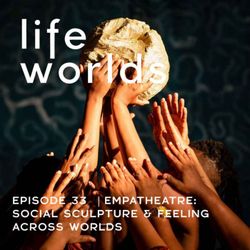
33. 33. Empatheatre: Social Sculpture & Feeling Across Worlds - with Dylan McGarry
01:17:20||Season 3, Ep. 33In this episode, we explore the role of theatre and empathy in transforming worldviews. Dr. Dylan McGarry is one of the founders of Empatheatre, a South African theatre-making company and methodology that turns research and storytelling into living social sculpture. Their plays create what they call amphitheatres for empathy - spaces where art, ritual, and dialogue help people listen across difference, from mining conflicts to ocean governance to human-wildlife coexistence.Empatheatre’s productions have brought together communities, policymakers, and activists that rarely meet, showing how imagination can transform civic life. The process of creating the plays generates profound potentials for restorative justice. As Dylan says, empathy is not about agreement, but about creating a vessel strong enough to hold our differences while keeping us in relation.We will cover:Empathy as a creative actTheatre and storytelling as Trojan horses that open conversations that traditional politics often can’tHow to design spaces that allow lifeworlds to touch and the practices that help us shift into another’s perspectiveHow empathy, when practiced collectively, becomes a form of governance: a new infrastructure for democracy and careEpisode websiteLinks:Share your input for the whale productionEmpatheatreDylan’s PHD5min Empatheatre docIndlela Yokuphila: The Soul's Journey (ZULU) film & the radio play used in the court caseLalela Ulwandle TrailerUmkhosi Wenala doc about Zulu musical on indigenous traditions & animist relationshipsSteiner’s 12 sensesMOTHProject CETIKaren BakkerUndrowned: Black Feminist Lessons from Marine MammalsOne Ocean Hubdylanmcgarry.orgInstagram: @dylan_mcgarryPhoto Credit: Casey Pratt. It captures a significant moment in a collaborative theatre-making & storytelling project titled "Umkhosi Wenala"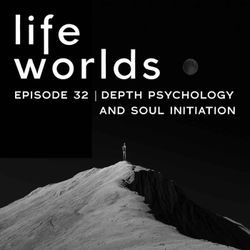
32. 32. Depth Psychology and Soul Initiation – with Bill Plotkin from Animas Valley Institute
01:14:45||Season 3, Ep. 32In this episode, I sit down with Bill Plotkin, founder of Animas Valley Institute. Over the past 40 years, Bill has developed intricate, nature-based models of human development and education that challenge dominant psychological frameworks and invite us into a maturation process rooted in wholeness, wildness, and the more-than-human world.We explore their three major maps of a person’s “soul-centric journey” and cover topics including:Why most modern humans remain developmentally stuck in early adolescenceThe 8-stage Soulcentric Developmental Wheel and how it mirrors nature’s rhythmsThe four cardinal facets of the psyche, and the inner protectors that distort themWhether other species undergo their own versions of soul initiationWhy the path to a mature culture will not come from the strategic mind, but from descent, mystery, and imaginationThis is a deep-dive into a body of work that’s revolutionizing the lives of thousands of people, and how to think about adulthood, education, and healthy human cultures.Episode Website LinkLinks:Animas Valley InstituteAnimas Valley OfferingsSoulcraft: Crossing into the Mysteries of Nature and PsycheNature and the Human Soul: Cultivating Wholeness and Community in a Fragmented WorldWild Mind: A Field Guide to the Human PsycheThe Journey of Soul Initiation: A Field Guide for Visionaries, Evolutionaries, and RevolutionariesParable of the TribesLook out for meditations, poems, readings, and other snippets of inspiration in between episodes.Music: Electric Ethnicity by Igor Dvorkin, Duncan Pittock & Ellie KiddPhoto Credit: Midjourney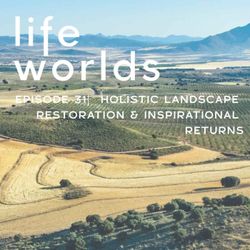
31. 31. Holistic Landscape Restoration and Inspirational Returns – with Willem Ferwerda from Commonland
01:08:40||Season 3, Ep. 31Almost 40% of Earth’s land is degraded, meaning that the natural cycles that sustain biodiversity, water, food, and livelihoods are breaking down. This degradation is an ecological crisis, and, it also lies at the root of massive social breakdown, displacement, and conflict. And it’s accelerating.In this episode, I speak with Dutch ecologist and entrepreneur Willem Ferwerda, founder of Commonland, one of the leading global initiatives tackling land degradation via large-scale holistic landscape restoration. Their work spans over 20 countries, with projects restoring millions of hectares from South Africa to Spain, Australia to the Netherlands. We get into their unique 4 Returns Framework - a powerful, intuitive model that integrates ecological, social, financial, and inspirational/spiritual returns.We talk about:Communities building long-term visions together across sectorsThe importance of meeting different audiences where they areThe role of storytelling, spirituality, and local leadershipHow restoring land helps restore meaning and purposeAnd how, ultimately, all this work is about regenerating lifeEpisode Website LinkShow links:The 4 Returns Framework in Practice4 Returns Framework Publication4 Returns Framework for Landscape Restoration4 Returns Diagnostic ToolThe Meaning of Laudato Si for a Landscape EthicTowards financing large-scale holistic landscape restoration in EuropeThe Trillion-Dollar Promise Of A Landscape Restoration Industry, ForbesWe must tackle global risks in an integrated way – here’s howHow the Ecosystem Approach supports “Cooperation in a Fragmented World"Albania landscape projectLook out for meditations, poems and readings in between episodes.Music: Electric Ethnicity by Igor Dvorkin, Duncan Pittock & Ellie KiddPhoto Credit: Commonland
From Orbit to Intimacy | Beyond the Overview Effect
16:24||Season 0, Ep. 0What if the next shift in planetary consciousness didn’t come from looking back at Earth from space, but from listening deeply to the voices already here? In this thought piece I propose the “inworlding effect” as the overview effect of our time: one where developments in science, technology, law, and many other disciplines are revealing our entangled presence within a multispecies world.Medium Article LinkEpisode Website Link
30. 30. Grief, Song and Ceremonies of Mourning - with Alexandra “ahlay” Blakey
01:05:29||Season 3, Ep. 30Today we’re joined by artist, musician and communal grief ritual facilitator Alexandra “ahlay” Blakey to speak about the cultural forgetting of communal mourning, the sacred role of professional mourners, and the re-emergence of grief ceremonies as necessary spaces of remembrance, healing and repair.Ahlay brings her experience weaving song, body, and ritual into collective spaces where grief is given breath and movement, and we explore the history of grief practices across cultures, the political power of public mourning, and how grief can soften the heart and stitch community back together. We explore what to expect in a communal grief ceremony, and ahlay shares the story behind her 200-voice album WAILS: Songs for Grief, inspired by whales, ancestral sorrow, and Francis Weller’s work. Within the episode are woven tracks of her haunting songs, so tune up your headphones, and sink in.Episode Website LinkShow Links:Healing at the Roots: ahlay’s websiteSong: Carry this AllThe Sacred Role of Eastern European Professional MournersSobonfu SomeWAILS: Songs For GriefOne Body Song Circle LiveFrancis WellerBook: Dangerous VoicesBook: Caliban and the WitchMartin PrechtelMyth of Lindworm: Martin ShawBandcampYoutube ChannelSpotifySoundcloudInstagramLook out for meditations, poems, readings, and other snippets of inspiration in between episodes.Music: Electric Ethnicity by Igor Dvorkin, Duncan Pittock & Ellie KiddPhoto Credit: Cover image (Earth Altering)