Share
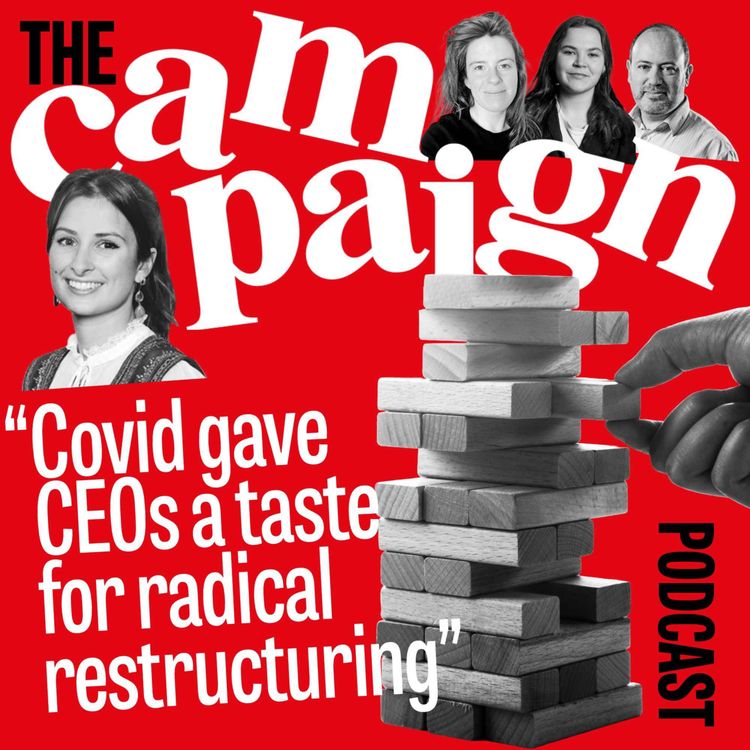
The Campaign Podcast
What’s wrong with being a holding company?
Adland’s agency networks have been forced to think differently, after a challenging year for holding companies with economic instability, a mega-merger and AI disruption.
Publicis began calling itself a “platform organisation” years ago, while Omnicom restructured to become a “premier marketing and sales company” after the acquisition of IPG last year. In February, WPP’s chief executive Cindy Rose said: “We don’t want to be a holding company any more”, but a “single operating company” instead.
Campaign Red released a market report called "The big reboot", looking into the top network's 2025 FY results and what the post-holding company era looks like for the industry.
In this episode, Campaign's editorial team is discussing why the largest agency groups are moving away from the holding company label, and what this "reboot" means. Editor-in-chief Gideon Spanier, media editor Beau Jackson and deputy media editor Shauna Lewis join the episode hosted by tech and multimedia editor Lucy Shelley.
Further reading:
Publicis grows 4.5% in Q1 as Arthur Sadoun pans “squeeze to please Wall Street”
Q1 expected to be “worst quarter” for WPP’s new business in 2026
WPP reports 6.7% revenue decline in Q1 2026
Omnicom revenue grew 3.9% in Q1 after IPG acquisition
AA/Warc: adspend forecast for 2026 drops amid methodology shake-up
“The fragmentation of media is clear”: adland reacts to AA/Warc Expenditure Report
AA/Warc: adspend to break records and smash £50bn ceiling in 2026
More episodes
View all episodes
Campaign Cannes Global Podcast, episode 2: first Lions wins and debating taste
21:56|The Campaign team has been busy in Cannes Lions and reports what's been happening so far at the festival, which runs from 22 to 26 June.Editors from Campaign's sites around the world discuss a 25% drop in award entries, the work that has been winning from their region and some of the key sessions in the Palais and at Campaign House.Gideon Spanier, UK editor-in-chief of Campaign, hosts the podcast, alongside Maisie McCabe, editor of Campaign UK, Jameson Fleming, editorial director of Campaign US, Vinita Bhatia, editor of Campaign India, and Chris Powell, co-editor of Campaign Canada.This is the second of three Cannes global podcast episodes. The third episode will look back on Cannes and be released in the week after the festival.Further reading:Cannes Lions 2026: rolling UK winners tableCannes Lions round-up: UK Grand Prix wins, shortlists & high mane-tenance horses
Campaign Cannes Global Podcast, episode 1: Lions preview and top festival tips
28:21|The Campaign team looks forward to Cannes Lions in this preview episode about the festival, which runs from 22 to 26 June. Editors from our sites around the world give their tips for the festival and discuss everything that’s going on at Campaign House, our dedicated venue at Cannes. Plus they talk about how the Lions award entry rules have changed this year, the work from their region that they would like to see win and the mood in the ad industry.Gideon Spanier, UK editor-in-chief of Campaign, hosts the podcast, alongside Maisie McCabe, editor of Campaign UK, Nikita Mishra, editor of Campaign Asia, Jameson Fleming, editorial director of Campaign US, Vinita Bhatia, editor of Campaign India, and Chris Powell, co-editor of Campaign Canada.This is the first of three Cannes global podcast episodes. The second episode will be recorded at Campaign House and published during the festival and the final episode will look back on Cannes and be released the following week.See the full agenda for Campaign House at: https://www.campaignatcannes.com/
Lord Heseltine: "You’re just playing in toy town”
15:38|Lord Heseltine tells the story of the birth of the European Space Agency. Why post-Apollo, when the US was spending £1.2 billion a year on space, the whole of Europe was spending just £200 million. Why the birth of ESA was driven by the self-interest of three major countries. Why the US general with a $29 billion budget for the Star Wars project wanted to invest in Heriot-Watt University in Edinburgh. Why, the idea that Britain could compete alone with the technologies that were accumulated and available to the American capitalist system was “simply laughable”. Why “being European is not selling out British interests”. And why Margaret Thatcher told him: “If you want to get on and put your budget into this, you can, but you're not getting any of mine." Join Alice and Lord Heseltine as they pick apart the negotiating contrivances and the wheeling and dealing to circumnavigate “turkeys not voting for Christmas” that ultimately put European space on the map.Contributors:Alice Bunn, President of UKspace Dr Alice Bunn OBE FIMechE FRAeS CEng | LinkedInUKspace: Overview | LinkedIn Lord Heseltine, Member of the House of LordsKey topics covered:Creation of the European Space Agency (ESA)US "Star Wars" program and brain drainGeopolitical case for European R&D collaborationImpact of Brexit on science and technology
94. What are Cannes Lions jurors expecting from this year's awards?
32:01||Season 4, Ep. 94Ahead of Cannes Lions Festival of Creativity taking place next week, Campaign catches up with three jurors to give us an insight into the judging process and what they expect from the festival and its winners this year. Helen Rhodes, chief creative officer at Grey London; Amanda Morrissey, global brand president at iProspect and James Brook-Partridge, head of production at WPP Production UK join the episode. They discuss the new transparency guidelines and how it's impacted the judging process, the added AI subcategory in the craft awards and which work they think will win. Morrissey who is judging the media lions said that the entrants are leaning more towards entertainment this year, while Brook-Partridge and Rhodes argued that craft becomes even more valuable with the insurgence of AI.Campaign will be at Cannes with a full week of sessions at Campaign House, including interviews with WPP chief executive Cindy Rose, Publicis Groupe chief executive, Arthur Sadoun, will.i.am, and a chat with Ian Russell, chair of the Molly Rose foundation on the safety and accountability of digital platforms.Further reading:Cannes Contenders: InstacartCannes Contenders: Waitrose & PartnersCannes Contenders: AnthropicCannes Contenders: BournvilleCannes Contenders: McDonald’sComing up in the Campaign calendar: The Campaign Ad Net Zero Awards second entry deadline has been extended to Thursday 28 May.
93. How will Cannes be different this year amid greater awards scrutiny?
29:31||Season 4, Ep. 93In 2025, Cannes Lions was dampened by controversy after three awards were withdrawn over fabrication of case studies and concerns around their legitimacy.DM9’s “Efficient way to pay” was retracted after the DDB agency was caught using AI to fabricate news coverage and misleading the jury. Two others Lions were also removed from the agency. In response, Cannes Lions updated the entry process and introduced a set of "integrity standards" to ban agencies for up to three years that submit "wilfully false" campaigns.Campaign's UK editor Maisie McCabe recently spoke to Cannes Lions on the new awards process and "necessary" reset to the standards. In this episode, Campaign's editorial team discuss how the awards will be different this year, both for those that have entered and the juries that are judging them, and what the industry makes of the changes. Plus, the team reveal how the Cannes Lions is making efforts to reduce bias in the judging rooms. Hosted by tech and multimedia editor Lucy Shelley, this episode includes McCabe, creativity and culture editor Gurjit Degun and reporter Eszter Gurbicz. It was edited by Haymarket's producer Inga Marsden.Further reading:Cannes Lions retires Creative Company of the Year AwardDecade-old Sainsbury’s ad used in Gut’s 2024 Media Grand Prix-winning case studyCannes Lions entries rise 'reflecting strong global participation'Icaro Doria steps down as co-president and CCO of DM9 following Cannes controversyAdland’s ‘New Year's’ resolution should be to revive its integrity at Cannes LionsMaybe Cannes Lions isn't capable of picking all of the best work
92. Should an agency be judged by its diversity?
31:40||Season 4, Ep. 92In 2025, there was a major rollback of DEI initiatives, and in 2026 the gender pay gap widened in advertising, while it shrinks in other sectors. However, the IPA Census reported the proportion of women in C-suite surpassing 40% in adland for the first time, and ethnic minority representation at senior levels improved following two successive years of decline.Campaign’s School Reports highlight and critique an agency’s efforts to improve its diversity, which has received some criticism for focusing too much on race and gender and overlooking class.In this episode, Campaign's journalists are asking whether, in a time of declining DEI initiatives, an agency should be judged by its diversity, how much do clients care, and is agency diversity becoming less of a priority.Hosted by tech and multimedia editor Lucy Shelley, this episode includes premium content editor Nicola Merrifield, deputy media editor Shauna Lewis and UK editor Maisie McCabe.Further reading:Why has adland's gender pay gap got worse?School Reports 2026: The end of “performative window dressing” for diversity
91. Media 360: What's the biggest change impacting media this year?
17:06||Season 4, Ep. 91Campaign's Media 360 opened its doors last week to a room of senior marketers, media owners and agency leaders. Food critic and Masterchef presenter Grace Dent opened the two-day conference in Brighton with speakers including co-host of The Rest Is Politics, Alastair Campbell, The Guardian's global chief advertising officer Imogen Fox and Michelle Spillane, managing director, Paddy Power Online at Flutter UK.This episode features the event's co-chairs: Sannah Rogers, chief executive of Zenith UK, and James Bailey, chief executive of Dentsu Media UK and Ireland. They chat to Campaign's tech and multimedia editor Lucy Shelley about their reflections on the media industry following the conference and discuss the biggest changes affecting the media industry and the people in it.Before the interview, media editor Beau Jackson and deputy media editor Shauna Lewis chat with Shelley on their reflections after day one, on themes of trust, community and Big Tech.Further reading:PepsiCo on how a media shake-up boosted OOHBauer’s Thomas Garry wins Media360 Challenge 2026How Just Eat and British Heart Foundation manage brand risk in influencer marketingGuardian ads chief: Brands need to embrace cultural turbulence'If you ask us to make an AI ad, we will inherently fail': Particle6 on AI in production
90. Is adland in danger of undervaluing mentoring?
30:51||Season 4, Ep. 90The advertising and media industry is going through a period of massive change, as a result of AI, economic and global pressures, organisational restructures and redundancies. In the latest market report from Campaign Red called “The Great Reboot”, we reported that the top holding companies cut 12,000 people from their businesses.As the industry is contracting, how are the people within it, its leaders and those seeking employment obtaining mentorship to push themselves and the industry forward?So far this year, we have seen the launch of mentorships schemes from The Marketing Skills Trust, Ogilvy UK and Rapp UK, an expansion of Lollipop mentoring’s existing programme and launch of Zoo.London’s career community.In this episode, Campaign's editorial team discusses why mentoring is so important in periods of rapid change, if adland puts enough value on the power of mentoring, and what happens if it’s neglected altogether. Fiona Cameron joins the episode as vice president of women’s professional support programme Bloom, and former learning and development partner at Group M, now called WPP Media. From Campaign, the episode features deputy editor Gemma Charles, deputy creativity and culture editor Charlotte Rawlings, and hosted by tech and multimedia editor Lucy Shelley.Further reading:Campaign Inspiring Women Awards winners 2026: Mentor of the YearWhat does it take to be an ad agency chief executive?