Share
Autistic Culture Presents...
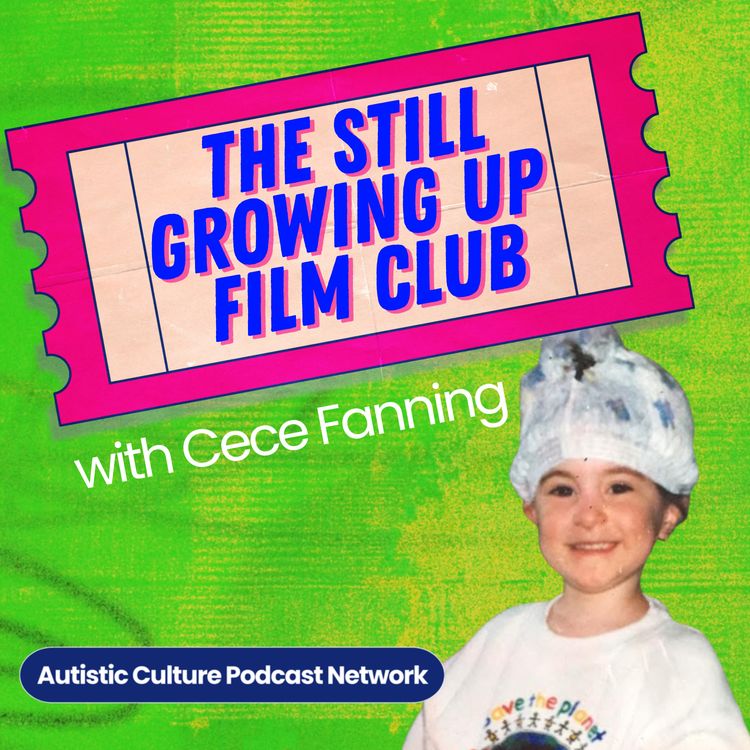
The Still Growing Up Film Club: How to Be You and Find Your People with Matilda
What happens when the people around you don't understand you — and how do you find the people who do?
In the Season One finale of The Still Growing Up Film Club, Cece Fanning revisits the beloved 1996 film Matilda to explore belonging, justice, community and the families we find for ourselves.
Growing up in a family that neither understands nor appreciates her, Matilda learns to rely on herself from an extraordinarily young age. But through books, school, friendship and eventually Miss Honey, she begins to discover something different: there are people in the world who will value you precisely for the things that make you different.
Cece reflects on why Matilda's story can resonate so strongly through a neurodivergent lens, from feeling like everyone else was given an instruction manual for socialising to finding comfort in books, developing fierce self-reliance and possessing an intense sense of fairness. She explores the difference between being nice and being kind, why the traits we're taught to see as weaknesses can sometimes become strengths, and why having power matters far less than what we choose to do with it.
Along the way, there are libraries, chocolate cakes, terrible parents, terrifying headteachers, telekinetic powers and seven more rules for growing up.
Because sometimes family isn't simply the people we're born to. It's the people who see us, choose us, support us and allow us to be entirely ourselves.
Follow Cece:
📸 Instagram: https://www.instagram.com/thenotoriouscece
📱 TikTok: https://www.tiktok.com/@thenotoriouscece
✍️ Blog: https://cecewhatimean.com/
🛍️ Store: https://stillgrowinguppodcast.dashery.com/
Produced for the Autistic Culture Podcast Network.
🎧 The Still Growing Up Film Club is available on Spotify, Apple Podcasts, and all major platforms.
🌈 Celebrate autistic voices with early access, ad-free listening, and our full archive at AutisticCulturePlus.com
🌐 Visit www.autisticculturepodcastnetwork.com
📲 Follow us on Instagram: @autisticculturepodcast
🎙️ Executive Producers: Amy Burns, Anamaria B Call, Andrew Banner, Anna Goodson, Ashley Apelzin, Audrea Volker, Ben Coulson, Brian Churcek, Cappy Hamper, Carley Biblin, Charlene Deva, Chloe Cross, Clay Duhigg, Clayton Oliver, Danny Dunn, Daria Brown, David Garrido, Emily Burgess, Eric Crane, Erik Stenerud, Fiona Baker, Grace Norman, Helen Shaddock, Jaimie Collins, Jason Killian, Jen Unruh, Jennifer Carpenter, Julia Tretter, Kathie Watson-Gray, Kenneth Knowles, Kira Cotter, Kristine Lang, Kyle Raney, Llew P Williams, Laura Alvarado, Laura De Vito, Laura Provonsha, Lily George, Nelly Darmi, Nigel Rogers, Rachel Miller, Tim Scott, Tyler Kunz, Victoria Steed, Yanina Wood.
🎧 Producers: AJ Knight, Bobby Simon, Da Kovac, Eleanor Collins, Emily Griffiths, Hannah Hughes, Jennifer Kemp, Jonas Fløde, Kate F, Katie N Benitez, Kendra Murphy, Lisa Dennys, Logan Wall, Louise Lomas, Melissa Nance, Nicola Owen, Rebecka Johansson, Sam Morris, Sarah Hannah Morris.
More episodes
View all episodes
27. Mindful Mondays With Ashley Dupuy: The Light of Your Life – The Biology and Meaning of Light
37:29||Season 7, Ep. 27In this episode of Mindful Mondays, Ashley explores something we live within every day, yet rarely stop to consider: light.Light shapes far more than our ability to see. It influences our sleep, mood, hormones, nervous system regulation, and overall wellbeing. For neurodivergent people especially, light can sometimes feel overwhelming or dysregulating - but when we understand how it works, it can also become a powerful ally for health and balance.In this episode we explore:* How light affects the nervous system and circadian rhythms* Why neurodivergent brains often experience light differently* The difference between nourishing light and overstimulating light* Simple ways to work with light to support sleep, mood and sensory balance* A guided meditation to reconnect with the light within youLight isn’t just something that happens to us - it’s something we can learn to notice, shape, and work with in ways that support our bodies and our lives.If you’d like to learn more about Ashley’s work or enquire about her upcoming programmes, you can get in touch at:integrativeiom@gmail.comMore details about Ashley’s work will also be appearing soon on her website. www.integrativeiom.co.ukIf you enjoyed this episode, please consider following the podcast and sharing it with someone who might benefit from a moment of calm.And remember…We’re all just walking each other home.Our Sponsors:🧘♀️ Ashley Dupuy – Integrative Coaching, Breathwork & Hypnotherapy & https://insighttimer.com/AshleyDupuy🤝 Sophie James - Neurodivergent Mentoring: sophiejamesndmentoring.com🎧 The Neurodivergent Experience is available on Spotify, Apple Podcasts, and all major platforms.🌈 Celebrate autistic voices with early access, ad-free listening, and our full archive at AutisticCulturePlus.com🌐 Visit www.autisticculturepodcast.com
16. This Week in Autistic Culture #16 | Rocky Horror, Autistic Relationships and Finding Your People
01:28:49||Ep. 16This week, Angela and Simon dive into new research about Autistic traits and romantic relationships — and find themselves questioning some of the assumptions behind it. From attachment styles and relationship maintenance to masking, regulation and the need for connection, they explore what happens when Autistic experiences are measured against expectations that may not have been designed with Autistic people in mind.It’s time to open the vaults for our brand-new segment: The Autistic Culture Archive!Each week, Angela and Simon will become cultural archaeologists, excavating a film, book, musician, fandom, hobby or cultural figure and using the Ten Pillars of Autistic Culture to uncover the Autistic fingerprints hiding in plain sight.First into the archive is The Rocky Horror Picture ShowAnd if our first excavation leaves you wanting to dig deeper, every entry in the Autistic Culture Archive will have its own Field Report, bringing together the research, evidence, rabbit holes and connections we couldn’t squeeze into the show — and inviting you to add your own field notes to an archive that is never truly finishedAs always, we’ll take you through everything coming up across the Autistic Culture Podcast Network this week!Strange Journey: The Story of Rocky Horror:Prime Video UK listingApple TV UK listingJustWatch UKPrime Video US listing🌐 Subscribe to our newsletter and read our Autistic Culture Archive Field Reports: www.autisticculturepodcast.com🎧 Listen: This Week in Autistic Culture is available on Spotify, Apple Podcasts and all major podcast platforms.🌈 Become a Culture Builder: Get early access, ad-free listening and our full podcast archive at AutisticCulturePlus📲 Follow us on Instagram: @autisticculturepodcast
Trailer: Welcome to AI and Autism
00:45||Season 26What happens when artificial intelligence meets neurodivergent life?In AI and Autism, host Bree Ransom explores how AI interacts with — and could potentially accommodate — neurological and developmental differences.Through conversations with people from across the spectrum, the series explores the ways neurodivergent people are using AI to communicate, create, process information, navigate everyday life and better understand themselves.Whether you're an AI super-user, a sceptic or simply curious about what these technologies could mean for neurodivergent people, you don't have to love AI to join the conversation.Subscribe to ai.tism — Bre's Substack exploring AI, neurodivergence and the ways she uses AI as an accessibility tool.Get in touch with Bre — Share your experiences with AI, tell Bre what you're experimenting with, or express your interest in joining AI and Autism as a guest.Produced for the Autistic Culture Podcast Network.🎧 AI and Autism is available on Spotify, Apple Podcasts, and all major platforms.🌈 Celebrate autistic voices with early access, ad-free listening, and our full archive at AutisticCulturePlus.com🌐 Visit www.autisticculturepodcastnetwork.com📲 Follow us on Instagram: @autisticculturepodcast
Autistic Culture Podcast Rewind - McEnroe is Autistic
01:09:11|In this episode of The Autistic Culture Podcast, hosts Matt Lowry, LPP and Dr. Angela Kingdon take a fresh look at tennis legend John McEnroe, reframing his legacy through a neurodiversity-affirming lens.🎧 What You’ll Learn:How McEnroe’s pattern recognition and visualization skills helped him anticipate the ball’s movements and turn tennis into a “math equation.”Why his emotional on-court reactions—often labelled as “brat-like”—were actually natural expressions of expectation sensitivity and scripting.Insight from McEnroe’s wife, Patty, who has said she believes he is autistic based on his routines, sensory needs, math skills, and strong SPINs (special interests) in art and guitar.Why his meltdowns should be seen not as flaws, but as valid autistic responses to an unfair and conformity-driven system.How McEnroe has embraced his autistic traits in later life, channelling them into charitable work, art, and voiceover projects.A call to celebrate McEnroe’s story as a reminder of the cultural pride and community connection autistic individuals can find in their shared strengths.Resources:McEnroe’s memoir: But SeriouslyeBook: You Cannot Be Serious : McEnroe, John, Kaplan, JamesAutistic people have big emotions—YouTube video: The Meltdown of all MeltdownsArticle: John McEnroe: Star not he possibility of being Autistic, ‘I’m somewhere around there’ NPR episode: John McEnroe grapples with his legacy as tennis' bad boyMcEnroe’s voice work websiteArticle: A Point in Time: McEnroe and the puff of chalkRelated Episodes:Chess is Autistic Animation is Autistic🌟 Connect With Us📱 Follow us on Instagram🎧 Find us on Apple Podcasts and Spotify🛍️Our Autism-affirming merch shop🌐 Learn more at www.autisticculturepodcast.com
1. The Dialogues: Autistic Advocacy, History and the Neurodiversity Movement
01:18:37||Season 25, Ep. 1In the first episode of The Dialogues, Kassiane Asasumasu, Morénike Giwa-Onaiwu, Renae Martin, and Oswin Latimer explore the history, politics, and lived realities of Autistic advocacy.Drawing on decades of experience within the Autistic and disability communities, the group discusses the growing use of terms such as “profound autism”, the complicated relationship between diagnosis and support needs, and what happens when disabled people are denied the resources and autonomy they need to live in their communities.They also reflect on the history of Autistic-led organising, the early online communities that helped shape the neurodiversity movement, and the personal cost that advocacy has sometimes carried for the people doing the work.Along the way, the conversation explores institutionalisation, disability rights, Medicaid and community-based support, the loss of Autistic community history, and why many of the battles being fought today feel remarkably familiar to those who have been fighting them for decades.The Dialogues is produced in collaboration with Foundations for Divergent Minds for the Autistic Culture Podcast Network.🎧The Dialogues is available on Spotify, Apple Podcasts, and all major platforms.🌈 Celebrate autistic voices with early access, ad-free listening, and our full archive at AutisticCulturePlus.com🌐 Visit www.autisticculturepodcastnetwork.com📲 Follow us on Instagram: @autisticculturepodcast
The Neurodivergent Experience: I Refuse to Raise My Autistic Little Brother | Reddit Stories
53:54|In this week's Reddit Stories episode, Jordan and Simon discuss three neurodivergent dilemmas involving boundaries, brutal honesty, family expectations and when neurodivergence explains behaviour — but doesn't necessarily excuse it.First, someone kicks their friend's autistic friend out of their home after they repeatedly ignore boundaries, burp in their face and start handling their expensive hearing aids without permission. Jordan and Simon discuss autism and social cues, respecting personal space, medical devices, direct communication and the difference between struggling to recognise an unspoken social rule and ignoring someone who has explicitly told you to stop.Next, a new mum clashes with her 19-year-old neurodivergent sister-in-law after being told that her six-month-old baby isn't actually that cute. When the sister-in-law becomes determined to make her admit it, Jordan and Simon discuss autistic bluntness, honesty versus unnecessary rudeness, learning social conventions, family members excusing behaviour because of neurodivergence and why sometimes you really don't need to say the thing you're thinking.Finally, a 20-year-old woman is told by her father that if he dies, she should take responsibility for raising her five-year-old autistic brother — despite his mother still being perfectly capable of caring for him. Jordan and Simon explore the pressure placed on siblings of disabled children, parental expectations, guilt, independence and whether being family means accepting a responsibility you never chose.The stories discussed in this episode are public Reddit posts. Titles may be shortened for readability, and all opinions expressed are those of the original posters.• AITAH for kicking out my friend's neurodivergent friend, for what I felt was ignoring boundaries and touching my most personal stuff?• AITA for telling my parents that if they died right now I would not take in my autistic little brother?• AITA for being harsh with my neurodivergent SIL?Our Sponsors:🧘♀️ Ashley Dupuy – Integrative Coaching, Breathwork & Hypnotherapy & https://insighttimer.com/AshleyDupuy🤝 Sophie James - Neurodivergent Mentoring: sophiejamesndmentoring.com🎧 The Neurodivergent Experience is available on Spotify, Apple Podcasts, and all major platforms.🌈 Celebrate autistic voices with early access, ad-free listening, and our full archive at AutisticCulturePlus.com🌐 Visit www.autisticculturepodcast.com
8. The Neurocomplex Creative: Your Seat Is Still Warm
48:54||Season 11, Ep. 8When your body says you have to pause, your seat is still warm. You don't have to start over from zero.In this episode of The Neurocomplex Creative, Vicki Peterson sits down with her executive producer Angela Kingdon, co-founder of the Autistic Culture Podcast Network, for a behind-the-scenes conversation about creating when your brain and body no longer allow you to work the way you once did.Vicki and Angela explore skill regression, autistic burnout and the grief of changing capacity, alongside the importance of building creative practices around real human needs rather than conventional ideas of productivity. Angela shares how her own experience of burnout changed the way she thinks about supporting creatives, and why podcasting can offer neurodivergent creators greater autonomy over how, when and where they work.Together, they explore what it means to build a sustainable creative life — one where taking a break doesn't mean giving up your place, and where being met with understanding on your hardest day can make it possible to return when you're ready.📝 Go deeper on Substack:https://ahatonahatonahat.substack.com/☕ Support the show:https://buymeacoffee.com/vickipetersonProduced for the Autistic Culture Podcast Network.🎧 The Neurocomplex Creative is available on Spotify, Apple Podcasts, and all major platforms.🌈 Celebrate autistic voices with early access, ad-free listening, and our full archive at AutisticCulturePlus.com🌐 Visit www.autisticculturepodcastnetwork.com📲 Follow us on Instagram: @autisticculturepodcast
6. Clinical Misfits: Are We Getting Neurodivergent Accommodations Wrong?
19:26||Season 9, Ep. 6For many neurodivergent people with complex chronic illness, the barriers they experience at school or work aren't only neurological or psychological. So why are accommodations so often approached as though they are?In this episode of Clinical Misfits, Dr Mary explores the relationship between dysautonomia, neurodivergence and the need for school and workplace accommodations. She questions whether current assessment processes adequately recognise physical symptoms such as fatigue, brain fog, dizziness, pain, sensory sensitivities and difficulties regulating heart rate, blood pressure and body temperature.Dr Mary looks at how dysautonomia might be recognised and investigated in healthcare, and argues for greater involvement from medical professionals when determining the support someone needs. She also discusses practical routes towards better quality of life, from physical and occupational therapy to nutrition, movement and other forms of ongoing support.Produced for the Autistic Culture Podcast Network.🎧 Clinical Misfits is available on Spotify, Apple Podcasts, and all major platforms.🌈 Celebrate autistic voices with early access, ad-free listening, and our full archive at AutisticCulturePlus.com🌐 Visit www.autisticculturepodcastnetwork.com📲 Follow us on Instagram: @autisticculturepodcast