Latest episode
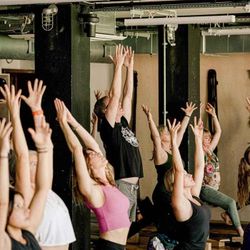
How to Combine Yoga, Cardio, and Resistance Training into One Balanced Week
39:54|How do you fit yoga, resistance training, and cardio into a real week — without burning out or dropping one of them entirely?That’s our topic this week — not in theory, but with specific days, durations, and honest personal experience of what actually works for me and Jason.The short version: yoga alone isn't enough. Cardio alone isn't enough. Resistance training alone isn't enough. But the three together — even in modest amounts — create a movement practice that is balanced, sustainable, and genuinely good for your body long term!To learn more about incorporating resistance training into your yoga practice, check out Jason's newest continuing education course, Strong Yoga here: jasonyoga.com/strength
More episodes
View all episodes
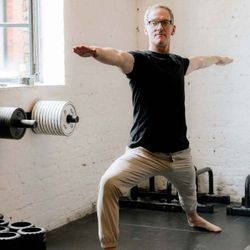
Is Yoga Enough? What It Trains Brilliantly and Where it Leaves Gaps
41:59|Is yoga enough? It's one of the most debated questions in the wellness world — and honestly, it's the wrong question. Yoga has specific strengths and specific limitations. The most useful thing we can do as practitioners and teachers is understand both — clearly and without defensiveness. That's what this episode does. We look at what yoga genuinely does brilliantly — and where it falls meaningfully short. Not to diminish yoga, but to add complement it with additional strength-training as a modality. Jason's newest online course, Strong Yoga is now open for enrollment! To learn more and register, click here: learn.jasonyoga.com/strongyoga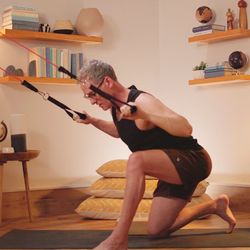
3 Resistance Band Exercises That Transform Your Backbends & Build Shoulder Strength
26:16|Most yoga backbend preparation focuses on opening the front body. That's valuable — but it's only half the equation. The posterior shoulders, rhomboids, and upper back muscles that should be driving backbends are almost never specifically strengthened in a yoga practice. The result: most practitioners push the floor away rather than pulling the chest forward — and no amount of additional stretching fixes a strength problem.This week’s podcast fixes that.Jason breaks down three targeted resistance band exercises for the posterior shoulders and upper back — and immediately applies each one to Locust, Cobra, Camel, and Bridge so you can feel the difference in real time.What You'll Learn:Why posterior shoulder and upper back weakness is the most overlooked limitation in yoga backbendsThree resistance band exercises — seated and standing row, elbow flare pull, and band pull-apart at three angles — that directly target the muscles yoga consistently under-developsHow to choose the right resistance level and how many sets and reps to use for both pre-practice activation and longer-term strength buildingHow to apply each exercise immediately to Locust, Cobra, Camel, and Bridge — and feel the difference in muscular recruitment in real timeWhy resistance provides proprioceptive feedback that bodyweight yoga cannot and how that feedback immediately improves your backbendsRegistration opens for Jason's newest course, Strong Yoga on Thursday! Get on the waitlist and we'll let you know when you can enroll: jasonyoga.com/strength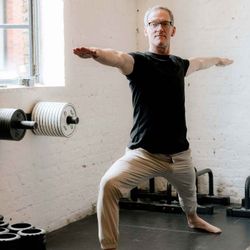
The Six-Phase Structure to Build a Strong Yoga Class
42:49|If you've been wondering how to incorporate resistance training into your yoga classes without losing what makes yoga yoga — this episode is for you.In this conversation breaks down his exact six-phase structure bringing resistance training into a yoga context. The central insight: resistance doesn't make yoga harder. Done intelligently, it makes yoga easier, more embodied, and more effective than ever before.We talk through:-Why Jason developed this approach — the personal and professional reasons behind this evolution-Why yoga props have always facilitated length and support-How resistance training and yoga are complementary modalities that address each other's gaps directly-Andrea's personal experience of how targeted strengthening resolved years of chronic SI joint pain -Why pranayama and meditation are non-negotiable in this structure-The interdisciplinary philosophy behind Jason's approach — why looking at embodiment through multiple lenses produces greater truth than any single ideology-Why Jason is not replacing his existing yoga teaching — this is an addition, not a substitution!NOTE! Jason's Strong Yoga: The Fundamentals of Resistance Training for Yoga Teachers will be open for enrollment soon! Click here to join the waitlist and we'll send you the details: jasonyoga.com/strength
Yoga(ish): Life Updates, Big Changes, and What This Summer Taught Us
47:22|The summer went quickly; we thought we'd reconvene and catch you up on our latest in life and yoga. As a reminder! Yoga-ish conversations are where we share life stuff, and although it may cross over into yoga territory, it is decidedly non-technical. This week, we cover a lot of ground and talk about:Books we loved this summerWhat we're watching (spoiler: We're divided over Widow's Bay)Surprising joy in our journey with memory careJason's professional evolution and the vulnerability that comes with itWhat's coming next — a new resistance training course for yogis called Strong Yoga. Join the waitlist to learn all about it: jasonyoga.com/strength
Yoga Philosophy Explained — The 6 Core Teachings That Unite Every Tradition
33:08|What is yoga — really?Most practitioners and teachers can answer that question with a pose, a breath, or a feeling. Far fewer can answer it with the philosophical depth the tradition actually deserves. This week's episode does just that.Drawing on academic scholarship, Sanskrit etymology, and nearly 30 years of teaching and study, Jason identifies the six core teachings that appear consistently across the diverse spectrum of yoga traditions — from Hatha to Jnana, from Karma to Bhakti, from Patanjali to modern practice. Not a single reductive definition, but a genuine philosophical framework that holds up across lineages, eras, and approaches.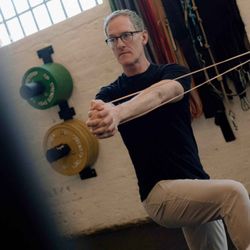
Your Twists Are Missing This
21:54|Most yoga twists are done to the spine — not with it. In nearly every conventional yoga twist, the arms and legs do the work: The hand presses against the knee. The elbow hooks outside the thigh. The leverage of the limbs produces the rotation, while the spinal muscles — the obliques, the multifidus, the deep rotators — remain largely passive. The spine is being twisted. It is not doing the twisting. I turn this on its head in this week’s solocast. In 15 minutes, you’ll transform the quality and depth of three yoga-informed spinal rotation exercises by adding resistance bands. This is not just about better twists. It's about building functional rotational strength that yoga's conventional twisting patterns cannot provide.