Share
Words That Burn - Poetry Podcast
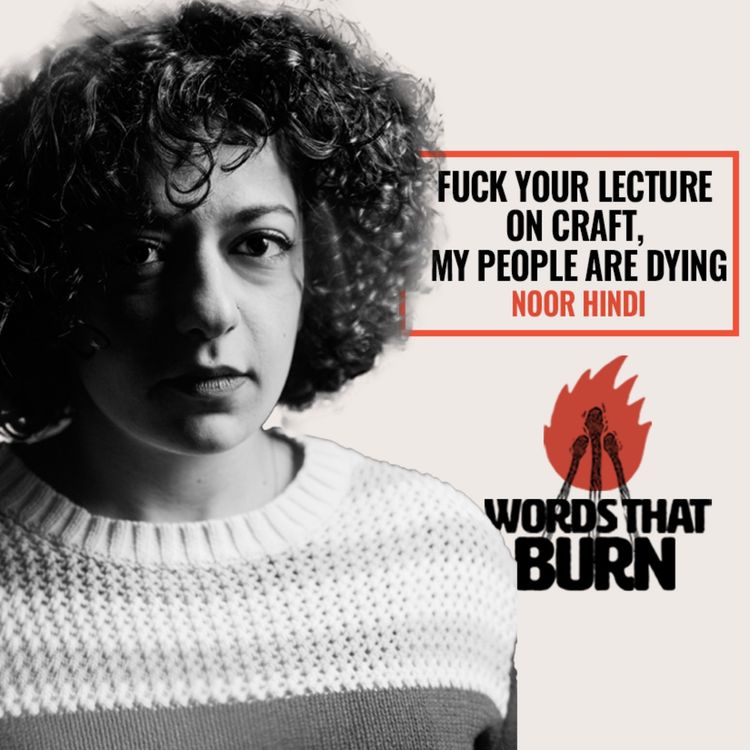
Fuck Your Lecture On Craft, My People Are Dying by Noor Hindi
Donation Link:
Ireland Palestine Solidarity Campaign: http://www.ipsc.ie/support/donate
In this week's episode of Words That Burn, I take a look at the powerful poem 'Fuck Your Lecture On Craft, My People Are Dying' by Palestinian American poet Noor Hindi.
The poem found a surge of interest during the lockdowns of 2020 and became phenomenally popular on social media, with thousands of shares and retweets. Given its unflinching disdain for injustice and searing language that refuses to allow passivity to take hold in its audience, it's not hard to see why.
This abrasive but essential poem sheds light on the ongoing plight of the Palestinian people, revealing the grim realities of occupation through poignant imagery. We explore Hindi's critique of colonial mindsets and her challenge to academic conventions, which increasingly seem like hollow, banal rhetoric.
As violence and suffering continue to devastate Gaza, Hindi's words resonate with urgency and a yearning for justice. The poem is her call for decolonised thinking and is an excellent showcase of her ability to connect the personal with the political in a deeply moving way.
I look at Hindi's unique voice as she cuts through layers of rhetoric to present a searingly honest portrait of Palestinian resistance.
Brigid Quirke's Excellent Breakdown of the Poem
Follow Noor Hindi:
The Music In This Week's Episode:
'Cicadas' by Scott Buckley - released under CC-BY 4.0. www.scottbuckley.com.au
Listen to more Palestinian poetry:
Listen to the Episode on Mahmoud Darwish
Listen to the Episode on Fadwa Tuqan
Listen to the Episode on Najwan Darwish
Follow the Podcast:
Follow the Podcast On Instagram
More episodes
View all episodes
An Interview with Poet Stephen de Búrca
40:38|Poet Stephen de Búrca joins me on Words That Burn to talk through his debut collection Atlantic Fret, published by The Gallery Press; a book where sea mist and anxiety share a single word, and where the Atlantic carries both personal grief and the weight of the climate crisis.Stephen explains how a few lines from Derek Mahon's The Sea in Winter gave him the title, and how a book he never intended to write about his father; a marine biologist who died when Stephen was a teenager, became unavoidable once he started writing about the sea.We talk about erosion as a double image: coastlines and memory both wearing away, and memory used not as autobiography but as a search for emotional truth.The conversation covers the pleasure of withholding, why the speaker in "Seaspray" never has to finish the gesture, and how much a line can bear before it breaks.Stephen walks us through Gerard Manley Hopkins' curtal sonnet, the shrunken eleven-line form Hopkins devised because he thought English couldn't carry a full fourteen, and why a form he theorised passionately about only produced three poems of his own.We also discuss "Scope and Dredge," built from radio programmes Stephen's father made for Connemara Community Radio about oyster fishing in Galway Bay, and the pressure of shaping a poem out of a parent's own recorded work. And we finish with the fourth section of the book, where Stephen translates the Icelandic modernist Jón úr Vör's Þorpið (The Village) word by word, without speaking Icelandic - a slow process that turned into the negative image of everything else in the collection.In this episode we cover:Writing elegy without setting out to write itMemory, erosion and the climate crisis in Irish eco-poetryAmbiguity, inference and the value of the unknownWriting at night, badgers and nocturnal animalsReading: "At the River Mouth"; and playing loose with terza rimaHopkins, Jenny Johnson and the curtal sonnetReading: "Reading About Rod Stewart's Atlantic Crossing"Inheritance, prayer and poems that speak to each other across a bookTranslating Jón úr Vör from Icelandic without the language Stephen de Búrca is a writer from Galway. He completed his PhD at the Seamus Heaney Centre, Queen’s University Belfast, and an MFA from the University of Florida. He received the Ireland Chair of Poetry Travel Award and the inaugural Poetry Ireland Gerald Dawe Poetry Bursary in 2026. Stephen’s work has featured in Poetry Ireland Review, PN Review, The Stinging Fly, Banshee, Propel Magazine, and elsewhere. His debut poetry collection, Atlantic Fret, was published by The Gallery Press and is out now.Purchase the CollectionFollow the Podcast:Read the Script on SubstackFollow the Podcast On InstagramFollow the Podcast on X/TwitterFollow the Podcast on TiktokFollow the podcast on BlueskyKeywords: Stephen de Búrca, Atlantic Fret, The Gallery Press, Irish poetry podcast, Galway poet, Derek Mahon, Gerard Manley Hopkins, curtal sonnet, Jón úr Vör, Icelandic poetry translation, eco-poetry, elegy, poetry interview, Words That Burn
An Interview with Poet Leeanne Quinn
38:25|Poet Leeanne Quinn joins Words That Burn to discuss her third collection, Landscape with Question, published by Carcanet Press.Written between Drogheda and Vienna, the collection holds two conversations at once: one with the Irish modernist painter Nano Reid, whose family bar on James' Street was later run by Quinn's parents, and one with Ingeborg Bachmann's novel Malina. Quinn explains why the "landscape with" poems move away from the representational towards questions of time and place, and why she took the three birth years Reid gave over her lifetime as the spine for the book's three sections.We talk about writing without a plan and finding the loops and repetitions only after the book is finished, about reading Reid's matter-of-fact titles against her abstraction, and about the eighteenth and nineteenth century visitor reports on Drogheda that Quinn cuts into her lines as springboards. We also discuss the speaker's resistance to being located, the surveillance running under the collection, and the elegy that surfaces in "Landscape with Crows", which adapts a line from H.D.'s Tribute to Freud.Leeanne reads two poems: "First Part of the Night" and the title poem, "Landscape with Question".Leeanne Quinn is from Drogheda, County Louth, and holds a doctorate in American literature from Trinity College Dublin. Her first collection, Before You, was highly commended in the Forward Prize. Her second, Some Lives, was a book of the year for both The Irish Times and The Irish Independent. She has edited two anthologies for Dedalus Press.Landscape with Question is out now from Carcanet Press. Links to Leeanne's work are below.If you enjoy the episode, please leave a review wherever you listen.Follow Leeanne QuinnBuy Landscape With QuestionPhoto credit for the thumbnail Bríd O'DonovanFollow the Podcast:Read the Script on SubstackFollow the Podcast On InstagramFollow the Podcast on X/TwitterFollow the Podcast on TiktokFollow the podcast on Bluesky
5. Famous Americans and Why They Were Wrong by Kaveh Akbar- Poetry Reading and Analysis
22:58||Season 6, Ep. 5Welcome back to Words That Burn, the poetry podcast taking a closer look at poetry. In this episode, host Benjamin Collopy offers a close reading of Kaveh Akbar's "Famous Americans and Why They Were Wrong", from his 2021 collection Pilgrim Bell.The poem runs to seven couplets and moves from a ribbon tied around an oak tree to a wish that somebody forgets you today. Benjamin situates Akbar as a poet formed by prayer and by place, tracing the poet's biography from a boy reciting Arabic he could not translate to a writer preoccupied with what empire does to language.In This Episode, I Explore:The Ribbon and the Hostage Crisis: Why the opening image reads so strangely to a non American audience, and how the yellow ribbon curdled from a welcome into a warning after 1979. We follow the poem discussion through the oak's roots sinking into the dirt and the heart that sinks alongside them, and ask what exactly is seeping into whom.Akbar's Ghazal: A look at the form, its couplets, its refrains, and the strict rules Akbar declines to follow. The ghazal is famous for what Agha Shahid Ali called its formal disunity, and that disunity turns out to be the literary technique doing the heaviest lifting here. We break down how enjambment carries meaning across couplets that seem unrelated on the page, one of several literary devices worth slowing down for.Data at the Centre of a Heart: The sinking library, the architect who forgot the weight of the books, and Akbar's argument that empire uses abstraction to cudgel us into idleness. We look at what the word "data" is doing in a poem that also treats untranslated prayer as a kind of data, and why only one of those is sacred.The Mercy of Being Forgotten: Why a poem about erasure ends by wishing for it. Visibility inside an empire is rarely a gift, and Akbar's closing hope is offered in the grammar of prayer, which is to say with no guarantee anyone is listening.Accessible enough for poetry for beginners and no prior reading required. As always, this poetry interpretation belongs to Benjamin and is very much up for debate. Full script with citations and references on Substack, linked below.Follow the Podcast:Read the Script on SubstackFollow the Podcast On InstagramFollow the Podcast on X/TwitterFollow the Podcast on TiktokFollow the podcast on BlueskyThe Music In This Week's Episode:'Hydra' by Huda - released under CC-BY 4.0.Time Stamps:00:00 Poetry Reading00:51 Poetry as Prayer01:43 Kaveh Akbar's Background03:39 The Iranian Hostage Crisis05:04 Iranian Identity in America06:43 Understanding the Title08:28 Ribbons and Patriotic Symbols09:50 The Ghazal Form13:00 Weaponisation of Language15:25 Data and Dehumanisation18:52 The Final Couplet20:58 Empire and Prayer21:39 Closing Thoughts
An Interview with Belfast Poet Matthew Rice
48:33|In this episode of Words That Burn, the poetry podcast dedicated to literary analysis and poetic interpretation, I sit down with Belfast poet Matthew Rice to discuss his new collection Plastic: a book-length poem mapped across a single night shift in an invented plastics factory. It's published by Fitzcarraldo Editions.Born from his PhD at the Seamus Heaney Centre, Queen's University Belfast, Plastic sits at a rare intersection in contemporary poetry: a deeply personal account of fifteen years working factory floors, fused with literary devices and techniques drawn from medieval romance, Gothic literature, and pop culture.We discuss the historical context behind the collection, tracing Rice's place within a tradition of working-class and "factory poets" like Philip Levine and Larry Levis, and explore how Sir Gawain and the Green Knight becomes a recurring avatar for the speaker's own quest through the night.This conversation doubles as a poetry education in itself, perfect whether you're new to contemporary poetry or already fluent in poetic analysis.We chat about:How timestamps and form mirror the malleability of plastic itselfThe Gothic undercurrents running through a hyper-modern, industrial settingLiterary allusion: from Wolverine comics to Kubrick's Gotham to Fassbender's Prometheus, and how pop culture deepens poetic meaningThe poet biography behind the book: Rice's journey from factory worker to MA and PhD in poetryA live reading of two poems from the collection, including the recurring Gawain sequenceWhether you're after rigorous poem discussion, a beginner-friendly entry point into poetry interpretation, or simply want to hear from one of the most original voices in Irish poetry and Global poets writing today, this episode of this poetry podcast offers a rich, accessible deep-dive into a genuinely singular collection.Follow Matthew Rice:On InstagramBuy His CollectionFollow the Podcast:Read the Interview on SubstackFollow the Podcast On InstagramFollow the Podcast on X/TwitterFollow the Podcast on TiktokFollow the podcast on BlueskyTime Stamps:00:00 Welcome and Guest Intro00:40 Inside the Book Plastic02:17 Factory Poetry Gap03:40 Molds and Poetic Form06:05 Long Poem in Sections07:38 Poetry as Escape11:23 Dream Time and Imagination12:34 Mapping Time on Shift16:19 Gawain on the Factory Floor19:47 Reading a Gawain Poem21:00 Reviews and New Meanings22:55 Pop Culture Allusions24:14 Fosse One Sentence Novel25:05 Wolverine And Prometheus27:37 Factory As Monster29:31 Kubrick City Character31:28 Flesh Meets Machine36:01 Gothic Hauntings And Swift38:12 Gotham Politics And Capital42:12 Prologue Ritual And Verbing45:54 Hidden Easter Egg Poem47:44 Final Thoughts And Thanks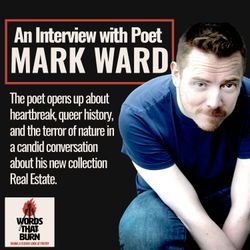
Interview with Dublin Poet Mark Ward
43:22|Welcome back to Words That Burn, the poetry podcast where host Benjamin Collopy takes a closer look at the verse that shapes our world.Whether you're here to deepen your poetry appreciation or are simply looking for accessible poetry for beginners, the goal is to make poetry education engaging for everyone.In this episode, Ben sits down for an in-depth poem discussion with Mark Ward, an incredible voice in modern Irish poetry. They explore Mark's compelling poet biography; from his early days writing in Dublin to his work as a playwright, before jumping into a full poem deep dive of his brand-new collection, Real Estate ( from Salmon Poetry).Listeners will get the mechanics of Mark's poetry explained by the poet himself. Through thoughtful poetry analysis, Ben and Mark unpack the evocative literary devices used to capture everything from the collapse of a relationship to the profound grief of losing a beloved pet.Key Topics DiscussedThe Architecture of Verse: Why Mark considers every line of a poem to be "prime real estate" and the importance of leaning into subjects that scare you.Grief and the Physical World: A close look at the sequence Nine Lives, dedicated to Mark's cat, Carbon, which beautifully captures the tactile realities of caregiving and loss.Body Horror & Metaphor: Exploring the complex imagery and literary devices in the poem Hunger, where inner anxieties warp physical, domestic spaces.Documenting Queer History: How poetry serves as an alternative lineage, with a focus on 1992, a piece that memorializes Dublin's 1980s and 1990s gay culture.Subverting Expectations: A reading and analysis of Slow Evening, a joyful and tender poem that acts as a poignant rebuke to the tragic "Bury Your Gays" narrative trope.About the GuestMark Ward is a poet, playwright, and short story writer based in Dublin. He is the author of two full-length collections with Salmon Poetry: Nightlight (2023) and his latest release, Real Estate. His diverse body of work also includes six chapbooks ranging from sonnets to queer ekphrastic verse, and his plays have been staged at the International Dublin Gay Theatre Festival.Follow & Support Mark:On InstagramBuy the book hereor hereFollow the Podcast:Read the interview on SubstackFollow the Podcast On InstagramFollow the Podcast on X/TwitterFollow the Podcast on TiktokFollow the podcast on BlueskyTime Stamps:00:00 Welcome and Guest Intro01:01 What Real Estate Means03:04 Building Poem Sequences05:00 Revisiting Old Work06:29 Writing Breakup Darkness11:05 Nine Lives and Pet Grief13:16 Reading Carer Aloud14:44 Desire and Physicality17:41 Hunger Image Craft20:43 Reading Hunger Aloud22:35 Desire Versus Self24:15 Writing From Observation26:04 Finding Poetry Mentors28:14 Ekphrasis And Queer Lineage31:42 Poetry As Cultural Memory36:18 Reading Poem 199238:24 Slow Evening And Gay Joy42:47 Closing Thanks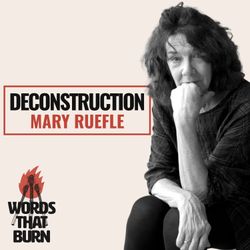
3. Deconstruction by Mary Ruefle
15:17||Season 6, Ep. 3Welcome back to Words That Burn, the podcast taking a closer look at poetry. In this episode, host Benjamin Collopy offers a close reading of Mary Ruefle’s four-line masterpiece, “Deconstruction.”This brief but devastating poem masterfully bridges ancient myth with the unbearable weight of modern existence. Benjamin situates Ruefle as a master storyteller and meticulous "sentence maker," breaking down how four short lines can bend time, space, and human memory.In This Episode, We Explore:The Sirens & The Metatextual Turn: How Ruefle uses Homer’s The Odyssey to force us to look inward. The poem presents a brilliant metatextual idea: that the Sirens actually sang The Odyssey itself, seducing listeners with the terrible, irresistible story of their own lives. We explore how the poem’s subtle shift from “I” to “we” invites shared introspection about how we remember, retell, and mythologise ourselves.Erasure vs. Found Poetry: Using Ruefle's own remarks, we distinguish her specific practice of erasure (or blackout) poetry from standard found poetry, highlighting the intent and precision required to carve a poem out of an existing text.Erasure as Survival: We connect "Deconstruction" to Ruefle’s broader lectures on reading, memory, and survival. Discover why picking apart existing texts isn't just an artistic choice, but a vital coping mechanism for processing life’s overwhelming excess.Mary Ruefle's Erasure NotebooksFollow the Podcast:Read the Script on SubstackFollow the Podcast On InstagramFollow the Podcast on X/TwitterFollow the Podcast on TiktokFollow the podcast on BlueskyThe Music In This Week's Episode:'Memories Of Stone' by Scott Buckley - released under CC-BY 4.0. www.scottbuckley.com.auTime Stamps:00:00 Sirens and Self Story00:27 Why This Poem01:28 Mary Ruefle's Style03:02 Erasure Poetry Explained04:53 Reading the Poem05:43 Metatext and Reading06:50 Sirens in The Odyssey08:21 Erasure as Survival11:22 Title Does the Work12:47 Why It Stays With Us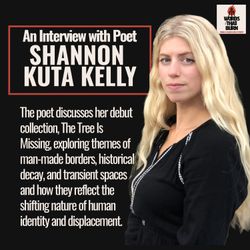
Shannon Kuta Kelly on Liminal Spaces, Folklore, and Her Debut Collection The Tree is Missing
44:29|In this episode of Words That Burn, I sit down with poet Shannon Kuta Kelly to explore the beautifully haunting landscapes of her debut poetry collection, The Tree is Missing (coming this April from Faber and Faber).Shannon’s work has been featured in the New England Review, Poetry Ireland Review, and The Irish Times. As a PhD graduate from the Seamus Heaney Centre at Queen's University Belfast and a 2025 Ciaran Carson Fellow, she brings a profound depth of knowledge and intuition to her craft. We discuss the tension between the past and present, the eerie realities of urbanisation, and how transient living shapes our identities.This episode explores:The Meaning of "The Tree is Missing": Unpacking the symbolic, ecological, and geographical resonances behind the collection's title.Liminality and Urban Sprawl: How manmade borders, transient city living, and the meeting point between nature and concrete influence her writing.History’s Phantom Limbs: Grounding the tragic, echoing histories of places like Tarnów, Poland, through human-centric storytelling and everyday images.Folklore and Dream Logic: Why poetry and myth are a "match made in heaven," and how Shannon taps into our shared subconscious and collective symbols.An Exclusive Reading: Shannon treats us to a reading of her poignant poem, Gost, and discusses the linguistic overlap between "ghosts" and "guests."Whether you are a writer looking for advice on peeling back the layers of your own poetry or a reader fascinated by the intersection of myth and reality, Shannon’s insights are not to be missed.Follow the Podcast:Read the Script on SubstackFollow the Podcast On InstagramFollow the Podcast on X/TwitterFollow the Podcast on TiktokFollow the podcast on BlueskyTime Stamps:00:00 Welcome and Guest Intro01:05 Why The Tree Is Missing02:25 Borders Urban Sprawl Erasure03:33 Liminal Life and POV Shifts04:49 Observing Strangers and Details06:00 From Reality to Spare Images08:43 Tarnov and Haunted History12:44 Storytelling Women and Three Sisters15:20 Poetic Truth and Let It Be August16:58 Endings Claustrophobia and Book Shape19:58 Editing Influences and Breathing Space22:28 Decay in Pastoral Scenes24:56 Folklore and Poetic Logic26:48 Two Brothers Divided29:31 Nostalgia and Lost Homes32:11 Dream Time Symbols34:45 How Poems Are Collected36:07 Gost Guests and Ghosts39:50 Refrain and Repetition42:05 Advice for other poets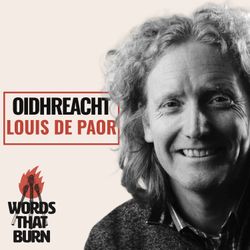
2. Oidhreacht by Louis De Paor
28:01||Season 6, Ep. 2Celebrate Seachtain na Gaeilge with a closer look at "Oidhreacht" (Heredity), a powerful piece by Irish poet and Gaeilgeoir, Louis De Paor. In this episode of Words That Burn, we explore the complex psychogeography of Ireland and the tension between holding onto the past and embracing the future of the Irish language.Discover how De Paor captures generational trauma and linguistic lineage through striking metaphors, from an ancient, shouting Ogham stone to a snarled tooth that evokes the myth of the Salmon of Knowledge (Bradán Feasa). We also unpack the cultural tug-of-war that helped shape modern Gaeilge, highlighting how the modernization of the language is not a betrayal, but a necessity.This episode takes a loot at:An in-depth analysis of the poem "Oidhreacht" (Heredity) and its exploration of Irish identity and guilt.The history of Innti, a radical 1970s literary journal that brought beat poetry techniques to Irish language literature.The historic clash between "old school" Nativists seeking to preserve a pure, pastoral form of Gaeilge and the progressive movement striving for modern European influence.How De Paor expertly weaves the folklore of Fionn mac Cumhaill and the Salmon of Knowledge into his modern reflections.Theo Dorgan EssayFollow the Podcast:Read the Script on SubstackFollow the Podcast On InstagramFollow the Podcast on X/TwitterFollow the Podcast on TiktokFollow the podcast on BlueskyThe Music In This Week's Episode:'Memories Of Stone' by Scott Buckley - released under CC-BY 4.0. www.scottbuckley.com.au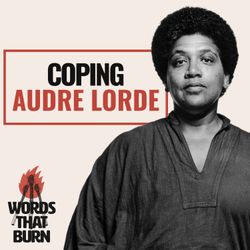
1. Coping by Audre Lorde
20:17||Season 6, Ep. 1Does the constant barrage of global news make you want to turn off the screens and bury your head? You aren’t alone. In a world that feels like a "round puddle of sunless water," how do we keep going?In this episode of Words That Burn, I analyse Audre Lorde’s powerful poem, "Coping."Written by the self-described "Black lesbian mother warrior poet," this piece from The Black Unicorn collection offers a vital lesson on resilience, parenting as revolution, and the refusal to drown easily.We explore Lorde’s legacy as a "bridge builder" and how her seminal philosophies, including The Master's Tools Will Never Dismantle The Master's House; inform this seemingly simple image of a boy bailing rainwater from a garden.In this episode, I cover:The Poem: A line-by-line analysis of "Coping" and its biblical vs. humanist metaphors.The Context: How Lorde’s travels to Benin and her experience with motherhood shaped her activism.The Philosophy: Understanding the "architecture of difference" and intersectionality.The Takeaway: Why preserving "young seeds" is crucial for the future of society.If you are feeling the weight of the world, let Audre Lorde’s words be the spark you need to keep doing the work.Follow the Podcast:Read the Script on SubstackFollow the Podcast On InstagramFollow the Podcast on X/TwitterFollow the Podcast on TiktokFollow the podcast on BlueskyThe Music In This Week's Episode:'Penumbra' by Scott Buckley - released under CC-BY 4.0. www.scottbuckley.com.au