Share
This Week in Business
Life and Medicine in the Eleventh Hour - Palliative Healthcare
When people find out they have a serious illness, it’s natural that they think of doing whatever it takes to prolong their lives. But the very methods of prolonging life sometimes means more pain and suffering for the patient. Host Dan Loney talks with Dr. Sunita Puri, Medical Director of Palliative Care and Support Care Services at Keck Hospital and Norris Cancer Center at the University of Southern California, about her mission to bridge medical care for devastating diseases and providing comfort and relief for the patient. Her new memoir, That Good Night: Life and Medicine in The Eleventh Hour, reflects on her own journey and examines how the field is evolving as patients and family members are looking forward to quality of life over quantity of time.
More episodes
View all episodes

Private Credit Risks and the Threat of Market Contagion
12:57|Itay Goldstein, Professor of Finance at the Wharton School, discusses the growing concerns surrounding private credit markets, including liquidity mismatches, valuation uncertainty, investor redemptions, AI-driven pressures on software borrowers, and the potential systemic risks posed by connections to banks and insurance companies.
Peanut Butter Raises and the Pay Equity Debate
10:08|Peter Cappelli, Professor of Management at the Wharton School, examines the resurgence of "peanut butter" raises, exploring how companies distribute limited pay increases, the impact of inflation on employee compensation, and the tradeoffs between rewarding top performers and maintaining workforce morale.
SpaceX’s Historic IPO and the Future of Space
12:50|David Hsu, Wharton Management Professor, discusses SpaceX’s $2 trillion valuation, the role of Starlink, launch services, and AI in driving investor enthusiasm, the influence of Elon Musk’s leadership, and what the company’s success means for the future of the global space economy.
Understanding Congress’s Impact on Financial Markets
12:36|Courtney Wiegand, Wharton Assistant Professor of Finance, explains her research on how fiscal policy shocks and shifting deficit expectations affect bond markets, inflation, monetary policy interactions, and the long-term implications of congressional budget decisions for financial markets.
The Science Behind Elite Athletic Performance
17:36|Michael Platt, Wharton Professor of Marketing, Psychology & Neuroscience, discusses his research on brain-based performance metrics, explaining how focus, confidence, and mental fatigue can be measured to improve athlete selection, training, and development, while also revealing applications for business leadership, cybersecurity, and other high-pressure professions.
Examining Equity and Opportunity in NFL Coaching Searches
13:29|Ken Shropshire, Wharton Emeritus Prof. of Legal Studies & Business Ethics and Strategic Advisor to 76 Capital, examines the NFL’s history of racial equity in hiring, assess the successes and shortcomings of the Rooney Rule, and explore how Brian Flores’ discrimination lawsuit could influence the future of coaching opportunities and hiring practices across the league.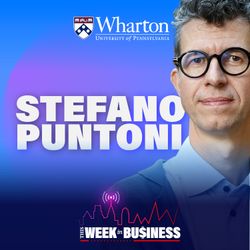
How Artificial Intelligence Is Reshaping Business and Society
14:57|Stefano Puntoni, Wharton Marketing Professor, discusses the biggest AI developments of the past year, including advances in model capabilities, the emergence of AI agents, growing enterprise investment, regulatory considerations, and the technology’s potential impact on business, consumers, and society.
AI Stocks, Oil Prices, and the Fed’s Next Move
12:20|Jeremy Siegel, Wharton Emeritus Professor of Finance and Chief Economist at WisdomTree, examines the market rally fueled by AI stocks, the economic impact of rising oil prices and tensions with Iran, the outlook for Federal Reserve policy under Kevin Warsh, and the mixed legacy of Fed Chair Jerome Powell.
Federal Reserve Leadership Transition Amid Economic and Political Pressures
10:57|Patrick Harker, Wharton Professor of Operations, Information, and Decisions, and former President of the Philadelphia Federal Reserve Bank, reflects on Jerome Powell’s tenure leading the Federal Reserve through the pandemic, inflation concerns, and political pressure, while also examining what Kevin Warsh’s leadership could mean for monetary policy, Fed independence, and the U.S. economy moving forward.