Share

This Week in Business
Leading with Dignity
•
Donna Hicks, PhD and Associate at the Weatherhead Center for International Affairs at Harvard University, joins host Laura Zarrow to discuss her career in resolving conflicts at an international level and her new book focusing on resolving workplace conflicts, "Leading with Dignity: How to Create a Culture That Brings Out the Best in People" on Women@Work.
More episodes
View all episodes
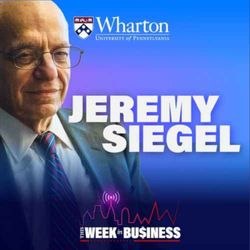
Why AI Stocks Are So Hard to Value
12:07|AI is changing how companies work, but investors still face a difficult question: How much are its future profits worth today?Jeremy Siegel, Wharton Emeritus Professor of Finance, explains why uncertainty about AI’s long-term earnings potential can produce dramatic swings in stock prices. He discusses the challenges of valuing AI companies, the pressure of competition, and why productivity gains do not always translate directly into higher corporate profits.Siegel also shares his outlook for the Federal Reserve’s upcoming interest rate decision and explains why falling energy prices may influence the debate over the size of a rate increase.
Jensen Huang’s Return and the Power of a CEO’s Brand
10:53|What makes people continue to support a leader after a controversy? Jensen Huang’s return as Nvidia CEO puts that question in the spotlight.Americus Reed, Wharton Professor of Marketing, examines Huang’s rapid comeback and the competing business, reputational, and governance considerations surrounding it. Reed explains the idea of “moral decoupling”: how people can separate their views of someone’s personal conduct from their assessment of that person’s professional performance. He also considers what the episode could mean for Huang’s personal brand, Nvidia’s reputation, and its leadership moving forward.
Is Auto Renew Actually Good for Your Business?
09:54|Automatic subscription renewals can create predictable revenue for businesses, but they might also discourage customers from signing up in the first place. So is auto renew actually good for business?Wharton Marketing Professor John Zhang explains the strategic tradeoffs between automatic renewals and automatic cancellations.He discusses how customer behavior, company size, and market dynamics influence subscription strategies, why customer acquisition and retention sometimes require different approaches, and how artificial intelligence could help businesses personalize their renewal policies.
Anthropic’s IPO and the Future of AI
12:49|Anthropic’s potential IPO could be a defining moment for the AI industry, but investors face major questions about the technology’s risks, business model and long term growth.Wharton Management Professor David Hsu discusses Anthropic’s path to the public markets, the uncertainty surrounding demand for AI models, and the competitive pressures facing frontier AI companies.He also examines Anthropic’s commitment to AI safety, its unusual governance structure, and whether the company can balance public benefit with the financial expectations of shareholders.
NVIDIA's Leadership Crisis Reveals a Bigger Problem
12:21|NVIDIA's leadership turmoil raises a bigger question: Can a company built around one extraordinary leader survive without them?Henning Piezunka, Wharton Associate Professor of Management, examines the challenges of CEO succession and what companies can learn from the leadership transitions at Apple, Disney, and other major organizations. From the power of corporate boards to the difficulty of grooming future CEOs, this conversation explores what makes companies resilient enough to survive beyond their founders.
Why Employees Choose Purpose Over Pay
11:25|Can a company's social mission help it attract top talent while spending less on salaries? New research suggests the answer is yes. J. Daniel Kim, Assistant Professor of Management at the Wharton School, joins the show to discuss how social responsibility influences hiring decisions.Kim explains why employees are willing to accept up to 15% lower compensation to join mission oriented startups, how a company's values can signal what kind of employer it will be, and why that advantage doesn't necessarily translate into better employee retention or job satisfaction.
The Hidden Consequences of Losing
12:21|Winning a competition doesn't always mean the rivalry is over. Sometimes, the person who loses can create bigger problems long after the competition ends.Henning Piezunka, Associate Professor of Management at the Wharton School, joins the show to explore what happens when people refuse to accept defeat.Drawing on research from Formula One racing and the business world, Piezunka explains how past rivalries can influence future behavior, why losing colleagues may sabotage successful coworkers, and what managers can do to prevent competition from damaging an organization.
The Hidden Risks of Corporate Political Spending
13:49|Corporate political spending is creating new reputational and legal risks for businesses. As companies become increasingly involved in political activity, questions about transparency, accountability, and corporate values are becoming harder to ignore.Witold Henisz, Vice Dean and Faculty Director of Wharton’s Impact, Value, and Sustainable Business Initiative, examines the evolving landscape of corporate political activity. He explores the disconnect between what companies publicly support and what they privately lobby for, potential legal liabilities surrounding political contributions, and why corporate boards and investors need to take a closer look at political spending.
How AI Is Reshaping the Stock Market
11:32|How will AI, inflation, and Federal Reserve policy shape the markets in the months ahead? Jeremy Siegel, Wharton Emeritus Professor of Finance and Senior Economist at WisdomTree, shares his outlook on the economy and financial markets.Siegel discusses the outlook for interest rates, the uncertainty surrounding AI investment and corporate profitability, and whether today's market valuations are justified. He also explains why diversification across technology, value stocks, and bonds could be especially important as investors navigate an uncertain economic future.