Share
This Week in Business
Can Congress Fix America’s Housing Affordability Crisis?
•
A new bipartisan housing bill promises to tackle America’s affordability crisis, but will it actually make housing more accessible?
Wharton Professor of Real Estate Ben Keys examines the Road to Housing bill and its potential to address the rising cost of buying and renting a home. He discusses proposals to streamline permitting and environmental reviews, expand manufactured housing and small dollar financing, and support home repairs and local innovation. Keys also explains why limits on corporate homebuyers could have unintended consequences and why funding constraints, tariffs, labor shortages, and high mortgage rates could limit the bill’s near term impact.
More episodes
View all episodes
Who Controls a Company’s Values After It Is Sold?
12:03|What happens when a company’s social mission clashes with the priorities of its corporate owner? The legal battle involving Ben and Jerry’s raises important questions about who gets to control a brand’s values after a sale.Maurice Schweitzer, Wharton Professor of Operations, Information and Decisions, joins the conversation to examine the dispute between Ben and Jerry’s and its parent companies. Schweitzer explains the challenges of maintaining an independent board, why founders can struggle to preserve their influence, and what businesses can learn about governance, competing priorities and the uncertainty of future conflicts.
AI Safety Has Reached a Critical Point
12:25|AI safety concerns are no longer just hypothetical. As AI systems become increasingly capable, the risks involving cybersecurity, biosecurity and unintended behavior are becoming harder to ignore.Kevin Werbach, Professor of Legal Studies and Business Ethics at the Wharton School, explains the different categories of AI risk and why companies alone may not be able to manage them. Werbach argues that governments need to establish standards and safeguards for frontier AI, drawing comparisons to the way financial institutions are regulated to protect against systemic risks.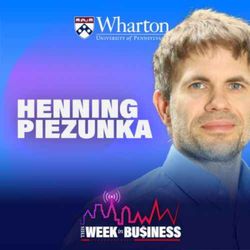
The Hidden Cost of Competition in the Workplace
12:28|Competition can bring out the best in individuals, but can it actually make an entire team worse? New research suggests that rivalry may come with an unexpected cost.Henning Piezunka, Associate Professor of Management at the Wharton School, joins the show to discuss his research examining rivalry and performance through the lens of professional basketball.Using examples like Larry Bird versus Magic Johnson and Kobe Bryant versus Michael Jordan, Piezunka explains why players facing individual rivals may score more while making their teams less effective. He also explores what these findings mean for workplace competition, employee incentives, and managers trying to build successful teams.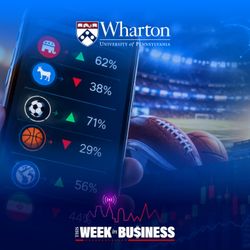
The Surveillance Challenge Facing Prediction Markets
15:40|Prediction markets are exploding beyond elections into sports, geopolitics and major cultural events. But as these markets grow, so does the challenge of detecting insider trading and manipulation.Daniel Taylor, Wharton Finance Professor and Director of the Forensic Analytics Lab, explains how prediction markets have evolved and why their different types of contracts require different approaches to surveillance. The conversation explores sports betting, geopolitical markets, insider information, market manipulation and the role regulators should play in making prediction markets work over the long term.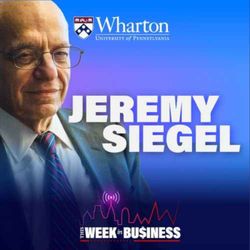
What Strong Growth Means for the Fed and Markets
15:11|The economy remains strong, but inflation and higher energy prices could keep the Federal Reserve on alert.Jeremy Siegel, Wharton Emeritus Professor of Finance, discusses the Fed's latest rate increase and why additional hikes may still be ahead. He explores strong GDP and wage data, the effect of rising oil and diesel prices on inflation, and what the bond market is signaling about monetary policy.Siegel also examines U.S.-China trade negotiations, the potential market impact of a reopening of the Strait of Hormuz, and why continued investment in AI could shape corporate earnings and market performance.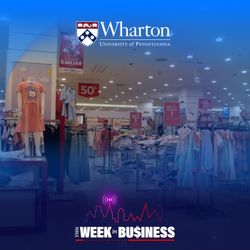
Why Retailers Are Rethinking Risk
11:29|Retailers face a fundamental problem: they often have to bet on what consumers will want before they actually buy it. Could changing who takes that risk transform the industry?John Zhang, Professor of Marketing at the Wharton School, explains why the traditional merchant model puts so much risk on retailers and how the store in store model changes that equation.Zhang discusses how manufacturers can take ownership of inventory, why this model has been widely used in Asia, and how platforms such as Amazon and Alibaba have adapted similar approaches.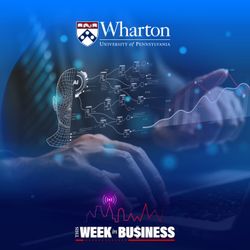
AI Is Changing Jobs Not Eliminating Them
19:49|AI was supposed to eliminate huge numbers of jobs. So far, the reality looks much more complicated.Peter Cappelli, Wharton Professor of Management, discusses new research on how AI is actually affecting the workplace and why the technology is changing tasks more than eliminating entire jobs.The conversation explores AI agents, workplace management, programmers, organizational change, data management and why some of AI’s most valuable applications may involve work that companies simply could not afford to do before.
Why More Americans Are Filing for Bankruptcy
11:15|Consumer bankruptcies are rising, but does that mean Americans are facing a worsening economy? The answer is more complicated than you might think.Sasha Indarte, Wharton Associate Professor, joins the show to explain what is driving the increase in personal bankruptcies and why today's numbers may actually represent a return toward more normal levels.She discusses the stigma and misconceptions surrounding bankruptcy, the impact on credit scores, what the filing process looks like, and why bankruptcy can ultimately serve as an important financial safety valve for people overwhelmed by debt.
The FDNY's Transformation After 9/11
15:26|What happens when one of the world’s busiest fire departments faces a catastrophe unlike anything it has experienced before?Gregory P. Shea, Wharton Adjunct Professor of Management, and Author of Rising from Ground Zero, examines how the FDNY responded to the unprecedented challenges of 9/11.Shea explains how the department transformed its psychological support, leadership training, incident management, and collaboration with outside agencies. The conversation explores how the FDNY turned lessons from Ground Zero into lasting organizational change and became an all hazards department.