Share
This Week in Business
On Camera and Off with Lisa Thomas-Laury of Action News
•
Lisa Thomas-Laury, Former News Anchor for Philadelphia's Action News, joins host Laura Zarrow to discuss her new book "On Camera And Off: When the News is Good and When It's Not" on Women@Work. Lisa talks to us about what it was like to be a trailblazer as one of the few African-American women in television news in the late 1970s, and how she had to face her own extraordinary challenge after being struck with a rare nerve disorder—one that would interrupt her career and ultimately lead to her retirement after nearly 40 years at the number one television news outlet in the Philadelphia tri-state area.
More episodes
View all episodes
The Hidden Financial Risks of the AI Boom
12:59|The AI boom could transform the economy, but who is financing it and where the risks are building may matter just as much as the technology itself.Joao Gomes, Wharton Professor of Finance and Senior Vice Dean of Research, Centers, and Academic Initiatives, argues that the Federal Reserve is too focused on inflation and not focused enough on financial stability.Gomes discusses the opaque role of private credit, lessons from the housing crisis and internet boom, the potential impact of AI investment on long term productivity, and why the Fed needs better models for understanding the financial risks surrounding AI.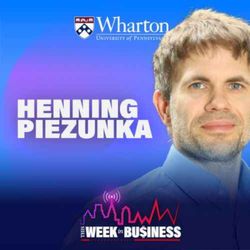
When Teammates Become Competitors
17:18|We often think of competition and collaboration as opposites. But in reality, we frequently do both at the same time. Henning Piezunka, Wharton Associate Professor of Management, explains why competing with someone can fundamentally change how we view and work with them.Piezunka uses World Cup soccer to examine what happens when teammates become opponents, finding that players collaborated less after competing against one another. The research offers surprising lessons for managers dealing with promotions, bonuses and other competitive workplace dynamics.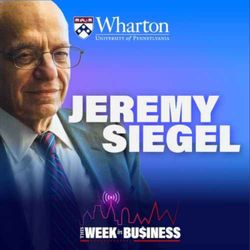
Why Bond Yields Are Warning Washington
12:40|What do rising bond yields, new tariffs and soaring AI investment mean for the U.S. economy and financial markets?Wharton Emeritus Professor of Finance and WisdomTree Senior Economist Jeremy Siegel joins the conversation to assess the latest economic and market developments.Siegel discusses the impact of higher tariffs on Canada and Mexico, why rising Treasury yields are signaling concern about U.S. deficits, and why he believes Washington may eventually be forced to take action on fiscal policy.He also weighs in on the resilience of the stock market, the extraordinary performance of AI-related companies, and what could determine whether equities reach new highs in the months ahead.
The Bond Market Is Losing Confidence in the Fed
11:23|The bond market is sending a warning to the Federal Reserve. With long-term yields climbing to levels not seen in decades, questions are mounting about the Fed’s ability to control inflation while maintaining market confidence.Wharton Finance Professor Nikolai Roussanov explains why Kevin Warsh’s recent messaging has unsettled investors and why the Fed’s reaction function may matter more than its guidance on the path of interest rates.Roussanov also examines the tension between monetary and fiscal policy, including whether Treasury efforts to push down long-term yields could undermine the Fed’s strategy.As inflation, energy prices and fiscal pressures evolve, the Fed faces a critical test: preserve its 2% inflation target—or risk losing credibility with the bond market.
When Food Safety Becomes the Family’s Responsibility
11:33|What happens when the systems designed to keep our food safe start to break down?Corinne Low, Wharton Associate Professor of Business Economics and Public Policy, argues that food safety is a public good—one that individuals and families simply can't provide for themselves.She explains how reduced staffing, weakened inspections and changes to disease surveillance can leave consumers more vulnerable to foodborne illness.Low also examines what happens when that responsibility gets pushed onto parents, and why trusting companies to regulate themselves isn't enough.The result is a larger question about government, business and the basic protections consumers should be able to count on.
Should AI Companies Be Supervised Like Banks?
13:33|AI is advancing rapidly—but who is responsible when the risks become too big to ignore?Peter Conti-Brown, Professor at the Wharton School, explores whether the banking system offers a useful model for supervising powerful AI companies.Rather than relying solely on rules written years in advance, bank supervision involves ongoing conversations between public officials and private institutions to identify and manage emerging risks.Conti-Brown discusses how AI stress tests could work, what might happen if powerful models are hijacked or misused, and why consumers could ultimately end up holding the bag when things go wrong.
Why Gen Z Is Choosing Entrepreneurship Over Traditional Careers
11:20|Why are more young Americans turning to entrepreneurship, and what role will AI play?Lori Rosenkopf, Vice Dean of Entrepreneurship at the Wharton School, explores how Gen Z’s shifting expectations, a tougher entry-level job market, and the desire for flexibility are reshaping career paths. She also examines how AI tools are making it easier to turn ideas into products while intensifying competition, and what venture capital, failure, the creator economy, and programs like VentureLab can teach aspiring founders.
Can AI Companies Regulate Themselves?
13:53|As AI becomes more powerful, who should be responsible for governing it?Kevin Werbach, Wharton Professor and Chair of Legal Studies and Business Ethics, explores the growing challenges of AI governance, from accountability and safety to the difficulty of creating effective regulations across countries. He explains why AI companies can't be expected to regulate themselves and why governments need to play a more constructive role in managing the risks of increasingly powerful AI.
Will the Government Bail Out Your 401(k) in a Market Crash?
18:00|What happens to your 401(k) if the stock market drops 25%, and would the government step in to help?Nikolai Roussanov, finance professor at the Wharton School, explains the real risks behind modern retirement investing and why volatility is built into the system.From the 1987 crash to COVID-19, he breaks down how markets recover, why long term investors tend to win, and why bailouts are more likely to support companies, not individual portfolios. If you’re relying on a 401(k), this episode will reshape how you think about risk, recovery, and protection.