Share

Voices of British Ballet
Conversations with the people who witnessed the story of dance in Britain.
Latest episode
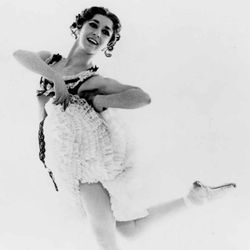
80. Brenda Last
23:33||Ep. 80Brenda Last achieved distinction as a ballerina with The Royal Ballet, but this was after a successful and multi-facetted career in many theatrical disciplines. Here, she tells Patricia Linton, founder and director of Voices of British Ballet, about her early training with teachers such as Tamara Karsavina, Vera Volkova and Lydia Kyasht, winning the Royal Academy of Dance’s Adeline Genée Gold Medal at the age of 16, and performing at the Edinburgh International Festival and in television before joining The Royal Ballet School. After that, she performed at Stratford-upon-Avon (as the leading dancer in Toad of Toad Hall) and then was asked by Elizabeth West to join Western Theatre Ballet as a founder member. Last talks about the early years of the company with Elizabeth West and Peter Darrell, and about Maurice Béjart, with whom she worked in Brussels.The interview, which was recorded in 2010, is introduced by former Royal Ballet principal Stephen Jefferies in conversation with Natalie Steed.Brenda Last was born in South London in 1938. Recovering from a childhood illness, she started dance classes and became passionate about dance. She trained with Biddy Pinchard at Brixton Hill, and studied with such notable teachers as Tamara Karsavina, Vera Volkova and Lydia Kyasht before winning the Royal Academy of Dance’s Adeline Genée Gold Medal at the age of 16. She then went to The Royal Ballet School for a year, having already performed at the Edinburgh International Festival and worked in television. She was then the leading dancer in Toad of Toad Hall at Stratford-upon-Avon.In 1957 Elizabeth West, with whom she had already worked in Edinburgh, asked Last to join her and Peter Darrell to become one of the founder members of Western Theatre Ballet. This was a pioneering company that specialised in dramatic works with contemporary themes, fusing classical and modern dance. She remained with the company until 1963, when Ninette de Valois saw her performing and asked her to join The Royal Ballet Touring Company. After two years in the corps de ballet, she was promoted to the rank of principal dancer. She stayed with the touring company because she relished the amount of performances it afforded – she once calculated that during her career, she danced the role of Lise in Frederick Ashton’s La Fille Mal Gardee 101 times. She eventually became ballet mistress for the company in 1974.In 1977, Last unexpectedly became director of the Norwegian National Ballet in Oslo, following the sudden death of David Blair, a former Royal Ballet colleague who had just taken up the position there. In 1980, Last returned to London to teach at the London Contemporary Dance School, where she stayed for 14 years. During this period of time she also worked extensively with the Noriko Kobayashi Ballet in Tokyo, where she staged works by Ashton and de Valois, among others. She has also worked with the Royal New Zealand Ballet and The Australian Ballet, as well as English National Ballet and Scottish Ballet.Brenda Last, who was married to the musician, conductor and accompanist Stephen Lade until his death in 2022, has served on the Arts Council Dance Panel and as a trustee of The Royal Ballet Benevolent Fund. She is vice president of the British Ballet Organisation, having previously been director of Training there. She was appointed an OBE for her services to dance in 2012
More episodes
View all episodes
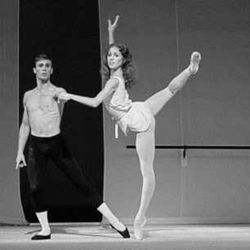
79. Bryony Brind
22:09||Ep. 79During the 1980s Bryony Brind was a distinctive and glittering presence in The Royal Ballet, famed for her long limbs and beautiful lines, combined with a deeply sensitive artistry. Here, she tells Patricia Linton, founder and director of Voices of British Ballet, of her early days in the company, star struck by the dancers around her, and particularly moved by Margot Fonteyn’s captivating use of her eyes. She talks of her own desire in dancing always to open up as much as possible, for which she was criticised by some, but defended by Fonteyn herself. Coached by Michael Somes for her historic debut in Swan Lake in 1981, while still in the corps de ballet, Brind recounts how determined she was to make that appearance, despite a heavy injury just days before. The interview, which was recorded in 2007, is introduced by Jay Jolley in conversation with Patricia Linton.Bryony Brind started dancing at the age of three and joined The Royal Ballet School in 1971. In 1977 she won the Prix de Lausanne competition and joined The Royal Ballet a year later. In 1980, while still in the corps de ballet, she created a role in Frederick Ashton’s Rhapsody, and the following year made her debut as Odette/Odile in Swan Lake. In 1982, she partnered Rudolf Nureyev in the “Kingdom of Shades” scene from La Bayadère, which led to other pairings together, including in George Balanchine’s Prodigal Son. Other leading roles followed, including Princess Aurora in The Sleeping Beauty, the Sugar Plum Fairy in The Nutcracker and the title roles in The Firebird and Giselle, and in 1984 she was made a principal dancer with the company. During her time with The Royal Ballet, she created roles in works by Richard Alston, David Bintley, Michael Corder, Jennifer Jackson, Kenneth MacMillan and Glen Tetley, which testified to her range and ability. In 1991 she left the company to pursue a freelance career in ballet, television and teaching, including at the Arts Educational School in London. In more recent years, Bryony Brind devoted herself to caring for her husband and her mother, before herself dying of a heart attack in 2015.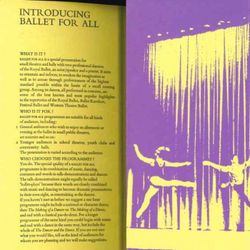
78. Ballet for All
49:27||Ep. 78A special episode of Voices of British Ballet with some of the people involved in Ballet For All. Jeanetta Laurence, formerly a dancer with and Associate Director of the Royal Ballet, hosts a conversation with Oliver Simons (dancer and Ballet For All's Ballet Master), Mark Silver (dancer), Nicola Katrak (dancer) and Fergus Early (dancer and choreographer) and they talk about their experiences with the company.The conversation was recorded in 2019.Ballet for All was a Royal Ballet initiative from the 1960s. It was initially worked out by the students from the Royal Ballet Upper School, under the direction of Barbara Fewster and Peter Brinson. Various exploratory performances were undertaken over a number of years, mainly in schools. However, after its success at The King’s Lynn Festival in 1964 and subsequent performance for Sir Frederick Ashton in the Shell Theatre, London, it was then developed for small groups of Royal Ballet Company dancers.The group, together with a pianist, would perform extracts from classical ballets together with an explanatory commentary. The performances were given to audiences in small theatres, mainly outside London.The aim was to introduce ballet to new audiences, but without diluting the art. The lecturer and indeed the director of the programme was Peter Brinson, a distinguished critic, writer and television presenter. The dancers would usually be a mixture of Royal Ballet principals and some younger dancers. Thus Ballet for All both served the twin aims of making ballet accessible to a new public and also to giving young dancers invaluable performing experience. Ballet for All was supported by the Calouste Gulbenkian Foundation, as well as the Royal Ballet Company.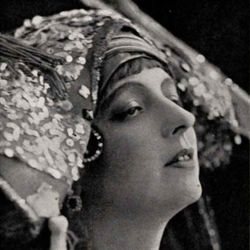
77. Reflections: Serafina Astafieva
16:29||Ep. 77As part of Voices of British Ballet’s Reflections series Jane Pritchard, former curator of Dance at the Victoria and Albert Museum, talks to Patricia Linton, founder and director of Voices of British Ballet, about the Russian ballerina and teacher, Serafina Asatfieva. Born in St Petersburg in 1876, Serafina Astafieva became an important teacher in London in the early years of the 20th century. She ran a school on the King’s Road in Chelsea. Her pupils included Anton Dolin, Alicia Markova and Margot Fonteyn.Reflections is a collection of personal responses to the topics and ideas that our archives highlight. These illuminating recordings sit alongside the Grace Notes section of our website. Grace Notes is a nod to the musical practice of embellishment, and also to British composer Arthur Bliss, who used the words to describe his “Grace Notes on Ballet” in Peter Noble’s 1949 book, British Ballet.Dancers spend their careers engaging with the ideas of choreographers. Thus, having a colourful and enriched perspective on the world around them is essential. Ballet does not live in a bubble. These embellishments, both written on our website, and recorded in this special Reflections series, show the wider social and artistic context from which ballet springs and within which it thrives.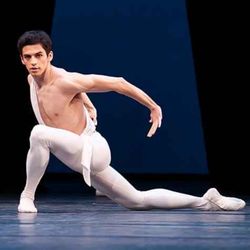
76. Federico Bonelli
18:39||Ep. 76It is a wonderful ability to make the most of the present situation whilst not letting the dream fade, in this case the dream to dance with The Royal Ballet. However, this is just what Federico Bonelli managed to do. He watched Royal Ballet videos in his youth and instinctively felt a bond with the British style of interpretation. He worked and learned a lot in various companies, and then, out of the blue, his chance of a lifetime came. Bonelli joined The Royal Ballet as a principal dancer at the invitation of the then director, Monica Mason. By his own admission it took him a while to find his feet, but once found he graced the stage of the Royal Opera House for many years, providing succeeding generations with a whole gamut of inspiration. In this interview, which was recorded in 2019, Bonelli talks to the dance writer Gerald Dowler. The interview is introduced by Mark Monahan, the dance critic of the Daily Telegraph.Federico Bonelli was born in Genoa, Italy, in 1978. He trained at the Turin Dance Academy and in 1996 he graduated into the Zurich Ballet in Switzerland, where he danced for three years. In 1999 he joined Dutch National Ballet where he was promoted to the rank of principal dancer in 2002. In 2003 he moved to The Royal Ballet in London, where his career blossomed. His immaculate technique and exquisite stage manners marked him out in the existing classical ballets, but it was his ability to shine in the variety of styles embodied in a full range of modern and contemporary choreography that allowed him to flourish in The Royal Ballet’s extensive repertoire. In 2018 he was awarded a place on the Clore Leadership Programme, and in 2022, after a glittering and exciting 18 years with The Royal Ballet, he retired from the stage to become artistic director of Northern Ballet.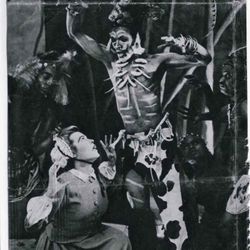
75. Patricia Clover
32:26||Ep. 75Patricia Clover gives the merest hint of the thinking behind Les Ballets Nègres, the company that lasted from 1946 until 1952. Her excellent memory and matter of fact style almost make you forget what a feat was achieved by its founder and director, Berto Pasuka: a Black company of dancers with cutting-edge material existing full time for six years touring the length and breadth of the country and abroad without any sort of government grant. Clover tells Patricia Linton, founder and director of Voices of British Ballet, of her early involvement with dance and about dancing with Les Ballets Nègres in its early days, as well as reflecting on the extent of racial prejudice at the time. She also talks about the musician Leonard Salzedo, whom she married, about the choreographer Andrée Howard, and about Pasuka’s determination in setting up, running and choreographing for his company.The interview, which was recorded in 2010, is introduced by the historian Stephen Bourne who talks about Berto Pasuka’s life and career and shows Natalie Steed Les Ballets Nègres press cuttings and programmes.Patricia Clover was born in Hammersmith, west London, in 1924. She started dancing at a local ballet school and at 16 went to study at Morley Theatre School in Lambeth. After working for a short time in a library, she joined the Gateway Theatre in Notting Hill Gate as assistant stage manager where she also played character parts. It was here that Clover met her future husband, the composer Leonard Salzedo, who was later to become musical director for Ballet Rambert and Scottish Ballet; the couple married in May 1945. Clover was involved with Berto Pasuka’s Les Ballets Nègres from the start, and the first performance was held at the 20th Century Theatre in Westbourne Park. Salzedo wrote the music for all four of the opening ballets and Clover danced with the company for several months before leaving in 1946. She later worked at the Ida Foster Theatrical Agency and then became general secretary of the Society of Cosmetic Scientists. After her retirement, Clover decided to study for her A Levels, followed by an English Literature degree. Salzedo died in 2000 and Clover in 2012.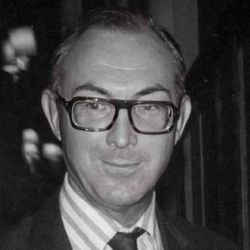
74. Celebrating Ninette de Valois: Clement Crisp and Richard Glasstone
18:18||Ep. 74In 2026 Voices of British Ballet is celebrating the life of Ninette de Valois, to mark the centenary of the Royal Ballet School, with a series of interviews and special episodes that illuminate her life and artistic practice.In this episode, Daniel Pratt, introduces two interviews the first with the dance critic of the Financial Times, Clement Crisp and then another with Richard Glasstone, the dancer and teacher. The interviews were recorded in 2011 at a conference dedicated to Ninette de Valois and they both reflect on their encounters with de Valois.Clement Crisp died in 2022 and Richard Glasstone in 2024.