Share
Voices of British Ballet
Edward Watson
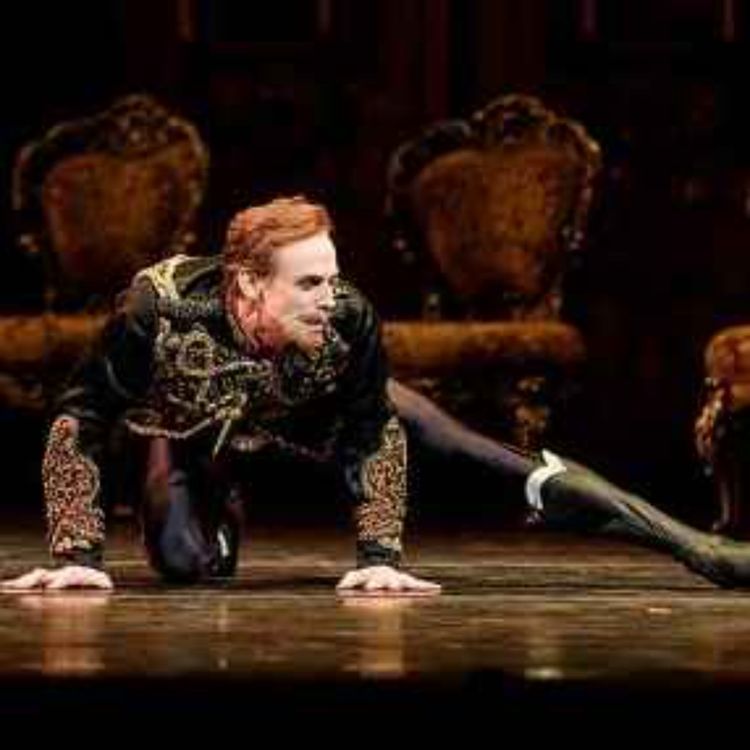
Over a long career, Edward Watson became one of The Royal Ballet’s greatest male principals, in the footsteps of Anthony Dowell and David Wall. He is particularly noted for his work in the ballets of Frederick Ashton and Kenneth MacMillan, and for creating many roles with contemporary choreographers. Here, in a conversation with Jane Burn recorded for Voices of British Ballet in 2007, he speaks disarmingly about his early days in The Royal Ballet before sharing some insights about portraying Crown Prince Rudolf in MacMillan’s Mayerling, a role for which he is particularly associated.
The interview is introduced by Kenneth Olumuyiwa Tharp.
Edward Watson was born in South London in 1976, and trained at The Royal Ballet School, first at the Lower School at White Lodge, and then at the Upper School in Barons Court. He graduated into The Royal Ballet in 1994 and was promoted to the rank of principal dancer in 2005. Watson’s pure classical technique, combined with a fine dramatic flair and sensitivity served him well in the works of Frederick Ashton, Kenneth MacMillan and Ninette de Valois herself, choreographers at the heart of the British tradition. He has himself been a major force in the continuation of that tradition.
More episodes
View all episodes
60. Jill Tookey
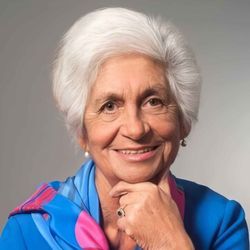
28:19||Ep. 60Jill Tookey, the founder of National Youth Ballet of Great Britain (NYB), in conversation here with Frank Freeman, explains how she set about it, and what her vision was. She gives a breathtaking insight into how all the different and necessary strands of activity plait together to create something worthwhile. She speaks engagingly about some of the ballets created for NYB, and about working on them with esteemed members of the ballet world, such as John Lanchbery and Wayne Sleep. The interview was recorded in 2010 and is introduced by Anna Meadmore.Born in Kent in 1937, Jill Tookey arrived at what was to be her dancing destiny by an unusual route. She had enjoyed ballet as a child but was swallowed up by the fashion industry of the 1960s, becoming fashion editor for both Woman and Beauty and Honey magazines. By the 1980s, and as mother of four children, she had begun writing childrens’ books. Pedro the Parrot, published by Thames and Hudson, was to be the springboard for an extraordinary adventure. To set Pedro dancing, music was found and also a choreographer. From there Tookey never looked back. She was alert to the huge interest in dancing and performance in the young and how, with the right build up, they could channel their excitement into something truly worthwhile.By 1988 Tookey had founded the National Youth Ballet of Great Britain (NYB) and she remained its artistic director until she died in 2016. She was always able to see the bigger picture as well as the details, with many ballets specially created for NYB and many young choreographers and dancers encouraged. As a result of her inspired and energetic leadership, literally thousands of children have had opportunities to enjoy the magical world of the theatre, with a number going on to dance professionally. Jill Tookey was appointed a CBE in 2016, but died that same year, and, sadly, was unable to collect her award. She was represented at the investiture by her ten-year-old granddaughter, who had danced with NYB for four years.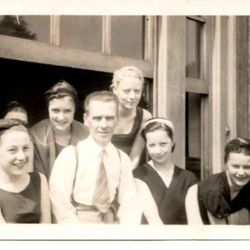
59. Patricia Thorburn
16:00||Ep. 59Here, Patricia Thorburn throws a little light on finding jobs with Patricia Linton, founder and director of Voices of British Ballet. The interview, which was recorded in 2003, is introduced by dance historian Jane Pritchard.Patricia Thorburn was born in Peebles, Scotland, and was a student of Mrs Bell Hardy in Edinburgh. In 1937, she auditioned and then studied at the Sadler’s Wells Ballet School and made her debut with the Carl Rosa Opera in 1938. In 1939 and 1940 she served with the Auxiliary Territorial Service (ATS) but joined the Anglo Polish Ballet in 1940 and remained with the company until 1942. Following this, she appeared in a number of London shows, and married John Arnold in 1945 before joining the Sadler’s Wells Ballet at the Royal Opera House, Covent Garden, in 1946 to boost the numbers in their extraordinary production of The Sleeping Beauty.Thorburn then danced as a member of the Agnes de Mille Ballet in the stage musical London Town. She retired from the company in 1947. Using her ballet training as a basis, she went to study with Sigurd Leeder at his School of Dance at Dartington Hall, Devon, to expand her horizons. She pioneered a Pure Movement course to help actors move more naturally on stage and screen and, working under her married name of Patricia Arnold, started to teach movement and historical dance at the London Academy of Music and Dramatic Art (LAMDA) in 1955, where she became head of Movement from 1963 until 1972. She also taught at the Guildhall School of Music and Drama. Thorburn taught well beyond the age of 75, and even after retirement was often asked back to teach masterclasses.The photograph shows Patricia Thorburn with fellow classmates from Sadler's Wells Ballet School with Nicholas Segeyev in the centre in 1937 / 1938. Photo courtesy of Patricia Thorburn.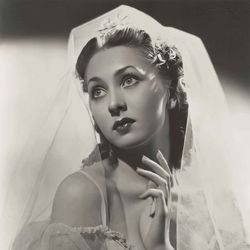
58. Irina Baronova
28:19||Ep. 58What agony to hear this gorgeous, beguiling woman lament the lack of interest she feels was shown to her generation in passing on their knowledge and experience to the next. Irina Baronova’s no nonsense approach is mysteriously interwoven with intuitive artistry – we could expect no less from one of the original “Baby Ballerinas” of the Ballet Russe de Monte Carlo. In this interview, recorded in 2006, Irina Baronova is interviewed by Patricia Linton, founder and director of Voices of British Ballet. The interview is introduced by Jane Pritchard of the V&A.Irina Baronova was a Russian-born ballerina and actress, known as one of the “Baby ballerinas” of the Ballet Russe de Monte Carlo. She was born in Petrograd in 1919. Her father, Mikhail Baronov, was a lieutenant in the Imperial Navy, and in 1920 he and his family had to flee the country following the Russian Revolution. They crossed the border into Romania disguised as peasants and eventually settled in Bucharest. They had no money in a foreign country where they did not know or speak the language. Baronov eventually found a job at a factory, and the family spent the following years living in the city slums.At the age of seven, Baronova began taking her first ballet classes when her mother (who was a ballet enthusiast) found her a teacher, Madame Majaiska, a former corps de ballet member of the Imperial Russian Ballet. She was also a refugee from Russia and so conducted Baronova’s classes in the kitchen of her one-bedroom house, using the kitchen table as a barre. To provide Irina with professional training, the family moved to Paris when she was ten years old, where she was taught by Olga Preobrajenska and Mathilde Kschessinska. In 1930, at the age of 11, Baronova made her debut at the Paris Opéra. The catalyst for her career came in 1932, just before her 13th birthday, when George Balanchine engaged her for the Ballet Russe de Monte Carlo, along with the equally youthful Tamara Toumanova and Tatiana Riabouchinska. The English critic Arnold Haskell dubbed this illustrious trio the “Baby Ballerinas”.Baronova was 14 when she was given her first principal role, as Odette in Act II of Swan Lake, in which she was partnered by Anton Dolin. At the age of 17, she eloped with an older Russian man, German (Jerry) Sevastianov, in order to get married. Their marriage came two years later, in 1938, with a ceremony in Sydney, Australia. Baronova then joined Ballet Theatre (now American Ballet Theatre) in the United States of America, subsequently divorcing Sevastianov. In 1946, in the United Kingdon, she met the theatrical agent Cecil Tennant who asked her to marry him, which she did, retiring from her career in ballet at the age of 27. Between 1940 and 1951, Baronova appeared in several films, including Ealing Studio’s Train of Events (1949). Much later she worked as ballet mistress on the 1980 Hollywood film Nijinsky. During her marriage to Tennant, she gave birth to three children: Victoria, Irina and Robert. In 1967, Tennant was killed in a car accident, and Baronova subsequently moved to Switzerland. She then resumed her marriage with her first husband, Sevastianov, who died in 1974. Baronova then began teaching master classes in the UK and the USA. In 1986 she staged Mikhail Fokine’s Les Sylphides for The Australian Ballet, and in 1992 returned to Russia to help the Maryinsky Theatre with an archival project. In 1996 she received a Vaslav Nijinsky Medal in Poland and an honorary doctorate from the North Carolina School of the Arts. In 2000, she went to live in Australia with her daughter, Irina. In 2005 she appeared in a documentary on the Ballet Russe, and published her autobiography Irina: Ballet, Life and Love. She died in her sleep in Byron Bay, Australia, on June 28, 2008, at the age of 89.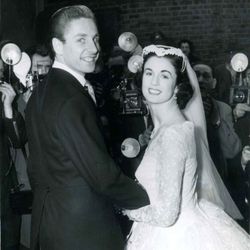
57. Rowena Jackson and Philip Chatfield
19:17||Ep. 57This gorgeous couple, infectiously happy and loving and warm, not surprisingly became special “voices” for British ballet. They were stars of The Royal Ballet at a remarkable point of that company’s history and contributed hugely to its success. This conversation between the couple and Patricia Linton, founder and director of Voices of British Ballet, was recorded in 2006. The episode is introduced by Dame Monica Mason.Rowena Jackson was born in Invercargill, New Zealand, in 1926. She originally studied ballet with Rosetta Powell and Stan Lawson and for her academic studies attended the Epsom Girls’ Grammar School in Auckland. In 1941, Rowena won the very first Royal Academy of Dancing Scholarship to be awarded in New Zealand. She travelled to London and joined the Sadler’s Wells Ballet School in 1946 and won the Adeline Genée Gold Medal in 1947, the same year she joined the Sadler’s Wells (later Royal) Ballet at Covent Garden.Rowena Jackson b. 1926 d. 2024; Dancer, teacher and directorBy 1954 Rowena had been promoted to the rank of principal dancer and performed most of the ballerina roles in the repertoire at that time. She was especially noted for her interpretation of Swanhilda in Coppélia and was also famous for her ability to pirouette, both alone and supported. There is proof in film of her ability to perform fast and brilliant turns with a repetition of single and double fouettés for the whole of Odile’s 32 fouettés in the third act of Swan Lake, something that was seldom attempted in those days. Before she left New Zealand for England, Rowena had set a World Record of 121 consecutive fouettés without a break.Early in 1958 Rowena married fellow Royal Ballet principal, Philip Chatfield. That same year they danced together in The Royal Ballet’s Giselle. They both retired in 1959 and moved to New Zealand. In 1961 Rowena was awarded an MBE. In 1972, she and Philip became directors of the National School of Ballet in Wellington. They eventually moved to Australia but continued to teach until well into their eighties. The couple had two children. Rowena died in 2024.Philip Chatfield b. 1927 d. 2021; Dancer, teacher and directorPhilip Chatfield was born in Eastleigh, Hampshire, in 1927. He first studied at the Elfin School of Dancing before getting a scholarship to the Sadler’s Wells Ballet School. He joined the Sadler’s Wells Ballet in 1943 and danced in a wide range of ballets. In 1944 he joined the Armed Forces and returned from service to re-join the Sadler’s Wells (now Royal) Ballet at Covent Garden in 1946. He travelled extensively with the company and was on the famous tour to the United States of America in 1949. He became a principal in 1953, married Rowena Jackson, a ballerina with the company in 1958, and retired in 1959 to New Zealand. In 1972 he and Rowena became joint directors of the National School of Ballet in Wellington, and they later went on to direct the Royal New Zealand Ballet. They retired again, this time to Australia where they made their home. Both Philip and Rowena continued to teach and coach for many years. Philip died in 2021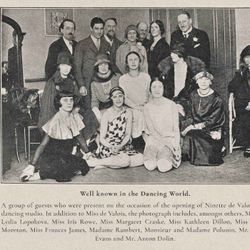
56. Celebrating Ninette de Valois: the founding of The Academy of Choregraphic Art
38:01||Ep. 56To celebrate the 100th anniversary of the founding of Ninette de Valois’ Academy for Choregraphic Art in March 1926, and to mark 25 years since her death, Patricia Linton talks to Dr Anna Meadmore, archivist at The Royal Ballet School. In the first of a series of special programmes across 2026, they discuss the early years of what would become the Vic-Wells, Sadler’s Wells Ballet School and then The Royal Ballet School.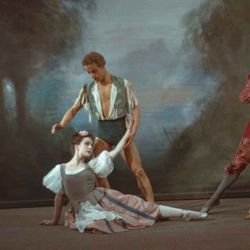
55. Anne Heaton
22:02||Ep. 55Anne Heaton’s career coincided with an upsurge in creative talent at the Sadler’s Wells Ballet. Observant and wide ranging she reflects on many things, not least the enigmatic choreographer, Andrée Howard. In this interview, which was recorded in 2003, she is talking to Patricia Linton, founder and director of Voices of British Ballet. The interview is introduced by Monica Mason.Anne Heaton was born in Rawalpindi, India, in 1930. She studied with Janet Cranmore in Birmingham from 1937 until 1943, and then with the Sadler’s Wells Ballet School. Her debut was with the Sadler’s Wells Opera in 1945 in a production of The Bartered Bride, and she became a soloist with Sadler’s Wells Theatre Ballet (SWTB) in 1946. That year, Heaton created roles in two ballets by Andrée Howard, Assembly Ball and Mardi Gras, and also in Celia Franca’s Khadra. In 1947, she created a role in Frederick Ashton’s Valses Nobles et sentimentales. She transferred to Sadler’s Wells Ballet at Covent Garden in 1948, where she specialised in romantic roles, for example, in Les Sylphides and Giselle. She performed again with SWTB when it was renamed The Royal Ballet Touring Company, creating the roles of the Woman in Kenneth MacMillan’s The Burrow in 1958 and the Wife in The Invitation in 1960. A foot injury caused her to resign from The Royal Ballet in 1959, but she continued to dance intermittently until 1962. Following her retirement from the stage, Heaton taught at the Arts Educational School and, from time to time, she staged ballets, including Giselle in Tehran in 1971. Having married Royal Ballet principal dancer John Field, who later became director of The Royal Ballet Touring Company, she co-directed the British Ballet Organization with him from 1984 until 1991. Field died in 1991 and Heaton in 2020.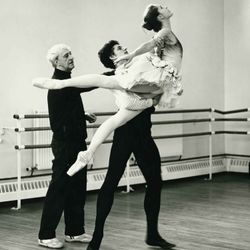
54. Darcey Bussell
31:46||Ep. 54Darcey Bussell talks to the dance critic Alastair Macaulay about her graduation performance at The Royal Ballet School, her early career with both Sadler’s Wells Royal Ballet and The Royal Ballet, and the creation in 1989 of the role of Princess Rose in Kenneth MacMillan’s The Prince of the Pagodas, as well as her experience of being coached by Margot Fonteyn. The interview, which was recorded in 2017, is introduced by Alastair Macaulay.Darcey Bussell was born in London in 1969. After initial vocational training at the Arts Educational School, she joined The Royal Ballet Lower School at the age of 13. In 1987 she graduated from The Royal Ballet Upper School and joined the Sadler’s Wells Royal Ballet that same year, but it was whilst still at the school that her talent had been noticed by the choreographer Kenneth MacMillan, who decided to create on her the leading role of Princes Rose in his new version of The Prince of the Pagodas. Bussell joined The Royal Ballet in 1988 and was promoted to the rank of principal dancer in 1989 on the opening night of MacMillan’s new ballet.During her distinguished career with The Royal Ballet, Bussell became one of the most famous British dancers of her time, and indeed of any time. She was particularly noted for her combination of a tall, athletic physique with a lovely soft lyricism. During her dancing career she performed in as many as 80 different ballets, including the majority of the classical roles, and had 17 new roles created on her. She stayed with The Royal Ballet until her formal retirement from the stage in 2007 (in a performance of MacMillan’s Song of the Earth), but she had also appeared as a guest artist with many major companies abroad, including New York City Ballet, the Ballet of La Scala, Milan, the Kirov Ballet, the Hamburg Ballet and The Australian Ballet.Even while dancing professionally, Bussell had begun to work in television and other media, and this side of her career developed at a fast pace on her retirement from ballet. As well as writing, modelling and presenting – both for television and for the Royal Opera House relays – she became a household name as a judge on the BBC’s Strictly Come Dancing (2009 to 2019). Since 2012, Bussell has been the President of the Royal Academy of Dance. Also in 2012, she danced the Spirit of the Flame at the Closing Ceremony of the London Olympic Games, leading a troupe of 200 dancers. She supports many educational and charitable causes, both artistic and in other fields. She has received many honours, including a gold medal from the John F Kennedy Center for the Performing Arts, and an honorary doctorate from Oxford University in 2009. Darcey Bussell was appointed an OBE for her services to dance in 1995, a CBE in 2006 and was made a DBE in 2018.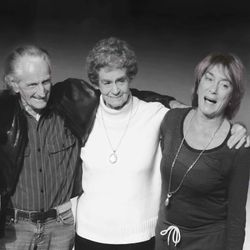
53. Henry Danton
24:55||Ep. 53In this extract, poor Henry Danton always seems to be running behind his talent – that is until he met the wonderful ballet teacher, Vera Volkova. However, before this and often against the odds, he managed to do quite a few things. From his early training with Judith Espinosa, he went on to work with Allied Ballet, International Ballet and, finally, Sadler’s Wells Ballet, and all this in the space of a few years. Candid and clear, something eventually went right as Henry continued to teach ballet into his 100th year. In this interview, recorded in 2004, Henry Danton talks to Patricia Linton, founder and director of Voices of British Ballet. The interview is introduced by Alastair Macaulay.Handsome and dashing, clever and full of life and good humour, Henry Danton was born into an army family in Bedford in 1919. He was educated as a King’s cadet at Wellington College. At first, Danton joined the army, but when on sick leave, following a back injury, he was introduced by a friend to the ballet teaching of Judith Espinosa. Almost overnight a new life unfolded for him. Although an avid ice skater, ballet had not been contemplated, but was “in his bones”, so to speak. After only 18 months of training, Danton joined the short-lived Allied Ballet, and then Mona Inglesby’s International Ballet. He joined the Sadler’s Wells Ballet in 1944. Here he began studying with Vera Volkova in her West Street Studio, and his lifelong passion and interest in Russian ballet training began. Volkova helped him to understand and fill in the gaps in his training. He was one of the original six dancers in Frederick Ashton’s Symphonic Variations at Covent Garden in 1946. From here he danced with various companies, including Les Ballets des Champs-Elysées, and toured the United States of America with Roland Petit’s Ballets de Paris. The USA became his home. He taught and choreographed extensively, both there and internationally, and was teaching at The Dance Studio with the Ballet Theatre of Scranton, Pennsylvania, until shortly before his death in 2022.The photograph shows Henry with Julia Farron and Gillian Lynne rehearsing a studio revival of Miracle in the Gorbals at White Lodge in 2011 photo courtesy of Marius Arnold Clarke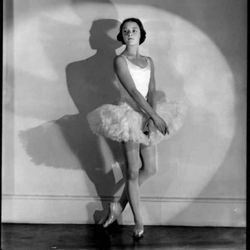
52. Jean Bedells
23:21||Ep. 52Jean Bedells talks about the 1930s as if it was yesterday. Full of detail and feats of memory, we are given an idea of the sense of foreboding that descended when their artistic home, Sadler’s Wells, was taken over as a refugee centre at the start of World War Two. In this interview, which was recorded in 2005, Jean Bedells talks to former Royal Ballet principal dancer Bruce Sansom. The interview is introduced by Alastair Macaulay.Jean Bedells was born in Bristol in 1924 as Jean McBain. She was the daughter of Phyllis Bedells, the great British ballerina, teacher and, later, a founding member and examiner for the Royal Academy of Dance. Jean Bedells first studied ballet with her mother and then trained at the Vic-Wells Ballet School for a year in 1936 before joining the Vic-Wells Ballet in 1937, making her debut as Clara in The Nutcracker. She had leave of absence from the company to dance as the Herald of Spring in Hiawatha at the Royal Albert Hall in 1937, 1938 and 1939. When she rejoined the Vic-Wells Ballet in 1938 she danced in Les Patineurs and The Haunted Ballroom, as Rose and Silver Fairies in The Sleeping Princess [The Sleeping Beauty], as Bathilde in Giselle, and in The Quest and, later, as one of the Three Fates in Adam Zero. She also appeared in a number of early films made of the company, notably as the Fairy Silver in The Sleeping Princess (1939), a Red Pawn in Checkmate (1939) and, later, a character role in a film of The Nutcracker (1958).In 1946, Jean Bedells became ballet mistress for Sadler’s Wells Ballet when the company moved into the Royal Opera House at Covent Garden. (The Vic-Wells Ballet was re-named Sadler’s Wells Ballet in the early 1940s.) She became a teacher after her retirement from the company, often teaching at The Royal Ballet School, especially during the 1960s and 1970s. Her granddaughter, Anne Bedells, was a member of London Festival Ballet. Jean Bedells died in 2014.