Share
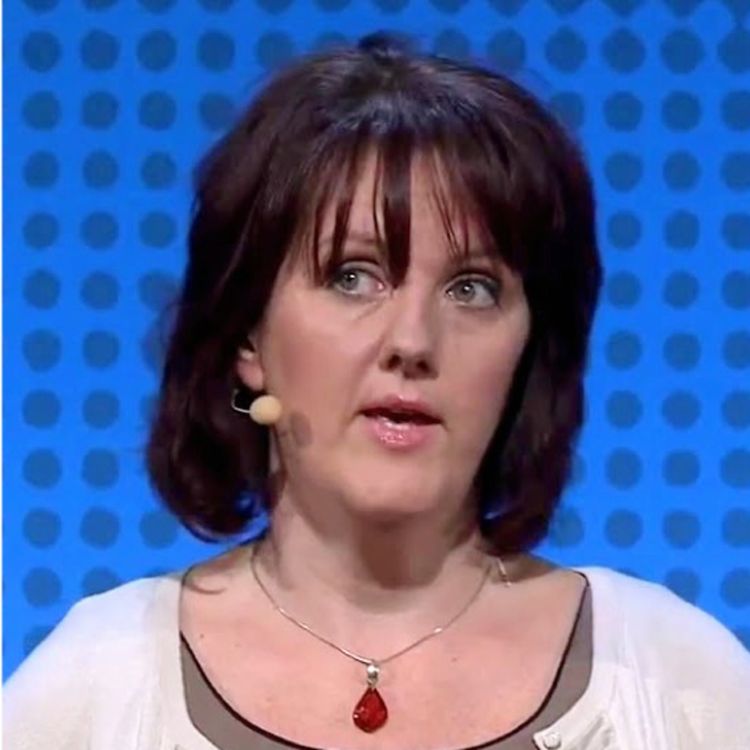
Transform Gov - the digital government podcast
Why you keep filling out the same forms — and why it’s about to end
Digital identity is often talked about — but rarely understood in practical terms.
In this episode of Transform Gov, Maeve Kneafsey speaks with Marie Wallace, Managing Director and Global Lead for Digital Identities at Accenture, about what is broken in how we prove who we are today — and what is changing.
From repeatedly filling out forms to sharing far more personal data than necessary, Marie explains why current identity systems are no longer fit for purpose — and how digital wallets and selective data sharing could transform how citizens access services.
This conversation focuses on:
- Why identity systems are fragmented and inefficient
- How digital wallets give citizens more control over their data
- What “selective sharing” actually looks like in practice
- How trust is changing in a digital world
- The risks if identity systems are implemented badly
In Part 2 we explore the economic impact and what this means for Ireland.
Chapters
00:00 Introduction to digital identity and control of data
01:12 What digital identity actually means (and why it’s broken)
02:14 Why sharing too much data is a problem
03:02 Marie’s background in AI and data privacy
04:07 Why centralised data creates risk
06:18 AI, deepfakes and the growing identity challenge
07:50 Designing better identity into public services
09:11 Why identity isn’t reusable today
10:02 Public concern around biometrics and data
11:09 Breaking down silos between public and private services
12:27 The real problem: forms, friction and delays
13:26 What governments need to build (trust + wallets)
14:57 Trust frameworks and verification explained
16:27 EU regulation and what happens next
17:47 Who owns identity in this model
19:13 Efficiency and cost impact (part 2)
More episodes
View all episodes
75. Could virtual hospitals replace hospital visits?
29:41||Season 2, Ep. 75What if your next hospital appointment happened from your kitchen table?In Part 2 of Transform Gov, Professor Derek O'Keeffe explains how Ireland is using digital technology to rethink healthcare delivery — from remote islands to nursing homes, prisons and beyond.You'll hear how:*Patients can be monitored safely at home.*Chronic diseases can be managed before emergencies happen.*Virtual hospitals are reducing unnecessary admissions.*AI and robotics could become everyday healthcare tools.This isn't science fiction.It's already happening.Transform Gov is part of the Ireland eGovernment Awards and is brought to you in partnership with Accenture.Find out more about the Ireland eGovernment Leadership Summit and Awards at:www.digitalgovawards.comIf you enjoy the episode, please like, subscribe and share.Chapters00:00 Introduction01:33 Why chronic disease is changing healthcare04:49 Why hospitals aren't designed for chronic illness07:24 The idea behind the virtual hospital09:44 Monitoring patients at home10:58 Virtual wards explained15:20 The island healthcare project17:06 Why islands became the perfect test bed18:37 A patient, a ferry and lambing season20:06 Scaling the project across Ireland21:41 Nursing homes, prisons and remote care24:23 International interest from Australia25:21 AI, robotics and the future of healthcare27:48 Why innovation requires resilience29:02 Final thoughts
74. Could drones deliver your medicine?
28:16||Season 2, Ep. 74What if the biggest challenge in healthcare wasn't medicine......but getting the right people to work together?In Part 1 of this fascinating conversation, Professor Derek O'Keeffe — consultant endocrinologist, engineer and founder of the Hive Lab at the University of Galway — explains why solving healthcare problems often starts outside the hospital.From delivering medicines by drone after Storm Ophelia, to creating smart connected medical devices and bringing engineers and clinicians together, this is a story about practical innovation that is already changing lives.In this episode:• Why Derek calls himself a "physicianeer"• Why healthcare is full of engineering problems• The remarkable drone medicine delivery project• Why regulation is often a bigger challenge than technology• The story behind the "digital stent"• Why the best innovations start with a real human problemThis isn't a conversation about gadgets.It's about using technology to make public services work better.Transform Gov is part of the Ireland eGovernment Awards and is brought to you in partnership with Accenture.Find out more about this year's Leadership Summit and Awards at:www.digitalgovawards.comIf you enjoy the episode, please like, subscribe and share.Chapters00:00 Introduction01:35 What is a "physicianeer"?03:20 From engineering to medicine05:12 Why healthcare is full of problems to solve08:15 Why technology isn't the difficult part10:48 "The technology is easy. The people are hard."11:24 The idea that led to medicine delivery by drone13:18 Aviation, pharmacy and regulation16:05 Building the Hive Lab18:42 Collaboration between engineers and clinicians21:15 The digital stent project24:10 The garden hose moment26:40 Why innovation often stays in the drawer28:50 Making technology work for people31:00 Final thoughts
73. The first COVID dashboard didn't exist... until Ireland had about two weeks to build it.
35:26||Season 2, Ep. 73Justin Gleeson explains how a small team from government, Maynooth University and Ordnance Survey Ireland came together in March 2020 to create the platform that millions of us watched every evening behind Tony Holohan.A fascinating story about what can happen when technology, data and public service all pull in the same direction.
72. How Galway digitised 1,000 townlands — and put local heritage on the world map
34:16||Season 2, Ep. 72What happens when local heritage meets digital innovation?In this episode of Transform Gov, Maeve Kneafsey speaks with Marie Mannion, Heritage Officer, and Brídín Feeney from the GIS team at Galway County Council.Winners of the 2025 Ireland eGovernment Open Data Award, their StoryMaps project is transforming how communities discover, preserve and share local heritage.From digitising more than 1,000 townlands to helping local communities tell their own stories, this project demonstrates how open data, GIS technology and community engagement can deliver real public value.The conversation explores:• Why traditional booklets were no longer enough• Using GIS and StoryMaps technology to connect people with place• Building digital skills within communities• The role of open data in preserving heritage• Creating pride of place through technology• How a local project attracted international interestTransform Gov is brought to you in partnership with Accenture.Find out more about the Ireland eGovernment Awards:www.digitalgovawards.com
71. What if the biggest barrier to suicide prevention is fear?
27:12||Season 2, Ep. 71Fear of saying the wrong thing.Fear of making things worse.Fear of even starting the conversation.In this episode of Transform Gov, Maeve Kneafsey speaks with Ailish O’Neill from the HSE’s National Suicide Prevention Office about “Let’s Talk About Suicide” — the winner of the 2025 Ireland eGovernment Education Award.This is a digital learning programme designed to help ordinary people recognise signs of suicidal distress and feel confident enough to step in and help.But this conversation goes far beyond technology.It explores:• Why lived experience completely changed the design of the programme• How language and tone can determine whether people engage or switch off• Why online learning was the right solution for a deeply sensitive subject• How digital tools can build confidence — not just awareness• What public sector teams can learn about communication, trust, and behaviour changeOne insight stands out:Many people taking the training were already worried about someone in their lives.That changes everything.Transform Gov is part of the Ireland eGovernment Awards and is brought to you in partnership with Accenture.To read more about free, accessible suicide prevention training from the HSE, or to enrol in Let’s Talk About Suicide, visit www.nosp.ie/training. This episode includes discussion about suicide and self-harm, which some listeners might find challenging or upsetting. If you, or someone you know needs support, visit the HSE website www.yourmentalhealth.ie for information on mental health, minding yourself and others, and to find services or supports. Samaritans are also available anytime day or night for support, on freephone 116 123.Chapters00:00 Introduction01:30 Why the programme was created during COVID04:10 Why suicide prevention training is different07:20 Designing learning that builds confidence10:15 The power of lived experience15:05 “We get it now” — the turning point for developers18:40 Fear of saying the wrong thing22:10 Real-world stories and impact25:00 What other public sector teams can learn28:00 What happens next
70. From paper forms to AI: 23 years that completely rewired Ireland's Public Services
34:19||Season 2, Ep. 70What actually happens when a country decides to digitise itself?Not the theory. Not the strategy decks. The real story.Over 23 years, Ireland’s public sector has gone from: • Paper forms, post and phone calls • To online transactions people trust • To fully integrated, citizen-first services • And now… cautiously stepping into AIThis episode is a rare step back — a straight, honest look at what changed, what worked, and what didn’t.You’ll hear: • Why early “digital” projects were little more than brochure websites • The moment citizens finally trusted online government services • The internal battles — fiefdoms, silos and systems that wouldn’t talk to each other • How collaboration became the biggest shift of all • Why “citizen-first” wasn’t always the mindset — and how that changed • The truth about AI in government — less hype, more cautionAnd crucially — what all of that means for what comes next.
69. From 3,000 to 18,000 applications — how the State rebuilt a system under pressure
40:41||Season 2, Ep. 69Two years and nine months.That’s how long people were waiting in the system — until everything had to change.What happens when a public service built for 3,000 applications a year suddenly faces over 18,000?That was the reality facing Ireland’s International Protection Office — a system under intense pressure, with growing backlogs, long delays, and real human consequences.In this episode of Transform Gov, Maeve Kneafsey speaks to Emer Mullins and Daniel Drennan, the team behind a transformation programme that didn’t just improve a service — it fundamentally redesigned it.From paper files that could stretch the length of a room…to fully digital workflows, online interviews, and real-time data dashboards…this is a story of what it actually takes to deliver change inside the public service — at scale, under pressure, and in real time.You’ll hear:What the system looked like before — and why it wasn’t sustainableHow they rebuilt processes before introducing technologyWhat changed for staff — and for applicantsHow decisions increased dramatically without simply adding more peopleWhat other public sector teams can learn from thisThis is not theory.This is real delivery.🎧 Listen now — and if it resonates, share it with someone working on transformation.Chapters00:00 — Welcome to Transform Gov 01:20 — What the International Protection Office actually does 02:30 — The surge: from 3,000 to 18,000 applications 04:44 — The “before”: paper, delays and pressure 06:44 — Waiting times: up to 2 years and 9 months 08:21 — The complexity: multiple agencies involved 10:07 — The tipping point — why change was unavoidable 11:25 — Where the transformation started 13:45 — Scaling up: staff, infrastructure and process 15:27 — From paper to digital — the reality on the ground 20:40 — Digitising 35,000+ case files 22:20 — Online interviews — what changed 25:49 — Time saved, faster decisions, real outcomes 27:30 — Preparing for new EU migration rules 29:39 — A fully digital applicant journey 32:38 — Data, dashboards and decision-making 34:59 — Lessons for other public sector teams 39:21 — What comes next
68. What judges actually look for — straight from the head judge
21:31||Season 2, Ep. 68An insider's guide to a brilliant entry for the Ireland eGovernment AwardsMost teams think awards are about technology, scale, or budget.They’re not.On this episode of Transform Gov, we sit down with Declan Tuite, Head Judge of the Ireland eGovernment Awards, and Maeve Kneafsey, to break down what really separates winning entries from the rest.Why strong projects fall short.What judges are actually looking for.And how to turn your work into a clear, compelling entry.Because here’s the truth:The difference between winning and losing is often not the project —it’s how it’s explained.If you’re planning to enter the Ireland eGovernment Awards 2026, start here.Ready to enter? You can find step-by-step guides to entry on our website https://digitalgovawards.com/enter/resources/Chapters00:00 – Why this episode matters: helping you win00:30 – Entries now open: key dates and deadlines01:10 – Meet the head judge: Declan Tuite02:00 – The #1 mistake applicants make02:40 – It’s not the tech — it’s the story03:20 – What judges actually look for04:00 – Before and after: showing real impact04:40 – Proof, not promises: using stats and evidence05:30 – Who is the user? Why it matters06:10 – Avoid this: jargon and over-explaining06:50 – Innovation vs real-world results07:30 – Picking the right category (and why it matters)08:20 – Start early: why timing improves your entry09:00 – Using supporting documents and visuals09:40 – Writing clearly: answering the actual questions10:20 – What makes an entry stand out11:10 – Small projects can win (and do)12:00 – Step-by-step: how to enter online13:10 – Register, save, refine: how the system works14:00 – Entering multiple categories14:50 – What happens after you submit16:00 – Final advice from the head judge17:00 – Deadline reminder and key dates18:00 – Why you should enter (even if unsure)
67. Ireland is leaving €8 billion on the table — and this is why
25:37||Season 2, Ep. 67In Part 2 of this Transform Gov conversation, Marie Wallace (Accenture) moves beyond the concept of digital identity — and explains what it actually means in practice for service delivery, cost, and efficiency.The headline figure? Up to €8 billion in economic impact for Ireland.But the real story is where that value comes from:removing manual verification from serviceseliminating repeated onboarding across organisationsreducing friction across life eventsand integrating identity directly into business processesFrom passports to healthcare to supply chains, this is a look at how identity sits at the centre of service transformation.And why fixing it could change everything.Get the full report The Identity Economy https://forms.office.com/r/fqCBsvQRv3Chapters00:00 Bringing digital identity into real-world impact01:18 €8bn — where the number comes from01:56 Manual verification — the hidden problem02:46 Repeating data across services03:06 Life events — why services don’t connect04:53 Personalised services explained05:47 Data control and AI at the edge08:46 Fraud, deepfakes and verification12:01 Where the biggest gains are (health, pensions, services)13:38 Ireland’s opportunity and readiness15:48 What governments must do next18:04 What could derail progress21:28 What changes over the next 3–5 years