Transform Gov - the digital government podcast
All Episodes

88. You don’t need a new app: how the HSE is backing frontline innovation
31:17||Season 2, Ep. 88Where does innovation in the public sector really come from? Rarely from technology first. In this episode Dr James O’Connell, Innovation Fellow with HSE Spark, talks to us about how frontline staff get support to spot problems, work with partners across the public sector and turn ideas into change.Spark is the HSE’s frontline staff-led innovation programme, and Spark Fusion funds collaborations between the HSE and other public sector organisations, up to €95,000. The response so far is strong: 228 people attended the recent Fusion workshop, and 772 consultants were involved in this year’s Innovation Fund for Consultants applications.What you can take away and act on:🔹 Start with the problem, not the solution. Examine the causes together as a group before you decide what to build. 🔹 Look beyond your own organisation. James describes two frontlines: the clinics and EDs, and the local authorities, schools and transport bodies that shape the conditions people live in. 🔹 Flatten the hierarchy. The best insights come from the frontline, so bring everyone to the table as equals. 🔹 Choose the right fund for your idea. Spark Seed supports early ideas up to €5,000, Spark Impact funds projects up to €90,000 and Spark Fusion up to €95,000, and there is a separate Innovation Fund for Consultants. 🔹 Make your case clearly when you apply. Describe the problem or opportunity, who it affects and who is on the team, and involve patients or the public at the problem-definition stage. 🔹 Remember it doesn’t have to be technology. Dementia training for the Gardaí, sun safety for lifeguards and a joint clinic all came from people working together. 🔹 Judge success beyond one project. Even when a pilot doesn’t scale, it can create an innovator for life.Key dates: Spark Fusion applications close on 30 October. The Innovation Fund for Consultants opened on 5 October and closes on 25 March, with a pre-submission feedback stage until early January.For civil servants and public sector leaders with a frontline idea, a cross-sector problem or a pilot that needs to scale, this is practical advice on where to start. Find out more about Spark at hse.ie/spark.Transform Gov is part of the Ireland eGovernment Awards, in partnership with Accenture.#TransformGov #PublicSector #Innovation #HSE #Healthcare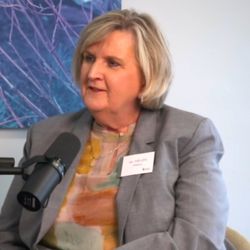
87. Ireland is about to build one health record. What can it learn from the US mistakes?
20:55||Season 2, Ep. 87Before AI can change healthcare, the record underneath it has to be right. In this episode, we speak with Helen Waters, Executive Vice President and COO of Meditech, about what Ireland needs to get right first as it moves towards a national electronic health record, and what 22 countries’ experience can teach us.Meditech develops electronic health records. It has more than 30 years in healthcare IT, works in 22 countries and has been in Ireland for over 20 years.What you can take away:🔹 Start with the system of record, and decide the pace and the cost deliberately. Fast should mean agile, not reckless. Helen describes a rollout of 180 hospitals in under five years, made faster by standardising and allowing for regional preferences.🔹 Standardise at the top and let regions adapt. Helen explains how HCA, which runs 180 US hospitals, sets national standards while allowing local variation.🔹 Plan for affordability beyond day one. In the US, technology costs went up and never came down.🔹 Insist on interoperability. The clinician making the next decision needs the data they need, whichever system holds it.🔹 Put clinicians, finance and data teams at the table early. Helen gives an example of a maternity system where counting births proved difficult.🔹 Use proven AI, such as ambient voice, and prove its value. Clinicians are wary of governments and vendors getting “drunk on the next technology”.For civil servants and public sector leaders involved in health technology, this is practical advice on getting the foundations right.Transform Gov is part of the Ireland eGovernment Awards, in partnership with Accenture.#TransformGov #HealthTech #PublicSector #AI #DigitalHealth
86. Fast and bad is still bad: how to get policy into practice
25:03||Season 2, Ep. 86Every new policy asks people to do something differently, but training is often treated as a mere afterthough, taking place after rollout. So what if we flipped the process? What if we treated learning as an essential, so policy actually changes what happens on the ground?In this episode, we speak with Gavin Woods, Managing Director of Aurion Learning, who has spent almost 26 years helping government departments, agencies and public bodies turn policy into practice through digital learning.What you can take from this episode:🔹 Bring learning into the room where the policy is written: The organisations that win awards for delivery plan training alongside the policy, not after it. One recent client saw 98% of its audience complete the compliance training required.🔹 Check your own language, and ask your audience what they need: Teams working intensely on policy can become "a little bit obsessed with our own plans and our own language", using terms their audience doesn't understand.🔹 Look beyond the tip of the iceberg: The people already engaged with you aren't your whole audience. Where you can't simply tell people to complete training, work out what's in it for them, and design for learning rather than just information sharing.🔹 Ask who is accountable for the policy's success, not just who runs training: Heads of strategy, transformation and sector skills increasingly need to be part of the conversation.🔹 Build a one-stop shop for AI upskilling: A learning portal with approved tools, internal guidance and colleague case studies helps turn "is this here to take my job?" into confidence.🔹 Don't mistake speed for quality: "Fast and bad is still bad." Ask what people need to know, what's difficult and what they ask most often, then pick the right format, from e-learning to a printable job aid.🎧 Transform Gov is part of the Ireland eGovernment Awards, brought to you in partnership with Accenture.#TransformGov #PublicSector #Learning #PolicyImplementation #AI
85. Six months for one meeting — then everything about how her hospital uses AI changed
28:29||Season 2, Ep. 85Recorded live at the All-Ireland Clinical AI Congress in Belfield, this episode features Dr Amrita Kumar, Radiology and AI Clinical Lead at Medica and a consultant breast radiologist who has built hospital-wide AI implementation from scratch — first in the NHS, now in the UAE.What you can take from this episode:🔹 Don't rush to a pilot — set up governance first. Dr Kumar discovered her hospital's departments were each adopting AI in isolation; the fix was getting every stakeholder (data governance, IT, digital, clinical teams) around one table from the start, not cascading through them one by one.🔹 Build a short, clear pitch for executive buy-in — and let leadership do the cascading. A five-slide deck and one meeting with her CEO was enough to unlock introductions to every other stakeholder needed.🔹 Secure funding through research partnerships before real-world rollout. Partnering on national research projects built internal infrastructure and expertise while bringing in funding, well before any live implementation began.🔹 Design one consistent governance and evaluation framework, even across different vendors and workflows. The same setup, evaluation, and monitoring approach was successfully scaled across five hospitals using different AI tools for different tasks.🔹 Watch for automation bias, and build in permanent checks. Less experienced clinicians' agreement with AI shifted measurably over time — the fix includes periodic "no AI" reporting sessions and training staff to read confidence scores, not just flagged regions.🔹 Know where AI genuinely helps today. With roughly 90% of scans normal, AI's clearest current value is confidently triaging those cases so limited specialist time goes to the 10% that need it.🎧 Transform Gov is part of the Ireland eGovernment Awards, brought to you in partnership with Accenture.📅 The Ireland eGovernment Awards and Leadership Summit take place 24 September at O'Reilly Hall, UCD. Find out more at digitalgovawards.com#TransformGov #AI #Healthcare #DigitalTransformation #PublicSector
84. Are we really talking about infrastructure — or are we talking about saving lives?
28:27||Season 2, Ep. 84Ireland is about to spend €275 billion on infrastructure with a workforce that's already stretched. So what is the difference between AI as a nice-to-have productivity tool, and AI as the thing that actually closes the gap between what we need to deliver and the people we have to deliver it?Stephen Bradley and João Silva from Accenture return to go deeper: not just what goes wrong on infrastructure projects, but exactly where AI changes the picture — and where to start if you're leading a major procurement tomorrow.What you can take from this episode:🔹 Sort your data foundation before you scale AI on top of it. It’s fundamental to figure out your work breakdown structures, cost breakdown structures, and what historical data is worth cleansing. If you get this wrong and "you'll spend the next 10 years doing data cleansing" instead of delivering.🔹 Understand the three layers AI actually adds: AI has three layers in a project – Assistance (roughly 50% productivity gains on individual tasks), orchestration (real-time triangulation across a whole project), and assurance (AI-supported checks that direct human reviewers to where their judgement matters most).🔹 Start small, prove it, then scale. Pick use cases where your data is already credible, demonstrate success, and expand from there.🔹 Reframe the skills conversation. The problem is that there are too many jobs, and not enough people. AI is a capability multiplier for a workforce already in short supply, rather than a threat in and of itself.🔹 Take humans out of harm's way wherever you physically can. Remote monitoring and AI-assisted inspection means real risk reduction. Every person you don't have to send onto a live rail line or a fast road is one less risk.Missed Part 1? Catch Stephen and João's earlier conversation on why infrastructure projects overrun, and Ireland's skills gap.🎧 Transform Gov is part of the Ireland eGovernment Awards, brought to you in partnership with Accenture.📅 The Ireland eGovernment Awards and Leadership Summit take place 24 September at O'Reilly Hall, UCD. Find out more at digitalgovawards.com#TransformGov #Infrastructure #PublicSector #AI #DigitalTransformation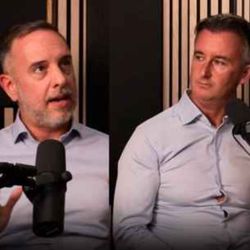
83. The £1 billion decision that became a £10 billion problem
31:27||Season 2, Ep. 83Ireland has committed €275 billion to infrastructure by 2035. Globally, 9 out of 10 major projects fail to deliver on plan, scope, or budget. What goes wrong, and can Ireland beat the odds using AI, digitisation and know-how?In Part 1 of this special two-part podcast series, host Maeve Kneafsey speaks with Stephen Bradley, lead author of Accenture's research into Ireland's infrastructure delivery challenges, and João Silva, Accenture’s managing director of capital projects.What you can take from this episode:🔹 How do you map your project's interfaces: A UK rail electrification project's cost grew tenfold after a value-engineering decision wasn't properly assessed against its knock-on effects — a decision that should have taken a day instead played out over a decade.🔹 How to face the skills gap honestly: Delivering Ireland's National Development Plan at current productivity would need roughly 100,000 additional construction practitioners — equivalent to two years of all net migration into the country.🔹 Why you need to rethink procurement before you launch: Moving from a "passive buyer" to an "engaged system orchestrator" means defining your data standards before contractors are appointed, not after.🔹 How to watch for over-engineering: It often reflects genuine caution around safety on novel assets — understanding why it happens is the first step to managing it.🔹 Why you should communicate progress early and often: Projects that published clear timelines and used digital twins to show the public visible progress built trust that made delivery easier, not harder.Part 2 goes deeper on exactly how AI and digital tools can change infrastructure delivery in practice.🎧 Transform Gov is part of the Ireland eGovernment Awards, brought to you in partnership with Accenture.📅 The Ireland eGovernment Awards and Leadership Summit take place 24 September at O'Reilly Hall, UCD. Find out more at digitalgovawards.com#TransformGov #Infrastructure #PublicSector #AI #DigitalTransformation
82. What Irish Rail's overruns can teach every public sector project team
42:27||Season 2, Ep. 82Could Irish Rail have saved the State €16.5 million, and got a working traffic management system, if its project had been managed differently?Today, guest James Louttit — Founder and Lead Trainer at Impactful Project Management — argues that successful projects come down to some surprisingly simple disciplines: focus on value, prioritise needs, make risk visible, force governance to make decisions, and adapt rather than blindly following a plan-for-plans-sake.So, could applying those principles earlier have changed the outcome at Irish Rail?That’s one of the questions we’re asking today on Transform Gov.James takes us inside:🔹How to get a project funded: focus on how many citizens benefit, how much time is saved, and how much risk is taken out🔹Why MoSCoW can collapse into chaos: when everything becomes a “must”, nothing is really prioritised, and force-ranking is a better way to make hard choices🔹Stopping project risk becoming tomorrow’s headline: The risk-specific contingency method for putting a real cost on what could go wrong before it happens🔹Pawpaws versus prickly pears: a brilliantly simple way to spot the work that delivers big value for little effort, and the work that eats time, money and energy for very little return🔹When an AI sceptic changed his mind: how a civil servant, given a real task and Microsoft Copilot, turned resistance into enthusiasm in a matter of minutes🎧 Transform Gov is part of the Ireland eGovernment Awards, brought to you in partnership with Accenture.📅 The Ireland eGovernment Awards and Leadership Summit take place 24 September at O'Reilly Hall, UCD. Find out more at digitalgovawards.com#TransformGov #ProjectManagement #PublicSector #Leadership #AI
81. Can AI help the public sector do more with less — and can we reskill fast enough?
30:47||Season 3, Ep. 81Public services need to deliver more, for a growing and increasingly complex population, but the people and technology resources available to do it are finite.Could AI change that?In Part 2 of her conversation with Transform Gov, Audrey O'Mahony of Accenture gets practical about where AI could have its biggest impact and how we reskill to meet the challenge.She explains how public-sector CIOs are already looking at AI to compress transformation timelines, increase the capacity of technology teams and rethink software delivery, coding, data migration and testing.We also hear how AI can change citizen services themselves — including a striking example where technology helped identify vulnerable people hidden within a huge backlog of correspondence, allowing public servants to prioritise those who needed help most.Where to start: Audrey brings us through the five imperatives for moving from isolated AI tools to genuine end-to-end transformation.This isn't AI as another productivity tool. It's a conversation about whether AI can give government something it badly needs: more capacity to transform and more capacity to serve. Missed Part 1? Catch Audrey's earlier conversation on agentic AI, data foundations, and the mindset shift from cost-cutting to capacity.🎧 Transform Gov is part of the Ireland eGovernment Awards, brought to you in partnership with Accenture.📅 The Ireland eGovernment Awards and Leadership Summit take place 24 September at O'Reilly Hall, UCD. Find out more at digitalgovawards.com#TransformGov #AI #PublicSector #FutureOfWork #Accenture
80. What would you do with 10,000 extra public servants?
25:58||Season 2, Ep. 80For decades, Ireland has built its economic identity on being a knowledge economy: highly skilled, highly educated, and a magnet for global investment. Agentic AI is about to test whether that advantage still holds.Most conversations about AI start with cost – how do we do more with less? Audrey O'Mahony, Accenture's Head of Talent Reinvention for UKIA, argues that's the wrong starting point entirely. Her question instead: what would you do with 10,000 extra employees? Thinking capacity instead of cost-cutting changes what preparing for AI actually looks like.In Part 1 of this conversation, Audrey talks about what's at stake for Ireland if that knowledge-economy advantage slips, and why government and the public sector have a uniquely important role to play. As adopters of AI, but also as enablers of it across the wider economy.🔹 The risk to Ireland's knowledge-economy advantage if AI readiness doesn't keep pace 🔹 The mindset shift — why "what would you do with 10,000 extra employees?" is a better question than "how do we cut costs?" 🔹 The public sector's dual role — adopting AI in its own services, and enabling AI readiness across the wider economy 🔹 The foundation — why agentic AI is only as good as the data sitting underneath it 🔹 The real driver of adoption — trust, not training modulesPart 2 coming soon.🎧 Transform Gov is part of the Ireland eGovernment Awards, brought to you in partnership with Accenture.📅 The Ireland eGovernment Awards and Leadership Summit take place 24 September at O'Reilly Hall, UCD. Find out more at digitalgovawards.com#TransformGov #AI #FutureOfWork #Accenture #PublicSector
loading...