Share
Wavelength Plus: A podcast by TradeWinds
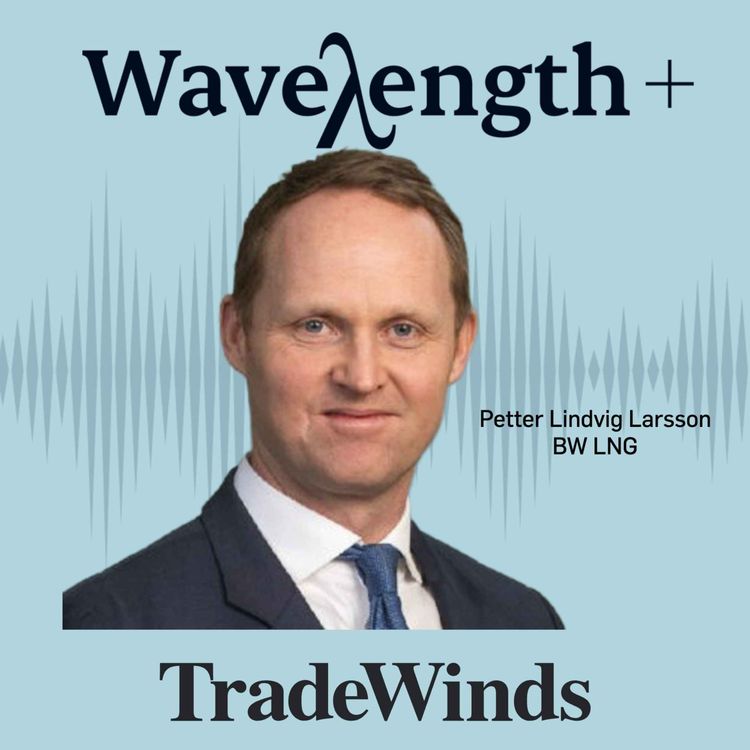
In conversation: BW LNG and its three tank gas carrier plans
LNG shipping can be something of a conservative, risk-averse sector. So to learn that the first mover on a new three-tank vessel design was BW LNG surprised some in the sector.
In this episode of Wavelength+, TradeWinds correspondent Lucy Hine, who has a focus on LNG, sat down with three senior executives from the company to hear about the new vessel and why the company had opted to make the move.
BW LNG executive vice president and head of LNG shipping Petter Larsson spelled out the company’s guiding principle which has led it to take the plunge on this pioneering quartet.
Head of technology Serge Schwalenstocker and the company’s chief of key account management and operations Riju Cherian explained how adding tank reinforcement, lowering the ship’s boil-off rate and upsizing its reliquefaction unit remove will give charterers a new flexibility on trading these ships.
“There is no downside, only upside,” Larsson says, as the company starts to take industry questions on its new ships, and ultimately market them.
Read more on this story on tradewindsnews.com.
More episodes
View all episodes
A shipping cyber-attack or disinformation campaign?
24:55|In August a fully laden VLCC ( a supertanker for the non shipping folk reading this) arrived off the US East coast and found itself being boarded by US coastguard officials and FBI investigators.They boarded because they suspected the vessel had been subject to a potential major cyber hack that that rendered parts of its engine or machinery inoperative. The general media only heard about this in September, but the news of the hack had reached TradeWinds in early August by someone claiming to be a crew member.So this is the story of this hack which may have not have been a hack. The complete silence of the shipowner and manager and how this may have emboldened the emailers/hackers to make claims about their hacking capabilities that were just on the right side of being unbelievable to be plausible. It was one of two similar emails TradeWinds received from different ships at around the same time.TradeWinds then spoke to Lars Benjamin Vold, head of Norma Cyber (the Nordic Cyber Resiliance Centre) about the emails received and the likelyhood of a laden tanker being hacked in the way described and posing a huge risk to the ships crew and the environment.This podcast includes the use of AI generated audio to represent the voices of the email senders.Reporting, host and production: Craig EasonA TradeWinds/DN Media podcast
In conjunction with YoungShip: The role of maritime journalism
38:56|What makes a news story? How do you talk to the press — and what do you do when things go wrong?This special episode of the Wavelength podcast comes in conjunction with YoungShip in Oslo as part of last week's Oslo Ocean Days events. It was recorded in front of an audience of YoungShip members, who had a chance to quiz TradeWinds journalists Matt Coyne and Holly Birkett, along with casualty lawyer Kirsten Wright from law firm Schjødt.Host: Matt Coyne.Panellists: Holly Birkett; Kirsten Wright, senior lawyer at Schjødt in Copenhagen.
Oslo Ocean Days: Leif Hoegh
15:40|This is the closing keynote speech given by Leif Hoegh at the Headline conference of the Oslo Ocean Days.The story of Hoegh is one that summarises what shipping is all about, he says in this recording.He points to the fact that the family company has accumulated capital only over about 20% of the last 100 years, with the rest of the time “treading water or wasting capital”.But he says the company has always had an appetite for risk and being a first mover."If you do not take any risks, you do not learn anything, you do not fail and you do not get the opportunity to get back on your feet. “And I think in this environment, as much as in any of the last 100 years, being able to take risks in people, in technology, in commercial solutions is the key.”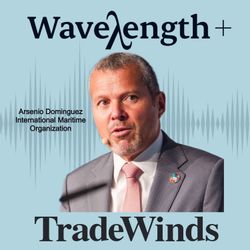
In conversation: Arsenio Dominguez, International Maritime Organization
22:50|This conversation was recorded before the audience of the TradeWinds Shipowner Forum, during SMM in Hamburg on September 1st 2026For details of TradeWinds shipowner forums and other high level events visit the events website.International Maritime Organization secretary general Arsenio Dominguez talks to TradeWinds editor in chief Julian Bray about the situation in the Gulf, the threat of fees to pass through the Strait of Hormuz, and the 6,000 seafarers still stuck in the Gulf since the conflict between the US and Iran began.The conversation also covers the ongoing impasse at the IMO regarding an industry appetite, or not, for a carbon levy on shipping and where a solution can be found this year as decarbonisation talks once again ramp up.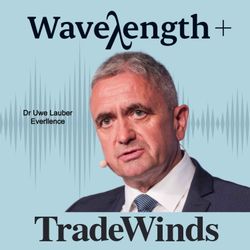
In conversation: Dr Uwe Lauber, Everllence
13:42|This episode comes from the halls of SMM, the shipbuilding, machinery and marine trade show in Hamburg, Germany.Everllence, once known as MAN Energy Services, Man Diesel and Turbo, MAN W&W (Burmeister and Wain) os simply Maschinenfabrik Augsburg-Nürnberg is one of the oldest and largest engine makers in shipping.The name Everllence came as its parent group, Volkswagen Group, looked to sell a majority stake of the division while retaining the MAN name for its other business lines.This year the sale of a 51% stake of Everllence was agreed for about $8.5bn to a private equity firm Bain. VW retaining the other 49%In this interview TradeWinds senior editor Craig Eason sits down with Everllence chief executive Dr Uwe Lauber to talk about the sale, the future and the lack of shipowner appetite for the new engines that the company has spent millions of dollars developing.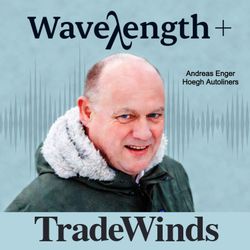
In conversation: Andreas Enger, Hoegh Autoliners
18:22|After making a big deal about its belief that green ammonia is the future fuel for shipping, Oslo-listed and based Hoegh Autoliners has just placed an order for a further 12 vessels to be built to be fuelled by LNG and diesel.It is a move that suggests it may not believe in its green objectives anymore, afterall its previous orderbook was for 12 of its new "Aurora" class vessels, with the latter four to be delivered with the ability to use green ammonia on delivery, as the fuel produces no CO2 when used in a ship's engine.In this interview with TradeWInds senior editor Craig Eason, Hoegh Autoliner chief executive Andreas Enger explains the decision and why he still believes that the company Aurora fleet will be fuelled by ammonia eventually.In this interview he lays the blame and points to where the ammonia is going to come from.produced nd hosted: Craig EasonGuest: Andreas Enger, chief executive, Hoegh AutolinersA TradeWInds/DN Media podcast
Guiding Stars finalist Evangelos Efstathiou
30:39|Each month until October, TradeWinds will publish a profile of a finalist in our Guiding Stars series, a project highlighting the people making tangible change in shipping.Our seventh Guiding Stars finalist is Evangelos Efstathiou, chief executive of digital platforms Marsoft and Burmester & Vogel (B&V) and founder of Skysail Advisors.Evan has been deeply entrenched in the maritime tech world for over 20 years, during which time he has developed new software, advised on investments and mergers and acquisitions in the space, and also completed some deals of his own. He reflects on his own career, how shipping uses data, investor appetite for maritime tech and looks ahead to how the era of AI will make or maybe even break some vendors in the space.TradeWinds' 10 Guiding Stars finalists have been nominated by our readers and editorial team. These are people who are innovating and tackling some of shipping's biggest issues. Later this year, we will ask you to vote on who will receive our TradeWinds Guiding Star award for 2026, which will be announced in November.Host and producer: Holly Birkett, TradeWinds reporter.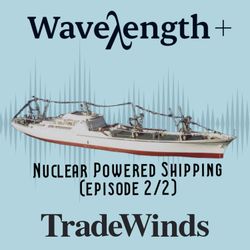
Going critical 2: the story of commercial maritime nuclear
20:05|The shipping industry is taking the potential of nuclear power seriously. In this second deep dive into its developments we look at the liability regimes, government involvement, indemnity needs and finance.Modular reactor developers are promising a new age of clean concentrated power which is chaper and safer than critics claimFor shipping this may be one answer to its energy transition.Hear from financiers, insurers, shipowners and policy lobbyists about these latest developments.Further details on nuclear can be found on TradeWindsnews.com:How funding, insurance and emotion need to align for shipping to go nuclearGreen Seas: Are we drinking the nuclear kool-aid?What a vessel from the 1960s can teach us about nuclear shippingIndia joins nuclear shipping race amid energy security concernsCore Power to study floating nuclear power plants using SMR technologyGreen Seas: There are critical questions to answer about nuclear for shippingRewriting the rules: Winning hearts and minds for a nuclear future‘Going critical’: Shipping takes a step closer to nuclear realityProduction and host: Craig EasonA TradeWinds/DN Media podcast