Share
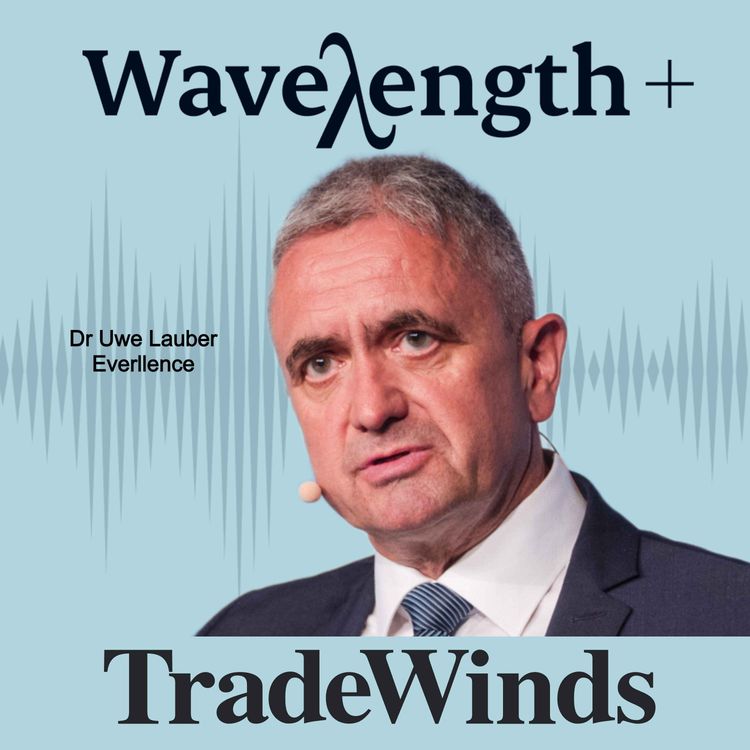
Wavelength Plus: A podcast by TradeWinds
In conversation: Dr Uwe Lauber, Everllence
This episode comes from the halls of SMM, the shipbuilding, machinery and marine trade show in Hamburg, Germany.
Everllence, once known as MAN Energy Services, Man Diesel and Turbo, MAN W&W (Burmeister and Wain) os simply Maschinenfabrik Augsburg-Nürnberg is one of the oldest and largest engine makers in shipping.
The name Everllence came as its parent group, Volkswagen Group, looked to sell a majority stake of the division while retaining the MAN name for its other business lines.
This year the sale of a 51% stake of Everllence was agreed for about $8.5bn to a private equity firm Bain. VW retaining the other 49%
In this interview TradeWinds senior editor Craig Eason sits down with Everllence chief executive Dr Uwe Lauber to talk about the sale, the future and the lack of shipowner appetite for the new engines that the company has spent millions of dollars developing.
More episodes
View all episodes
In conversation: Jotaro Tamura, president and chief executive, Mitsui OSK Line
21:16|Jotaro Tamura, president and chief executive, MOL Lines talks to TradeWinds senior editor Craig Eason during the recent Tokyo Shipowners Forum about the groups increased investment in LNG (hint: data centres and energy security the need to still look at the transition and the need for cleantech solutions and how the Japanese conglomerate must tread a geopolitical tightrope at times.A TradeWinds/ DN Media podcast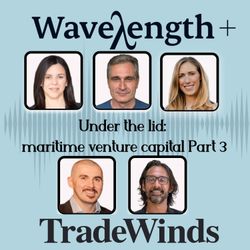
Under the lid: maritime venture capital. Part three
28:24|This is the third and final episode of a three part podcast series looking at the role venture capital is playing in shipping industryMarina Hadjipateras explains why she did not focus on shipping and maritime when she co-founded TMV, despite coming from a renown ship owning family.The discussion also looks at the role global uncertainty is playing in the industry and those start-ups that can play into the need for energy security are the ones most likely to be attractive to venture fundsExpert guests:Marina Hadjipateras, founder and managing partner, TMVKate Danaher, managing director, Ocean Investments, S2GKrishnan Narayanan, founder, MarineFifty/Skies Fifty, CFO, SW7Argyris Stasinakis, co-founder and ex principle, MarineTraffic, founder the Maritime Innovation NetworkJoshua Gold, Principal, TMVHost: Craig Eason, Senior Editor, TradeWindsA TradeWinds/DN Media Podcast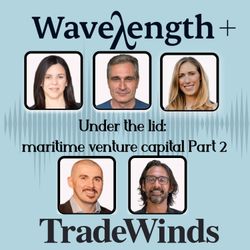
Under the lid: maritime venture capital. Part two
18:38|Venture capital fund creators Joshua Gold, Krishnan Naravanan and Kate Danaher discuss the expectations of start-up founders in this second of three episodes of this Wavelength Plus mini series.Do founders believe their businesses can become valued at two billion dollars if there is a global fleet of 200,000 ships?A key requirements can be that startups have potential in adjacent industries like aviation, space or energy.Argyris points to start-ups feeling intimidated by VC fund demands and expectations while a question is raised about funding levels through a startups growing pains (the valley of death).Expert guests:Kate Danaher, managing director, Ocean Investments, S2GKrishnan Narayanan, founder, MarineFifty/Skies Fifty, CFO, SW7Argyris Stasinakis, co-founder and ex principle, MarineTraffic, founder the Maritime Innovation NetworkJoshua Gold, Principal, TMVHost: Craig Eason, Senior Editor, TradeWindsA TradeWinds/DN Media Podcast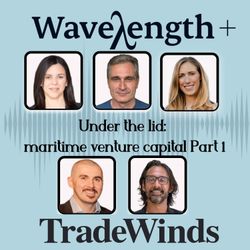
Under the lid: maritime venture capital. Part one
20:00|The must listen to episode about investing in innovation and change in shipping and maritime. Part oneIn this unique round the world deep dive talk recorded specifically for TradeWinds Wavelength Plus subscribers, five venture experts offer their insights on capital flows towards today's innovations and bright ideas.Guests Joshua Gold from TMV in New York, Kate Danaher from the Oceans Investment team of S2G in San Francisco, Krishnan Narayanan from MarineFifty/SkiesFifty in Singapore, and UK-based MarineTraffic co-founder Argyris Stasinakis (and founder of the new Maritime Innovation Network), talk to TradeWinds Craig Eason about the current appetite for maritime innovation, the investment sizes and the need for founders to have an eye for adjacent industries when they assess their value and want to get the attention of an investor.This is part one of a mini series, with all three episodes available on Tradewindsnews.comExpert guests:Kate Danaher, managing director, Ocean Investments, S2GKrishnan Narayanan, founder, MarineFifty/Skies Fifty, CFO, SW7Argyris Stasinakis, co-founder and ex principle, MarineTraffic, founder the Maritime Innovation NetworkJoshua Gold, Principal, TMVHost: Craig Eason, Senior Editor, TradeWindsA TradeWinds/DN Media Podcast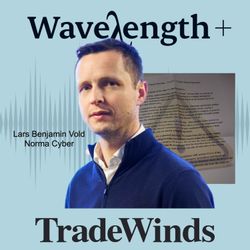
A shipping cyber-attack or disinformation campaign?
24:55|In August a fully laden VLCC ( a supertanker for the non shipping folk reading this) arrived off the US East coast and found itself being boarded by US coastguard officials and FBI investigators.They boarded because they suspected the vessel had been subject to a potential major cyber hack that that rendered parts of its engine or machinery inoperative. The general media only heard about this in September, but the news of the hack had reached TradeWinds in early August by someone claiming to be a crew member.So this is the story of this hack which may have not have been a hack. The complete silence of the shipowner and manager and how this may have emboldened the emailers/hackers to make claims about their hacking capabilities that were just on the right side of being unbelievable to be plausible. It was one of two similar emails TradeWinds received from different ships at around the same time.TradeWinds then spoke to Lars Benjamin Vold, head of Norma Cyber (the Nordic Cyber Resiliance Centre) about the emails received and the likelyhood of a laden tanker being hacked in the way described and posing a huge risk to the ships crew and the environment.This podcast includes the use of AI generated audio to represent the voices of the email senders.Reporting, host and production: Craig EasonA TradeWinds/DN Media podcast
In conjunction with YoungShip: The role of maritime journalism
38:56|What makes a news story? How do you talk to the press — and what do you do when things go wrong?This special episode of the Wavelength podcast comes in conjunction with YoungShip in Oslo as part of last week's Oslo Ocean Days events. It was recorded in front of an audience of YoungShip members, who had a chance to quiz TradeWinds journalists Matt Coyne and Holly Birkett, along with casualty lawyer Kirsten Wright from law firm Schjødt.Host: Matt Coyne.Panellists: Holly Birkett; Kirsten Wright, senior lawyer at Schjødt in Copenhagen.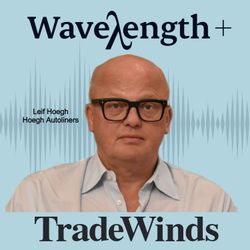
Oslo Ocean Days: Leif Hoegh
15:40|This is the closing keynote speech given by Leif Hoegh at the Headline conference of the Oslo Ocean Days.The story of Hoegh is one that summarises what shipping is all about, he says in this recording.He points to the fact that the family company has accumulated capital only over about 20% of the last 100 years, with the rest of the time “treading water or wasting capital”.But he says the company has always had an appetite for risk and being a first mover."If you do not take any risks, you do not learn anything, you do not fail and you do not get the opportunity to get back on your feet. “And I think in this environment, as much as in any of the last 100 years, being able to take risks in people, in technology, in commercial solutions is the key.”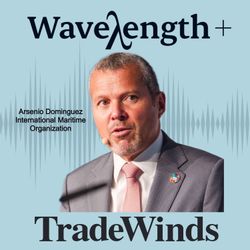
In conversation: Arsenio Dominguez, International Maritime Organization
22:50|This conversation was recorded before the audience of the TradeWinds Shipowner Forum, during SMM in Hamburg on September 1st 2026For details of TradeWinds shipowner forums and other high level events visit the events website.International Maritime Organization secretary general Arsenio Dominguez talks to TradeWinds editor in chief Julian Bray about the situation in the Gulf, the threat of fees to pass through the Strait of Hormuz, and the 6,000 seafarers still stuck in the Gulf since the conflict between the US and Iran began.The conversation also covers the ongoing impasse at the IMO regarding an industry appetite, or not, for a carbon levy on shipping and where a solution can be found this year as decarbonisation talks once again ramp up.