Share
The Techne Connect
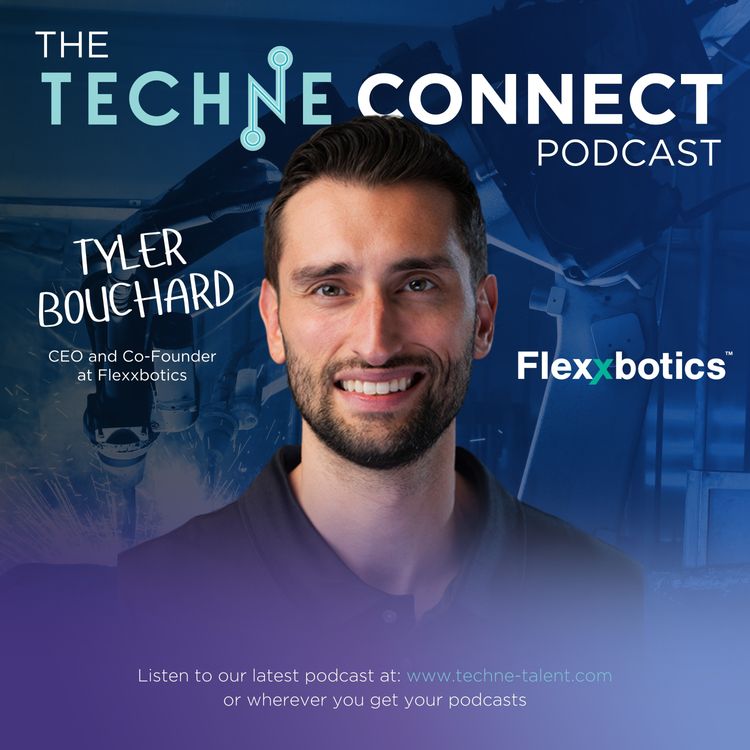
Tyler Bouchard, CEO and Co-Founder at Flexxbotics
In this episode of Behind The Robot, Adam Ewing speaks with Tyler Bouchard, CEO and co-founder of Flexxbotics. Tyler explains how modern manufacturing is shifting toward software defined automation and why orchestration, interoperability, and autonomy sit at the centre of scalable robotics adoption.
He shares his journey from mechanical engineering and industrial automation into building Flexxbotics, and how early experience across manufacturing, robotics components, and commercial roles shaped the company’s vision. Tyler discusses the challenge of connecting robots, machines, and business systems, and why clean, contextualised data is critical for reliable AI deployment in high compliance environments.
The conversation explores manufacturing labour gaps, the role of robotics in reshoring and reindustrialisation, and the skills engineers need to succeed at production scale.
This episode offers practical insight into robotics software, manufacturing autonomy, and building systems that work reliably in the real world.
Thank you for listening to The Techne Connect Podcast - where we go behind the tech and ahead of the curve.
But we don’t just share stories, we help build them. At Techne Talent, we connect ambitious people with opportunities across the very industries we feature. If you’re inspired by what you hear, speak to us today about where your skills could take you.
👉 Don’t miss an episode: Follow and subscribe wherever you get your podcasts.
📸 For behind-the-scenes content, follow us on Instagram: @techne_talent
💼 Explore opportunities and connect with us on LinkedIn: Techne Talent
Inspire your future. Plug into what’s next.
More episodes
View all episodes

The Techne Connect Special: Tamarack Global, Behind the Capital
01:32:55|Recorded live in Notting Hill, London, this episode of Behind the Capital explores the world of early-stage investing in hard tech and techno-industrial innovation.You hear from Rob Eloff, Partner at Tamarack Global, as he shares his journey into venture capital and the thinking behind the firm’s investment approach. He explains why the focus is shifting back to the physical world, how AI and simulation are shaping new industrial opportunities, and why sectors like space, energy, defence and advanced manufacturing are drawing more attention from investors. He also shares what he looks for in founders, why resilience and self-awareness matter, and how the right capital partner helps companies move from early conviction to long-term value.
Tony Rios, Vice President of Navigation Engineering at ANELLO Photonics
44:17|In this episode we speak with Tony Rios, VP of Navigation Engineering at ANELLO Photonics, about a career spent building inertial navigation systems across space, consumer electronics, and aviation. Tony explains how he started on space shuttle navigation at Rockwell International, moved into satellite controls at The Aerospace Corporation, then joined Crossbow Technology as an early employee to help bring MEMS inertial systems into real products. He shares what it took to embed algorithms on constrained hardware, calibrate low performance MEMS sensors, and deliver one of the first FAA certified MEMS Attitude Heading and Reference Systems for general aviation.The conversation covers leadership paths, why Tony prefers small, technical teams, and how his work later expanded into Apple products including Vision Pro, and advanced air mobility at Archer Aviation. They close with a real example of handling a critical certification issue, owning mistakes, and solving complex problems in partnership with customers.
Martin Turco, Senior AI Engineer at Affineon Health
35:42|In this episode we speak with MartinTurco, AI Engineer at Affineon Health, about using AI to automate clinical inbox workflows and reduce administrative pressure on healthcare providers.Martin shares his journey from electronics engineering into startups and health tech, and explains how Affineon helps practitioners manage lab results, patient messages, and clinical documentation more efficiently.The conversation explores AI in healthcare, regulation, clinical trust, and how automation can return time to practitioners so they can focus on patient care.
John Malsbury, Co-Founder & CEO at AnySignal
46:44|In this episode we speak with John Malsbury, Co-Founder and CEO of AnySignal.John shares his journey from early work in software defined radio and communications engineering, through to SpaceX, where he helped build mission-critical RF and ground segment systems, before taking the leap into entrepreneurship. They discuss what it takes to go from concept to action, why customer feedback matters more than theory, and how AnySignal is building RF platforms that support spacecraft communications, tactical connectivity and future defence applications. The conversation also explores leadership, startup resilience, scaling technical teams, and why RF and DSP talent will play such an important role in the future of space and defence.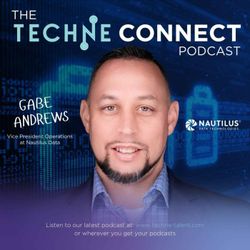
Gabe Andrews, Vice President of Operations at Nautilus Data
48:42|In this episode we speak with Gabe Andrews, Vice President of Operations at Nautilus Data Technologies, about the evolution of the data centre industry and the shift toward high density liquid cooled infrastructure.Gabe shares how he entered the industry after leaving the military, and how a career that began by chance turned into a global journey across design, construction, commissioning, operations and innovation in mission critical facilities.The conversation explores leadership, mentorship and talent development in data centres, along with the importance of networking, adaptability and learning across different parts of the infrastructure lifecycle. Gabe also discusses the future of the sector, including the rapid growth driven by AI workloads, the rise of prefabricated modular infrastructure, and why liquid cooling will become a standard feature of modern facilities.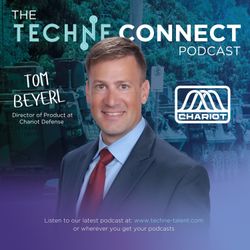
Tom Beyerl, Director of Product at Chariot Defense
56:59|In this episode of Behind the Mission, we speak with Tom Beyerl, Director of Product at Chariot Defense, about his transition from a 20 year Army career into defence technology.Tom reflects on leadership in the military, lessons from combat operations, and how emerging technologies such as drones, autonomy, and AI are reshaping modern warfare.The conversation explores why power and energy are becoming critical infrastructure for the modern battlefield, and how defence startups are accelerating innovation across the sector.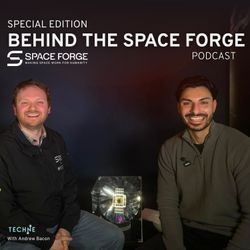
The Techne Connect Special: Space Forge, Behind the Orbit
34:10|Recorded onsite at Space Forge in Cardiff, this episode takes you inside a fast-growing space startup focused on manufacturing in orbit.You hear from Andrew Bacon, Co-Founder and CTO, as he shares his journey into the space industry and the thinking behind Space Forge. He explains the focus on space-to-Earth manufacturing, semiconductor materials, and how microgravity enables new technologies that are not possible on Earth. He also shares lessons from building a deep tech company, from securing funding to shaping a long-term vision, and why real-world experience, testing, and learning from failure matter.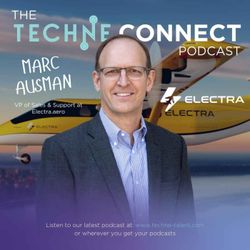
Marc Ausman, VP of Sales & Support at Electra.aero
40:15|In this episode of Behind the Flight we speak with Marc Ausman, VP Sales and Support at Electra, about hybrid electric aviation and the future of regional air mobility.Marc shares his journey through aerospace, drones, eVTOL, and electric flight, and explains why Electra has taken a pragmatic route to market with a fixed wing hybrid electric aircraft.The conversation explores commercial viability, regulatory progress, customer demand, and the operational value of quiet, short take-off aircraft. Marc also discusses why this is such an exciting time to build in aerospace, and what it takes to turn new aviation technology into a real product customers will adopt.
Kevin Noertker, CEO & Co-Founder of Ampaire
39:11|In this episode we speak with Kevin Noertker, co-founder and CEO at Ampaire, about building hybrid electric aircraft and what it takes to turn a bold aviation vision into a product you can certify, deploy, and scale.Kevin explains how Ampaire began with an ambitious long-term view of fully electric flight, then narrowed to propulsion and onboard power as the practical path to market. He breaks down how founders de-risk big ideas, learn fast, and adapt when infrastructure, regulation, and real-world operations force hard trade-offs.The conversation also covers early personal sacrifices, how to manage downside risk, why PhD spinouts need customer pull, and how Ampaire defines culture through trusted, practical, compelling values. Kevin closes with a reflection on curiosity, motivation, and why he would choose dinner with Isaac Newton.