Share
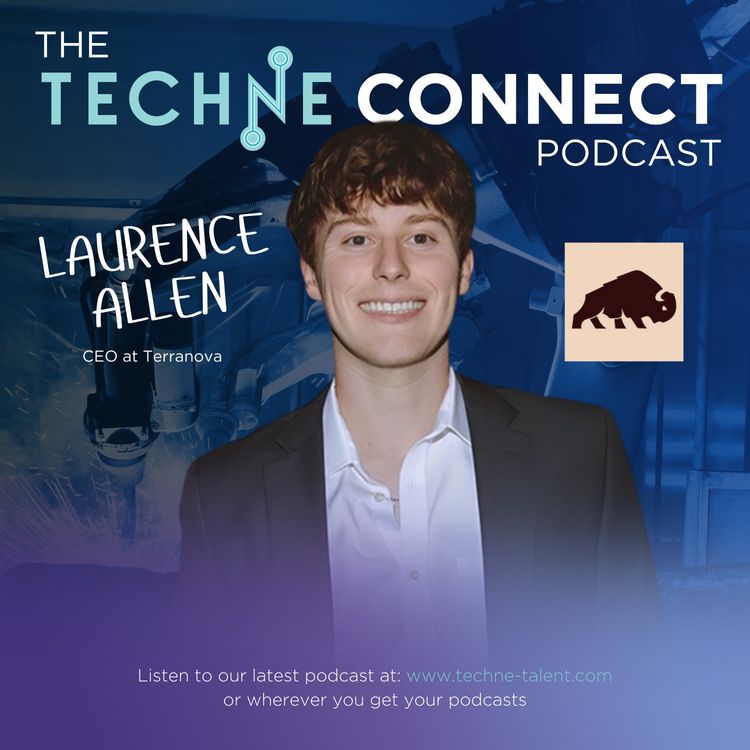
The Techne Connect
Laurence Allen, CEO at Terranova
In this episode of Behind the Robot, we speak with Laurence Allen, CEO of Terranova.
Laurence explains how Terranova builds autonomous terraforming robots to lift land out of flood zones, preserving cities and infrastructure in place. He shares lessons from SpaceX, scaling deep tech hardware, and why robotics must focus on real world problems like flooding and climate resilience.
This episode explores robotics with impact, autonomy at scale, and building technology for long term human challenges.
Thank you for listening to The Techne Connect Podcast - where we go behind the tech and ahead of the curve.
But we don’t just share stories, we help build them. At Techne Talent, we connect ambitious people with opportunities across the very industries we feature. If you’re inspired by what you hear, speak to us today about where your skills could take you.
👉 Don’t miss an episode: Follow and subscribe wherever you get your podcasts.
📸 For behind-the-scenes content, follow us on Instagram: @techne_talent
💼 Explore opportunities and connect with us on LinkedIn: Techne Talent
Inspire your future. Plug into what’s next.
More episodes
View all episodes
Brook Leonard, CEO at Rogue Space Systems Corporation
41:11|In this episode we speak with Brook Leonard, CEO at Rogue Space Systems, about his journey from the US Air Force into commercial space leadership.Brook shares how his experience as a pilot and leader shaped his approach to building teams, solving complex problems, and driving execution in high-pressure environments. The conversation explores the shift towards a new space economy, where infrastructure, logistics, and autonomy are becoming critical to scaling operations in orbit. Brook also explains how Rogue Space Systems is developing in-orbit logistics, payload containers, servicing vehicles, and autonomous software to support the next generation of space missions.
Avi Shabtai, CEO at Ramon Space
30:34|In this episode we speak with Avi Shabtai, CEO at Ramon Space, about his journey from deep tech and data centres into the space sector.Avi shares how Ramon Space is building computing infrastructure in orbit to support the next generation of data-driven space applications.The conversation explores how ideas move from concept to execution, the balance between innovation and commercialisation, and why early customer engagement plays a critical role. Avi also explains how space is shifting from an isolated sector into a connected extension of Earth’s infrastructure, and what this means for engineers and entrepreneurs.
Chip Walter, Managing Director at Marlinspike Partners
42:03|In this episode we speak with Chip Walter, Partner at Marlinspike Partners, about his journey from the US Navy and CIA into venture capital.Chip shares how his experience across defence, intelligence, and innovation shaped his approach to investing, with a focus on technologies that deliver real impact to the warfighter.The conversation explores the rise of dual-use technology, why AI and autonomy are reshaping modern defence, and how venture capital plays a role in accelerating capability development. They also discuss common mistakes founders make when raising capital, what investors look for beyond technical strength, and why building the right team and funding strategy is critical to long-term success
Ben Cipperley, Chief Strategy Officer at Havoc
48:51|In this episode we speak with Ben Cipperley, Chief Strategy Officer at Havoc AI, about his transition from 26 years in the US Navy into defence technology leadership.Ben shares how his Navy career shaped his approach to strategy, autonomous systems, and decision-making in high-pressure environments.The conversation explores collaborative autonomy, command and control, multi-domain defence systems, startup culture, and how Havoc AI is helping operators control large numbers of autonomous assets at scale.
Rob Alford, Mission Operations & Navy Programs Lead at Havoc
58:54|In this episode we speak with Rob Alford from Havoc about his transition from the US Navy into one of the fastest-growing defence technology startups.Rob shares his journey through mechanical engineering, nuclear propulsion systems, aircraft carrier operations, and emerging technology experimentation before moving into autonomous defence systems.The conversation explores collaborative autonomy, robotics, defence innovation, startup culture, military leadership, and the future of multi-domain autonomous operations across maritime, aerial, and land systems.
Sanjay Ralhan, VP of Airtworthiness & Certification at Atropos Group
40:50|In this episode we speak with Sanjay Ralhan, VP of Airworthiness and Certification at Atropos Group, about his 30-year journey across aviation, regulation, certification, and autonomous aircraft development.Sanjay shares lessons from his time at Boeing, the FAA, Virgin Galactic, and now Atropos Group, where he is helping shape the certification pathway for a clean-sheet autonomous aircraft.The conversation explores why certification should never be treated as an afterthought, how safety and innovation must evolve together, and why certification expertise is becoming one of the most important skill sets in aviation.
Enrique Oti, CSO at Second Front Systems
42:12|In this episode we speak with Enrique Oti, Chief Strategy Officer at Second Front Systems, about his journey from the US Air Force into defence technology.Enrique shares his experience as a cyber warfare officer, China Foreign Area Officer, and founder of Kessel Run, before moving into industry to help modern software reach the warfighter faster.The conversation explores the challenge of bringing commercial technology into defence environments, why compliance and security need to move beyond manual processes, and how Second Front Systems is enabling faster, more secure deployment into government infrastructure.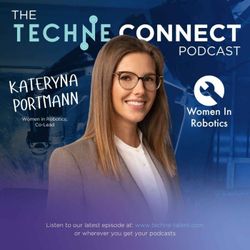
Kateryna Portmann, Women in Robotics, Co-Lead
22:30|In this episode of Behind the Influence, we speak with Kateryna Portmann, Women in Robotics, Co-Lead and lecturer in robotics and Physical AI.Kateryna shares her journey into robotics, from neurorehabilitation technology to industrial inspection robots, and explains why representation, visibility and access matter in engineering. She also discusses how robotics is evolving, why inclusive teams build better products, and what the next generation of women in tech should know as they build their careers.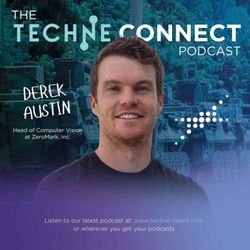
Derek Austin, Head of Computer Vision at ZeroMark, Inc
35:24|In this episode of Behind the Mission, we speak with Derek Austin, Head of Computer Vision at ZeroMark, about building computer vision systems for counter-drone defence.Derek shares his journey from computer science and self-supervised learning to leading computer vision development at ZeroMark. The conversation explores edge deployment, startup culture, defence technology, counter-UAS systems, drone warfare, and why curiosity, ownership, and high agency matter in fast-moving technical teams.