Share
The Leadership in Insurance Podcast - Insurtech & Innovation
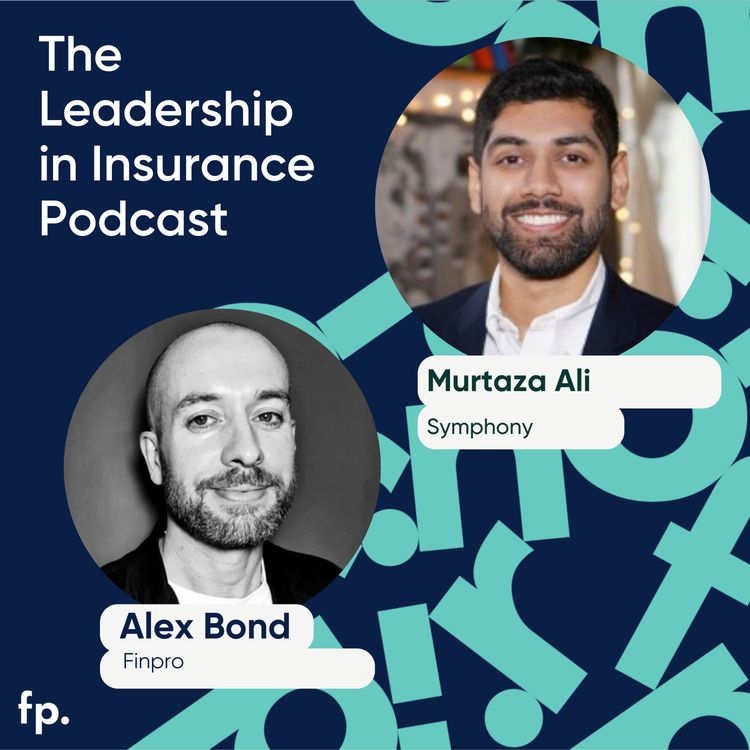
Putting Humanity in the Loop — How Symphony AI Is Redefining Insurance Claims Training : An Interview with Murtaza Ali, CEO and Co-Founder of Symphony
I was joined this week by Murtaza Ali, CEO & Co-Founder of Symphony (YC F24), for a conversation about how he’s tackling some of the biggest challenges in the insurance industry with cutting-edge voice AI — without losing sight of the human touch.
A bit of context: Murtaza’s journey insurtech journey started at McKinsey before joining Tractable to build out their platform. He’s seen firsthand how AI can transform industries — but also where it can fall short without humanity in the loop. That insight became the driving force behind Symphony AI.
What we covered in this episode:
🔍 From Tractable to Symphony: Why Murtaza left a leading AI scale-up to build his own YC-backed startup focused on the insurance sector.
🧑💼 The insurance industry’s talent gap: How Symphony AI is tackling high turnover and lengthy onboarding by using voice AI to simulate real-world claim calls.
🎭 AI-powered role-play: How claims adjusters practice tough conversations with AI personas — from handling a frustrated customer to delivering empathetic responses during stressful moments.
💡 Humanity in the loop: Why empathy will always be a competitive edge — and how AI can enhance it, not replace it.
🔄 AI adoption in traditional industries: The importance of messaging AI tools as training allies — not threats to jobs.
🚀 Insights from Y Combinator: How YC’s “make something people want” mantra helped shape Symphony’s roadmap — and what other founders can learn from it.
🔮 The future of claims handling: How automation may shift claims adjusters into project manager roles, overseeing AI agents while focusing on complex cases that demand human understanding.
My key takeaway?
Tech is powerful — but putting people first is what makes it stick. Symphony’s approach is a great reminder that the best AI solutions augment human skills, they don’t replace them.
We've also got to give a special shout out to the I Love Claims team - and a huge congratulations to Murtaza and his co-founder Shobhit Srivastava for winning their pitch competition!
We work with the ILC team every year to help them scout the latest in claims innovation and we're so glad that we were able to put these masterminds together! Sue Whyte Jonathon Valentine Mark Hadaway mba
If you work in insurance, customer experience, AI, or just want to hear how real startups navigate AI hype vs. real-world impact — give this one a listen.
💬 I’d love to hear your thoughts — where do you see the balance between AI and the human touch going next?
More episodes
View all episodes

Alex Ley, Scrub AI: Specialist AI, Human Judgment and the Future of Underwriting
40:14|Before co-founding Scrub AI, Nicola Turner spent around half of her first two years as an underwriter manually cleaning data. Is that really the best way to train the next generation?On this episode of The Leadership In Insurance Podcast, FinPro founder and host Alex Bond is joined by Alex Ley, CEO and Co-Founder of @Scrub AI, to explore where automation adds value and where human judgment remains essential.Scrub AI tackles a familiar insurance challenge: turning messy spreadsheets into clean, structured data ready for catastrophe modelling, pricing and internal systems.But the conversation goes beyond data preparation:🔹 Why Scrub AI uses small, specialist models rather than relying on general-purpose LLMs🔹 How human feedback helps improve accuracy and accommodate customer preferences 🔹 Why complex specialty risks still need experienced underwriters🔹 How the industry can develop new talent as AI changes entry-level work🔹 Building a lean business with angel backing in a market where trust takes timeFor anyone building insurance technology, leading underwriting teams or thinking about the industry’s future workforce, this episode offers plenty to consider.#InsurTech #Insurance #Underwriting #AI #LeadershipInInsurance #ScrubAI
Olivier Lafontaine: Equisoft’s Approach to AI and Insurance Modernisation.
35:43|🎙️ Could the biggest risk in insurance AI be doing nothing?In this week’s Leadership in Insurance Podcast, Alex Bond speaks with Olivier Lafontaine, Chief Product Officer at Equisoft, about autonomous agents and how insurers can modernise their technology.Drawing on 20 years at Equisoft, Olivier explores:🔹 Where AI agents can reduce friction in insurance workflows—and why human oversight and guardrails matter.🔹 How AI coding tools are reshaping the build-versus-buy debate.🔹 How Equisoft/amplify helps carriers modernise incrementally, without replacing their entire core system.For insurance leaders navigating AI adoption and legacy technology, this conversation offers a practical perspective on where to start.
Dan Schuleman (Qumis): AI as a Second Set of Eyes in Insurance Claims
29:05|This week on The Leadership in Insurance, Alex Bond sits down with Dan Schuleman, CEO & Co-founder of Qumis, to explore how AI can help insurance professionals navigate complex policies — and why human judgement still matters.Some of what they cover:📄 Why lengthy policies, amendments and endorsements make insurance a tough challenge for AI 🤝 AI as a co-worker — helping professionals spot issues while keeping people responsible for decisions 💬 Why a good claims experience matters for trust, retention and the wider business 🎯 Measuring AI’s value beyond time savings — 72% of Qumis users reported catching coverage issues they would otherwise have missed 💡 Moving beyond faster processes to entirely new ways of transacting insuranceA must-listen for anyone exploring how AI can strengthen claims decisions and support the people making them.
Ashwin Agarwal (Advocate Technologies): The $150 Trillion Opportunity in Insurance Pricing
33:17|This week on The Leadership in Insurance, Alex Bond sits down with Ashwin Agarwal, Founder & CEO of Advocate Technologies, to talk about bringing pricing transparency to commercial insurance.Some of what they cover:📊 An $8 billion data network, built in five years — think "Verisk 2.0" meets Bloomberg for insurance pricing⏳ Insurance pricing is 40 years behind financial markets — and that gap is costing the industry🔄 A 12.5% quote-to-bind ratio that shows just how badly the market needs better benchmarking💡 A bold bet: turning a $3 trillion market into $150 trillion with floating-rate policies and price-indexed hedges🎯 Real innovation vs. cost-cutting — and why insurance needs an investment mindset like Buffett'sA must-listen for anyone tracking where pricing data and market infrastructure in commercial insurance are headed next.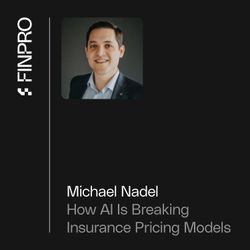
Michael Nadel on How AI Is Breaking Insurance Pricing Models
35:42|This week, host Alex Bond is joined by Michael Nadel, Global Practice Lead at Simon-Kucher, to unpack how AI is upending pricing and monetization in insurance.In this conversation, Michael shares:✅ Why AI is breaking the traditional per-user-per-month pricing model and forcing carriers and vendors toward outcome-based, value-aligned pricing instead✅ The hard truth that AI speeds things up but doesn't always cut costs ✅ How to manage pricing transitions without alienating existing customers✅ The State Farm AI claims lawsuit as a cautionary tale for deploying customer-facing AI in a regulated industry✅ Why he believes specialized judgment and expertise will remain valuable in consulting, even as AI commoditizes more technical knowledgeIt's a conversation about the gap between perceived value and willingness to pay — and why pricing strategy is really a signal of who you are as a business.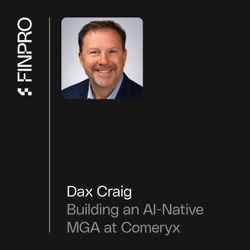
Dax Craig on Building an AI-Native MGA — With a Team of Five
39:32|This week, host Alex Bond is joined by Dax Craig, co-founder and CEO of Comeryx — a serial insurance entrepreneur.In this conversation, Dax shares:✅ His journey from a wireless start-up in grad school to founding two prior insurance ventures and why he came back for a third✅ Comeryx's AI-native approach to small commercial insurance, targeting hard-to-place ENS risks through wholesale brokers with no-touch processing from submission to renewal✅ How a five-person team is aiming to deliver the output of 50-75 employees and why profitability matters more to him than growth for growth's sake✅ Why MGA structures beat traditional carriers on speed and innovation and his warning against MGAs drifting into becoming carriers✅ What's really overlooked in small commercial insurance, and where investors are repeating mistakes from the mid-2010sIt's a conversation about building lean, staying disciplined on profitability, and why real distribution expertise still beats hype in Insurtech.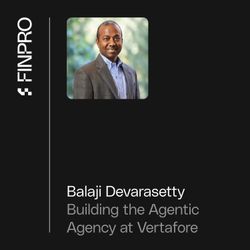
Balaji Devarasetty on Building the "Agentic Agency" at Vertafore
30:47|🎙️ NEW EPISODE: Leadership in Insurance PodcastThis week, host Alex Bond is joined by Balaji Devarasetty, CTO of Vertafore, to talk about bringing AI and outside-industry thinking to insurance technology.In this conversation, Balaji shares:✅ His path from banking to payments to crypto — and how that cross-industry experience shapes how he approaches insurtech✅ Vertafore's vision for the "Agentic Agency," using AI to modernize the tech stack without ripping out legacy systems✅ How the Orange Partner Program's 40+ partners and hundreds of APIs let agencies of every size extend their platform, rather than building everything in-house✅ How AI is closing the gap with other industries — cutting regulatory updates from days to hours and commission reconciliation from hours to minutes✅ Why attracting the next generation of insurance talent means rethinking user experience, not just technology It's a conversation about modernizing legacy systems without ripping them up, why the best insurtech ideas often come from outside insurance, and what it takes to build technology the next generation really wants to use.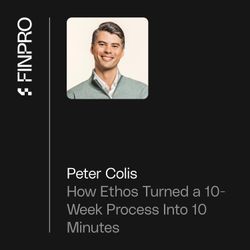
Peter Colis: How Ethos Turned a 10-Week Process Into 10 Minutes
31:05|🎙️ NEW EPISODE: The Leadership in Insurance PodcastThis week, host Alex Bond is joined by Peter Colis, co-founder and CEO of Ethos — the vertically integrated platform that's rebuilding how life insurance gets underwritten, sold and serviced in the US.In this conversation, Peter shares:✅ How Ethos went from a Stanford dorm-room idea in 2016 to the largest direct life insurance marketer in the US✅ The three pivotal decisions behind Ethos's growth — from vertical integration to automating 95% of underwriting decisions instantly (vs. a 20-30% industry average)✅ Why building a real competitor to Ethos is harder than it looks, and what makes their culture different from traditional carriers✅ His view on where LLMs will (and won't) fit into life insurance distribution✅ How Ethos's agent platform is democratizing access to life insurance for the mass and middle marketsIt's a conversation about innovation, execution, and building a category-defining company — as told by someone who's done it twice over: through years of private growth and now as a newly public company.#LeadershipInInsurance #InsurTech #LifeInsurance #Leadership #Ethos #Innovation
Bill Harris on 10 Years of InsurTech and What's Next at ITC Vegas
28:01|🎙️ NEW EPISODE: The Leadership in Insurance PodcastThis week, host Alex Bond sits down with Bill Harris, co-founder and Chief Customer Officer of ITC (InsureTechConnect), ahead of ITC Vegas 2026 (Sept 29 – Oct 1).In this conversation, Bill shares:✅ How InsurTech has evolved over 10 years — from disrupting legacy carriers to helping them adopt technology at scale✅ The AI investment numbers reshaping the sector, and why he's excited (with eyes open) about where it's heading✅ What's new at ITC Vegas this year, including dedicated Cyber and AI summits✅ Why 80-85 of the top 100 global carriers now show up — and what keeps 9,000+ attendees coming back✅ His take on why the best opportunities at ITC happen outside the formal agenda — in the hallway conversations and serendipitous meetingsIt's a conversation about scale, connection, and why ITC has become the industry's annual homecoming.