Share

The Intelligence from The Economist
Leeward: we meet South Korea’s probable president
•
We meet the opposition leader who is likely to be the next president. Cleaning up the domestic mess after an alleged coup would seem easy compared with his tasks on the international stage. Our correspondent reports on renewed violence in Colombia; again, or still, it is about cocaine (10:10). And remembering the ups and downs of Marianne Faithfull, a beloved British singer (17:40).
Get a world of insights by subscribing to Economist Podcasts+. For more information about how to access Economist Podcasts+, please visit our FAQs page or watch our video explaining how to link your account.
More episodes
View all episodes

The Weekend Intelligence: Shire folk
49:13|For 15 years, the British media dismissed Tommy Robinson as a far-right extremist. We kept him off our televisions, and out of our newspapers. Today his rallies attract tens of thousands of followers and he has the ear of the world’s richest man.Shire Folk is the story of how some of the most powerful people in America came to see Britain—and Islam—through the eyes of a fringe football hooligan.Topics covered:Radical IslamGangsEnglish Defence LeagueListen to what matters most, from global politics and business to science and technology—Subscribe to Economist Podcasts+For more information about how to access Economist Podcasts+, please visit our FAQs page or watch our video explaining how to link your accountThis podcast transcript is generated by third-party AI. It has not been reviewed prior to publication. We make no representations or warranties in relation to the transcript, its accuracy or its completeness, and we disclaim all liability regarding its receipt, content and use. If you have any concerns about the transcript, please email us at podcasts@economist.com.Read more about how we are using AI.
Out-numbered: AI’s contentious maths milestone
22:49|OpenAI’s claim to have solved one of the great problems in mathematics has itself created problems. We ask why the breakthrough has shaken the field. On the 25th anniversary of 9/11 we examine the vast counterterrorism machinery that followed in America, and nascent efforts to pare those powers back. And remembering Guo Lanying, a Chinese singer who championed traditional opera.Watch extended clips from Insider here.Guests and host:Sam Wikeley, science correspondentSam Beal, Washington correspondentAnn Wroe, obituaries editorJason Palmer, co-host of “The Intelligence”Topics covered: mathematics, AI, Millennium Prize Problems9/11 anniversary, counterterrorism lawGuo Lanying, Chinese operaListen to what matters most, from global politics and business to science and technology—subscribe to The Economist.
Working through it: the AI jobs boom dawns
19:56|The labour data are in from America and a trend is becoming clearer: on balance AI is starting to create more jobs than it hoovers up. Despite advancements of just about every other kind, China cannot seem to escape its food-safety problems. We ask why not. And why Kenya’s ants have become the target of smugglers.Guests and host:Alex Domash, economics correspondentGabriel Crossley, China correspondentCarla Subirana, news editorRosie Blau, co-host of “The Intelligence”Jason Palmer, co-host of “The Intelligence”Topics covered: AI, labour statistics, labour marketChina, regulation, food safetyants, smuggling, KenyaListen to what matters most, from global politics and business to science and technology—subscribe to The Economist.
Chainsaw sputtering: Milei’s experiment falters
22:09|President Javier Milei has tamed inflation and improved the lot of many Argentines. But an election season approaches, and the promised economic and wage growth are not materialising. As LIV Golf files for bankruptcy, we ask where it went wrong in trying to disrupt the sport. And the growth that is good for India’s people is bad for its elephants.Guests and host:Kinley Salmon, Latin America correspondentHenry Tricks, US technology editorAbhishek Kumar, India writerRosie Blau, co-host of “The Intelligence”Topics covered: Argentina, Javier Mileigolf, LIV Golf, Saudi ArabiaIndia, elephantsListen to what matters most, from global politics and business to science and technology—subscribe to The Economist.
School of shock: teenagers get dimmer
21:20|International tests in maths and reading show that 15-year-olds today score what 14-year-olds would have done a decade ago. Our correspondent explains the long-term decline. Is Miami’s thriving economic growth sustainable? And why Jeremy Vine’s BBC Radio 2 show is a microcosm of Britain. Guests and host:Mark Johnson, senior editorCerian Richmond Jones, international economics correspondentSonny Loughran, Britain correspondent Rosie Blau, co-host of “The Intelligence”Topics covered: PISA, education, test scores, exams, aptitudeMiami, Trump, Florida, hurricaneJeremy Vine, Radio 2, BBCListen to what matters most, from global politics and business to science and technology—subscribe to The Economist.
All right on the night: AfD’s victory
24:04|Alternative for Germany won an even larger share of the vote than expected in yesterday’s state election. What does the far-right nationalist party’s success mean for Germany and Europe? The climate case for limiting vapour trails from aeroplanes. And why South Korean youths are turning to Buddhism. Guests and host:Tom Nuttall, Berlin bureau chiefOliver Morton, planetary affairs editorSoobin Kim, Korea writerRosie Blau, co-host of “The Intelligence”Topics covered: AfD, Alternative for Germany, Alternative für Deutschlandcontrails, aviation, climate scienceSouth Korea, BuddhismListen to what matters most, from global politics and business to science and technology—subscribe to The Economist.
The Weekend Intelligence: Radio Kudirat
43:28|In the 1990s, as Nigeria was under a brutal military dictatorship, Radio Kudirat emerged as a glimmer of hope. The clandestine project united journalists, activists and engineers, who risked their lives to give Nigerians a voice even when a $5 million bounty was put out on their heads. Over 30 years later, Africa correspondent Ore Ogunbiyi re-unites some of the people who brought Radio Kudirat to life.Topics covered:NigeriaDemocracyAuthoritarianism PropagandaRadio KudiratListen to what matters most, from global politics and business to science and technology—Subscribe to Economist Podcasts+For more information about how to access Economist Podcasts+, please visit our FAQs page or watch our video explaining how to link your account.Music by bluedot Sessions and Epidemic Sound.This podcast transcript is generated by third-party AI. It has not been reviewed prior to publication. We make no representations or warranties in relation to the transcript, its accuracy or its completeness, and we disclaim all liability regarding its receipt, content and use. If you have any concerns about the transcript, please email us at podcasts@economist.com.Read more about how we are using AI.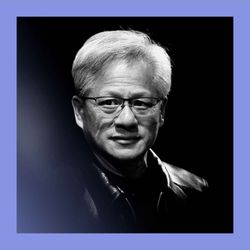
Bargaining chips: Nvidia is the bank of AI
24:33|Nvidia, the world’s most valuable company, has shifted strategy to boost demand for its chips. Our correspondent assesses the opportunities and risks. Knife crime in Britain moves to rural pastures. And our obituaries editor recounts the life of Frank Smith, who died in prison aged 101. Watch extended clips from Insider here, plus the full Elon Musk interviewGuests and host:Shailesh Chitnis, global business writerSonny Loughran, Britain correspondentAnn Wroe, obituaries editorRosie Blau, co-host of “The Intelligence”Topics covered: Nvidia, AI, Jensen HuangKnife crime, county lines, drug marketFrank Smith, electric chair, death rowListen to what matters most, from global politics and business to science and technology—subscribe to The Economist.
Ire and ICE: the toll of America’s deportations
23:12|Donald Trump’s stance on immigration helped him win the presidency. Our correspondent asks if a backlash against the campaign could damage Republican midterm prospects. Reddit is struggling in an age of AI. And the enduring beauty of the Bayeux tapestry.Guests and host:Aryn Braun, West Coast correspondentShera Avi-Yonah, business correspondentAlexandra Suich Bass, culture editorRosie Blau, co-host of “The Intelligence”Jason Palmer, co-host of “The Intelligence”Topics covered: Deportation, ICE, immigration, MinneapolisReddit, Google, AIBayeux tapestry, 1066, British MuseumListen to what matters most, from global politics and business to science and technology—subscribe to The Economist.