Share
The Intelligence from The Economist
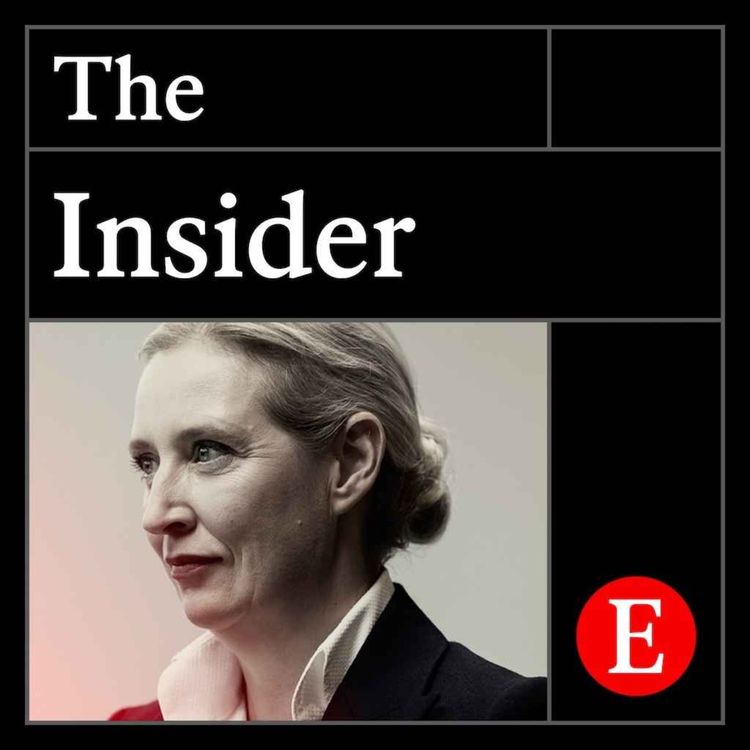
An interview with Alice Weidel
•
Under Alice Weidel’s leadership the Alternative for Germany (AfD), a right-wing populist party, has been riding high. A series of successes in state elections have brought it closer than ever to power at national level. Ms Weidel is perhaps best known for her calls for “remigration” and criticism of Germany’s support for Ukraine. She spoke to The Economist’s editor-in-chief, Zanny Minton Beddoes, for The Insider, our video show for premium subscribers. Hear their conversation in full.
Watch the show—and sign up to the Insider newsletter.
Listen to what matters most, from global politics and business to science and technology—subscribe to The Economist.
More episodes
View all episodes

Strait draw: Iran’s hot war cools
18:42|A sense of stalemate prevails between Iran and America. We ask how the impasse might break, and how the Gulf states are thinking about it. The “Bangladesh paradox” referred to good economic outcomes despite messy political ones. But now the country’s banking system is teetering. And a look under the bonnet of large-language models finds them being quietly profane. Guests and host:Josie Delap, Middle East editorChris Lockwood, Asia editorAlex Hern, AI writerỌrẹ Ogunbiyi, co-host of “The Intelligence”Jason Palmer, co-host of “The Intelligence”Topics covered: Iran war, America, Gulf statesBangladesh, development, corruptionAI models, LLMs, swearingListen to what matters most, from global politics and business to science and technology—subscribe to The Economist.
Alice forgiven? Jensen Huang back at Nvidia
23:42|And just like that, and just before markets opened, he was back. We take a look at how things will not and cannot be the same at the company Mr Huang leads once again. America has lost its measles-elimination status, thanks to wrong-headed public-health policy. And an interview with Max Richter, a wildly in-demand composer. Guests and host:Shailesh Chitnis, global business writerSlavea Chankova, health-care correspondentBrooke Unger, senior digital editorỌrẹ Ogunbiyi, co-host of “The Intelligence”Jason Palmer, co-host of “The Intelligence”Topics covered: Jensen Huang, Nvidiameasles, vaccines, America, public-health idiocyMax Richter, classical music, composing Listen to what matters most, from global politics and business to science and technology—subscribe to The Economist.
In the life of prime: AI’s latest maths triumph
24:09|As mathematics problems go, proving the Riemann hypothesis, about prime numbers, was enormous. Now that an AI solution appears to have cracked it, we ask what’s next for the field. In Japan natural disasters are a perpetual inevitability; we examine the country’s new agency dedicated to preparedness. And the economic signs that renters in America are in over their heads.Guests and host:Alex Hern, AI writerMoeka Iida, East Asia reporterDoug Dowson, data journalistỌrẹ Ogunbiyi, co-host of “The Intelligence”Jason Palmer, co-host of “The Intelligence”Topics covered: Riemann hypothesis, AI, mathematicsJapan, disaster preparednessAmerican renters, creditListen to what matters most, from global politics and business to science and technology—subscribe to The Economist.
The Weekend Intelligence: The real tech addicts
41:07|Are people too dependent on their devices? Britons are on track to spend nearly five years of their waking lives unintentionally scrolling. People everywhere worry they are “addicted”. Our Digital Culture Correspondent, Caitlin Talbot, went to rehab to find out who the real tech addicts are—and whether they are an early indication of what might happen to a generation raised on screens. Topics covered:Technology AddictionSocial MediaRehabGamingMusic by bluedot Sessions and Epidemic Sound.Listen to what matters most, from global politics and business to science and technology—subscribe to The Economist.
Delayed but not denied: justice for the Rohingyas
27:18|After decades of persecution, and seven years after the case was first brought before the UN’s highest court, judges ruled that Myanmar has committed genocide against the muslim minority. AI has facilitated new methods of cyber-crime, but for tech giants it has also created new opportunities to prevent them. And a tribute to Vladimir Uglev, the Russian chemist turned dissidentGuests and host:Irena Long, Asia writerAlex Hern, AI writerAnn Wroe, obituaries editorỌrẹ Ogunbiyi, co-host of “The Intelligence”Topics covered: Myanmar, Rohingyas, International Court of JusticeAI, cyber-crime, cyber-securityVladimir Uglev, Novichok, RussiaListen to what matters most, from global politics and business to science and technology—subscribe to The Economist.
Racing ahead: Anthropic’s big IPO
22:31|The leading AI lab is expected to raise over $80bn, the largest sum ever raised at an initial public offering. Where does this leave its rival OpenAI? The countries profiting from China and America’s battle for the world’s critical minerals. And why the colour of your rice might not matterGuests and host:Miles Kruppa, technology correspondentCerian Richmond Jones, international economics correspondentBenjamin Sutherland, science writerỌrẹ Ogunbiyi, co-host of “The Intelligence”Topics covered:Anthropic, OpenAI, artificial intelligenceCritical minerals, lithium, Democratic Republic of CongoBrown rice, starch, sugarsListen to what matters most, from global politics and business to science and technology—subscribe to The Economist.
Third wheeling: Xi, Putin and Trump meet in China
23:04|The APEC summit began in Shenzhen today and the leaders of China, Russia and America are set to sit down tomorrow. Will it amount to much? Scientists are finally taking a closer look at what causes the complicated disease of the uterine lining. And the highly-anticipated launch of the new Grand Theft Auto gameGuests and host:Jeremy Page, chief China correspondentAnjani Trivedi, global business correspondentTom Wainwright, culture correspondentỌrẹ Ogunbiyi, co-host of “The Intelligence”Jason Palmer, co-host of “The Intelligence”Topics covered: APEC, Donald Trump, Xi JinpingEndometriosis, women’s health, medical researchGrand Theft AutoListen to what matters most, from global politics and business to science and technology—subscribe to The Economist.
Transchipment: Huang and the AI aftershocks
22:19|Jensen Huang probably is not coming back to lead Nvidia. We look to other signals of what lies ahead for the AI juggernaut, from earnings calls to export controls. Britain’s politicians have long promised lower or even zero migration. What would happen if that came to pass? And examining Robert Pattinson’s fit in the storied past of James Bond.Guests and host:Shailesh Chitnis, global business writerDuncan Robinson, political editorCatherine Nixey, Britain correspondentỌrẹ Ogunbiyi, co-host of “The Intelligence”Jason Palmer, co-host of “The Intelligence”Topics covered: Nvidia, Jensen Huang, AIBritain’s migration policyJames Bond franchise, Robert PattinsonListen to what matters most, from global politics and business to science and technology—subscribe to The Economist.
Cede of doubt: a NATO offer to Ukraine
24:05|Reasons abound for scepticism about America’s Donbas-for-membership gambit. The truth that it reveals is the hurry the administration and its envoys are now in. A veto-loving president confronting Democratic majorities in Congress might spell interminable deadlock; our correspondent outlines the reasons to expect some compromise. And a field trip to see The Economist Education Foundation’s good work in practice. Donate here.Guests and host:Oliver Carroll, Ukraine correspondentAlex Domash, economics correspondentỌrẹ Ogunbiyi, co-host of “The Intelligence”Jason Palmer, co-host of “The Intelligence”Topics covered:Ukraine war, Russia, NATO, diplomacyDonald Trump, America’s Congress, dealmakingThe Economist Educational Foundation, news literacyListen to what matters most, from global politics and business to science and technology—subscribe to The Economist.