Share
The Impossible Network
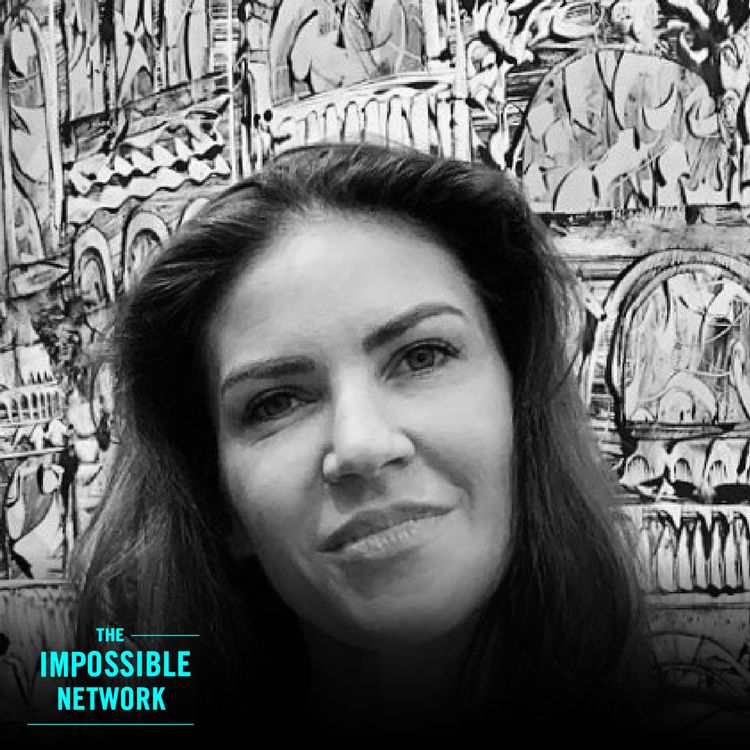
106: A Serendipitous Path To Educational Reform - Maria Dantos
Season 2, Ep. 106
•
Guest Overview
Maria Dantos was born to a gregarious Greek immigrant father and ‘Mayflower compact’ mother. She grew up in her family-run haunted hotel in Vermont, with safety and freedom to play and explore her imagination. Immersed in abundant love she developed a world view of social justice and the importance of removing the inequity in education.
Maria is an educator to her core; with 15 years of teaching, administration and educational reform experience. She has worked with people of diverse backgrounds and to advocate for justice in education as a means of upward social mobility for minority, female or otherwise less advantaged people. Her work reflects the importance of lifelong education and encouraging curiosity.
She founded, and led multiple daycare and pre-kindergarten (Pre-K) education programs and schools of up to 100 students.
Driven by her conviction that every child deserves to have access to quality education led her to launch her non-profit organization, Philox to provide humanitarian relief and education to underserved at-risk children in humanitarian areas of concern. Maria is also seeking to collaborate with educators, healthcare workers, community organizers and artists to provide solutions for at-risk children in this time of crisis.
Applying her organizational, management and creative skills together Maria has worked as producer for several live events, short films, documentaries and one feature length film. She has also collaborated with members of Yo Yo Ma’s Silk Road Ensemble, Lincoln Center, and with Bank Street College at Columbia University.
In Part One we cover Maria’s early years.
In Part two we cover her work in educational development and perspectives on the future impact of Covid19 on education and child development.
I hope you enjoy the caring compassion and commitment of Maria Dantos.
What we discuss
Growing up in a playful outdoor environment she discusses her making her own adventures.
Maria reflects on the influence of her Greek roots, and her curiosity about ‘otherness’ in a non greek community. We discuss the abundance of love but changing material scarcity.
Maria explains how her education piqued her curiosity and broadened her worldview and led her to winning a scholarship to Japan aged fourteen and learning what was an alien culture but forged lifelong connections.
Maria explains how serendipity set her on a path to a career in education as a result of 9/11 that led her to signing up to a Masters program at University of Pennsylvania.
She discusses the impact of living with the Navajo Nation and the influence of living with a Navajo Indian elder and revolutionary Catherine Smith and how this opened her eyes to systematic social injustice, poverty, addiction, malnutrition, lack of human rights and dignity .
We cover her first experience in teaching in New York working between two economically diverse schools
Maria tells the story of the serendipity of one set of parents who decided to fund her school start up.
Maria discusses early childhood education curriculum strategies and her hope for the future of education and the relationships and discussions she is having to address the changes we need in education.
We cover behavioral and neural changes in children due to the impact of technology and the lack of human interaction that is affecting child and interpersonal developments.
We dive into the importance of quality content for children.
Maria describes her collaborations with Columbia and Yo Yo Ma create new educational experiences
I ask Maria to describe her educational NGO Philox and how its creating access to education to children and the community and protection.
We discuss this in relation to Covid 19 and where the education system will change and how she hopes that more value will be focused on education.
She names her principles of justice and ...
More episodes
View all episodes
262. Embracing Uncertainty: A Conversation with Futurist Tamar Kasriel
57:57||Season 8, Ep. 262Tamar Kasriel is a futurist and author of Could: The Smart Thinking Handbook for When Nothing Is Certain.In this conversation, Tamar traces her unconventional path, from studying history at Oxford to teaching English in rural Japan to advising some of the world's biggest brands on what's coming next. Along the way, she explains why the skills she learned studying historiography (the study of how history is written) are surprisingly useful in an age of disinformation, and why the goal of futures work isn't prediction. It's readiness.We explore why multiple truths can coexist, why pessimism has no predictive advantage, and why agency, not certainty, is what leaders actually need right now.This is Part One of two conversations. In Part Two, we'll dive deeper into the ideas in Tamar's book. Timecodes00:00 Introduction02:00 From Oxford to Japan: An unplanned path08:00 Why multiple truths can coexist13:00 Retail as "the sharp end of consumption"21:00 Selfridges: From icon to cautionary tale28:00 "It's not about being right, it's about being ready"37:00 How scenario planning saved supermarkets in COVID44:00 Herman Kahn and the origins of scenario planning47:00 Why the book is called "Could"50:00 "Pessimism has no predictive advantage"55:00 Agency comes with accountabilitySocialsLinkedin https://www.linkedin.com/in/tamarkasriel/Website https://www.tamarkasriel.com/LinksCould: The Smart Thinking Handbook for When Nothing Is Certain.
261. Economic Inequality & The Stories That Silence It
09:45||Season 7, Ep. 261I hope this is a thought-provoking episode. In it I explore why economic inequality persists despite overwhelming evidence of its damaging effects. I reference economist Gary Stevenson's stark assessment of wealth concentration and connect it with Jon Alexander's work on the narratives that shape our society. The episode delves into how our collective stories; from being "subjects" to being "consumers" have blinded us to systemic issues and blocked meaningful change. I share Jon's work on the emerging "Citizen Story" as an alternative framework that could transform how we address inequality through collaboration, agency, and shared responsibility. This episode may challenges you to reconsider the stories you live by and their power to reshape your economic future.TIMESTAMPS00:00 Introduction and Topic Overview00:52 The Problem of Economic Inequality00:55 Gary Stevenson's Insights02:15 The Consumer Story05:11 The Citizen Story06:04 Practical Steps Towards Change08:55 Conclusion and Call to ActionSOCIALShttps://instagram.com/markfallowshttps://linkedin.com/in/markfallowsLINKS Citizens Jon AlexanderGary Stevenson The Trading Game
260. Building a New Game for Capitalism - A Conversation with Chad Grills
57:02||Season 7, Ep. 260Today, I'm joined by Chad Grills, an entrepreneur, veteran, and visionary who's on a mission to reimagine how capital flows to startups.In our conversation, Chad shares his fascinating journey from small-town Maryland to military service in Iraq and Egypt, to becoming a writer and entrepreneur in Silicon Valley. Now based in Texas, Chad is the founder of National Capital League, a startup developing a game designed to help people make or raise money in alignment with their values.As a father of five, Chad offers thought-provoking perspectives on education, raising children in today's digital world, and the importance of outdoor play. We discuss the challenges facing young men in society, the shifting economic landscape, and how courage might be our most needed and contagious virtue.As usual I ask the three fundamental questions at the heart of The Impossible Network: Who are you as a human being? What made you the human you are? And what are you working to achieve?This is a conversation about faith, entrepreneurship, and creating a future where capital flows to those embodying virtue. Let's dive in with Chad Grills.Time stamps 00:00 Introduction to Chad Grills01:39 Chad's Early Life and Values08:01 Parenting and Education in the Digital Age10:45 The Impact of AI on Society13:07 Chad's Professional Journey21:01 Challenges Facing Young Men23:45 Geopolitical and Economic Observations30:03 Transitioning from Silicon Valley to New Beginnings30:25 Introducing National Capital League31:09 The Concept of Private Markets32:55 Building a Game for Entrepreneurs35:16 Challenges in Entrepreneurship38:30 Virtue and Capital Flow45:27 Guiding the Next Generation47:57 Inspirations and Legacy51:29 Documentaries and UAPs54:56 Final Thoughts and Next InterviewSocial Links LinkedinLinks In The Show Age of Disclosure The Fourth TurningOnly The paranoid SurviveThe Man Who Solved the Market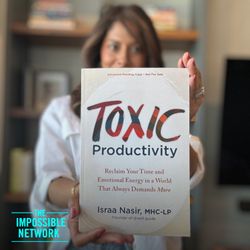
259. Israa Nasir – Breaking Free From Toxic Productivity
25:46||Season 7, Ep. 259Two weeks ago at SXSW in Austin, I reconnected with previsous guest, Israa Nasir, therapist, clinical strategist, and author of "Toxic Productivity,” During our short conversation Israa explains the mindset that compels us to chase relentless achievement, often as a means to cope with challenging emotions such as guilt, shame, and feeling left behind.Israa shares her personal journey and why she wrote her book. She looks at how society's views on productivity impact our work, relationships, parenting, and self-image. We also discuss the emotional side of productivity advice. It is important to recognize our core values to achieve healthy productivity.We also cover the impact of AI on the future of work, mental health, and leadership. Israa highlights both the risks and opportunities that AI presents, stressing the need for thoughtful guardrails and intentional use to enhance, rather than diminish, human value and connection.Whether you're grappling with burnout, feeling pressured to constantly perform, or curious about navigating productivity in the age of AI, this conversation offers thoughtful insights and practical advice. Enjoy the episode.Social Links Instagram Well.guide Israa’s Linkedin Links In the ShowToxic ProductivityHBR article on Toxic productivity Timestamps00:00 Introduction and Reconnection01:28 Discussing Toxic Productivity02:25 Personal Journey and Book Genesis03:16 Impact on Relationships and Society06:20 AI and the Future of Work15:11 AI in Mental Health: Risks and Benefits15:56 Regulatory Challenges in AI Adoption16:49 Disparities in AI Adoption Among Clinicians18:30 Personal Reflections on Productivity20:04 Where to Find the Book20:48 Future Plans and Career Aspirations21:24 Speaking Engagements and Workshops23:21 Final Thoughts on Leadership and Productivity
258. The AI FlyWheel – Are You In or Out?
05:32||Season 7, Ep. 258In this episode, I explore the concept of the "AI flywheel" - the accelerating momentum of artificial intelligence development that's either carrying us forward or leaving us behind. As we approach the critical juncture of Artificial General Intelligence we need to understand what makes us uniquely human, something I discussed with recent guest, Dom Heinrich. Key PointsThe Accelerating Pace: Recent releases from Anthropic (Claude 3.7 Sonnet), OpenAI (GPT-4.5), Google (Gemini), and Grok demonstrate how each breakthrough contributes to faster development.Choosing Your Tools: Mark uses different AI models for specific purposes - Claude for creative work, Gemini for Google's ecosystem, and Grok for Twitter-based insights.Human Uniqueness: As AI handles analytical tasks with ease, our distinct value may lie in emotional intelligence, ethical reasoning, and wisdom from lived experience.Finding Balance: Technology should be used thoughtfully. AI might help us become more human by handling routine tasks, freeing us to focus on relationships, creativity, and empathy.Notable Quote"As controllers of technology, we must balance technological connection with disconnection, have the discipline to lose ourselves in our unconscious minds, and have the focus to listen to our souls."Join the ConversationI invites listeners to share how they're navigating the AI flywheel and what human qualities they believe will become more valuable as AI advances.Timestamps00:00 Introduction 00:08 The AI Flywheel Concept00:38 Recent AI Developments01:49 Choosing the Right AI Tool02:49 Human Qualities in the Age of AI03:43 Balancing Technology and Humanity04:33 Engaging with AI Technology05:12 Conclusion and Call to Action LinksLinkedin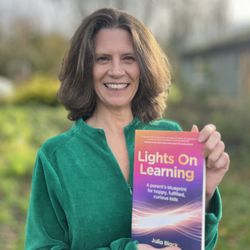
257. Transforming Education with Julia Black's Lights On Framework
34:10||Season 7, Ep. 257In this follow-up conversation, Julia Black, a former TV producer turned education innovator, shares insights from her groundbreaking Lights On framework and her book 'Lights On Learning: A Parent's Blueprint for Happy, Fulfilled, Curious Kids.' Julia describes how her framework challenges traditional education paradigms by focusing on internal learning processes and parental involvement to treat disengagement as an opportunity for growth. She discusses the six learning signatures and provides real-life examples, including a case study of a six-year-old, demonstrating transformative changes. The discussion also touches on the relevance of her approach in the age of AI, emphasizing the importance of creativity and problem-solving. Additionally, Julia talks about her upcoming audiobook and collaborative projects aimed at building a community of curious, fulfilled learners.Timestamps00:00 Introduction 01:25 Julia's Journey and Book Release01:55 Understanding the Lights On Approach05:28 Parental Role in Education10:06 Real-Life Success Stories18:35 Empowering Parents and Teachers32:12 Future Projects and ConclusionSocial Links Explorium Facebook Instagram Links Lights On Learning Book
256. Dominik Heinrich - Navigating the Future: Design, AI, and the Human Touch
54:03||Season 7, Ep. 256My guest this week is Dominik Heinrich, a visionary working at the intersection of design, AI technology, and human experience. As the co-founder of the Creative AI Academy, faculty member at Pratt Institute, and Head of Global Design at Coca-Cola Company, Dom brings a unique perspective on how AI is reshaping creativity and innovation.Dom's journey is fascinating—from his childhood in Germany drawing maps that would foreshadow his future global agency network, to driving innovation at McCann and MRM in NYC, to forming the Creative AI Academy. He has become a highly respected, influential voice in AI and design.What I loved about this conversation, was how Dom emphasized the importance of remaining curious, authentic, and most importantly, human in an increasingly AI-driven world.We explore everything from his early days as an entrepreneur and agency owner to his current mission of helping organizations and individuals navigate the transformation that AI brings to creative work. What emerges is not just a discussion about technology but a deeper reflection on how we can become better humans in an AI-enhanced future.Now over to Dom. Time stamps 00:00 Introduction 00:50 Meet Dominic Heinrich: A Visionary in AI and Design02:20 The Human Side of AI: Dom's Personal Journey03:54 Early Influences and Career Beginnings11:07 From Germany to New York: A Career Evolution13:20 Pioneering AI in Creativity and Design19:30 The Intersection of Roles: Coca-Cola, Creative AI Academy, and Pratt23:25 The Future of Creative Agencies in an AI-Driven World26:57 The Future of Agencies and Creativity27:41 AI Mind Shift and Critical Thinking28:22 Challenges in Creativity and Education33:31 The Role of AI in Human Behavior36:20 Preparing for a Rapidly Changing Future42:02 Personal Insights and Reflections42:07 Thoughts on AGI and Future Technologies44:49 Principles and Inspirations47:54 Managing Fears and Uncertainties51:22 Book Recommendations and Networking52:43 Final Thoughts and FarewellSocial Links Linkedin www.linkedin.com/in/domheinrichCreative AI Academy Links in the ShowBook AI 2041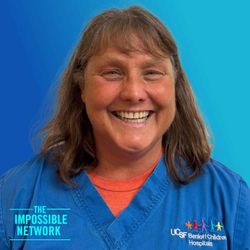
255. Amy Gubser - "I Can Do Hard Things" How a 56-Year-Old Grandmother Conquered Shark-Infested Waters
01:30:18||Season 7, Ep. 255Amy Gubser Amy Gubser, is an extraordinary 56-year-old grandmother who this year became the first person ever to complete an unassisted swim from the Golden Gate Bridge in SF to the Farallon Islands - a 30-mile stretch of cold, shark-infested waters off the California coast. Moreover, what makes this achievement even more remarkable is that Amy only started her marathon swimming journey aged 46.Throughout a fascinating conversation, Amy describes her path from early morning swims in San Francisco Bay through increasingly arduous challenges, including consequently crossing the treacherous North Channel between Ireland and Scotland. Furthermore, Amy shares her insights into the physical and mental preparation required for ultra-marathon swimming, from nutrition strategies to managing the understandable fear of great white sharks and jellyfish swarms.In addition to her swimming achievements, Amy discusses how her work as a nurse has informed her mental toughness, the importance of breaking age-related stereotypes, and as a result, her mission to inspire others - especially women - to pursue ambitious goals at any age.With upcoming swims planned for Scotland's deep and mysterious Loch Ness, therefore Amy is proof that human potential knows no bounds when matched with determination, careful preparation, and above all her simple mantra: 'I can do hard things.'Amy's story is an inspiring reminder that it's never too late to pursue extraordinary achievements. Note to self! Now over to Amy. Timestamps00:00 Introduction03:10 Who is Amy as a Human?05:35 Childhood and Family Background10:48 Early Swimming and Lifeguarding14:26 Nursing Career and Mental Toughness26:12 Rediscovering Swimming33:24 First Marathon Swim: Gibraltar Straits35:59 Conquering Lake Tahoe37:20 The North Channel Challenge39:24 Molokai to Oahu Swim39:56 Local Swims and Challenges40:47 The Alcatraz Swim42:15 Manhattan Island Swim45:23 Nutrition and Hydration Strategies53:18 Facing the Farallon Islands55:34 Shark and Jellyfish Encounters01:01:32 Mental and Physical Endurance01:06:24 Inspiration and Future Goals01:11:11 Advice for Aspiring Swimmers01:18:04 Final Thoughts and Inspirations Social posts Instagram - https://www.instagram.com/amygubser92?igsh=MzRlODBiNWFlZA== Links in show Books:"The Devil's Teeth" (Book about the Farallon Islands mentioned as inspiration)- "Tough Broads" by Caroline Paul (Recent book Amy highly recommends)- Young Woman in the Sea (About Trudy Ederle, first woman to swim the English Channel) Films/Media: Documentary about Mercedes Gleitze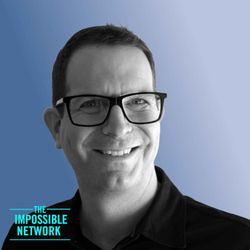
254. Noam Sagi - Transforming Wellness: A Path to Personalized Wellbeing
01:45:22||Season 7, Ep. 254In this episode of the Impossible Network, Mark interviews Noam, a pioneering psychotherapist and co-founder of VidaVii. Noam's captivating journey from his upbringing on a kibbutz near the Gaza border to establishing a wellness technology hub in London is explored in depth. The conversation touches on communal living, military service, corporate culture, and the importance of authenticity. Noam shares insights on navigating childhood and parenting in different eras, the impact of social media on mental health, and the potential future challenges for children growing up in isolated environments. Noam also highlights the integration of body-centered psychotherapy, the concept of 'befriending vulnerability,' and innovative wellness treatments like cryotherapy and breathwork. Mark and Noam discuss the shift from symptomatic treatment to preventative health through biohacking, AI-driven health suggestions, and the significance of a balanced approach to life following the 80/20 rule. Noam also shares his personal stories of emotional resilience, and the harrowing yet inspiring account of Noam's mother's kidnapping and release by Hamas, and his hope for peace amidst global conflicts.TimeCodes00:00 Introduction 01:14 Who is Noam as a human?04:26 The Kibbutz Experience08:10 Reflections on Childhood and Group Dynamics21:06 Transition to Adulthood and Military Service22:12 Career Shift to Psychotherapy35:48 Founding VidaVi1: A Wellness Tech Venture48:02 Innovative Health Solutions for Everyone49:04 The Power of Cryotherapy: Real-Life Stories50:06 Bringing Nature's Best to Urban Centers50:41 The Science Behind Dry Cryotherapy53:00 Personalized Health and Wellness01:07:20 The Future of Health: AI and Technology01:17:45 Personal Reflections and Inspirations01:27:24 A Personal Story of Resilience and Hope01:42:47 Final Thoughts and Call to ActionSocial Links VidaviiLinkedin Links in the showCure" (or "Cured") by Dr. Jeff Rediger - specifically recommended by Noam for understanding medicine and wellnessOutlive" by Peter Attia - mentioned in discussion but not specifically recommended