Share

The Unquiet Library: Fifty years of Robarts Library
Ep. 1 Toronto's Ugliest Building?
This episode of 'The Unquiet Library' podcast explores the criticisms and emotional reactions surrounding the John P. Robarts Research Library—an iconic and controversial brutalist structure in Toronto, Ontario, Canada. Host Jesse Carliner introduces its massive scale and unique design, which has drawn both admiration and ire since its opening in 1973.
Featuring experts urbanist Shawn Micallef, architectural historian Mary Louise Lobsinger, preservation architect Michael McClelland, and Diamond Schmidt principal architect Gary McCluskie, the episode delves into themes of architectural brutalism, historical context, and the library's profound impact on Toronto’s cultural and architectural landscape.
The episode also addresses the visceral reactions people have towards the building, debates on whether it is ugly or sublime, and the architectural significance of its design.
00:00 One student’s opinion
00:23 Episode Introduction
02:22 Interview with Shawn Micallef
11:56 Interview with Mary Louise Lobsinger
18:01 Interview with Gary McCluskie
21:48 Interview with Michael McClelland
28:16 Conclusion
To learn more about the history of Robarts Library, visit uoft.me/robarts50. Follow us @unquietlibrarypodcast on Instagram, Blue Sky or TikTok for additional content and updates.
Learn more about concrete architecture in Toronto:
McClelland, Michael, and Graeme Stewart. 2004. Concrete Toronto: A Guide to Concrete Architecture from the Fifties to the Seventies. 1st ed. Coach House Books: https://chbooks.com/Books/C/Concrete-Toronto3
Learn about the architect Ron Thom here: https://en.wikipedia.org/wiki/Ronald_Thom
Learn about Massey College, designed by Rom Thom here: https://en.wikipedia.org/wiki/Massey_College,_Toronto
Theme music:
Felipe Sarro, Bach-Siloti - Prelude BWV 855a
Creative Commons CC0 1.0 Universal Public Domain Dedication
Sound credits:
yonge_street_02.flac by tim.kahn -- https://freesound.org/s/35556/ -- License: Attribution 4.0
escaleras_mecanicas_interior_-_metro.mp3 by sonsdebarcelona -- https://freesound.org/s/70146/ -- License: Attribution NonCommercial 3.0
2 08 Br Lib amb 5.wav by ERH -- https://freesound.org/s/51632/ -- License: Attribution 4.0
More episodes
View all episodes
10. Ep. 10 The Future of Robarts
32:54||Season 1, Ep. 10The Future of Robarts In the final episode of The Unquiet Library: 50 Years of Robarts Library, host Jesse Carliner looks ahead to what the future holds for the John P. Robarts Research Library at the University of Toronto amid digital access, changing cities, and evolving user needs. Artist Jess Thalmann imagines Robarts as a “glorious futurist ruin,” while urbanist Shawn Micallef argues the building will endure and that libraries are increasingly vital as shared study spaces in a denser Toronto. Professor Siobhan Stevenson highlights the magic of finding books in the stacks and questions how digitization and automation may reshape academic librarianship. Digital humanities pioneer Ian Lancashire warns about long-term digital fragility and advocates keeping print for archival and reading purposes. Librarian Sian Meikle stresses libraries’ role in cultural heritage, digital preservation, and community, while architect Michael McClelland and architectural historian Mary Louise Lobsinger consider Robarts Library as a growing civic hub amid land scarcity. Former chief librarian Carol Moore emphasizes adaptation, preserving artifacts and collections, and challenges around new formats, costs, and intellectual property. For more on Robarts’ history, visit uoft.me/robarts50 and follow @unquietlibrary on Instagram, Blue Sky, and TikTok. 00:00 Opening with Jessica Thalman 00:51 Episode Introduction and welcome 03:05 Shawn Micallef 07:13 Siobhan Stevenson 08:38 Ian Lancashire 13:22 Sian Meikle 16:07 Siobhan Stevenson 18:25 Michael McClelland 21:21 Mary Louise Lobsinger 23:23 Carole Moore 29:54 Conclusion
Bonus Episode: Back to School
14:11|First Impressions: What Students Really Think of Robarts Library In this back-to-school bonus episode of The Unquiet Library, host Jesse Carliner revisits the long-running debate over Robarts Library’s brutalist design—variously described for decades as a fortress, prison, masterpiece, peacock, or turkey—by interviewing incoming University of Toronto students during orientation week about their first impressions. Students comment on the building’s imposing concrete exterior, unusual geometry, and massive scale, often finding it intimidating from the outside but more welcoming, “human,” and full of varied study and social spaces once inside. Several mention campus stories and TikTok lore about what the building is “supposed” to resemble, while others focus on amenities and the role Robarts will play in their academic lives. To learn more about the architectural history of Robarts Library, including archival photos, visit uoft.me/robarts50
9. Ep. 9 Bringing the University Online
33:35||Season 1, Ep. 9Bringing the University Online: Robarts Library and the expansion of computing access Host Jesse Carliner explores how Robarts Library helped move the University of Toronto into a digital space as computing, the internet, and digital resources reshaped research and access. In the episode opener digital scholarship librarian Leslie Barnes defines digital humanities and describes AI as lowering barriers to coding while increasing the need for AI literacy and technology education in libraries. Then the episode traces early humanities computing through Ian Lancashire, founder of the Centre for Computing in the Humanities in Robarts, and his efforts to introduce word processing and computational methods to humanities graduate students. Former chief librarian Carole Moore recounts the uneven early distribution of email and computers and the push for broader access. Lari Langford describes building the Information Commons, dial-up starter kits, tokens, and campus-wide support. Retired reference librarian Patricia Bellamy and retired information technology service librarian and director Sian Meikle detail the web’s arrival, early UTL site design, local hosting of Elsevier journals, and Representative Poetry Online’s wide impact. 00:00 Unquiet Library Ep. 9 Opener- Leslie Barnes 02:45 Introduction 03:51 Ian Lancashire-Early Digital Humanities Computing 09:31 Carole Moore-- The library provides email and internet access to U of T 13:33 Lari Langford-- Bringing the university online 19:58 Patricia Bellamy-- Reference Department and the birth of the online library 23:05 Sian Meikle- Early university and library websites 26:59 Ian Lancashire- Representative Poetry Online 32:34 Conclusion Robarts Library 50th anniversary exhibit: http://uoft.me/robarts50 Key figures and concepts mentioned in this episode: Adel Sedra - Wikipedia Amrhein, Carl G. - Discover Archives In Memoriam: Professor Emeritus Ian Lancashire | Department of English What is Gopher in Computer? - GeeksforGeeks Graphical user interface - Wikipedia Representative Poetry OnlineTheme music: Felipe Sarro, Bach-Siloti - Prelude BWV 855a Creative Commons CC0 1.0 Universal Public Domain Dedication Sound credits: 2 08 Br Lib amb 5.wav by ERH -- https://freesound.org/s/51632/ -- License: Attribution 4.0
8. Ep. 8 Robarts in the Early Days of Computing and Automation
30:55||Season 1, Ep. 8Discovery Systems librarian Susan Bond explains that the University of Toronto Libraries’ LibrarySearch blends results from Alma (the catalogue for items like books and journals) with a large database that can include chapter- and article-level content, and suggests AI’s most likely near-term impact is enabling natural-language queries instead of Boolean searching, rather than replacing the catalogue. Host Jesse Carliner traces Robarts Library’s technological history from card catalogs to computer output microform (COM) catalogues and the Felix online public catalogue (launched 1987), highlighting early collaborations with Calvin “Kelly” Gottlieb, Ritvars Bregzis, and the IBM Toronto Data Center that helped shape the MARC record and produced the University of Toronto Library Automation System (UTLAS) in the early 1970s. Interviews with Carol Moore, Debbie Green, Patricia Bellamy, and Sian Meikle describe costs, resistance, database challenges, email and office automation, CD-ROM and dial-up searching, and the shift to user self-service. More: uoft.me/robarts50; follow @unquietlibrary on Instagram, Blue Sky, and TikTok. 00:00 Opener- Susan Bond discusses AI and library searching 03:02 Introduction 05:30 Carol Moore- The early days of library automation 08:10 Carole Moore- The closing of the card catalogue 18:02 Debbie Green--The impact of technology on daily library work 21:35 Patricia Bellamy-- Early days of digital research tools 25:06 Sian Meikle- The early days of computing in the library 29:57 Conclusion Robarts Library 50th anniversary exhibit: http://uoft.me/robarts50 Learn more about the history of automation and computing at the University of Toronto Libraries: Access & Discovery · University of Toronto Libraries at 125 · Exhibits Bregzis, Ritvars, Calvin Gotlieb, and Carole Moore. "The beginning of automation in the University of Toronto Library, 1963-1972." IEEE Annals of the History of Computing 24, no. 2 (2002): 50-70.What is a card catalogue? Library catalog - Wikipedia What is a microfiche/microfilm catalogue? https://lis.academy/organising-and-managing-information/microform-catalogues-space-saving-library-solutions/ What is the DIALOG search system? Milestones:DIALOG Online Search System, 1966 - Engineering and Technology History Wiki What is a CD-ROM? CD-ROM - Wikipedia Theme music: Felipe Sarro, Bach-Siloti - Prelude BWV 855a Creative Commons CC0 1.0 Universal Public Domain Dedication Sound credits: 2 08 Br Lib amb 5.wav by ERH -- https://freesound.org/s/51632/ -- License: Attribution 4.0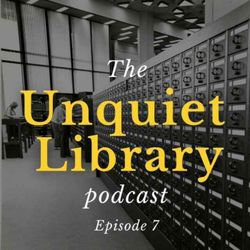
7. Ep. 7 The Analogue Era
30:00||Season 1, Ep. 7In this episode of The Unquiet Library: 50 Years of Robarts Library, host Jesse Carliner explores Robarts’ pre-digital era through oral history interviews with current and former librarians. Margaret Wall describes processing 340 legacy CD-ROMs (plus cassettes and floppy disks) and determining whether their contents evolved into print or online databases, noting the convenience of today’s searchable platforms compared with swapping annual discs. Former chief librarian Carole Moore recalls card catalogues wired for phone reference, heavy photocopy demand, and the chaos of shared print journals and interlibrary delivery. Sian Meikle details intensely manual circulation work with charge files, typed loan cards, pneumatic tubes, book elevators, and noisy conveyor belts. Susanne Tabur explains serials “Kardex” tracking of roughly 30,000 journal titles and daily mail processing, while Debbie Green recounts research via print indexes, microfilm/microfiche catalogs, and early staff-mediated online, CD-ROM, and DIALOG searches. 00:00 Opener with Margaret Wall 02:07 Episode Introduction 03:14 Carole Moore- Phone reference and the card catalogue; sharing print journals 07:55 Sian Meikle—Library circulation during the analogue era 14:12 Susanne Tabur—Tracking print journal subscriptions with the Kardex 23:31 Debbie Green—The pre-digital research process 28:55 Conclusion Robarts Library 50th anniversary exhibit: http://uoft.me/robarts50 Learn more about the pre-digital libraryWhat is a card catalogue? Library catalog - Wikipedia What is the Kardex system for managing serials? https://lis.academy/management-of-library-and-information-centre/library-serials-management-periodicals-journals/#kardex-system What is a microfiche/microfilm catalogue? https://lis.academy/organising-and-managing-information/microform-catalogues-space-saving-library-solutions/ What is a periodical (journal) index? What is a periodical index? - LibAnswers What is the DIALOG search system? Milestones:DIALOG Online Search System, 1966 - Engineering and Technology History Wiki What is a CD-ROM? CD-ROM - Wikipedia Theme music: Felipe Sarro, Bach-Siloti - Prelude BWV 855a Creative Commons CC0 1.0 Universal Public Domain Dedication Sound credits: 2 08 Br Lib amb 5.wav by ERH -- https://freesound.org/s/51632/ -- License: Attribution 4.0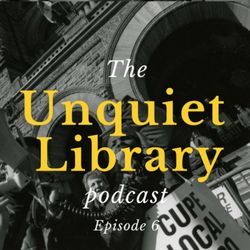
6. Ep. 6 Facing Austerity
35:37||Season 1, Ep. 6This episode of The Unquiet Library examines how decades of public funding cuts, neoliberal policy shifts, wage restraints, attrition, buyouts, and rapid technological change reshaped Robarts Library and culminated in major strikes in 1975 and 1991. Former Chief Librarian Carol Moore and retired Chief Administrative Officer Alfred Cheng describe repeated annual budget reductions, prioritization and fundraising, migration to digital services, consolidation of desks, and avoiding layoffs through attrition while protecting the acquisition budget. Union and management perspectives recount resentments over capped pay, anxieties about the threat of technology and inadequate training, grievances, picket-line tensions, damaged relationships, and a sense that “nobody won,” even as Robarts ultimately transformed into a modern digital library. 00:00 Opening with Alison Lang 02:02 Introduction 05:09 Carole Moore 10:46 Alfred Cheng 16:04 Dana Kuszelewski 20:18 Gabriela Bravo 25:19 Terrence Correia 31:04 John Iacono 33:36 Conclusion Robarts Library 50th anniversary exhibit: http://uoft.me/robarts50 Learn more about CUPE 1230 and the 1991 strike About CUPE 1230: Welcome to CUPE 1230 - CUPE 1230 CUPE 1230 1991 Strike Archival Materials: Flyers and brochures re CUPE strike, 1991 - Discover Archives The University of Toronto Varsity newspaper coverage of the start of the strike, see March 4, 1991 issue: The Varsity, June 1990 - April 16, 1991 : University of Toronto : Free Download, Borrow, and Streaming : Internet Archive doc-slotnick-cupe-local1230-strike-pamphlet-toronto-1975-OCR.pdf Theme music: Felipe Sarro, Bach-Siloti - Prelude BWV 855a Creative Commons CC0 1.0 Universal Public Domain Dedication Sound credits: 2 08 Br Lib amb 5.wav by ERH -- https://freesound.org/s/51632/ -- License: Attribution 4.0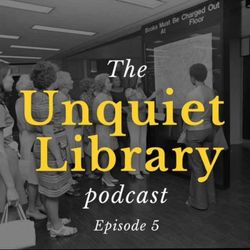
5. Ep. 5 The Pink Collar
29:58||Season 1, Ep. 5The gendered history of Robarts Library. This episode of The Unquiet Library: 50 Years of Robarts Library explores the gendered history of the John P. Robarts Research Library through 2021 oral-history interviews, framing librarianship as a “pink collar” profession dominated by women yet often led by men and undervalued in pay and influence. Kathleen Scheaffer explains that a 2019 gender salary-gap settlement for U of T librarians resulted from a University of Toronto Faculty Association (UTFA) grievance and created a joint working group to continually audit salaries and address systemic barriers across career stages. Retired librarians recount key struggles: Carole Moore describes the 1974 “reference revolution” sparked by Anne Woodsworth’s dismissal after seeking pay equity, leading to committees and more consultative management; Susan Johnston highlights safety and late-night working conditions; Debbie Green discusses undervalued service work, sexism, and pay differentials; and Evelyn Houtman describes the “glass escalator,” including interview dynamics and men advancing quickly in administration. Index00:00 Unquiet Library Episode 5: The Pink Collar01:34 Introduction 04:49 Interview with Carole Moore 15:44 Interview with Susan Johnston 18:17 Interview with Debbie Green 25:09 Interview with Eveline Houtman 28:34 Conclusion To learn more about the history of Robarts Library, visit uoft.me/robarts50. Follow us @unquietlibrarypodcast on Instagram, Blue Sky or TikTok for additional content and updates. Additional Information about the 2019 gender-based salary gap settlement at U of T: UTFA Instrumental in Securing 3.9% Salary Increase to Remedy Gender-Based Salary Gap for Female Librarians | University of Toronto Faculty Association Gender-Based Salary Equity – Division of the Vice-President & Provost Equitable compensation | CAUT Pay Equity Act Theme music: Felipe Sarro, Bach-Siloti - Prelude BWV 855a Creative Commons CC0 1.0 Universal Public Domain Dedication Sound credits: 2 08 Br Lib amb 5.wav by ERH -- https://freesound.org/s/51632/ -- License: Attribution 4.0 R120120_walking_through_building.wav by reinsamba -- https://freesound.org/s/142929/ -- License: Attribution 4.0
4. Ep. 4 From Fort Book to the Heart of Campus
31:50||Season 1, Ep. 4Host Jesse Carliner explores how the John P. Robarts Research Library at the University of Toronto evolved from an intimidating “Fort Book” into a more welcoming, student-centered hub through architectural changes, service innovations, and shifts in engagement culture. Retired U of T Libraries manager Gabriela Bravo describes efforts to improve navigation, promote reference help and instruction, and build a stronger service culture through staff training and morale initiatives. Retired reference librarian Eveline Houtman recounts how digital tools and end-user searching reshaped reference work, reducing reliance on imposing service desks and repositioning librarians as educators. Former head of user services Lari Langford highlights accessibility advances, from physical upgrades and a relocated entrance to the ACE accessible content ePortal and collaborative alternate-format services. Professor Emerita Lynn Howarth reflects on Robarts becoming a safe, inclusive space supporting students’ academic, physical, and emotional wellbeing, including 24/7 exam access. 00:00 Unquiet Library Episode 4: From Fort Book to the Heart of Campus 01:29 Introduction 02:19 Interview with Gabriela Bravo 10:49 Interview with Eveline Houtman 15:22 Interview with Lari Langford 25:45 Interview with Lynn Howarth 30:47 Conclusion To learn more about the history of Robarts Library, visit uoft.me/robarts50. Follow us @unquietlibrarypodcast on Instagram, Blue Sky or TikTok for additional content and updates. Additional Information: Accessibility for Ontarians with Disabilities Act (AODA), 2005: https://en.wikipedia.org/wiki/Accessibility_for_Ontarians_with_Disabilities_Act Accessible Content e-Portal (ACE): https://ace.scholarsportal.info/ Theme music: Felipe Sarro, Bach-Siloti - Prelude BWV 855a Creative Commons CC0 1.0 Universal Public Domain Dedication Sound credits: analogue_phone_ring_004.flac by lorenzosu -- https://freesound.org/s/72064/ -- License: Attribution NonCommercial 4.0 picht-type-writer2.flac by ondrosik -- https://freesound.org/s/203989/ -- License: Creative Commons 0 moretube.wav by NoiseCollector -- https://freesound.org/s/65325/ -- License: Attribution 3.0 2 08 Br Lib amb 5.wav by ERH -- https://freesound.org/s/51632/ -- License: Attribution 4.0
3. Ep. 3 The Gatekeepers
33:18||Season 1, Ep. 3Reference Service at Robarts Library in the 1970s and 1980s Host Jesse Carliner explores Robarts Library’s intimidating reputation beyond its brutalist architecture, tracing how the building was intended as a formal, graduate student and faculty focused research facility until undergraduate protests led to full access when it opened in 1973. Through 2021 oral-history interviews, retired librarians Patricia Bellamy and Susan Johnston recall the busy 1970s–80s fourth-floor reference room—imposing service desks, constant phone questions, and pre-digital tools like card catalogs, microfiche, and rotating files—where librarians’ deep knowledge inspired awe but could also feel intimidating or even unwelcoming. Professor David W. Smith describes reliance on exceptionally skilled reference librarians, especially Mary McTavish, remembered as formidable and indispensable. Debbie Green, Eveline Houtman, and Suzanne Tabor discuss a perceived culture of elitism and hostility that gradually shifted toward friendlier, user-centered service. Index 00:00 Unquiet Library Episode 3: The Gatekeepers 00:29 Introduction 03:05 Patricia Bellamy 10:14 Susan Johnston 14:39 Professor David Smith 18:47 Mary McTavish 19:46 Debbie Green 23:13 Eveline Houtman 28:30 Susanne Tabur 32:48 Conclusion To learn more about the history of Robarts Library, visit uoft.me/robarts50. Follow us @unquietlibrarypodcast on Instagram, Blue Sky or TikTok for additional content and updates. What is a library catalog? https://en.wikipedia.org/wiki/Library_catalogWhat is a bibliography? https://en.wikipedia.org/wiki/BibliographyWho were the United Empire Loyalists? https://en.wikipedia.org/wiki/United_Empire_LoyalistAbout Rosedale, Toronto: https://en.wikipedia.org/wiki/Rosedale,_TorontoTheme music: Felipe Sarro, Bach-Siloti - Prelude BWV 855a Creative Commons CC0 1.0 Universal Public Domain Dedication Sound credits: OFFICE SELF INKING STAMP ON PAPER 01.wav by sengjinn -- https://freesound.org/s/178650/ -- License: Attribution 4.0 escaleras_mecanicas_interior_-_metro.mp3 by sonsdebarcelona -- https://freesound.org/s/70146/ -- License: Attribution NonCommercial 3.0 Price Tower Elevator 2 by Filmscore -- https://freesound.org/s/823076/ -- License: Creative Commons 0 Walking Up Stairs by qubodup -- https://freesound.org/s/210430/ -- License: Creative Commons 0 British Library sounds 2 08 Br Lib amb 5.wav by ERH -- https://freesound.org/s/51632/ -- License: Attribution 4.0 picht-type-writer2.flac by ondrosik -- https://freesound.org/s/203989/ -- License: Creative Commons 0