Share
The Mike Method
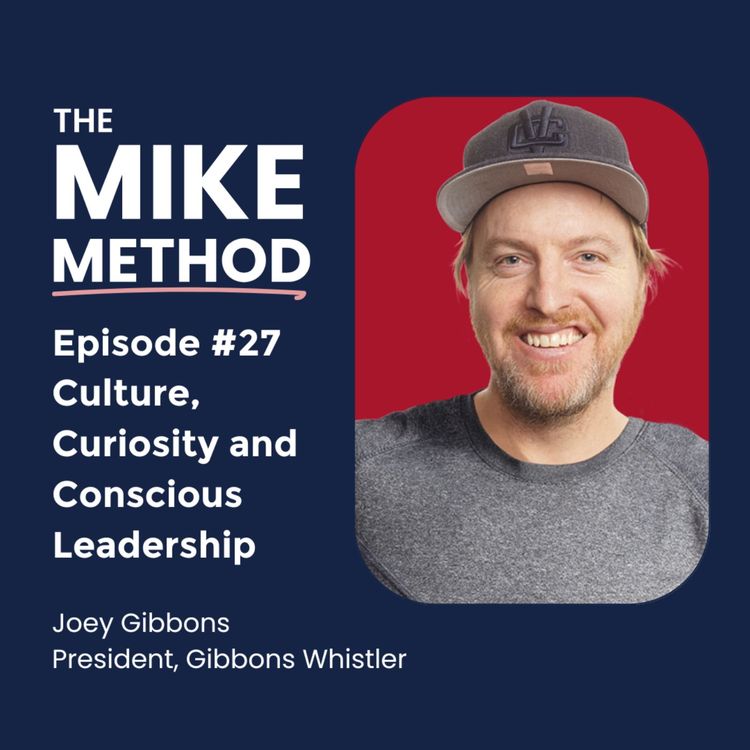
E27 Culture, Curiosity, and Conscious Leadership with Joey Gibbons
This week Mike is sitting down with Joey Gibbons to dive into the evolving nature of leadership, the role of culture in driving business success, and the power of feedback to create alignment and trust within teams. Joey has been the CEO of Gibbons Whistler since 2004. Established in 1979, the Gibbons name has been synonymous with Whistler for over 41 years. Gibbons now encompasses ten iconic bars, festivals and events, Gibbons Après Lager and Gibbons Life, an experiential travel program, designed to connect the world to Whistler. Joey feels his passion, together with the expertise of his team, showcases all that Whistler has to offer.
In this episode Joey shares his journey as a leader, emphasizing the fulfillment that comes from contributing to society through business and mentoring others.They discuss the lessons found in timeless books like Think and Grow Rich, how conscious leadership fosters curiosity and openness, and the transformative shift from a drama triangle to an empowerment triangle. Joey reflects on balancing happiness and productivity in business while staying true to purpose and contribution, offering insights from his mentors and even advice he’d share with his future self about maintaining health, relationships, and community impact.
This conversation is a reminder that leadership is about more than growth—it’s about fulfillment, curiosity, and the lasting impact we create. Tune in for inspiration and actionable wisdom. Available wherever you listen to your podcasts.
Episode Resources:
Joey Gibbons: LinkedIn
Gibbons Whistler: Website
Think and Grow Rich by Napoleon Hill
Conscious Leadership: Locating Yourself Above or Below the Line
ViRTUS: Website / Instagram / LinkedIn
Sign up for our Newsletter: Sign Up
More episodes
View all episodes
105. EP105 The Human Side of Mergers, Culture, and Change Management with Lisa Smith
49:00||Ep. 105Mergers are often discussed in terms of strategy, systems, and financial outcomes. What receives less attention is the human experience behind organizational change.In this episode of The Mike Method, Mike Desjardins is joined by Lisa Smith, Vice President of People Development and Change Management at Coast Capital Savings Federal Credit Union. Lisa has spent more than two decades helping organizations navigate leadership development, culture transformation, and large-scale change initiatives. Most recently, she has played a key role in bringing together Coast Capital, Prospera Credit Union, and Sunshine Coast Financial to form Canada's largest purpose-driven federal credit union.Together, Mike and Lisa explore what it takes to successfully guide people through major organizational change. They discuss why culture must be intentionally developed, how leaders can prepare themselves before supporting others through uncertainty, and why communication, trust, and emotional awareness are often the difference between change that succeeds and change that struggles.Lisa also shares lessons from previous mergers, the value of employee ambassador programs, how organizations can build readiness before change arrives, and why the Hero's Journey offers a surprisingly useful framework for understanding transformation.Whether you're leading a merger, managing a growing team, or helping people navigate uncertainty, this conversation offers practical insights for building resilience, engagement, and trust during times of change.In This EpisodeWhat is driving consolidation across the Canadian credit union systemLessons learned from multiple large-scale mergersWhy culture should be co-created rather than imposedThe role of emotional awareness in successful change initiativesHow leaders can lead themselves before leading othersEmployee ambassador programs and peer-to-peer communicationBuilding organizational readiness before major change occursCreating learning cultures that support adaptation and growthThe Hero's Journey as a framework for understanding changeWhat successful transformation may look like one year after merger dayEpisode Resources:Lisa Smith: LinkedIn
104. EP104 The Power of Collective Leadership and Business with Jen Riley
47:26||Ep. 104Businesses are better together. It is a simple idea that has shaped chambers of commerce for more than 400 years, and according to Jen Riley, it may be more important than ever.In this episode of The Mike Method, Mike welcomes Jen Riley, President and CEO of the BC Chamber of Commerce, for a conversation about leadership, storytelling, policy, and the role businesses play in shaping stronger communities.Drawing on more than two decades of experience in communications and brand leadership, including senior roles at EA Sports and Bosa Properties, Jen shares how curiosity and the ability to synthesize complex information have become essential leadership skills. Together, Mike and Jen explore the evolving role of chambers of commerce, why collective voices matter in advocacy efforts, and how local business communities contribute to economic resilience across British Columbia.The conversation also explores workforce challenges, affordability, trade, major projects, energy systems, Indigenous partnerships, and why many of today's most important conversations require moving beyond simple either-or perspectives.Rather than reducing complex issues into competing sides, Jen encourages listeners to approach them with curiosity, deeper understanding, and a willingness to engage with multiple perspectives.Key topics include:The history and evolving role of chambers of commerceWhy businesses are stronger when they work togetherLeadership through curiosity and continuous learningThe importance of storytelling in shaping policy conversationsWorkforce challenges facing communities across British ColumbiaTrade, affordability, and major economic opportunitiesEnergy systems and why nuance matters in public discussionsIndigenous partnerships and reconciliation in business communitiesWhy holding complexity is an important leadership capabilityWhether you're a business owner, community leader, or simply curious about how policy and business intersect, this conversation offers valuable insights into the challenges and opportunities shaping British Columbia's future.Episode Resources:Jen Riley: LinkedInBC Chamber of Commerce
103. EP103 The Science of Jet Lag, Recovery, and Human Performance with Andrew Herr
41:26||Ep. 103Travel affects more than just your schedule. It influences sleep, recovery, energy, focus, and how you show up once you arrive.In this episode of The Mike Method, Mike Desjardins welcomes Andrew Herr, CEO of Fount and Flykitt, human performance expert, and advisor whose work has supported Navy SEALs, fighter pilots, professional sports teams, executives, and leading scientific institutions. Andrew has also been recognized twice by the U.S. Army as a "Mad Scientist" for his contributions to human performance research.Together, Mike and Andrew explore the science behind jet lag and why the challenges associated with travel extend far beyond changing time zones. They discuss how pressure changes during flights can contribute to oxidative stress and inflammation, how circadian rhythms influence sleep and recovery, and why factors such as meal timing, noise exposure, hydration, and even aircraft selection can shape how we feel after traveling.Andrew shares the story behind Flykitt, including how years of work supporting military personnel and high performers led to the development of a practical system designed to help people recover more effectively from long-distance travel. The conversation also explores broader lessons about innovation and leadership. Andrew reflects on the process of translating complex science into practical tools, the importance of listening to customer feedback, and how thoughtful product design can make evidence-based solutions more accessible.Whether you travel frequently for work, lead teams across multiple time zones, or simply want to arrive feeling more prepared for what matters most, this episode offers practical insights grounded in both science and real-world experience.Key topics discussed include:• The physiological factors that contribute to jet lag• The role of inflammation and oxidative stress during travel• Why sleep timing and meal timing matter more than many people realize• How noise exposure affects the nervous system during flights• The differences between aircraft types and their impact on travel recovery• Building products that simplify complex science for everyday use• Leadership lessons from designing human-centered solutionsConnect with Andrew Herr:FlykittLinkedInIf you enjoyed this episode, be sure to subscribe, leave a review, and share it with someone who travels frequently for work or personal adventures.
EP102 Why Your Brain Talks You Out of What You Really Want with LauraAura
51:00|Many of us experience moments where we know what we want, but still find ourselves hesitating to take the next step.In this episode of The Mike Method, Mike welcomes LauraAura, keynote speaker, coach, entrepreneur, and host of the Gutsy Podcast. After more than two decades building businesses, leading brands, and supporting entrepreneurs through growth and change, LauraAura now helps people move beyond hesitation and take meaningful action toward what matters most.Together, Mike and LauraAura explore the tension between intuition and self-protection, why our minds often resist change even when something feels right, and how small acts of courage can create momentum toward larger goals. They also discuss identity shifts, entrepreneurship, trusting yourself through uncertainty, and the challenge of disappointing others in order to remain aligned with what you genuinely want.Whether you're considering a career change, starting a creative project, launching a business, or navigating a significant life decision, this conversation offers a practical reminder that meaningful change rarely begins with certainty. More often, it develops through small actions taken before all the answers are available.Episode Resources:Connect with LauraAuraThe Gutsy Podcast
101. EP101 How Small Choices Shape Character, Discipline, and Identity with Andrew Allen
56:47||Ep. 101Character is not something we talk about often in modern leadership conversations, but according to Andrew Allen, it may be one of the most important forces shaping the lives we build.Andrew Allen is a multi-platinum Canadian singer-songwriter, keynote speaker, and creator of the HIIDA framework: “How You Do Anything Is How You Do Everything.” After nearly two decades touring alongside artists like Bruno Mars, OneRepublic, Train, and Andy Grammer, Andrew shifted from music into leadership conversations focused on discipline, intentionality, responsibility, and character development.In this conversation, Mike and Andrew explore the difference between personality, identity, and character, why repeated choices matter more than motivation, and how small daily actions quietly shape the way we respond under pressure. They also discuss willpower versus discipline, stoicism, resilience, habits, fatherhood, leadership, and the connection between intentional living and personal responsibility.This conversation offers a grounded reminder that character is not built in one defining moment. It is developed through repeated choices, practiced consistently over time.Topics We Explore:The HIIDA framework: How You Do Anything Is How You Do EverythingThe difference between personality, identity, and characterWhy discipline matters more than motivationHow repeated choices shape future behaviorStoicism and intentional livingBuilding resilience before life becomes difficultThe role of habits and consistency in leadershipWhy goals can begin to feel hollowFatherhood, leadership, and evolving identityCreating meaningful change through small daily actionEpisode Resources:Andrew Allen: Website
100. EP100 Why “Just Push Through It” Stops Working with Kara Kalin
49:15||Ep. 100We’re excited to welcome Kara Kalin for the 100th episode of The Mike Method. We’re also incredibly grateful for the support that has helped us reach this milestone. Every listen, follow, share, and conversation around the podcast truly means so much to us.In this conversation, she shares how early experiences in sport, grief, pressure, and performance shaped the way she understood strength, achievement, and emotional survival. Kara has spent more than two decades working at the intersection of trauma, resilience, mental health, and high performance as a registered clinical counselor, certified EMDR therapist, mental performance specialist, former national level athlete, and Team Canada coach. Together, she and Mike explore how trauma can remain stored in the body long after an experience is over, why “just push through it” is not a sustainable strategy, and how nervous system overload often shows up as anxiety, overthinking, shutdown, or emotional exhaustion.Kara also breaks down EMDR in a practical and accessible way, explaining how trauma loops form, the difference between conscious and unconscious looping, why many people cannot simply reason their way out of activation, and how processing experiences can create more capacity, connection, and resilience over time.The conversation explores parenting, sport culture, leadership, grief, emotional regulation, and the difference between surviving hard experiences and actually healing from them.This episode is about learning how to move through life with what Kara calls a strong spine and an open heart.Episode Resources:Kara Kalin: Website / LinkedInShift Change - leadership and corporate integration: WebsiteViRTUS: Website / Instagram / LinkedInSign up for our Newsletter: Sign Up
99. EP99 Almost Good Enough: Perfectionism, Peace, and the Nervous System with Lynn Sumida
46:57||Ep. 99In this episode of The Mike Method, Mike sits down with returning guest Lynn Sumida for a deeply personal conversation about perfectionism, nervous system safety, and the hidden fear many high performers carry beneath constant striving.Lynn is the founder of Mirrors Point and Expanding You, co-author of The Extraordinary Within, and is currently writing her upcoming book Almost Good Enough, which explores the pressure so many people feel to perform, perfect, and prove themselves.Together, Mike and Lynn explore why peace can feel uncomfortable for the nervous system, how early experiences shape our relationship with safety, and why many leaders stay stuck in cycles of achievement while struggling to actually enjoy the journey.The conversation also moves into masculinity, emotional sensitivity, vulnerability, and the difference between the polished facade people present to the world and the very human reality underneath it.Topics include:nervous system protection and hypervigilanceperfectionism and productivitywhy white space can feel threateningemotional safety and childhood patterningvulnerability and leadershipthe inner critic and self-protectionpeace, achievement, and identityhow early experiences shape adult behaviorLynn also shares details about her upcoming Almost Good Enough workshop experience happening in Nanaimo.Episode Resources: Connect with Lynn: Linkedin / Website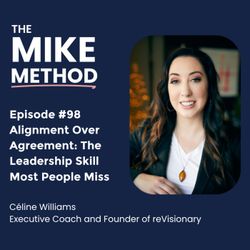
98. EP98 Alignment Over Agreement: The Leadership Skill Most People Miss with Céline Williams
44:11||Ep. 98Agreement is not the goal. Alignment is.In this episode, Mike sits down with Céline Williams, a business strategist, executive coach, and leadership development expert who has spent more than 15 years helping fast-growth companies and Fortune 500 organizations build stronger cultures, improve communication, and lead with greater clarity.This conversation starts where most leadership advice does not, with self-awareness. Céline shares why understanding your own reactions, patterns, and internal drivers is the foundation for everything else, including empathy, communication, and decision making.From there, they explore the difference between listening for agreement and listening for understanding, and why that shift can change how we navigate conflict, relationships, and team dynamics.They also get into:Why empathy starts with curiosity about yourselfA simple two-question framework to approach difficult conversationsThe relationship between people and systems, and why one cannot be prioritized at the expense of the otherThe false choice between kindness and accountabilityWhy leaders need to acknowledge power dynamics to build real psychological safetyThis is a grounded, practical conversation with ideas that feel clear once they are named, but are easy to miss when you are immersed in the day to day.Episode Resources:Connect with Celine on LinkedInreVisionary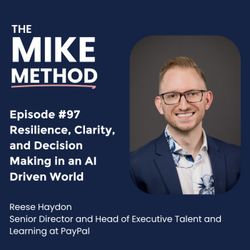
97. EP97 Resilience, Clarity, and Decision-making in an AI Driven World with Reese Haydon
46:25||Ep. 97Resilience is often framed as pushing through. But in a world where AI, fintech, and constant change are reshaping how we work, that definition is no longer enough.In this episode, Mike sits down with Reese Hayden, Senior Director and Head of Executive Talent and Learning at PayPal. Reese leads executive selection, development, and top team effectiveness for senior leaders, and has spent over a decade helping organizations like Salesforce, Dropbox, and Cisco connect leadership development directly to strategy and performance.Together, they explore what leadership requires when the pace of change continues to accelerate.They break down PayPal’s four core leadership capabilities: investing in self and others, leading with clarity, impactful problem solving, and agile decision making, and how these show up in real, day to day leadership.The conversation moves beyond theory into practical tools, including how to recognize when you are in the “yellow” before burnout, the difference between productive and destructive tension, and how simple frameworks like DAISY and the Five Whys help leaders make better decisions and avoid solving the wrong problems.This is a grounded, practical conversation on how leaders can stay effective, present, and resilient without running themselves into the ground.Episode Resources:Connect with Reese on LinkedIn