Share
The Late Diagnosis Club
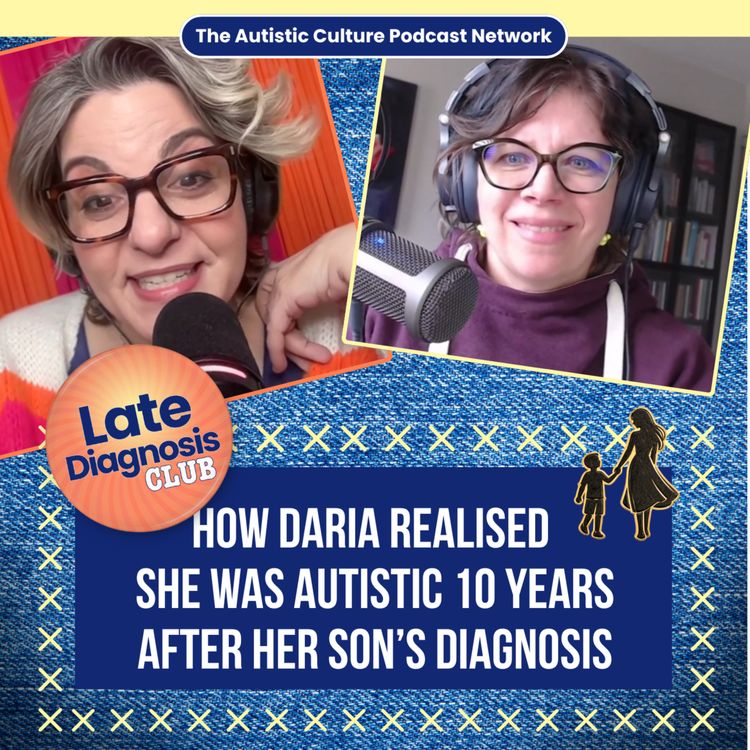
How Daria Realised She Was Autistic 10 Years After Her Son’s Diagnosis
In this meeting of The Late Diagnosis Club, Dr Angela Kingdon welcomes Daria Brown, creator of Affect Autism and host of the We Chose Play podcast.
Daria shares her journey from parent advocate to late-identified Autistic adult, reflecting on the decade between her son’s diagnosis and her own. What began as a search for how to support her son eventually led to a deeper understanding of herself, reframing lifelong traits, parenting experiences, and ways of relating to the world.
They discuss DIR Floortime, rejecting compliance-based approaches, and the role of connection, regulation, and play in both parenting and personal growth.
This is a conversation about unlearning, identity, and what happens when the lens finally shifts.
🪑 Attendees
Chair: Dr Angela Kingdon — Author, community-builder, and Autistic advocate
Guest: Daria Brown — Parent advocate, podcaster, and late-identified Autistic adult
You: The Listener!
🗒️ Meeting Agenda
- Opening remarks from the Chair
- Member introduction: Parenting, advocacy, and late self-recognition
- Discussion: Son’s diagnosis, seizures, and early understanding of autism
- Medical model, ableism, and the “fixing” mindset
- Discovering Autistic voices during the pandemic
- Questioning identity and the late diagnosis journey
- DIR Floortime, connection, and rejecting compliance-based therapy
- Key learnings
- Club announcements
🧾 Minutes from the Meeting
1️⃣ Opening Remarks
Angela introduces Daria Brown, a long-time parent advocate and creator of Affect Autism, whose work focuses on supporting families through DIR Floortime and neurodiversity-affirming approaches.
2️⃣ Member Introduction: Daria’s Story
Daria’s journey into the autism world began with her son’s diagnosis following a serious medical event involving seizures and brain inflammation. At the time, her understanding of autism was shaped by ableist narratives and a belief that her role was to “fix” her child.
Over the years, as she supported her son and connected with other families, Daria became deeply involved in advocacy and alternative approaches like DIR Floortime.
A decade after her son’s diagnosis, Daria received her own autism diagnosis, reframing her identity and life experiences.
3️⃣ Discussion Highlights
- Early assumptions: Autism initially understood through an ableist, deficit-based lens
- Medical trauma: Son’s seizures, hospitalisation, and lasting impact on parenting
- DIR Floortime: Choosing connection and co-regulation over compliance
- ABA tension: Navigating systems that prioritise behaviour over individual needs
- Late recognition: Seeing lifelong traits through an Autistic lens
- Imposter syndrome: Questioning identity despite strong resonance
- Reframing traits: From “bossy” or “controlling” to regulation and coping strategies
- Special interests: Intense projects, creativity, and lifelong patterns
- Community: Finding belonging through shared neurodivergent experiences
4️⃣ Key Learnings
- Understanding autism often begins with outdated or ableist assumptions that require unlearning.
- Parenting a neurodivergent child can reshape identity and self-understanding.
- Connection and co-regulation are foundational to both parenting and personal growth.
- Traits once labelled negatively may be reframed as adaptive or regulating.
- Community plays a crucial role in reducing isolation and building self-acceptance.
📌 Notice Board
Kieran Rose, The Autistic Advocate
The Neurodivergent experience Podcast
📣 Club Announcements
🎧 The Late Diagnosis Club is available on Spotify, Apple Podcasts, and all major platforms.
💬 Join our online meetups and community at latediagnosis.club.
📌 Check the LDC Notice Board for Member Contributions
💜 There is a small charge — but no one is turned away for lack of funds.
🌈 Celebrate autistic voices with early access, ad-free listening, and our full archive at AutisticCulturePlus.com
🌐 Visit www.autisticculturepodcast.com
📲 Follow us on Instagram: @autisticculturepodcast
🎙️ Executive Producers: Amy Burns, Anamaria B Call, Andrew Banner, Anna Goodson, Ashley Apelzin, Audrea Volker, Ben Coulson, Brian Churcek, Cappy Hamper, Carley Biblin, Charlene Deva, Chloe Cross, Clay Duhigg, Clayton Oliver, Danny Dunn, Daria Brown, David Garrido, Emily Burgess, Eric Crane, Erik Stenerud, Fiona Baker, Grace Norman, Helen Shaddock, Jaimie Collins, Jason Killian, Jen Unruh, Jennifer Carpenter, Julia Tretter, Kathie Watson-Gray, Kenneth Knowles, Kira Cotter, Kristine Lang, Kyle Raney, Llew P Williams, Laura Alvarado, Laura De Vito, Laura Provonsha, Lily George, Nelly Darmi, Nigel Rogers, Rachel Miller, Tim Scott, Tyler Kunz, Victoria Steed, Yanina Wood.
🎧 Producers: AJ Knight, Bobby Simon, Da Kovac, Eleanor Collins, Emily Griffiths, Hannah Hughes, Jennifer Kemp, Jonas Fløde, Kate F, Katie N Benitez, Kendra Murphy, Lisa Dennys, Logan Wall, Louise Lomas, Melissa Nance, Nicola Owen, Rebecka Johansson, Sam Morris, Sarah Hannah Morris.
More episodes
View all episodes
36. How Simon Helped Build the Autistic Culture Podcast Network After His Late Diagnosis
01:29:02||Ep. 36In this final meeting of The Late Diagnosis Club Season One, Dr Angela Kingdon welcomes Simon Scott, co-founder of the Autistic Culture Podcast Network, co-host of The Neurodivergent Experience, and producer of this series.Simon shares his own journey of identifying as neurodivergent, a story marked by missed signs, school struggles, identity, and years of feeling like an alien.Together, Angela and Simon reflect on Simon’s work in podcasting — from co-hosting The Neurodivergent Experience to creating The Late Diagnosis Club — and how storytelling can create connection, validation, and community for neurodivergent people.In the final part of the episode, they discuss the wider Autistic Culture Podcast Network, what they are building beyond this series, and what listeners can expect next.This is a conversation about connection, self-understanding, and closing a season — while opening the door to what comes next.🪑 AttendeesChair: Dr Angela Kingdon — Author, community-builder, and Autistic advocateGuest: Simon Scott — Podcast producer, co-founder of the Autistic Culture Podcast Network, and co-host of The Neurodivergent ExperienceYou: The Listener!🗒️ Meeting AgendaOpening remarks from the ChairMember introduction: Late identification and early missed signsSchool experiences and feeling “different”Simon’s podcasting journeyBuilding The Late Diagnosis ClubCommunity, belonging, and shared experienceLooking ahead to Season Two and the Autistic Culture Podcast NetworkKey learningsClub announcements🧾 Minutes from the Meeting1️⃣ Opening RemarksAngela introduces Simon Scott and reflects on the journey of The Late Diagnosis Club — a space created for connection, understanding, and shared experience.2️⃣ Member Introduction: Simon’s StorySimon describes a childhood marked by missed signs and environments that didn’t fit his needs.School brought challenges that were often misunderstood, leading him to internalise the idea that he was the problem.Without a framework for Autism, he learned to adapt and cope, carrying those patterns into adulthood.Over time, through reflection and exposure to neurodivergent experiences, Simon began to understand himself differently, leading to his identification as Autistic.3️⃣ Discussion HighlightsMissed signs: Early indicators of neurodivergence not recognisedSchool experience: Environments that didn’t meet his needsInternalised blame: Believing struggles were personal failingsAdaptation: Coping without knowing why things were difficultPodcasting journey: From co-hosting The Neurodivergent Experience to producing The Late Diagnosis ClubCommunity: Finding connection through listening and participationReflection: Looking back with a new perspectiveThe Autistic Culture Podcast Network: Expanding beyond one podcast into a wider platformWhat’s next: New shows, more voices, and continued community building4️⃣ Key LearningsYou can feel different without knowing why.Understanding yourself can change how you see your past.You are not alone in your experiences.Storytelling can be a powerful tool for connection and validation.Community can create a sense of belonging.There is no single way to be Autistic.📌 Notice BoardThe Neurodivergent Experience on Spotify📣 Club Announcements🎧 The Late Diagnosis Club is available on Spotify, Apple Podcasts, and all major platforms.💬 Join our online meetups and community at latediagnosis.club.📌 Check the LDC Notice Board for Member Contributions💜 There is a small charge — but no one is turned away for lack of funds.🌈 Celebrate autistic voices with early access, ad-free listening, and our full archive at AutisticCulturePlus.com🌐 Visit www.autisticculturepodcast.com📲 Follow us on Instagram: @autisticculturepodcast
35. How Nyck Stopped Forcing a Life That Didn’t Fit After a Late Autism Diagnosis
52:47||Ep. 35In this meeting of The Late Diagnosis Club, Dr Angela Kingdon welcomes Nyck Walsh, writer, therapist, and advocate, who shares their journey to identifying as Autistic and ADHD later in life.Nyck reflects on growing up feeling fundamentally different — navigating school, relationships, and work without the language to understand why things felt harder than they seemed for others. Like many late-identified adults, they developed ways to cope, adapt, and push through, often at the expense of their own well-being.It wasn’t until adulthood, through a combination of burnout, reflection, and exposure to neurodivergent experiences, that Nyck began to recognise themselves, leading to a deeper understanding of their needs, identity, and way of being.This is a conversation about unlearning, self-acceptance, and choosing a different way forward.🪑 AttendeesChair: Dr Angela Kingdon — Author, community-builder, and Autistic advocateGuest: Nyck Walsh — Writer, therapist, and AuDHD advocateYou: The Listener!🗒️ Meeting AgendaOpening remarks from the ChairMember introduction: Lifelong differenceDiscussion: Masking and adaptationBurnout and turning pointsLate identification journeySelf-trust and unlearningIdentity and authenticityBuilding a life that fitsKey learningsClub announcements🧾 Minutes from the Meeting1️⃣ Opening RemarksAngela introduces Nyck Walsh and reflects on the shared experience of reaching adulthood before having the language to understand oneself.2️⃣ Member Introduction: Nyck’s StoryNyck describes a lifelong sense of being different, not quite fitting into expected social, academic, or professional norms.Without a framework for Autism or ADHD, they developed strategies to cope, often masking their natural responses and pushing themselves to meet external expectations.Over time, this led to burnout and a growing awareness that something deeper needed to be understood.Through reflection and exposure to neurodivergent experiences, Nyck began to recognise themselves, leading to a process of late identification and self-understanding.3️⃣ Discussion HighlightsLifelong difference: Feeling out of sync with others from an early ageMasking: Adapting behaviour to meet expectationsInternal pressure: Pushing through despite difficultyBurnout: The cost of long-term maskingLate identification: Recognition through reflection and communitySelf-trust: Learning to listen to internal needUnlearning: Letting go of harmful narrativesIdentity shift: Moving toward authenticityEnvironment fit: Designing life around needsCoaching perspective: Supporting others through similar journeys4️⃣ Key LearningsYou can feel different long before you understand why.Masking can delay recognition but comes at a cost.Burnout is often a turning point toward self-understanding.Late identification can open the door to self-trust.Unlearning is as important as learning.Building a life that fits is a process, not a moment.📌 Notice BoardNeurodivergent Somatics in Therapy: an anti-oppressive model for whole person care - Nyck’s book - For book orders in Europe and AsiaNyck’s book - For book orders in the USThe discount code is WN357 and offers a 30% discount on both the print and ebook when ordered through our site. nyckwalsh.comNyck Walsh Counselling and Training Centre on FacebookNyck Walsh on InstagramADHD 2.0 and VASTKinetic Cognitive Style (KCS) term for ADHD📣 Club Announcements🎧 The Late Diagnosis Club is available on Spotify, Apple Podcasts, and all major platforms.💬 Join our online meetups and community at latediagnosis.club.📌 Check the LDC Notice Board for Member Contributions💜 There is a small charge — but no one is turned away for lack of funds.🌈 Celebrate autistic voices with early access, ad-free listening, and our full archive at AutisticCulturePlus.com🌐 Visit www.autisticculturepodcast.com📲 Follow us on Instagram: @autisticculturepodcast
34. How Katharine Spent 40 Years in Therapy Before Discovering She Was Autistic
56:20||Ep. 34In this meeting of The Late Diagnosis Club, Dr Angela Kingdon welcomes Katharine Gates, a writer, artist, and long-time creative who identified as Autistic and ADHD after a lifetime of questioning herself.Katharine shares how she spent decades feeling like the “odd one out” — academically gifted, outwardly successful, yet constantly struggling with everyday life, relationships, and a persistent sense that something didn’t quite fit.After 40 years of therapy, misdiagnoses, and searching for answers, it was a period of Autistic burnout that finally led her to recognise her neurodivergence and begin to reframe her life.This is a conversation about being misunderstood for decades — and what changes when you finally understand yourself.🪑 AttendeesChair: Dr Angela Kingdon — Author, community-builder, and Autistic advocateGuest: Katharine Gates — writer, artist, and Autistic + ADHD creatorYou: The Listener!🗒️ Meeting AgendaOpening remarks from the ChairMember introduction: Gifted child, lifelong differenceDiscussion: Masking, achievement, and burnoutPrivilege and hidden accommodationsADHD + Autism dual identificationAlexithymia and emotional processingSpecial interests and bottom-up thinkingFamily patterns and generational neurodivergenceSelf-compassion and dropping shameKey learningsClub announcements🧾 Minutes from the Meeting1️⃣ Opening RemarksAngela introduces Katharine Gates, whose story reflects a common Late Diagnosis Club experience — decades of feeling different, capable, and confused all at once.2️⃣ Member Introduction: Katharine’s StoryKatharine describes herself as an “exceedingly odd child,” growing up academically gifted but struggling to translate that success into everyday life.She became highly skilled at masking — orienting her life around achievement and external validation — while privately questioning why basic things felt so difficult.Over time, this led to cycles of burnout, misdiagnosis, and self-blame, with labels such as depression, anxiety, substance use, and personality disorder used to explain her experiences.It wasn’t until a major burnout in adulthood that Katharine encountered the concept of autistic burnout and began recognising herself in Autistic narratives.3️⃣ Discussion HighlightsGifted but struggling: Academic success masking real challengesHyper masking: Performing competence at the cost of burnoutBurnout trigger: Brain “stopping” rather than emotional collapseTherapist dismissal: Being told she “just wanted to feel special”ADHD alongside Autism: Dual identification later in the processAlexithymia: Difficulty identifying and processing emotionsMasking as performance: Life experienced as “putting on a show”Parenting moment: Struggles with empathy prompting deeper reflectionGenerational patterns: Neurodivergence, trauma, and coping across family linesSpecial interests: Deep dives into systems, patterns, and categorisation4️⃣ Key LearningsYou can be highly capable and still struggle deeply.Masking can delay recognition for decades.Privilege can both hide support needs and meet them.Burnout can be the turning point toward understanding.Emotional processing differences are often overlooked.Special interests can shape identity, career, and meaning.Self-compassion can be one of the most powerful outcomes of a diagnosis.📣 Club Announcements🎧 The Late Diagnosis Club is available on Spotify, Apple Podcasts, and all major platforms.💬 Join our online meetups and community at latediagnosis.club.📌 Check the LDC Notice Board for Member Contributions💜 There is a small charge — but no one is turned away for lack of funds.🌈 Celebrate autistic voices with early access, ad-free listening, and our full archive at AutisticCulturePlus.com🌐 Visit www.autisticculturepodcast.com📲 Follow us on Instagram: @autisticculturepodcast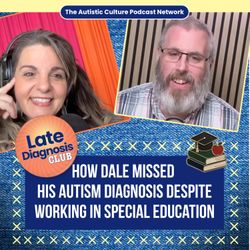
33. How Dale Missed His Autism Diagnosis Despite Working in Special Education
58:43||Ep. 33In this meeting of The Late Diagnosis Club, Dr Angela Kingdon welcomes Dale Pickles — host of Sendcast and Managing Director of B Squared — for a wide-ranging conversation on late diagnosis, education systems, and what it really means to support neurodivergent people.Dale shares how he grew up surrounded by special education — yet still missed his own Autism and ADHD. It wasn’t until 2023, prompted by supporting his daughter through her diagnosis journey, that everything finally clicked.This is a conversation about understanding yourself, supporting the next generation, and rethinking systems that weren’t built for neurodivergent minds.🪑 AttendeesChair: Dr Angela Kingdon — Author, community-builder, and Autistic advocateGuest: Dale Pickles — SEND specialist, podcast host, and Managing Director of B SquaredYou: The Listener!🗒️ Meeting AgendaOpening remarks from the ChairMember introduction: Family neurodivergence and missed recognitionLearning social rules and maskingLate diagnosis through parentingNavigating the UK diagnosis systemEducation system challenges and executive function in schoolsSEND reform and needs-led supportAI and neurodivergent support toolsKey learningsClub announcements🧾 Minutes from the Meeting1️⃣ Opening RemarksAngela introduces Dale Pickles and reflects on how someone can grow up immersed in special education and still miss their own neurodivergence.2️⃣ Member Introduction: Dale’s StoryDale grew up in a family deeply connected to special education, yet his own Autism and ADHD were not identified.Although he recognised he was different, he didn’t feel he met diagnostic criteria. Instead, he developed ways to adapt, learning social rules, structuring his environment, and building a life that worked for him.His path to diagnosis came later, prompted by supporting his daughter through her own challenges and recognition.3️⃣ Discussion HighlightsMissed in plain sight: Growing up around SEND without recognising himselfFamily neurodivergence: Traits present across generationsLong-term relationships: Building connections through learned skillsDiagnosis trigger: Supporting his daughter through school strugglesSelf-accommodation: Designing life to reduce frictionLabels vs reality: Diagnosis doesn’t define abilityFail-first system: Support often comes only after crisisSEND reform: Moving toward needs-led supportEarly intervention: Preventing long-term harmExecutive function gap: A missing focus in schoolsAI support: Tools for communication, reflection, and preparationEnvironmental impact: Needs to change depending on context4️⃣ Key LearningsYou can build a life that works without knowing why it works.Late diagnosis often comes through supporting others.Self-accommodation is a powerful but often invisible skill.Diagnosis is personal and not always necessary for everyone.Education systems often require failure before support.Early support can prevent long-term harm and trauma.Executive function is a key area often overlooked in schools.📌 Notice BoardDale’s Podcast - https://thesendcast.com/sendcast-episodes/Dale’s LinkedIn - www.linkedin.com/in/dalepicklesBrain in Hand App📣 Club Announcements🎧 The Late Diagnosis Club is available on Spotify, Apple Podcasts, and all major platforms.💬 Join our online meetups and community at latediagnosis.club.📌 Check the LDC Notice Board for Member Contributions💜 There is a small charge — but no one is turned away for lack of funds.🌈 Celebrate autistic voices with early access, ad-free listening, and our full archive at AutisticCulturePlus.com🌐 Visit www.autisticculturepodcast.com📲 Follow us on Instagram: @autisticculturepodcast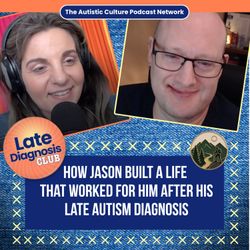
32. How Jason Built a Life That Worked for Him After His Late Autism Diagnosis
50:56||Ep. 32In this meeting of The Late Diagnosis Club, Dr Angela Kingdon welcomes Jason Killian, an engineer, hiking instructor, and long time member of the club, who shares his journey to understanding himself as Autistic in his 40s.Growing up in a neurodivergent household, Jason was unknowingly accommodated in early childhood. Despite strong academic performance, Jason struggled with social integration, bullying, and later workplace dynamics, experiences that only made sense years later through the lens of Autism.This is a conversation about understanding your needs, building a life that fits, and what changes when you finally have the right framework.🪑 AttendeesChair: Dr Angela Kingdon — Author, community-builder, and Autistic advocateGuest: Jason Killian — Engineer, hiking instructor, and Autistic advocateYou: The Listener!🗒️ Meeting AgendaOpening remarks from the ChairMember introduction: Early environment and hidden accommodationsDiscussion: School overwhelm and social expectationsIEPs, missed diagnoses, and academic maskingWorkplace challenges and burnoutLate identification and diagnosis journeySelf-accommodation and relationshipsHiking, regulation, and sensory experienceKey learningsClub announcements🧾 Minutes from the Meeting1️⃣ Opening RemarksAngela introduces Jason Killian, a longtime LDC member whose story explores what it means to grow up supported, but not understood, and to find clarity later in life.2️⃣ Member Introduction: Jason’s StoryJason grew up in a neurodivergent family where his needs were naturally accommodated — quiet spaces, independence, and room to explore interests.But once he entered school, sensory overwhelm, social expectations, and group environments became challenging. Without a framework for Autism, these struggles were interpreted as social difficulties rather than unmet needs.Although he performed well academically, Jason experienced bullying, isolation, and later workplace challenges, particularly around communication, expectations, and social norms.It wasn’t until adulthood — after years of reflection, therapy, and recognising patterns — that Jason identified as Autistic and sought a formal diagnosis.3️⃣ Discussion HighlightsNeurodivergent household: Early needs met without formal recognitionSchool shock: Sensory overwhelm and social confusion in group settingsIEP limitations: Focus on social skills, not sensory or learning needsBullying experience: Social differences targeted in adolescence and workCollege turning point: Finding acceptance in the queer communityPandemic reflection: Patterns recognised through shared experiences onlineRelationship clarity: Shared neurodivergence improves understandingWorkplace shift: Smaller company enabling better fit and autonomyHiking regulation: Nature as a consistent nervous system supportSensory joy: Smell, sound, and visual richness in outdoor environments4️⃣ Key LearningsSupport without understanding can still leave gaps.Academic success does not mean needs are being met.Late identification often comes through pattern recognition over time.Self-accommodation is a critical skill for wellbeing.Relationships can improve with shared understanding and language.Environment plays a major role in regulation and success.Special interests can become both careers and lifelines.📣 Club Announcements🎧 The Late Diagnosis Club is available on Spotify, Apple Podcasts, and all major platforms.💬 Join our online meetups and community at latediagnosis.club.📌 Check the LDC Notice Board for Member Contributions💜 There is a small charge — but no one is turned away for lack of funds.🌈 Celebrate autistic voices with early access, ad-free listening, and our full archive at AutisticCulturePlus.com🌐 Visit www.autisticculturepodcast.com📲 Follow us on Instagram: @autisticculturepodcast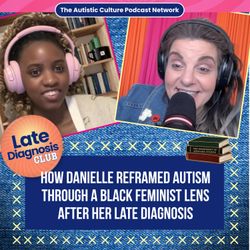
31. How Danielle Reframed Autism Through a Black Feminist Lens After Her Late Diagnosis
58:05||Ep. 31In this meeting of The Late Diagnosis Club, Dr Angela Kingdon welcomes Danielle Procope Bell, PhD, an Autistic Black feminist scholar and Assistant Professor of Africana Studies at the University of Tennessee, Knoxville.Danielle shares how she knew from early childhood that she was different, finding other children chaotic, preferring books and structure, and feeling an invisible glass wall between herself and others.Like many late-identified adults, Danielle’s recognition journey deepened after her son’s Autism diagnosis, when family patterns suddenly came into focus and helped her understand herself in a new way.This is a conversation about identity, lineage, belonging, and what becomes possible when you finally see yourself clearly.🪑 AttendeesChair: Dr Angela Kingdon — Author, community-builder, and Autistic advocateGuest: Danielle Procope Bell, PhD. — Scholar, professor, and Black feminist thinkerYou: The Listener!🗒️ Meeting AgendaOpening remarks from the ChairMember introduction: Early difference, late recognitionDiscussion: Hyperlexia, gifted programs, and childhood belongingFamily neurodivergence and being accepted at homeSon’s diagnosis and family pattern recognitionRace, gender, and what gets missed in Autism conversationsAutigendering and Black feminist theoryKey learningsClub announcements🧾 Minutes from the Meeting1️⃣ Opening RemarksAngela introduces Danielle Procope Bell, PhD, whose work sits at the intersection of Autism, Black feminism, gender, and identity.2️⃣ Member Introduction: Danielle’s StoryDanielle recognised from kindergarten that she related differently to the world. While other children felt unpredictable and chaotic, she preferred reading, routine, and solitary play.Her traits were interpreted as shyness and giftedness rather than Autism. She was moved into a gifted program, but the transition also brought racial and class isolation.Later, after her son was diagnosed as Autistic, Danielle began to recognise familiar patterns in herself, her father, and wider family members — leading to her own formal diagnosis.3️⃣ Discussion HighlightsKindergarten awareness: Knowing early that other children felt chaoticHyperlexia signs: Reading from age three and a deep love of booksSon’s diagnosis: Recognition through seeing herself reflected in himRepresentation gap: Autism narratives dominated by white male stereotypesTraits misread: Black Autistic traits interpreted as aggression or defianceODD pipeline: Black children funnelled into behavioural labels instead of supportMedical privilege: Access to quality adult assessment shaped outcomesBlack feminism as home: Intellectual spaces that affirmed difference before diagnosis4️⃣ Key LearningsMany Autistic people know they are different long before they know why.Diagnosis journeys are shaped by race, gender, and class.Traits are often interpreted differently depending on who displays them.Representation changes who gets recognised and supported.Identity can be built through community as much as through medicine.📌 Notice BoardThe Department of Africana Studies at the University of Tennessee, KnoxvilleBlack, White, and in Colour: Essays on American Literature and Culture by Hortense J. SpillersParable of the Sower by Octavia ButlerSister Outsider: Essays and Speeches by Audry LordeThe users of the erotic - centring your internal experience by Audry LordeSula by Toni MorrisonThe Deep by River Solomon📣 Club Announcements🎧 The Late Diagnosis Club is available on Spotify, Apple Podcasts, and all major platforms.💬 Join our online meetups and community at latediagnosis.club.📌 Check the LDC Notice Board for Member Contributions💜 There is a small charge — but no one is turned away for lack of funds.🌈 Celebrate autistic voices with early access, ad-free listening, and our full archive at AutisticCulturePlus.com🌐 Visit www.autisticculturepodcast.com📲 Follow us on Instagram: @autisticculturepodcast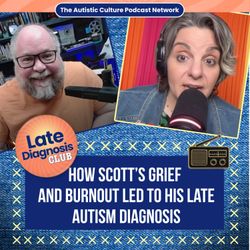
30. How Scott’s Grief and Burnout Led to His Late Autism Diagnosis
56:37||Ep. 30Warning: This episode includes discussion of terminal cancer, sudden bereavement, grief, burnout, and mental health struggles. Please listen with care.In this meeting of The Late Diagnosis Club, Dr Angela Kingdon welcomes Scott Simpson, a late-identified Autistic and ADHD creator, former broadcast journalist, and widowed father who has been raising his son solo since 2016.After decades working in radio, Scott’s life began to unravel through grief, burnout, and the collapse of the structures that had quietly supported him for years. What followed was a search to understand executive functioning, ADHD, and eventually Autism.Together, Angela and Scott explore hidden support needs, burnout after loss, Autistic shutdown, identity through memoirs and community, and why many late-identified adults only recognise their needs once life’s scaffolding disappears.This is a conversation about grief, structure, survival, and finally understanding yourself.🪑 AttendeesChair: Dr Angela Kingdon — Author, community-builder, and Autistic advocateGuest: Scott Simpson — Content creator, former broadcaster, and late-identified AuDHD parentYou: The Listener!🗒️ Meeting AgendaOpening remarks from the ChairMember introduction: Gifted kid, burnout, and late recognitionDiscussion: Special education and social confusionWidowhood, solo parenting, and hidden support needsRadio career collapse and autistic burnoutADHD diagnosis and later Autism recognitionStructure, scaffolding, and unmet needsKey learningsClub announcements🧾 Minutes from the Meeting1️⃣ Opening RemarksAngela introduces Scott Simpson, a creator and former radio professional whose late identification followed years of grief, burnout, and trying to understand why life had become so much harder.2️⃣ Member Introduction: Scott’s StoryScott was identified as “gifted” in childhood and placed into a specialist education program. While his intelligence was recognised early, his social struggles and deeper support needs were not.As an adult, he built a long career in broadcasting, married, became a father, and later experienced profound loss when his wife died of cancer while their son was still young.When career structure and family scaffolding fell away, Scott began exploring executive functioning, received an ADHD diagnosis, and later recognised Autism.3️⃣ Discussion HighlightsGifted program: Early intelligence recognised, while deeper needs were missedSmart but struggling: Academic ability masking social confusionRelationship patterns: Trying hard without understanding the rulesSudden grief: Becoming a widowed father to a three-year-oldRadio collapse: Career pressure, impossible demands, and burnoutHidden scaffolding: Job structure and parenting routines quietly sustaining lifeADHD first: Executive functioning becomes the doorway to understandingAutism later: Shutdowns, overwhelm, and lifelong patterns making senseMemoirs mattered: Learning through Autistic voices and lived experienceSupport needs emerge: Struggles become visible once the structure disappears4️⃣ Key LearningsHigh achievement can hide unmet support needs.Grief and burnout often expose needs that were once masked.Executive functioning struggles are often misunderstood as laziness or failure.Late recognition can come after life changes remove coping systems.Autistic voices and memoirs can be more powerful than diagnostic checklists.Support is often invisible until it is gone.📌 Notice BoardScott’s WebsiteScott’s YouTube Channel📣 Club Announcements🎧 The Late Diagnosis Club is available on Spotify, Apple Podcasts, and all major platforms.💬 Join our online meetups and community at latediagnosis.club.📌 Check the LDC Notice Board for Member Contributions💜 There is a small charge — but no one is turned away for lack of funds.🌈 Celebrate autistic voices with early access, ad-free listening, and our full archive at AutisticCulturePlus.com🌐 Visit www.autisticculturepodcast.com📲 Follow us on Instagram: @autisticculturepodcast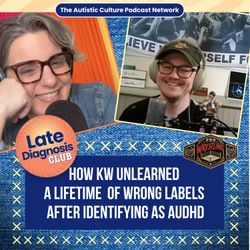
29. How KW Unlearned a Lifetime of Wrong Labels After Identifying as AuDHD
01:21:51||Ep. 29In this meeting of The Late Diagnosis Club, Dr Angela Kingdon welcomes KW Raney, a therapist, creative, and podcast host who identified as AuDHD in adulthood after years of misdiagnosis, burnout, and self-blame.As a child, KW was labelled with oppositional defiant disorder and grew up believing he was difficult, lazy, and broken. But decades later, recognition of ADHD, and later Autism, helped him reframe the struggles that had followed him since childhood.Together, Angela and KW explore the cost of wrong labels, Autistic burnout, meltdowns mistaken for behavioural problems, sensory overwhelm, masking through work and education, and the long process of learning how to accommodate yourself instead of fighting yourself.🪑 AttendeesChair: Dr Angela Kingdon — Author, community-builder, and Autistic advocateGuest: KW Raney — Therapist, creative, and AuDHD advocateYou: The Listener!🗒️ Meeting AgendaOpening remarks from the Chair Member introduction: Misdiagnosis, masking, ADHD discovery and later Autism recognitionDiscussion: ODD labels and childhood misunderstandingBurnout, depression, and reframing the pastMeltdowns, sensory overwhelm, and self-accommodationMusic, animals, and nervous system regulationTrusting your own internal compassKey learningsClub announcements🧾 Minutes from the Meeting1️⃣ Opening RemarksAngela introduces KW Raney, who reflects on how years of wrong labels shaped his identity, and how discovering he was AuDHD helped everything begin to make sense.2️⃣ Member Introduction: KW’s StoryKW was diagnosed with oppositional defiant disorder as a child, a label that framed his distress and overwhelm as bad behaviour rather than unmet needs.Despite academic success, he carried deep feelings of failure and self-blame into adulthood. It was only later, through recognising ADHD and then Autism, that he began to understand the lifelong patterns beneath those experiences.3️⃣ Discussion HighlightsODD label: Childhood distress framed as defiance instead of neurodivergenceHidden struggle: Good grades masking internal overwhelmAdult ADHD recognition: A workplace conversation changed the lensAutism realisation: Later patterns are becoming clear through a new frameworkBurnout reframe: Depression and suicidality viewed differently in hindsightMeltdowns misunderstood: Pressure-valve overload mistaken for behaviour problemsSelf-accommodation: Learning to support needs instead of suppressing themAnimal regulation: Comfort, pressure input, and nervous system calmMusic as lifeline: Emotional release, identity, and connectionCreative return: Rebuilding expression after burnoutInner compass: Learning to trust yourself over old labels4️⃣ Key LearningsWrong labels can shape identity for decades.Achievement does not cancel out struggle.Burnout is often misunderstood when neurodivergence is unseen.Meltdowns are overwhelm, not moral failure.Self-accommodation can be life-changing.Healing often begins when you trust your own experience.📌 Notice Boardhttps://substack.com/@mraskmorehttps://www.goodreads.com/book/show/203579170📣 Club Announcements🎧 The Late Diagnosis Club is available on Spotify, Apple Podcasts, and all major platforms.💬 Join our online meetups and community at latediagnosis.club.📌 Check the LDC Notice Board for Member Contributions💜 There is a small charge — but no one is turned away for lack of funds.🌈 Celebrate autistic voices with early access, ad-free listening, and our full archive at AutisticCulturePlus.com🌐 Visit www.autisticculturepodcast.com📲 Follow us on Instagram: @autisticculturepodcast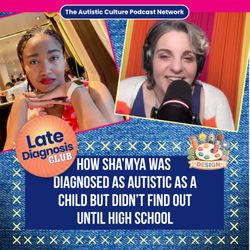
28. How Sha’mya Was Diagnosed as Autistic as a Child But Didn’t Find Out Until High School
30:32||Ep. 28In this meeting of The Late Diagnosis Club, Dr Angela Kingdon welcomes Sha’mya Jones, a graphic designer and entrepreneur who was diagnosed as Autistic in early childhood — but didn’t learn about it until she was a teenager.Sha’mya shares what it was like to grow up knowing she was different but not understanding why, navigating school, relationships, and identity without the language to describe her experience. From early academic success to social challenges and bullying, her story reflects the complexity of being both supported and left in the dark.Together, Angela and Sha’mya explore masking, college burnout, creative identity, and what it means to build a life and business that reflects who you truly are.🪑 AttendeesChair: Dr Angela Kingdon — Author, community-builder, and Autistic advocateGuest: Sha’mya Jones — graphic designer, entrepreneur, and Autistic self-advocateYou: The Listener!🗒️ Meeting AgendaOpening remarks from the ChairMember introduction: Early diagnosis, late awarenessDiscussion: Childhood differences and school experiencesIEP meeting and discovering her diagnosisMasking, bullying, and social challengesCollege life, burnout, and independenceArt, identity, and creative expressionEntrepreneurship and neurodivergent designRepresentation and visibility🧾 Minutes from the Meeting1️⃣ Opening RemarksAngela introduces Sha’mya Jones, a graphic designer and entrepreneur whose work centres on neurodivergent and underrepresented communities, particularly entrepreneurs of colour.2️⃣ Member Introduction: Sha’mya’s StorySha'mya was diagnosed as Autistic as a toddler, but her diagnosis was not shared with her until she was in high school during an IEP meeting.Growing up, she sensed she was different, often finishing work early, helping classmates, and connecting more easily with teachers than peers. Despite having accommodations, she navigated childhood without the language to understand her experiences.3️⃣ Discussion HighlightsEarly diagnosis, hidden identity: Diagnosed in early childhood but not told until high schoolFeeling different: Awareness of being out of step with peers from a young ageTeacher connection: Easier relationships with adults than classmatesIEP moment: Learning about her diagnosis during a school meetingMasking and bullying: Navigating teasing, social confusion, and self-protectionCuriosity misunderstood: Being perceived as rude for asking direct questionsCollege burnout: Over-involvement, pandemic disruption, and exhaustionCreative identity: Art as expression and pathway to careerEntrepreneurship: Building a business centred on neurodivergent clientsRepresentation: Highlighting Autistic women and people of colour4️⃣ Key LearningsBeing diagnosed early does not guarantee understanding or support.Without language, differences can lead to confusion and self-doubt.Masking and social challenges often emerge more strongly over time.Creative expression can provide clarity and identity.Representation matters — especially for marginalised Autistic voices.Self-understanding is an ongoing process, not a single moment.📌 Notice BoardSha’mya’s LinkedInPrisma kind Design NewsletterPrisma Kind Design WebsiteKo-Fi (for tipping)Brand Check-In SurveyFree Brand Clarity Checklist Brand Calm-Down Kit (paid audit and reset)Signature 2-tiered Brand Package (currently looking to book 3-4 beta clients to test and improve her offer) 📣 Club Announcements🎧 The Late Diagnosis Club is available on Spotify, Apple Podcasts, and all major platforms.💬 Join our online meetups and community at latediagnosis.club.📌 Check the LDC Notice Board for Member Contributions💜 There is a small charge — but no one is turned away for lack of funds.🌈 Celebrate autistic voices with early access, ad-free listening, and our full archive at AutisticCulturePlus.com🌐 Visit www.autisticculturepodcast.com📲 Follow us on Instagram: @autisticculturepodcast