Share
The Gen Mess with Tess
Ep 60: How to Stop Feeling Stuck in Toxic Workplace Patterns
You left. You reflected. You did the work. You asked better questions, watched for red flags, and turned down offers that didn't feel right. And then six months into the new job, the same feeling came back.
This isn't bad luck. And it isn't a failure of effort. It's psychology. In Part 1 of this two-part series, licensed therapist and certified coach, Tess Brigham, breaks down the real reason so many people, especially Gen Z workers entering or re-entering the workforce, end up repeating the same patterns at work even when they're actively trying to avoid it.
The answer is uncomfortable but important: most people do a thorough post-mortem on the wrong thing. They autopsy the job. They never examine themselves.
In this episode:
- How to identify a toxic workplace
- Why leaving a toxic workplace and doing all the right things still isn't enough
- The three patterns that follow people from one difficult job to the next: avoidance, disconnection, and measuring the wrong things
- What years inside a difficult work environment does to your beliefs about yourself, and how those beliefs travel with you
- Why salary, title, and company reputation are the wrong filters for evaluating a new opportunity
- The questions that actually predict whether you'll thrive somewhere, and why no one ever taught you to ask them
- Amy Edmondson's research on psychological safety, and why it's the most important thing almost no organization measures
- Why Gen Z's willingness to say "this doesn't feel right" isn't a weakness. It's the question every generation should have been asking.
Researcher credit: Amy Edmondson, Harvard Business School, psychological safety research
00:00: Opening story: the client who did everything right and still ended up back in the same place
01:40: The hard truth: she solved the right problem the wrong way
02:00: You autopsied the job. The job isn't what repeated. You repeated.
02:25: The three patterns that follow people from one workplace to the next
02:35: Pattern 1: Avoidance and what making yourself smaller to survive actually costs you
03:30: How avoidance rewrites your beliefs about whether it's safe to speak up
04:10: Pattern 2: Disconnection and losing touch with how you actually feel at work
04:35: Pattern 3: Measuring the wrong things, salary, title, and the cold brew on tap
05:15: The questions that actually predict whether you'll thrive somewhere
05:40: Why most people were never taught those questions were valid to ask
06:00: Amy Edmondson's research on psychological safety and why organizations don't teach it
06:55: Gen Z is not the problem. They're the first ones saying what everyone should have been asking.
07:45: What to ask yourself if you've repeated the pattern
08:30: The bottom line: you were handed the wrong checklist
09:00: Preview of Episode 61: three exercises that go to the root of each pattern
Follow for weekly episodes, and be sure to visit tessbrigham.com to learn more about Tess's work as a licensed therapist and certified coach.
More episodes
View all episodes
Ep 74: How to Rewire Your Brain and Break the Patterns Running Your Life (with Thais Gibson)
50:08|Most people think self-awareness is the goal. It's not. It's the starting line.In this episode, I sit down with Thais Gibson, founder of the Personal Development School, who spent over a decade earning a PhD and 13+ certifications across cognitive behavioral therapy, hypnosis, somatic experiencing, and more to answer one question: How do you actually change what's running your life at the subconscious level?Thais grew up with fearful avoidant attachment in a chaotic family environment and spent years learning how to rewire the patterns quietly controlling her decisions, her relationships, and her sense of self. Now she helps people all over the world do the same through a framework that integrates attachment theory, neuroplasticity, CBT, and somatic processing.We get into the specific mechanics: why affirmations don't work, what the subconscious mind actually responds to, and the exact exercise she uses to rewire a core wound in 21 days. This one gets practical fast.What you'll learn in this episode:Thais's three pillars of healing and why nervous system regulation alone is not enoughThe BTEA framework (Beliefs, Thoughts, Emotions, Actions) and why it explains almost every triggered reaction you have at work or in relationshipsThe 15 major core wounds organized by attachment style and which ones are secretly driving your behaviorThe 21-day rewiring exercise: how to use neuroplasticity to change a belief at the subconscious level, not just positive thinkingWhy anxiously attached people keep choosing emotionally unavailable partners, and what's actually happening underneathThe difference between victimization and victimhood, and why that distinction changes everythingWhy self-awareness without action can actually leave you more stuck, not lessHow to find your attachment style and where to begin the real workCHAPTER TIMESTAMPS00:00 Introduction: Who Is Thais Gibson 01:14 Thais' Origin Story: Fearful Avoidant Attachment and a Chaotic Childhood 05:52 The Three Pillars of Healing: Core Wounds, Nervous System, and Identity 09:31 The BTEA Framework: How One Belief Drives Your Entire Day 13:23 Why Rewiring Works: Neuroplasticity and the Subconscious Mind 15:31 The 15 Core Wounds by Attachment Style 17:55 The 21-Day Rewiring Exercise (Step by Step) 21:02 Gen Z, Social Media, and Getting Into This Work Earlier 30:03 Why We Keep Choosing the Same People (The Subconscious Comfort Zone) 32:04 What Actually Makes Something Trauma 40:00 Victimhood vs. Victimization: The Distinction That Changes Everything 46:29 Where to Start: Programs, Resources, and Next StepsGuest: Thais Gibson, Founder, Personal Development SchoolWebsite: personaldevelopmentschool.comVisit tessbrigham.com to learn more about host Tess Brigham, and sign up for the free weekly Dear Gen Mess Newsletter.
Ep 73: How to Stop Avoiding Conflict For Good
15:27|Someone corners you at your desk to vent about a coworker. You listen, you nod, you leave them feeling a little lighter. You didn't do anything wrong. But you just became the container for someone else's unresolved conflict.There's a name for this. It's called triangulation. And once you see it, you cannot unsee it.In this solo episode I walk through the psychology of why this pattern is so hard to give up, drawing on Murray Bowen's family systems theory and evolutionary psychologist Robin Dunbar's research on gossip as social bonding. I cover the three real reasons people avoid going direct: it's not just conflict avoidance, it's anxiety regulation, it's a genuine need to be seen, and it's risk avoidance around a relationship that actually matters. I also share what happened with a client of mine, I'm calling her Maya, who spent over a year in the same Friday coffee ritual before one sentence to her manager changed everything.If you've ever been someone's Friday coffee, or if you're a manager wondering why the same tension keeps surfacing on your team quarter after quarter, this episode is for you.What you'll learn in this episode:What triangulation is and why the triangle is more stable than a two-person relationship under stressThe three real drivers behind this pattern: anxiety reduction, the need to be seen, and risk avoidanceWhy Robin Dunbar's research on gossip reframes venting as something ancient and human, not just bad behaviorWhy the advice to just talk to them directly almost always gets ignored and what to say insteadThe one question to ask when someone pulls you into their conflict that actually helps them moveThree concrete things managers can do to become someone people don't have to vent aroundCHAPTER TIMESTAMPS:00:00 Opening hook and introduction to triangulation 01:20 Murray Bowen and family systems theory: why the triangle is more stable than a two-person relationship under stress 02:24 How triangulation shows up at work: managers, HR, and the desk-side vent 03:00 Why the pattern feels good: anxiety reduction and Robin Dunbar on gossip as social bonding 04:47 Why "just talk to them directly" almost never works: you are asking someone to give up something that is working 05:45 Why the pattern never resolves the conflict: relief is real but temporary, and the same tension resurfaces 06:30 The third driver nobody names: risk avoidance and the real cost of going direct 07:50 The Maya story: a year of Friday coffee venting, one question, and one sentence that shifted everything 11:30 What to do when you are the third point in someone else's conflict 11:47 Three concrete things managers can do right now 13:30 The bottom line: conflict avoided is conflict postponedVisit tessbrigham.com to learn more about fixing the mess in the modern workplace.
Ep 72: ADHD, Autism, and the Myth of Productivity with Genie Love
49:59|Most managers have at least one person on their team who is hard to read. They resist changes. They go quiet after a pivot. They seem disengaged, or they overdeliver one week and disappear the next. And the usual management advice does not seem to reach them.In this episode I sit down with Genie Love, an executive functioning and relationship coach with over 25 years of experience working with neurodivergent adults. Genie spent 13 years supporting students with ADHD and autism in schools before shifting to adult coaching, helping people whose brains were never designed for the systems being handed to them.We talk about why more adults are getting diagnosed with ADHD and autism now, why the apps and planners always fail, and why productivity is the wrong goal entirely. Genie introduces the concept of steadiness as the target instead, and walks through two concrete starting points that actually work for neurodivergent brains. We also get into what managers can realistically do without overhauling everything, and why the accommodations that help neurodivergent employees almost always turn out to help everyone on the team.What you'll learn in this episode:Why so many adults are discovering they have ADHD or autism in midlife and why it surfaces thenWhy apps, planners, and productivity systems keep failing neurodivergent peopleWhy steadiness is a better goal than productivity, and what that actually looks likeA step-by-step protocol for starting a hard task that you have been avoidingHow to match tasks to energy levels rather than defaulting to productivity guru schedulesWhat one small, sustainable change managers can make that benefits their entire teamResources for parents who suspect their child may be neurodivergentCHAPTER TIMESTAMPS:00:00 Introduction and guest bio: Genie Love, executive functioning coach00:47 Genie's origin story: from physical therapy to 25 years of neurodivergent coaching04:27 Why more adults are being diagnosed with ADHD and autism now07:10 The midlife tipping point: when systems that worked before suddenly stop working10:17 ADHD vs. autism: overlaps and differences in the coaching approach11:30 Why apps and planners keep failing neurodivergent people15:12 Productivity vs. steadiness: why the wrong goal is burning people out20:20 Technology, constant access, and the value of learning to do nothing24:14 The hard-thing setup protocol, time blocking, and energy blocking31:38 Mindset advice that backfires and the autistic burnout risk34:01 Late diagnosis: shame, grief, resources for parents, and why parents need coaching too43:37 What managers can do: one small change that ends up benefiting everyoneFollow Genie Love & Join Her Newsletterhttps://beyondcoaching.pro/Join the Dear Gen Mess Community to get the weekly download of the generational challenges facing us all.https://www.tessbrigham.com/podcast
Ep 71: Why Your Best Manager Is Burning Out
16:05|She is the manager first to respond to a message, even outside of normal business hours. She takes on every project nobody else wants. She quietly rewrites deliverables before they go out, even when she technically does not have to. Her team loves her, leadership loves her, she is the best manager you've ever worked with. And she is running on fumes in a way that will never once show up on paper.In this solo episode I go deep on a pattern I see repeatedly in my work with high-performing managers, particularly women. This is not about a leadership style or a personality trait. It is about a childhood role that never got put down. And it is quietly running her nervous system every single day at work.I walk through the psychology of parentification, Murray Bowen's concept of overfunctioning and underfunctioning from family therapy, and why the standard advice, just delegate more, does not just fail these managers. In some cases it actively makes things worse. I also share a composite case study and give both the manager living this pattern and the leaders above her something concrete to do differently.What you'll learn in this episode:What parentification is and the story it writes in a child's brain before they have words to question itWhy overfunctioning is not a trust problem or a perfectionism problem but an anxiety regulation problemWhy telling your best manager to delegate more can accidentally deepen the compulsive pattern instead of breaking itThree specific ways the standard delegation advice backfiresWhat actually helps: the one question to ask before taking something back overHow to give feedback to a manager like this without triggering the old story that she needs to try harderCHAPTER TIMESTAMPS:00:00 Introduction and hook: the manager who seems to handle everything00:58 What this episode is really about: a childhood role that never got put down02:10 Parentification: the framework and the story it writes in the brain03:15 Eldest daughter syndrome: what it is, who it applies to, and why Tess is focusing on women today04:48 The Sierrico thesis on birth order and caretaking roles, and how they become a management style05:45 Murray Bowen: overfunctioning and underfunctioning from family therapy06:30 Why overfunctioning is really about anxiety regulation, not the quality of the work07:07 Why just delegate more misses the mark and why willpower won't fix a body problem08:20 Three specific ways telling someone to delegate more backfires09:25 Meet Rachel: the composite case study and what her day actually looks like11:20 It does not look like a wound. It looks like competence.11:41 What actually helps: noticing, pausing, and getting curious before taking back over12:30 How to give feedback to a manager like Rachel without triggering the old story13:45 The bottom line: burnout in your best managers is an old role playing out on a new stageCheck Out These Related Episodes:Ep 47: The Manager Effect | Why Your Boss Impacts Your Mental Health More Than You Think with Ashley HerdEp 44: The Real Reason HR, Managers, and Employees Are ExhaustedFollow for weekly episodes that aren't just fixing the mess, but teaching you how to live in it. Visit tessbrigham.com for more.
Ep 70: The Part of Your Brain That's Quietly Killing Motivation with Dr. Kyra Bobinet
58:21|Have you ever watched a talented employee just stop trying? They know what to do. They have the skills. And still, nothing. What you are witnessing is not a character flaw. It is a brain event. And until now, most of us have had no name for it.Dr. Kyra Bobinet is a public health physician, scientist, and behavioral designer who has spent her career closing what she calls the know-do gap: the space between knowing what you should do and actually doing it. She has identified the specific brain region responsible for killing motivation, generating negative self-talk, and driving everything from procrastination to addiction. It is called the habenula. It is the size of a pea. And it is running more of your team's behavior than you realize.In this conversation we go deep on the neuroscience of motivation and disengagement, what triggers the habenula (and what that is) to shut people down at work, why GLP-1 medications are actually addiction drugs that work through this same brain region, how Gen Z's particular history with social media and loneliness makes them especially vulnerable to habenula overload, and what managers can actually do about it. Dr. Bobinet also shares the iterative mindset framework she has published in peer-reviewed research, which is available as a free tool at her website.What you'll learn in this episode:What the habenula is and why it is the master control switch for motivation and negative self-talkHow trauma, adverse childhood experiences, and social media overload create a hypersensitive habenulaWhy 1 in 3 Americans are using alcohol, cannabis, or nicotine during the workday and what that tells us about workplace stressThe surprising reason GLP-1s like Ozempic reduce cravings for alcohol, nicotine, and nail-biting (not just food)Why 67% of Gen Z report loneliness and what that means for their performance at workThe iterative mindset: why you cannot fail if you are experimenting, and how managers can use this to support struggling employeesA real workplace ritual that Dr. Bobinet uses to protect motivation and build retention on her teamCHAPTER TIMESTAMPS:00:01 Introduction and guest bio: Dr. Kyra Bobinet, public health physician and behavioral designer01:06 Origin story: patients who swear they'll change and then don't, and the know-do gap03:04 The habenula: what it is, how it kills motivation, and why it drives negative self-talk07:00 Habenula vs. amygdala: the prediction machine vs. the fear response09:10 Trauma, adverse childhood experiences, and the hypersensitive habenula11:46 Substances at work: the stat, the self-medication cycle, and the habenula's role in addiction and cravings15:47 GLP-1s and the habenula: why they reduce cravings far beyond weight loss19:53 Loneliness, belonging, and why 67% of Gen Z report feeling lonely24:04 What happens in the brain when someone stops making progress at work29:13 Building small wins into the workday and the iterative mindset framework37:07 Gen Z, social media overload, and what managers are getting wrong about disengagement45:10 Workplace rituals that protect motivation, plus the third/third/third hiring rule49:37 Why 30-day resets backfire and what to do instead: the planner, the doer, and the free tool at drkyrabobinet.comSubscribe to the podcast for weekly content, and visit tessbrigham.com to learn more.
Ep 69: Why You're Scared to Give Gen Z Feedback
09:55|There is a fear spreading through management right now that nobody is naming out loud. Managers are scared to give feedback to their Gen Z employees. And because it stays unspoken, it is quietly destroying performance culture inside organizations everywhere.In this episode, I walk through exactly why this is happening, what it's costing you, and what works when it comes to delivering feedback to a younger workforce. This is not a Gen Z problem, and it is not a manager problem. It is a product of a generation raised with a very specific relationship to evaluation, criticism, and their own sense of worth colliding with a management culture that was never trained to work with that reality.I draw on Carol Dweck's research on fixed vs. growth mindset, Dr. Kristin Neff's work on self-compassion and external performance feedback, organizational researcher Edgar Schein's concept of humble inquiry, and Sheila Heen's research from Thanks for the Feedback to explain what is actually happening in those feedback conversations when they go sideways. Then I give you concrete, specific tools to make them go differently.What you'll learn in this episode:Why a significant portion of Gen Z was never given direct developmental feedback before they entered your organizationThe neurological leap that turns a comment about a deliverable into an identity threatThree specific things that go wrong in most feedback conversations with Gen ZA 20-second framing technique that changes the entire dynamic before you say a single word of feedbackWhy Gen Z does not leave managers who give honest feedback, and who they actually leaveCHAPTER TIMESTAMPS:00:01 The fear managers won't say out loud00:40 The millennial manager story: one feedback conversation that went wrong and what happened next02:01 The deep mismatch in expectations, emotional history, and how Gen Z was wired to receive feedback02:10 Carol Dweck: growth mindset and the conditions required to develop it03:20 How self-esteem culture, protective parenting, and social media shaped Gen Z's relationship with evaluation03:44 Dr. Kristin Neff: self-compassion research and what happens when worth is tied to external feedback04:08 The leap: how this report missed the mark becomes you are inadequate04:41 Many Gen Z employees have never received direct developmental feedback before05:00 Three specific things going wrong in feedback conversations right now05:00 Problem 1: feedback is about identity, not behavior05:45 Problem 2: no relational foundation exists before the feedback lands (Edgar Schein, humble inquiry)06:25 Problem 3: expectations were never set clearly upfront07:04 One concrete shift: the 20-second framing technique07:50 Sheila Heen: asking for a smaller piece to give employees agency08:30 The real truth about what Gen Z actually needs from a managerDownload my FREE Gen Z Playbook: https://www.tessbrigham.com/#retention
Ep 68: Why We Need More Black Therapists and What Institutions Are Actually Doing About It
56:36|Are our educational systems actually built for the people who need them most? For students who are also parents, caregivers, veterans, and full-time workers, the traditional model of higher education was never designed with them in mind. And in the Black community, where those layers of responsibility are often even more pronounced. The gap between who the system was built for and who it needs to serve has real consequences.In this conversation I sit down with Dr. Alvin McLean, clinical psychologist and dean of psychology at National University, and Cherina Shaw, PhD candidate in psychology, doula, mother of six, and homeschool parent.We cover a lot of ground in this one, from why psychology training pipelines produce so few Black therapists, to what culturally responsive care actually looks like in practice, to one of the most important insights I have heard about worldview and how it shapes the kind of advice a person can actually receive. We also talk about where integrated physical and mental healthcare is headed and why it matters more than most people realize.This conversation is for HR leaders, healthcare providers, therapists in training, and anyone thinking about what it means to really see the people they are trying to help.What you'll learn in this episode:What is actually driving the shortage of Black therapists and what flexible institutions like National University are doing about itWhat "culturally responsive care" looks like in daily clinical practiceWhy collective worldview is not the same as personal preference and why missing that distinction derails treatmentWhy humility, not expertise, is the most important thing a healthcare provider or leader can bring to any conversationHow integrated physical and mental healthcare is already reducing costs and improving outcomesCHAPTER TIMESTAMPS: 00:37 Dr. McLean on why he focused his career on Black mental health 04:10 Cherina's path to a psychology PhD 07:50 Why psychology programs produce so few Black therapists and what the system gets wrong 08:09 HBCUs, state-by-state licensing, and the structural gap in the pipeline 11:16 National University's flexible model and why 70% of their students are people of color 13:22 Starting the pipeline earlier: building toward psychology careers at the elementary level 14:36 The problem with taking one multicultural competency class and calling it done 16:00 How the doctoral program at National University structures a full year of multicultural training 17:27 Implicit bias training in hospitals and why it matters for patient outcomes 18:59 Gen Z and therapy: more acceptance, but are they doing the work? 20:44 The Amazon generation and the demand for instant results 21:41 Young Black men being open about emotions on reality TV and what that signals 22:24 The gap between checking the therapy box and real internal change 23:25 The future of integrated physical and mental healthcare 25:38 Why integrated care is gaining momentum: cost data and long-term outcomes 26:11 How technology is reshaping mental health needs across generations 27:14 Intentional technology use and reclaiming mental downtime 30:38 What does culturally responsive care actually look like in practice? 31:03 Preparation, listening, partnership over task completion 33:02 Collective worldview: why prioritizing yourself can feel like betrayal 35:02 How to recognize a collective worldview through observation and conversation 38:13 Humility as the foundation of culturally competent care 39:14 Imposter syndrome, the pressure to have all the answers, and learning to let go of it 41:23 Acknowledging intersecting identities in coaching and clinical work 43:41 Prison reform: rehabilitation, for-profit prisons, and what actually works 44:50 Peer support specialists and preparing people to return to community 51:05 Final takeaways from both guests 51:25 Healing is incremental, ongoing, and that is okay 52:25 Collaborative care and leading with humility
Ep 67: 3 Signs Your Gen Z Employee Is About to Quit That Most Managers Never See Coming
10:37|I had no idea anything was wrong. They seemed fine and then they just quit.This is the most common thing I hear from managers and HR leaders right now. And here is what I need you to understand: The silence is not the problem. The silence is the symptom.In this solo episode, I break down exactly what is happening psychologically when a Gen Z employee goes quiet, why this generation responds to stress by withdrawing rather than speaking up, and what you can do to catch it before it becomes a resignation letter you never saw coming.I walk through the neuroscience behind this pattern, including neuroscientist Stephen Porges' polyvagal theory and why the nervous system's freeze response gets misread by managers as contentment. I also draw on developmental psychologist Jean Twenge's research on Gen Z's anxiety levels and psychologist Wendy Mogul's work on the parenting patterns that left this generation without the tools to navigate interpersonal friction at work.And I give you three specific behavioral signals to watch for, plus two questions you can ask in your next one on one that change the entire dynamic.What you'll learn in this episode:Why silence from a Gen Z employee is data, not contentmentThe neuroscience of the freeze response and why it gets misread as low dramaHow Gen Z's upbringing left many of them without tools for navigating conflict at workThree specific behavioral signals that a Gen Z employee is disengagingTwo questions to ask in your next one on one that actually give permission for honestyCHAPTER TIMESTAMPS: 00:01 Opening hook: the resignation that came out of nowhere 00:40 Why silence surprises us: managers are trained to look for the wrong signals 01:45 What Gen Z gives you instead: quiet, gradual withdrawal 02:18 Jean Twenge's research on Gen Z's anxiety and nervous system development 03:20 The heightened threat detection response this generation developed 03:50 Stephen Porges: polyvagal theory and the freeze response 04:42 Wendy Mogul: parenting patterns and the lack of tools for interpersonal friction 05:45 Signal 1: They stop asking questions 06:10 Signal 2: Responses get shorter and more transactional 06:35 Signal 3: They stop bringing problems to you (the most dangerous signal) 07:06 Client story: the 25-year-old who stopped speaking in meetings 07:50 What to do: one concrete thing to try this week 08:30 Two specific questions to ask in your next one on one 09:33 Closing and call to action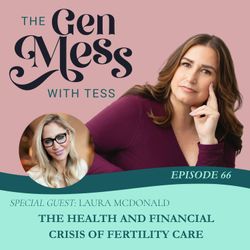
Ep 66: The Health and Financial Crisis of Fertility Care for the Next Generation
47:28|In this episode, I sit down with Laura McDonald, co-founder of Flora Fertility, the first individually owned insurance solution for fertility and women's health. Laura is a bestselling author, former financial media personality, and the founder of Canada's largest financial media company focused on women and wealth, which she built, scaled, and sold. Now she is tackling one of the most urgent and under-discussed financial crises facing the next generation: the cost of fertility care.We talk about why 72% of Gen Z women are already thinking about fertility anxiety before they are even trying to conceive, why the current group benefits model is failing most employees, how Flora Fertility is changing that with individually owned coverage starting at $15 a month, and what HR leaders and parents can actually do right now.If you manage Gen Z employees, have a young adult daughter, or are a young woman thinking about your own options, this conversation will change the way you look at reproductive health as a financial planning issue.What you'll learn in this episode:Why Gen Z women are thinking about fertility earlier than any generation before themThe data behind the fertility financial crisis (and why the existing employer model isn't solving it)How Flora Fertility works and why individual ownership changes everythingWhy the average Gen Z employee's 12-job career makes employer-tied benefits a broken modelWhat HR leaders should be doing right now, and what parents can do tooCHAPTER TIMESTAMPS:00:00 Introduction and guest bio01:04 Laura's origin story: from financial media to fertility insurance07:20 Why Gen Z women are thinking about fertility by age 23: the data10:24 Tess's theory on how Gen Z women approach life differently than Gen X12:41 Laura's own daughters and the reality of Gen Z's mindset around family14:35 Birth rates, delayed motherhood, and what the data actually shows16:31 Why women are finally being honest about what parenthood really looks like19:18 The conversation parents need to be having with their 22-24 year old daughters20:34 How Flora Fertility works: pricing, coverage, and the set-it-and-forget-it model23:23 The financial reality: 80% of people pay for IVF on credit cards25:32 How financial stress directly affects fertility outcomes26:06 Why Fortune 500 fertility benefits are not the solution most people think they are31:12 Emotional intelligence, pet insurance, and why Flora resonates differently33:37 How Flora is earning trust with a generation skeptical of insurance37:54 Why Flora may be the first financial product Gen Z women ever actually buy40:25 The gig economy, 12 jobs, and why benefits have to travel with you41:45 What HR leaders should be doing right now43:55 Parents as policyholders: gifting coverage to adult children