Share
The Edition
Soul suckers of private equity, Douglas Murray on Epstein & are literary sequels ‘lazy’?
The soul suckers of private equity, Douglas Murray on Epstein and MAGA & are literary sequels ‘lazy’?
First up: how private equity is ruining Britain
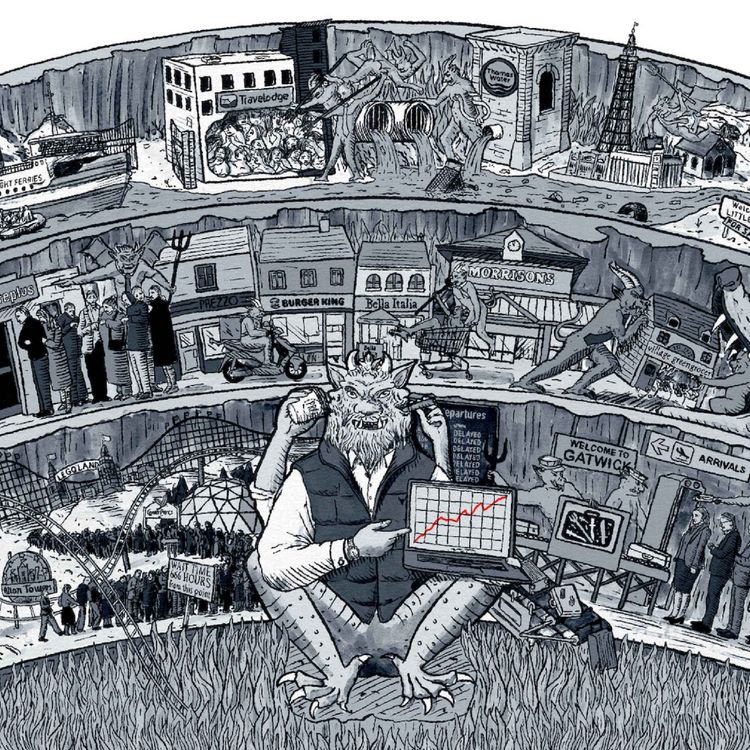
Gus Carter writes in the magazine this week about how foreign private equity (PE) is hollowing out Britain – PE now owns everything from a Pret a Manger to a Dorset village, and even the number of children’s homes owned by PE has doubled in the last five years. This ‘gives capitalism a bad name’, he writes. Perhaps the most symbolic example is in the water industry, with water firms now squeezed for money and saddled with debt. British water firms now have a debt-to-equity ratio of 70%, compared to just 4% in 1991. Britain’s desperation for foreign money has, quite literally, left Britain ‘in the shit’.
Gus joined the podcast to discuss further, alongside the journalist Megan Greenwell, author of Bad Company: Private Equity and the Death of the American Dream. (00:46)
Next: why is MAGA so incensed over Jeffrey Epstein?
Six years after he died, the Jeffrey Epstein scandal is still haunting Donald Trump. Trump had vowed to release all files on various cases that attract conspiracy theorists – from JFK to Martin Luther King Jr. What makes the Epstein case different, as Douglas Murray writes in the magazine this week, is that the case was so recent and Epstein’s ties with the elites, many of whom are still in power. Trump appeared to backtrack on releasing files relating to Epstein, prompting ire from the MAGA world, and there is now mounting cross-party pressure to uncover who knew what. Mike Johnson, the House speaker, sent representatives home early for summer, and there is even talk of Ghislaine Maxwell testifying.
Why is the Epstein scandal such a lightning rod for MAGA rage? Douglas Murray joined the Spectator to discuss. The full interview can be found on Spectator TV. (15:49)
And finally: are literary sequels ‘lazy’?
It’s ‘sod’s law’, says the Spectator’s literary editor Sam Leith, that when a friend’s book is due to be reviewed in the pages of the books section that you edit, the review will be bad. Mike Cormack reviews Men In Love by Irvine Welsh this week, calling the decision by Welsh to pen another sequel to Trainspotting ‘lazy’. At the Spectator this made us ponder whether this is true of all literary sequels, and what motivates authors to stick with characters and stories that they know.
Sam joined us to discuss further alongside Lucy Thynne, the Telegraph’s deputy literary editor. (33:59)
Hosted by William Moore and Lara Prendergast.
Produced by Patrick Gibbons and Megan McElroy.
Become a Spectator subscriber today to access this podcast without adverts. Go to spectator.co.uk/adfree to find out more.
For more Spectator podcasts, go to spectator.co.uk/podcasts.
Contact us: podcast@spectator.co.uk
More episodes
View all episodes

Why is antisemitism rising in Britain? – with Andrew Roberts & Peter Hitchens
46:14|For this week’s Edition, Lara Prendergast is joined by the Spectator’s commissioning editor Tali Fraser, Mail on Sunday columnist Peter Hitchens and the historian and Conservative peer Andrew Roberts.This week: why is antisemitism rising on both the left and right of British politics? On the third anniversary of 7 October, Tali writes in this week’s cover story about what she sees as a growing antisemitic convergence between Zack Polanski's Green Party and Rupert Lowe's Restore Britain. The panel discuss the Green Party’s ‘Zionism is racism’ motion – passed this week at their conference in Brighton – and the increasingly blurred line between anti-Zionism and antisemitism. Is this simply history repeating itself or has something changed in British politics since 7 October? Is the American right helping to normalise some of these ideas? And what does it mean for British Jews, many of whom now face extraordinary security measures simply to attend synagogue?Plus: did Kemi Badenoch have a good Conservative party conference? Andrew argues that she has finally set out the ideological battle lines, while Peter remains sceptical that the Tory recovery is real – and warns that Reform could still do serious damage.And finally: Andrew discusses his new book Napoleon and His Marshals, Peter makes the case for paying to visit Britain’s cathedrals, and the panel ask what’s happened to the midlife crisis. Produced by Patrick Gibbons.
Benefits ban: How Badenoch plans to follow Burnham – with Poppy Coburn
39:43|For this week’s Edition, Lara Prendergast is joined by the Spectator’s political editor Tim Shipman, restaurant critic Angus Colwell and Telegraph associate editor Poppy Coburn.This week: does the country want Kemi Badenoch’s tough love? Ahead of Tory party conference, Tim speaks to the Tory leader about her plans to get Britain working again. She argues that if you can work, you should; young people without a work history could be put onto a six-month ‘get to work’ scheme rather than Universal Credit. Badenoch says the Tories have spent too long worrying about being called the ‘nasty party’ and now need to plant their flag on welfare, the economy and conservative values. But while her personal fortunes have improved, has the Tory brand recovered with her?Also: has Andy Burnham handed the Conservatives an opportunity? Badenoch believes the Prime Minister is moving Labour decisively to the left, while Burnham’s conference speech revived arguments about public ownership, devolution and Britain’s relationship with Europe. Is his attack on, what he sees as the economic consensus of the past 40 years, bold – or an opportunity for the Conservatives to open up ideological fault lines? And how realistic are Burnham’s ambitions to move Britain closer to the EU?Plus: is AI ruining literature or just exposing bad writing? The panel discuss whether machines can produce genuinely great art, and Tim reveals how he uses AI to sift interview transcripts. And finally: are some people nostalgic for lockdown? Following a controversy over a Boston lesbian bar, Angus looks at the persistence of mask culture, while the panel reveal what they would stockpile for the apocalypse.Produced by Patrick Gibbons.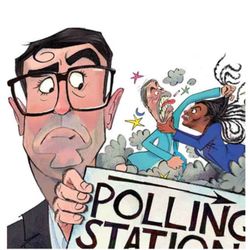
Should Burnham call a snap general election?
41:05|For this week’s Edition, William Moore is joined by the Spectator’s deputy editor Freddy Gray, commissioning editor Lara Brown and deputy political editor James Heale.This week: will Andy Burnham call an early general election? Tim Shipman’s cover asks whether the Prime Minister might go to the polls sooner than 2029, as Labour faces a worsening fiscal situation and an increasingly difficult choice over tax and spending. With the government’s budget looming, does Burnham need a fresh mandate – or is an election simply too risky? And with Reform and the Conservatives competing for voters on the right, could an early contest catch his opponents off guard?Also: the coming AI backlash. James writes about the Prime Minister's cautious approach to artificial intelligence and asks whether the government can afford to hedge its bets as the technology transforms the economy. With Britain facing high energy costs and limited computing capacity, can the UK really compete in the AI race?Across the Atlantic, Freddy looks at Abdul El-Sayed, the Democratic Senate candidate in Michigan whose campaign has attracted attention for its combination of progressive politics, online influence and an emphasis on masculinity and fitness. Could candidates like El-Sayed tell us something about where the American left is heading? And as politicians increasingly turn themselves into social-media personalities, is this more important than traditional party structures?Plus: would you make a good professional mourners? We explore the strange world of people paid to attend funerals.Produced by Patrick Gibbons & Abigail Brierley.
Elon Musk to Clavicular: should we fear the manosphere? with Peter Hitchens & Toby Young
39:19|For this week’s Edition, William Moore is joined by the Spectator’s associate editor and director of the Free Speech Union Toby Young, journalist and author Esther Walker, and Mail on Sunday columnist Peter Hitchens.This week: the men on the spectrum who rule the world. Charles Steel writes in the magazine about the wealthy, obsessive and often unconventional figures who increasingly shape politics and technology – from Elon Musk to the crypto billionaire Ben Delo. Is autism a useful way of understanding these men or has society become too obsessed with diagnosing people? Toby argues that traits such as hyper-focus and an indifference to what others think can be an advantage in competitive professions, while Peter dismisses our enthusiasm for putting people on ‘spectrums’ altogether. And, as tech leaders issue increasingly apocalyptic warnings about artificial intelligence, should we take them seriously or be suspicious of calls for greater regulation?Also: should parents really be worried about the ‘manosphere’? Esther argues that the moral panic surrounding online influencers such as Andrew Tate is already out of date. Teenage boys, she says, are perfectly capable of recognising when misogyny is being used as a business model – and many are more interested in mocking influencers than following them. But with ‘looksmaxxing’, bodybuilding and increasingly extreme attempts at self-improvement taking off online, are boys becoming more like the teenage girls of previous generations?Plus: Peter reveals why he has fallen out of love with America – and in love with Canada, while Toby marks 35 years since the launch of the Modern Review.Produced by Patrick Gibbons.
Will Andy drill deep for oil & gas – and is Bayeux in Britain as good as it gets?
35:44|William Moore is joined by The Spectator's economics editor Michael Simmons, The Spectator's commissioning editor and writer at large Tali Fraser, and the Deputy Leader of the Conservative Party Alex Burghart MP.This week: has Labour stopped just stopping oil? Michael reveals that ministers are expected to approve the Jackdaw gas field within days, while Rosebank is held back until after the by-election in Keir Starmer's old seat – and asks whether a party whose last energy secretary called the project 'climate vandalism' has really changed its mind, or has just found a half measure it can live with.Also: is Britain about to get a new social order? Tali examines the socio-economic duty, a dormant clause of the Equality Act that Labour now plans to switch on, requiring public bodies to weigh social background in every decision they make. The panel discuss what that would mean for school admissions, NHS waiting lists and potholes. Is this equality of outcome by the back door – or simply a charter for lawyers?Plus: after 900 years, is the Bayeux Tapestry worth the wait?Produced by Henry Lloyd.
Has Reform UK lost its magic? – and why Middlesbrough’s young men don’t care
34:01|Lara Prendergast is joined by The Spectator’s political editor Tim Shipman, columnist and journalist Melanie McDonagh, and the Daily Mail’s parliamentary sketchwriter Quentin Letts.This week: has Reform UK lost its magic? Ahead of the party’s conference, Tim reveals its plans for the first 100 days of a Reform government – and asks whether Nigel Farage can persuade voters that his party is ready to govern after a turbulent summer.Also: what is happening in Middlesbrough? The panel discuss rising gang violence, the decline of visible policing and a generation of young men who appear increasingly indifferent to the law. Is social breakdown to blame – or has Britain simply lost its respect for authority?Plus: what can Britain learn from Norway’s royals? Produced by Henry Lloyd and Oscar Edmondson.
How the blob broke teaching – and can the Sussexes redeem themselves?
41:02|Lara Prendergast is joined by The Spectator’s economics editor Michael Simmons, author and critic Philip Hensher, and comedian and co-host if the Triggernometry podcast Frances Foster.This week: are good teachers under siege? The panel discuss Michael Gove’s cover story on the education establishment, from collapsing classroom discipline to the ‘pathetically low ambition’ of those training Britain’s teachers. Also: have accusations of bullying become a weapon against demanding ministers? Michael Simmons comes to the defence of his former teacher, Scotland’s Deputy First Minister Jenny Gilruth, while Philip asks whether the real problem is that civil servants are simply too difficult to sack.Plus: Harry and Meghan are back in Britain. Has the public’s fascination with the Sussexes ever really gone away – and do they deserve a chance at redemption?Produced by Henry Lloyd, Patrick Gibbons and Oscar Edmondson.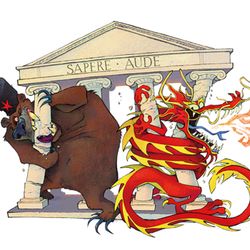
Maureen Lipman on Britain’s anti-Semitism crisis – and has the West lost the will to defend itself?
44:13|William Moore is joined by The Spectator’s political editor Tim Shipman, commissioning editor Tali Fraser and actress Maureen Lipman.This week: has the West lost the will to defend itself? The panel discuss the threats posed by China, Russia and Islamism – and whether Western societies have become too reluctant to defend their own values. Maureen also warns about the rise of antisemitism, arguing that universities are ‘grooming’ a generation of anti-Semites.Also: Tali reports back from a screening of Chris Packham’s People’s Emergency Briefing. Has environmental campaigning become too patronising – and are politicians forcing through policies they have failed to persuade the public to support?Plus: can James Bond survive modern Britain?Produced by Oscar Edmondson and Patrick Gibbons.
‘It’s a cesspool!’ — What’s going wrong in Britain’s universities?
52:10|William Moore is joined by The Spectator’s associate editor Toby Young, commissioning editor Lara Brown and newsletter editor and restaurant critic Angus Colwell.This week: What has gone wrong with British universities? Lara unpacks the wider academic crisis in the wake of the Jason Arday scandal, from ‘surviving the apocalypse’ courses at Warwick to maths departments promising to ‘decolonise’ the subject. Has the sector lost its nerve?Also: Balding. Toby explains why he’s trying to talk his three sons out of hair transplants, while Angus and Lara weigh in on whether men vastly overestimate the importance of their hair on the dating market.Plus: is Indian the best cuisine? Angus argues it’s surprisingly hard to find a truly great curry in London, while the the panel ask whethe Indian food is unfairly low-status because it’s too cheap.Produced by Henry Lloyd and Oscar Edmondson.