Share

The Edition
Is politics becoming more religious? With Tom Holland & Jonathan Sumption
Is British politics becoming more religious? Madeline Grant certainly thinks so, arguing – in the Spectator’s cover article – that the next election could be the most religious for decades. Issues like immigration and Islam, assisted dying – and even the establishment of the Church of England are likely to play a role. The current Labour government's ‘most telling divide’, Madeline writes, is between MPs – like Shabana Mahmood and Wes Streeting – who understand religion – and 'those who don’t’.
For the Edition’s Easter special, host Lara Prendergast is joined by vicar – and Madeline’s husband – The Rev’d Fergus Butler-Gallie, former Supreme Court justice Jonathan Sumption and the historian and broadcaster Tom Holland.
They discuss why faith might be re-emerging as a live political issue: from searching for meaning in modern life, to a reaction against an ‘anaemic form of post-Christianity’ that has dominated since the 1960s. They also ponder whether the public has always sought out authority, and a moral code, and if the current, insurgent political parties – the Greens and Reform – have understood this, embracing a ‘moral energy’ which has proven attractive to a large portion of the electorate.
Plus: is having Anglican Bishops in the House of Lords ‘an anomaly’? Why is the Church of England 'the canary in the coal mine’? And was the late Queen the 'most effective proselytiser’ for Christianity in Britain since the Georgians?
Produced by Patrick Gibbons. Wishing all our listeners a very Happy Easter.
Become a Spectator subscriber today to access this podcast without adverts. Go to spectator.co.uk/adfree to find out more.
For more Spectator podcasts, go to spectator.co.uk/podcasts.
Contact us: podcast@spectator.co.uk
More episodes
View all episodes

Could France’s crisis come to Britain? with Louis Sarkozy & Loyd Grossman
44:53|For this week’s Edition, Lara Prendergast is joined by the Spectator’s economics editor Michael Simmons, writer Louis Sarkozy and broadcaster Sir Loyd Grossman.This week: is France heading for revolution? As protests and unrest grip the country, Louis argues that France faces overlapping political, economic, demographic and security crises – and warns that the turmoil is likely to have consequences for next year’s presidential election. Is Macron losing control? Could Marine Le Pen finally take power? And to what extent are the violent riots uniquely French, or part of a wider European unrest? Also: why does Napoleon still loom so large over French politics and culture? Louis discusses the emperor’s obsessive reading habits, while Loyd asks whether today’s politics are once again being shaped by 'great men' rather than institutions.Plus: here in the UK, what should we expect from John Healey’s first Budget? Michael explains why ministers want it to be seen as a small and boring Budget – while warning that tax rises could still be on the way. And, as Peter Hitchens argues against letting generals dictate foreign policy, the panel debate defence, patriotism and whether the young would still fight for their country.Produced by Patrick Gibbons and Abigail Brierley.
Are we failing the next generation? – with Camilla Cavendish & Gloria de Piero
51:12|For this week’s Edition, William Moore is joined by the Spectator’s commissioning editor Lara Brown, Financial Times columnist and peer Camilla Cavendish and broadcaster and former Labour MP Gloria De Piero.This week: are screens creating a new education divide? Lara examines the growing backlash against technology in schools. What began as an attempt to create a generation of ‘digital natives’ has left children as young as four doing reading and maths on gamified apps – despite little evidence that they improve learning. State schools are spending hundreds of millions of pounds on 'EdTech', while some of Britain’s leading private schools are moving back towards books, handwriting and screen-free classrooms. Are we creating a two-tier education system – books for the rich and screens for everyone else?Also: why aren’t young people having children? Camilla discusses her new book Generation Maybe, which investigates falling birth rates around the world. She argues that the problem isn’t simply that women are choosing careers over motherhood: millions of people would like children but cannot find someone to have them with. Are we living through a ‘relationship recession’? Have men failed to keep up with women or have expectations changed? And can governments actually do anything about it? Finally: why are we so nostalgic for the 1990s? The panel look back at Tony Blair, boozy lunches, and the millennium bug – a world before smartphones took over.Produced by Patrick Gibbons.
Why is antisemitism rising in Britain? – with Andrew Roberts & Peter Hitchens
46:14|For this week’s Edition, Lara Prendergast is joined by the Spectator’s commissioning editor Tali Fraser, Mail on Sunday columnist Peter Hitchens and the historian and Conservative peer Andrew Roberts.This week: why is antisemitism rising on both the left and right of British politics? On the third anniversary of 7 October, Tali writes in this week’s cover story about what she sees as a growing antisemitic convergence between Zack Polanski's Green Party and Rupert Lowe's Restore Britain. The panel discuss the Green Party’s ‘Zionism is racism’ motion – passed this week at their conference in Brighton – and the increasingly blurred line between anti-Zionism and antisemitism. Is this simply history repeating itself or has something changed in British politics since 7 October? Is the American right helping to normalise some of these ideas? And what does it mean for British Jews, many of whom now face extraordinary security measures simply to attend synagogue?Plus: did Kemi Badenoch have a good Conservative party conference? Andrew argues that she has finally set out the ideological battle lines, while Peter remains sceptical that the Tory recovery is real – and warns that Reform could still do serious damage.And finally: Andrew discusses his new book Napoleon and His Marshals, Peter makes the case for paying to visit Britain’s cathedrals, and the panel ask what’s happened to the midlife crisis. Produced by Patrick Gibbons.
Benefits ban: How Badenoch plans to follow Burnham – with Poppy Coburn
39:43|For this week’s Edition, Lara Prendergast is joined by the Spectator’s political editor Tim Shipman, restaurant critic Angus Colwell and Telegraph associate editor Poppy Coburn.This week: does the country want Kemi Badenoch’s tough love? Ahead of Tory party conference, Tim speaks to the Tory leader about her plans to get Britain working again. She argues that if you can work, you should; young people without a work history could be put onto a six-month ‘get to work’ scheme rather than Universal Credit. Badenoch says the Tories have spent too long worrying about being called the ‘nasty party’ and now need to plant their flag on welfare, the economy and conservative values. But while her personal fortunes have improved, has the Tory brand recovered with her?Also: has Andy Burnham handed the Conservatives an opportunity? Badenoch believes the Prime Minister is moving Labour decisively to the left, while Burnham’s conference speech revived arguments about public ownership, devolution and Britain’s relationship with Europe. Is his attack on, what he sees as the economic consensus of the past 40 years, bold – or an opportunity for the Conservatives to open up ideological fault lines? And how realistic are Burnham’s ambitions to move Britain closer to the EU?Plus: is AI ruining literature or just exposing bad writing? The panel discuss whether machines can produce genuinely great art, and Tim reveals how he uses AI to sift interview transcripts. And finally: are some people nostalgic for lockdown? Following a controversy over a Boston lesbian bar, Angus looks at the persistence of mask culture, while the panel reveal what they would stockpile for the apocalypse.Produced by Patrick Gibbons.
Should Burnham call a snap general election?
41:05|For this week’s Edition, William Moore is joined by the Spectator’s deputy editor Freddy Gray, commissioning editor Lara Brown and deputy political editor James Heale.This week: will Andy Burnham call an early general election? Tim Shipman’s cover asks whether the Prime Minister might go to the polls sooner than 2029, as Labour faces a worsening fiscal situation and an increasingly difficult choice over tax and spending. With the government’s budget looming, does Burnham need a fresh mandate – or is an election simply too risky? And with Reform and the Conservatives competing for voters on the right, could an early contest catch his opponents off guard?Also: the coming AI backlash. James writes about the Prime Minister's cautious approach to artificial intelligence and asks whether the government can afford to hedge its bets as the technology transforms the economy. With Britain facing high energy costs and limited computing capacity, can the UK really compete in the AI race?Across the Atlantic, Freddy looks at Abdul El-Sayed, the Democratic Senate candidate in Michigan whose campaign has attracted attention for its combination of progressive politics, online influence and an emphasis on masculinity and fitness. Could candidates like El-Sayed tell us something about where the American left is heading? And as politicians increasingly turn themselves into social-media personalities, is this more important than traditional party structures?Plus: would you make a good professional mourners? We explore the strange world of people paid to attend funerals.Produced by Patrick Gibbons & Abigail Brierley.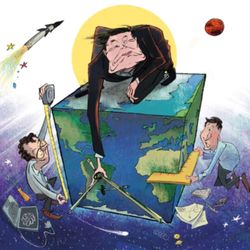
Elon Musk to Clavicular: should we fear the manosphere? with Peter Hitchens & Toby Young
39:19|For this week’s Edition, William Moore is joined by the Spectator’s associate editor and director of the Free Speech Union Toby Young, journalist and author Esther Walker, and Mail on Sunday columnist Peter Hitchens.This week: the men on the spectrum who rule the world. Charles Steel writes in the magazine about the wealthy, obsessive and often unconventional figures who increasingly shape politics and technology – from Elon Musk to the crypto billionaire Ben Delo. Is autism a useful way of understanding these men or has society become too obsessed with diagnosing people? Toby argues that traits such as hyper-focus and an indifference to what others think can be an advantage in competitive professions, while Peter dismisses our enthusiasm for putting people on ‘spectrums’ altogether. And, as tech leaders issue increasingly apocalyptic warnings about artificial intelligence, should we take them seriously or be suspicious of calls for greater regulation?Also: should parents really be worried about the ‘manosphere’? Esther argues that the moral panic surrounding online influencers such as Andrew Tate is already out of date. Teenage boys, she says, are perfectly capable of recognising when misogyny is being used as a business model – and many are more interested in mocking influencers than following them. But with ‘looksmaxxing’, bodybuilding and increasingly extreme attempts at self-improvement taking off online, are boys becoming more like the teenage girls of previous generations?Plus: Peter reveals why he has fallen out of love with America – and in love with Canada, while Toby marks 35 years since the launch of the Modern Review.Produced by Patrick Gibbons.
Will Andy drill deep for oil & gas – and is Bayeux in Britain as good as it gets?
35:44|William Moore is joined by The Spectator's economics editor Michael Simmons, The Spectator's commissioning editor and writer at large Tali Fraser, and the Deputy Leader of the Conservative Party Alex Burghart MP.This week: has Labour stopped just stopping oil? Michael reveals that ministers are expected to approve the Jackdaw gas field within days, while Rosebank is held back until after the by-election in Keir Starmer's old seat – and asks whether a party whose last energy secretary called the project 'climate vandalism' has really changed its mind, or has just found a half measure it can live with.Also: is Britain about to get a new social order? Tali examines the socio-economic duty, a dormant clause of the Equality Act that Labour now plans to switch on, requiring public bodies to weigh social background in every decision they make. The panel discuss what that would mean for school admissions, NHS waiting lists and potholes. Is this equality of outcome by the back door – or simply a charter for lawyers?Plus: after 900 years, is the Bayeux Tapestry worth the wait?Produced by Henry Lloyd.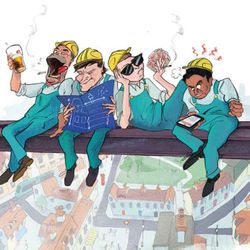
Has Reform UK lost its magic? – and why Middlesbrough’s young men don’t care
34:01|Lara Prendergast is joined by The Spectator’s political editor Tim Shipman, columnist and journalist Melanie McDonagh, and the Daily Mail’s parliamentary sketchwriter Quentin Letts.This week: has Reform UK lost its magic? Ahead of the party’s conference, Tim reveals its plans for the first 100 days of a Reform government – and asks whether Nigel Farage can persuade voters that his party is ready to govern after a turbulent summer.Also: what is happening in Middlesbrough? The panel discuss rising gang violence, the decline of visible policing and a generation of young men who appear increasingly indifferent to the law. Is social breakdown to blame – or has Britain simply lost its respect for authority?Plus: what can Britain learn from Norway’s royals? Produced by Henry Lloyd and Oscar Edmondson.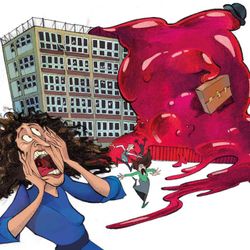
How the blob broke teaching – and can the Sussexes redeem themselves?
41:02|Lara Prendergast is joined by The Spectator’s economics editor Michael Simmons, author and critic Philip Hensher, and comedian and co-host if the Triggernometry podcast Frances Foster.This week: are good teachers under siege? The panel discuss Michael Gove’s cover story on the education establishment, from collapsing classroom discipline to the ‘pathetically low ambition’ of those training Britain’s teachers. Also: have accusations of bullying become a weapon against demanding ministers? Michael Simmons comes to the defence of his former teacher, Scotland’s Deputy First Minister Jenny Gilruth, while Philip asks whether the real problem is that civil servants are simply too difficult to sack.Plus: Harry and Meghan are back in Britain. Has the public’s fascination with the Sussexes ever really gone away – and do they deserve a chance at redemption?Produced by Henry Lloyd, Patrick Gibbons and Oscar Edmondson.