Share

The Doctor's Kitchen Podcast
#158 Cannabis and Mood with Dr Dani Gordon plus an intro from Dr Michael Dixon LVO, OBE
🎬 Watch the podcast on YouTube here
📱 Download The Doctor’s Kitchen app for free
Today I’m chatting with Dr Dani Gordon. Canadian, British and American Board Qualified Medical doctor and author of ‘The CBD Bible’ and the forthcoming ‘The Resilience Blueprint’ .
She has treated thousands of patients with medical cannabis, trained some of the first UK cannabis physicians and now runs a UK based medical practice focused on Integrative & Cannabinoid Medicine.
Dani has been on the pod before when we did a hugely popular series on CBD, so definitely check that out if you haven’t listened already.
Today we chat about:
- An overview of CBD and its chemical constituents
- CBD and coffee
- The mood stabilising effect of CBD for mental health
- What to look for in a CBD product
- Uses of other classified drugs
But first, I also have a quick chat with Dr Michael Dixon, chairman of the college of medicine and his CV is about as long as the podcast! Having graduated in psychology and philosophy at Oxford University he studied medicine at Guy’s Hospital. Since 1984 he has been a general practitioner at College Surgery in Cullompton, Devon. In 2008, he and his partners created the “Culm Valley Integrated Centre for Health”, which is widely regarded as a prototype for general practice of the future.
Since the early 1990s, he has been a leader of the GP/clinical commissioning movement with its aim of allowing frontline clinicians a far greater role in improving local services and health. Since 2007, he has been visiting professor to the University of Westminster (Integrated School of Health) and was also appointed visiting professor of University College, London in 2012. He is a regular writer and broadcaster, having written several books including “The Human Effect in Medicine” and is a former president of the Health Writers Guild.
Michael and his team were pivotal in creating this conference that brought together a huge collection of varied professionals and frankly I’m counting the days till the next one.
You can download The Doctor’s Kitchen app for free to get access to all of our recipes, with specific suggestions tailored to your health needs and new recipes added every month. We’ve had some amazing feedback so far and we have new features being added all the time - check it out with a 14 day free trial too.
Do check out this week’s “Eat, Listen, Read” newsletter, that you can subscribe to on our website - where I send you a recipe to cook as well as some mindfully curated media to help you have a healthier, happier week.
Check out the recipes and app here: https://apple.co/37PvMMX
Join the newsletter and 7 day meal plan here: https://thedoctorskitchen.com/newsletter/
Check out the socials here: https://www.instagram.com/doctors_kitchen/
More episodes
View all episodes
How to lower inflammation from morning to evening | Dr Jenna Macciochi
01:15:01|👉 If you’d like help eating a more anti-inflammatory diet, try The Doctor’s Kitchen app free for 7 days.Inflammation has become a huge wellness buzzword, but it isn’t always bad. It’s an essential part of how your immune system protects and repairs your body.The problem is long-term, unwanted inflammation. It’s linked to heart disease, type 2 diabetes and other chronic health problems. And it may also play a role in how we feel day to day, including our energy, gut health, skin and more.The good news is that simple changes to what you eat and how you live can help keep inflammation well regulated.Today, I’m joined by Dr Jenna Macciochi, an immunologist, author and inflammation expert with over 20 years of experience. We walk through:What inflammation actually is and why everyone is talking about itThe biggest everyday drivers of inflammationWhat to eat to support a healthy inflammatory responseHow light, movement, stress and sleep affect your immune systemSimple habits to build into your day, from morning to evening🎬 Watch the podcast on YouTube here📱 Download The Doctor’s Kitchen app🌐 View full show notes, including guest details, on our website☕️ Try Exhale Coffee here🥗 Join the newsletter and receive a 7 day meal plan📷 Follow on Instagram
Professor shares 8 foods to lower inflammation and help you age slower | Professor Robert Thomas
01:08:10|If you want to stay healthier for longer, one of the best things you can do is lower chronic inflammation. The great thing is, food is one of the most powerful tools we have. So I sat down with Professor Rob Thomas, consultant oncologist at Addenbrooke's and UCLH, Professor of Sports and Nutritional Science, and one of the UK's leading experts in healthy ageing, to talk about what makes the biggest difference.We cover:The best foods to lower chronic inflammationThe link between inflammation and ageingHow to reduce your biological ageWhy grip strength predicts how well you'll ageThere are so many practical takeaways in this one. I hope it inspires you to add a few more anti-inflammatory foods to your plate this week!–One of the most important ways we can impact our health, feel stronger and more energetic everyday and even slow ageing is by lowering inflammation. And the good news is, that what you choose to put on your plate is a powerful lever to reduce it, alongside improving sleep, moving more and stressing less.So today I'm joined by Professor Robert Thomas, NHS Consultant Oncologist at Addenbrooke's and Bedford Hospitals, and Head of Integrative Oncology at The Royal London Hospital for Integrative Medicine, where he advises lifestyle, complementary and nutritional strategies to improve patient outcomes.We’re going to discuss the 8 key foods he believes we should be eating everyday to optimise inflammation to help us live longer, healthier lives and protect us from diseases of ageing including cancer and heart disease.Professor shares 8 longevity foods to eat daily to protect against ageingOREat these 8 foods daily to reduce inflammation and age slowerSEE SUGGESTED DISCUSSION POINTS FROM ROB BELOW.🎬 Watch the podcast on YouTube here📱 Download The Doctor’s Kitchen app🌐 View full show notes, including guest details, on our website☕️ Try Exhale Coffee here🥗 Join the newsletter and receive a 7 day meal plan📷 Follow on Instagram
Obesity professor explains 5 reasons why calories don't count and what to focus on instead | Professor Giles Yeo
01:20:48|Next time you look at the calories on the back of a packet or the nutritional breakdown of a recipe, remember that number doesn't tell you the whole story. It says nothing about the nutrients, the quality of the food, how satisfying it'll be, or even how many calories your body will actually absorb.To unpack it all, I'm joined by Professor Giles Yeo, Professor of Molecular Neuroendocrinology at the University of Cambridge, MBE, and author of the brilliant book Why Calories Don't Count.We cover:5 reasons calorie counting matters less than we thinkWhy "low-cal" doesn't always mean healthyWhy we don't absorb every calorie we eatWhy the calories in nuts, avocados and seeds aren't the same as the calories in a ultra-processed foods, even when the numbers matchIs fruit juice really healthy?3 strategies to maintain a healthy weightI hope this changes the way you think about calories and gives you a few practical ideas you can start using straight away. If you know someone who's always checking the calorie label before anything else, send this episode their way.As always, thanks for listening!Dr Rupy xMore from Professor Giles Yeohttps://www.wolfson.cam.ac.uk/people/giles-yeohttps://x.com/GilesYeohttps://www.instagram.com/gilesyeo/?hl=enMore from us🎬 Watch the podcast on YouTube here📱 Download The Doctor’s Kitchen app🌐 View full show notes, including guest details, on our website☕️ Try Exhale Coffee here🥗 Join the newsletter and receive a 7 day meal plan📷 Follow on Instagram
The 3 macronutrients of happiness and how to build them into your life | Professor Arthur Brooks
01:00:34|How do you become happier?Professor Arthur Brooks describes 3 “macronutrients” for a happier life: enjoyment, satisfaction and meaning. Rather than chasing positive feelings, the idea is to build more of each into our everyday lives.We get into some really practical ways to do this, including:• Why being bored is good for your brain• The three times to put your phone away each day• How to make your downtime more meaningful• How to find more meaning through love, awe and spirituality 👤 About today’s guest: Arthur Brooks is a professor at Vanderbilt University, a senior fellow at Harvard Business School, a New York Times bestselling author and a leading researcher on happiness and meaning.His latest book, The Meaning of Your Life, is out now. From the #1 New York Times bestselling author of From Strength to Strength, it's an account of how the modern world sets us up to fail at finding meaning, and a plan for finding what you seek.More from us🎬 Watch the podcast on YouTube here📱 Download The Doctor’s Kitchen app🌐 View full show notes, including guest details, on our website☕️ Try Exhale Coffee here🥗 Join the newsletter and receive a 7 day meal plan📷 Follow on Instagram
A nutritionist’s guide to 30g of protein and over 10g of fibre in every meal | Dominique Ludwig
01:04:48|I’ve been talking a lot about eating healthy high protein. And sometimes it feels like you have to choose a side. High protein or plant-focused.But both play really important roles for energy, appetite, muscle health, gut health and healthy ageing. My guest today actually describes them as a dynamic duo 🤝 They work best together. You want both on your plate, not one crowding out the other.Dominique Ludwig is an accredited nutritionist and registered Nutritional Therapy Practitioner with more than 30 years of clinical experience helping people improve their health, energy and relationship with food.She’s also the author of the brilliant new book ‘No-Nonsense Nutrition’, which is filled with practical, realistic advice and beautiful recipes that make healthy eating feel really achievable.We cover:Protein recommendations for every mealWhy protein becomes more important after 30The benefits of prioritising protein during menopauseTop protein foods and easy 10g protein top-upsHow to upgrade breakfasts, salads and pastaWhole carbs vs refined carbsHow to lose weight without counting caloriesBuilding balanced plates that keep you full🎬 Watch the podcast on YouTube here📱 Download The Doctor’s Kitchen app🌐 View full show notes, including guest details, on our website☕️ Try Exhale Coffee here🥗 Join the newsletter and receive a 7 day meal plan📷 Follow on Instagram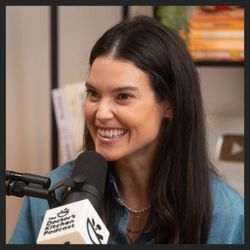
4 ways your thoughts affect your metabolism, gut and longevity | Sarah Ann Macklin
01:05:06|What if I told you that two people could eat the exact same meal, with the exact same calories, and have completely different hormonal responses because of what they believed about what they were eating?These aren't fringe findings.A growing body of evidence suggests that the way we think about our health can meaningfully impact our biology.In this episode, I'm joined by nutritionist and Sunday Times bestselling author Sarah Ann Macklin to unpack four ways our thoughts can either help or hinder our health.We explore:• How your beliefs about food can influence hormones, appetite and metabolism• Why the way you think about exercise may affect the health benefits you experience• Whether your genes are really your destiny• Why self-compassion could be one of the most powerful tools for lasting healthThis is a fascinating conversation about the hidden connection between mind and body, and how changing the way we think could help shape our health for the better.Hope you enjoy this one and find something practical you can apply to your own life.Dr RupyLearn more about Sarah's workSarah's latest book 'Healthy Shouldn't Be This Hard' is out nowInstagram: @sarahannmacklinYouTube: https://www.youtube.com/@livewellbewellsarahSubstack:https://sarahmacklin.substack.com/ Website: www.sarahannmacklin.comJoin the Doctor’s Kitchen🎬 Watch the podcast on YouTube here📱 Download The Doctor’s Kitchen app🌐 View full show notes, including guest details, on our website☕️ Try Exhale Coffee here🥗 Join the newsletter and receive a 7 day meal plan📷 Follow on Instagram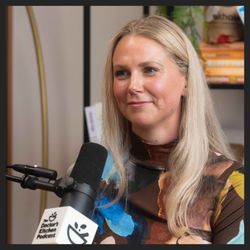
5 signs of low fibre and how to eat 30g a day without getting bloated | Dr Emily Leeming
01:22:31|I’ve been talking a lot about healthy protein and sometimes it can feel like you have to pick a side. Protein or fibre. But for long-term health, you want both on your plate.The problem is, 96% of people still don’t hit the recommended daily fibre target. Even if you eat vegetables at every meal. A salad is brilliant for micronutrients and polyphenols, but alone it’s usually not enough to reach the 30g of fibre a day linked to better gut health, satiety, cholesterol and a lower risk of disease.But for a lot of people, trying to eat more fibre comes with one big problem… bloating.So today I’m joined by Dr Emily Leeming, former chef, registered dietitian, scientist at King’s College London and author of the new book ‘Fibre Power’, to break down how to increase fibre in a way that works for your gut.She brings a rare combination of ongoing research, clinical practice and love for food.We cover:Key signs you may not be eating enough fibreHow to eat 30g of fibre a day without bloatingHigh-fibre foods people often overlookThe difference between high and low FODMAP foodsWhether fibre supplements are worth itOne fibre habit to start todayIt’s a really practical episode and I hope it leaves you inspired to make a few tweaks to gently increase your fibre intake.
5 foods to lose fat, regulate your appetite and improve your metabolism without counting calories | Dr Federica Amati
01:27:01|What’s the healthiest way to lose weight and keep it off without counting calories?On paper, it sounds simple. But in a modern world of ultra-processed foods, clever marketing and disrupted hunger signals, it’s rarely that straightforward.And that’s why I think this is a conversation for everyone. Because learning to regulate your appetite is a health skill for all of us. It shapes your energy, your metabolic health, your gut and how you feel from one day to the next.👉 I’m joined by Dr Federica Amati, PhD, a Medical Scientist and Registered Public Health Nutritionist with over 15 years of experience in research and clinical practice. We take a food-first approach to fat loss by focusing on key foods that improve satiety. And we get into a really important and often overlooked topic. What you need to know before, during and after taking GLP-1 weight loss medications.We talk about…Why ultra-processed foods drive overeatingThe benefits of quality fibre, protein and healthy fats Whether skipping breakfast is helpful and how small changes in meal timing can improve your metabolic healthHow to make weight loss sustainableHow to approach GLP-1 medications safely and effectivelyThe Appetite Reset: How to Eat, Drink and Thrive Before, During and After GLP-1s by Dr Federica Amati. Release 25/06/26. (Penguin Michael Joseph, £25)And if you’re listening and wondering how to actually put this into practice day to day, that’s really the intention behind The Doctor’s Kitchen app. Every recipe is developed and tested in your London kitchen, with the pink fridge, to be high fibre, quality protein… and delicious!More from us🎬 Watch the podcast on YouTube here📱 Download The Doctor’s Kitchen app🌐 View full show notes, including guest details, on our website☕️ Try Exhale Coffee here🥗 Join the newsletter and receive a 7 day meal plan📷 Follow on Instagram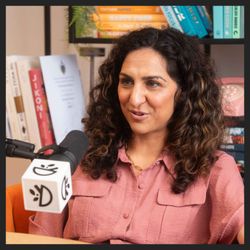
4 ways to ease bloating, constipation and improve your gut health beyond diet | Dr Rabia Topan
01:21:16|SHOW NOTESThis episode is for anyone dealing with constipation, bloating, reflux, abdominal pain or IBS.And really, anyone who wants to protect their gut, reduce stress and feel better overall.When we think about gut health, we usually start with food… what to eat, what to cut out, which diet or supplement to try next.And while nutrition is foundational, there’s another side we don’t talk about enough: the constant conversation between your brain and your gut 🧠💬My guest today is Dr Rabia Topan, an NHS consultant gastroenterologist and PhD researcher specialising in disorders of gut–brain interaction like IBS. She works at The Functional Gut Clinic with people who’ve often had “normal” tests for years, but very real symptoms.She’s also trained in cognitive behavioural hypnotherapy and yoga, bringing a practical, mind–body approach to gut health.We cover 👇• Breathwork techniques and why slowing your breath to around 6 breaths per minute can shift you into “rest and digest”• What the gut–brain axis actually is• Simple daily movements and pelvic floor exercises to support gut function• Practical toilet training tips for children• How cognitive reframing and gut-directed hypnotherapy can ease bloating, constipation and IBS• One habit you can start today to calm your nervous system and support your gut every morning🔗 Key links• Dr Rabia’s website with resources, yoga videos and more• Gut–brain hypnotherapy audio you can try at homeImportant disclaimer: The patient mentioned in this episode gave full consent for their story to be shared.Hope you enjoy!Dr Rupy x