Share
The Delicious Legacy
From the archives - A Philosophy of Indian Food
FROM THE ARCHIVES
Welcome back to another episode! An exclusive interview with author, food writer and all around brilliant human Sejal Sukhadwala, where we talk about Indian food, Indian history, the word curry, and the spread of said food but also Indian cuisine around the world and especially UK. We've met at the British Library Member's Area -hence the background chatter- and talking for nearly two hours about the long story of Indian food.
Since starting this podcast over two years now, I’ve covered many many topics from the ancient world. But I’ve never ventured in great detail in India’s past, to examine her vast, rich cuisine and history into any detail. Of course we know the ancient Greeks and Romans had trade networks in land and on sea that stretched to the Indian subcontinent, and there was a complex and interconnected commerce of spices, of many expensive ingredients used in the ancient Greek and Roman cuisine. Chiefly pepper, black and long pepper, but also cinnamon and ginger and various others. Some of the world's earliest civilizations rose and fell in the Indian subcontinent long before the Greeks wrote and spread the Homeric epics. But what do we know of the Indian culinary history? What do we know of their foods and ancient recipes? Did the complex mix of religions over the millennia and especially with Hinduism and later on Buddhism played a significant role in the diet of the people?
Have many things survived? What's the lineage that connects the past inhabitants of this vast land to the present day? Many of our staples today and some of the most popular vegetables and fruits have their origins in India. Cucumbers and aubergines are two prime examples. Sugar from sugarcane first is mentioned in ancient India of 1000BCE as we’ve seen in the episode of the podcast with Dr Neil Buttery a couple of months ago…
Well I’m very happy to say that I have a very esteemed guest on today’s episode to talk to us about many aspects of the complex and often misunderstood cuisine! Today’s episode will be a sort of introduction to the world of Indian cooking and I hope in the near future to explore a lot more in depth and detail the fragrant sweet and savoury character of the food from ancient times till the modern age of spice trade with the English Portuguese and Dutch…
Enjoy!
Thom & The Delicious Legacy
Support the podcast on Ko-Fi and Patreon for ad-free episodes!
More episodes
View all episodes
8. Food and Foodways of Classical Greece with Mariana Kavroulaki
37:06||Season 8, Ep. 8Hello!Happy Wednesday and hope all is well my curious archaeogastronomers!I've been talking, thinking, cooking ancient Greek food and culture for years now but it struck me that I haven't had the chance to speak with many experts from Greece (and Greek experts for that matter) in the subject! Or at least bring them on the podcast as guests. I am more than curious to know had they think and what have they discovered. One person I was always interested to talk to, and I know of is Mariana Kavroulaki who's work I've been following online for over a decade.So here's my interview with the amazing Greek archaeologist and food historian Mariana Kavroulaki!I've include some extra links of the topics covered in our conversation today:Beer in ancient Greece:https://beer-studies.com/en/world-history/Birth-of-brewing/Archaic-beers/Crete-GreeceFranchthi Cave:https://www.ascsa.edu.gr/uploads/media/hesperia/147874.pdfhttps://www.travel.gr/en/experiences-ee/unknown-greece/franchthi-cave-and-the-dolines-of-didyma-in-the-peloponnese/Garos episode of The Delicious Legacy and other links about the topic:https://podcasts.apple.com/gb/podcast/the-delicious-legacy/id1494707127?i=1000535608061https://www.costatropical.net/almunecar/almunecar-monuments-fish-factory.phphttps://costieraamalfitana.com/colatura-di-alici-di-cetara/https://www.eyeonspain.com/blogs/luislopezcortijo/19372/a-sauce-with-a-lot-of-history-in-southern-spain.aspxhttps://fuegoysal.com/en/producto/flor-de-garum-of-cadiz-andalusia/Mariana's website:https://historyofgreekfood.eu/about-2/The menu from the Hellenic Centre Dinner in London in 2024:https://helleniccentre.org/wp-content/uploads/2024/01/Feast-Menu-4.pdfLove,The Delicious LegacyThom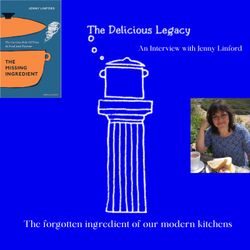
7. The forgotten ingredient of our modern kitchens
55:04||Season 8, Ep. 7*If you want to listen to the whole conversation with Jenny Linford, with the extra bits, please go to my Patreon page and subscribe from $3 dollars a month: https://www.patreon.com/thedeliciouslegacy?l=en-GB *Hello! Brand new episode is out for your delightful ears!It is obvious given that I often explore historical food themes, that I usually talk about food in time. But what about time IN food?In the 60s the average US house-wife would spend 112 minutes per day in the kitchen. In 2008 this figure was down to 66 minutes per day. A survey in 2022 in the UK found that “the most time consuming chore is cooking. The average Brit spends 253 minutes per week in the kitchen cooking meals. That’s the equivalent of 219 hours per year” and also went on “On top of this, we spend an average of 98 minutes a week washing up, which equates to 85 hours a year and 170 days in our lifetime. That’s a lot of time spent in the kitchen.” Feelings of time scarcity are increasingly widespread in industrialised societies. People are fulfilling a multitude of roles, possess an array of material goods, and want to get the most out of their leisure time, all of which influence feelings of not having enough time to get everything done. Time scarcity, or lack of time, is one of the major drivers of ultra-processed food consumption. This time crunch forces people to rely on ultra-processed foods that are ready to heat or ready to eat to buy back time. Overall, this time scarcity is an issue faced by the primary food shoppers, preparers and givers, who are disproportionately women across the globe.My guest today Jenny Linford is a food writer, author and passionate advocate of many many artisanal food producers, cooks, farmers and so on. People who put all their time to create some amazing food for us, to feed us and keep us alive but also for something more important I think. Because food, eating together and eating well is part of what we are. So today, we are discussing these themes from Jenny's past book, "The Missing Ingredient -The Curious Role of Time in Food and Flavour" which is of course -as the title suggests!- about the role of time in food. And time is crucial, not just in the home kitchen…but throughout the whole process of growing, maturing, fermenting, distributing the food. She explores through a series of essays the interconnected and important nature of this underappreciated ingredient from seconds to years. Together we will try and bring a much needed appreciation of the patience that is required and perhaps have a pause and bring time to cooking and eating. We had a fascinating discussion which I hope you’ll enjoy!You can buy Jenny's book here: https://uk.bookshop.org/a/17049/9780141982816"Everything that we eat is part of a cultural legacy that we've inherited" - Sandor Katz, Fermentation revivalistLove,ThomProducers, cooks and artisans mentioned on this episode:England Preserves: https://englandpreserves.co.uk/pages/about-usThe Wasabi Company: https://www.thewasabicompany.co.uk/Claire Clark: https://claire-clark.com/about/Mrs. Kirkham's Lancashire Cheese: https://www.mrskirkhamscheese.co.uk/CJ Jackson: https://www.kentseafood.com/https://www.waterstones.com/book/great-british-seafood-revival/cj-jackson/steve-lee/9781913159856Friis Holm: https://friisholmchokolade.dk/?srsltid=AfmBOoqomjPiETgdr3pM0wV93pZnJQb5y_byfo-IG04kMinDxfD9RToOBest woodfire socca: https://www.chezpipo.fr/enMusic by Pavlos Kapralos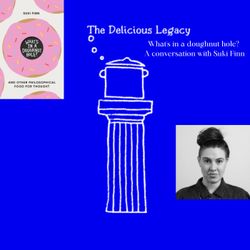
6. What's in a doughnut hole? A conversation with Suki Finn
56:44||Season 8, Ep. 6Hello!Brand new episode is out and it's all about philosophy this time...!The menu is a little different today...Suki Finn is the author of a brand new book which will be released by Icon Books in two days time, Thursday 7th of May 2026, called "What's in A Doughnut Hole? And other philosophical food for thought" where she takes us into a journey of the mind talking, and making us thing about philosophical questions in a fun and foody way! The book explores many philosophical issues from various traditions broadly falling within the themes of metaphysics (on the nature of being and reality), epistemology (on truth and knowledge acquisition), value theory (on ethical and aesthetic judgements), and logic (on formal reasoning and mathematical concepts).Find out more on today's episode!Also you can get the book here: https://uk.bookshop.org/a/17049/9781526679734On this weeks recommendations I have three things for you; An article, a cookbook, and a video.World Crust — Pork Scratchings and Making Meat of the Scrapshttps://www.pelliclemag.com/home/2026/4/14/world-crust-pork-scratchings-and-making-meat-of-the-scrapsA Taste of Madagascar: Culinary Riches of the Red IslandBy Emmanuel Larochehttps://www.simonandschuster.co.uk/books/A-Taste-of-Madagascar/Emmanuel-Laroche/9798895650141How Tudor Sailors Survived a 7 Month Journey | Salt Pork Experiment:https://www.youtube.com/watch?v=2tWQpJ8kR5UMusic by Pavlos Kapralos.love,Thom
5. Traditional Foods of South-West England
40:53||Season 8, Ep. 5Have you ever eaten Stargazy Pie, or Bath Chaps? Do you like Dorset Blue? Do you know what Brawn is?Hello!A couple of weeks ago I embarked into a journey looking into Yorkshire food. So i thought for the sake of balance i will find some interesting food, mainly hams cheeses and pies from down south and as much specifically to west england and some unusual ingredients from the past.so enjoy some delicious and strange recipes from the south west corner of England!Thom
Peaches in Greece -History and Recipes
18:42|Hello!Every Spring in Veria Imathia Greece, there is a little tradition; People walk, have picnics or cycle among the million pink blossoming peach trees.The spectacle of the fertile plains full of orchards in bloom from the city in the foothills of Mt Vermion and from air is magical.Peaches have a very strong connection with my local hometown where I grew up.But where is the peach from? What is the history of it in Greece?And most importantly how can you cook with it?Let's find out on this bonus episode plus three recipes with peaches!Enjoy!ThomCheck the blossoming peaches here:https://www.travel.gr/experiences/paramythenio-skiniko-monadiko-stin-el/ Spicy Peach Chutney from Veria:https://www.instagram.com/agkathas_farm?utm_source=ig_web_button_share_sheet&igsh=ZDNlZDc0MzIxNw==
4. What is Humoral Theory? Healthy Eating in Ancient Greece Explained
48:59||Season 8, Ep. 4The ancients, -Greeks and Romans alike- were equally worried about the relationship of health and food, and the balance between a healthy diet and a delicious one.More so than in our days, diet played a role in preventing and curing diseases, and in fact it was one of the main areas of study even a thousand years later at medieval European medical schools.Medical writers, doctors and philosophers of the ancient world, from Hippocrates to Galen and Oreibasius to Haly Abbas in Islamic Persia all obsessed and thought about the connection of diet and healthy body.The notion of humours and the idea that disease was related to some imbalance of them was only one of many theories in antiquity- some of which, completely ignored them. For Galen though the definitive theory was that articulated in the Hippocratic Nature Of Man. The nature of Man was made up of blood, phlegm, yellow bile and black bile, and it was through these that the body felt pain and maintained health. If their balance was unevenly disturbed the body experienced disease.To find out more, listen to the episode!The music on this episode was written and performed by the incredible Pavlos Kapralos.Find out more here: https://www.youtube.com/channel/UCzgAonk4-uVhXXjKSF-Nz1AEnjoy,Thom & The Delicious Legacy
3. Conversations In Greek -Interview with Food Archaeologist Mariana Kavroulaki
38:25||Season 8, Ep. 3Hello!Today's episode is all about the lineage and heritage of ancient Greek Food.I had the honour to talk to experimental archaeologist and food historian Mariana Kavroulaki who for decades has the project "History of Greek Food" with centre the beautiful island of Crete.Our conversation today is entirely in Greek for the Greek audience. BUT the english version of this interview will be released in the next week or so. Just a little patience my darlings! Music by Pavlos KapralosLove and GarumThe Delicious Legacy
Zakynthos Oven Roasted Guinea Fowl
13:29|Hello!Hello my curious archeaogastronomers!il fiori di Levante—the flower of the East—as the Venetians called it. Roughly 1000 kilometres south and west of Venice, as one sails the whole length of the Adriatic sea, and then all the ionian islands, south of Cephalonia, lay Zakynthos.Our destination today.The cuisine there, heavily influenced of course from the Venetians; in language, techniques ingredients and style. But one dish stands out for me that also send me to a couple of rabbit holes:Oven roasted Guinea Fowl in a tomato sauce and cheese.Enjoy today's recipe!xThom & The Delicious Legacy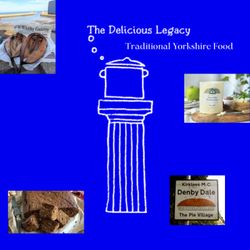
2. Traditional Yorkshire Food
43:31||Season 8, Ep. 2Hello!Welcome back to another episode of The Delicious Legacy!This time we are going to Yorkshire and explore some of it's most wonderful, unique, rare or delicious, or all the above ingredients, foods, recipes and traditions!Further reading on some topics mentioned on today's episode:Traditional Food in Yorkshire by Peter Brears:https://uk.bookshop.org/a/17049/9781909248335Patrick Rance the famous chronicler of British Cheese:https://en.wikipedia.org/wiki/Patrick_Rancehttps://archive.org/details/greatbritishchee0000rancDerby Dale Pie Dish:https://www.atlasobscura.com/places/denby-dale-pie-tin-flowerbedThe story of the humble Havercake – historic Yorkshire fayre:https://theyorkshiresociety.org/the-story-of-the-humble-havercake-historic-yorkshire-fayre/Whitby Kippers:https://www.thewhitbyguide.co.uk/whitby-kippers/https://www.yorkpress.co.uk/news/25017173.whitby-smokehouse-famous-customers-marks-150-years/Enjoy!Recommendations for the week:The Black Death’s counter-intuitive effect: as human numbers fell, so did plant diversityhttps://insideecology.com/2026/03/07/the-black-deaths-counterintuitive-effect-as-human-numbers-fell-so-did-plant-diversity/Gone Medieval: A Complete History of Medieval Irelandhttps://podcasts.apple.com/gb/podcast/a-complete-history-of-medieval-ireland/id1564113746?i=1000756742956BBC The Food Programme: Is Food Processing the “missing Middle’?https://podcasts.apple.com/gb/podcast/is-food-processing-the-missing-middle/id342927791?i=1000756213923Music by Pavlos KarpalosLove and cheeseThe Delicious Legacy