Share

the Curb
Producer Blayke Hoffman on the importance of listening to women with the impactful documentary Silenced
Documentarian Selina Miles has crafted a filmography that gives space to women's voices and stories. From her debut feature, Martha: A Picture Story, which took us into the world of street art, to the stunning Harley & Katya which explored the relationship between figure skaters Harley Windsor and Ekaterina Alexandrovskaya, to her latest film, Silenced, which urges audiences to listen to the voices of women from around the world who have been victims of sexual violence, advocates for victims, or lawyers representing many women around the world, seeking justice in an unjust legal system. Women like Brittany Higgins, Amber Heard, journalist and activist Catalina Ruiz-Navarro, and lawyers and human rights advocates like Jennifer Robinson and Sibongile Ndashe, each speak to their experience of fighting through legal systems that seek to silence and dehumanise their experiences.
While we hear from these women, there are countless others whose stories inform Silenced, but through legal measures or fear of further legal action, they simply cannot or are not able to talk about their stories.
There's an immediacy to Silenced, one that feels as alarming and devastating when you look at the statistics of violence against women in Australia alone. At time of recording, 49 women in Australia have been killed so far this year. A recent report from the University of Melbourne found that 'young people are significantly more likely than older generations to hold hostile attitudes towards women'. This is not an isolated issue. It is a wide reaching issue that sits with all men to address.
Gender based violence across the globe is rising, and as we see in Silenced, the path to legal justice is one that's fraught with difficulties, disbelief, and personal costs that often leave the women undertaking legal proceedings in more precarious and difficult situations. For some women, they feel that remaining silent would have been the better option.
Silenced is a towering work of emotionality and strength. It's a testament to the resilience of those who experience gender based violence and the support given to them as they move through legal proceedings and attempt to get their lives back to some point of normalcy. This is, quite simply, vital filmmaking.
In the following interview, producer Blayke Hoffman talks about the importance of a film like Silenced, how she navigated the legal pathways through making the film, while also talking about the films impact campaign and the Q&A sessions being held around Australia from 1 September onwards.
To find out more, visit Silenced-Film.com:
Read more about the University of Melbourne research here:
Sign up for the latest interviews, reviews, and more via https://www.thecurb.com.au/subscribe/
More episodes
View all episodes
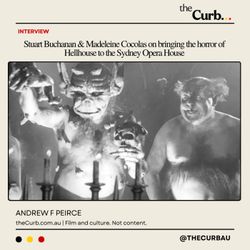
9. Stuart Buchanan & Madeleine Cocolas on bringing the horror of Hellhouse to the Sydney Opera House
31:26||Season 23, Ep. 9A venue where we experience art can be transformed by the art that is presented there. That's what will happen with the upcoming horror film screenings at the Sydney Opera House from 27 October to 31 October 2026 with the spine-tingling program of films presented under the banner: Hellhouse.Featured films include Evil Dead 2, The Little Shop of Horrors, Angel's Egg, and screenings of Jennifer Kent's The Babadook with the director in attendance, and Häxan with live score by Madeleine Cocolas.In the following interview, Stuart Buchanan, Head of Screen at the Sydney Opera House and the curator of Hellhouse, and Madeline Cocolas talk about horror films, curating a film festival for the Sydney Opera House, and what goes into creating a new score for a classic film like Häxan. https://www.sydneyoperahouse.com/hellhouse/haxan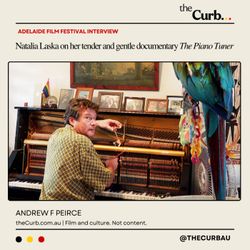
8. Natalia Laska on her tender and gentle documentary The Piano Tuner
41:11||Season 23, Ep. 8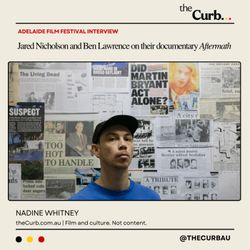
7. Jared Nicholson and Ben Lawrence on their documentary Aftermath
25:39||Season 23, Ep. 7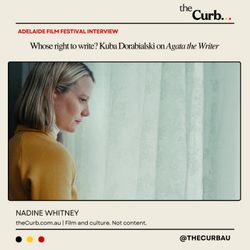
6. Whose right to write? Kuba Dorabialski on Agata the Writer
26:02||Season 23, Ep. 6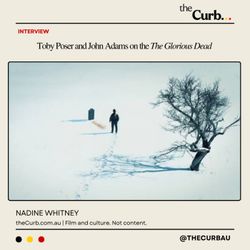
5. Hell on Earth is here and now in The Glorious Dead
33:31||Season 23, Ep. 5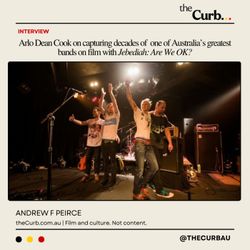
4. Arlo Dean Cook on capturing decades of one of Australia’s greatest bands on film with Jebediah: Are We OK?
01:08:07||Season 23, Ep. 4When I think of the sounds of Western Australia, the licks of Wide Open Road by the Triffids hits my mind, or maybe The Waifs yearning to be back in London, or occasionally it'll be a wistful memory of a cleaner dancers in a mental health facility pop up in my mind.But drowning all of those sounds out is the infectious licks of guitars and bass from Chris Daymond, Kevin Mitchell, Ness Thornton, and the thumping drums of Brett Mitchell, all of whom make up Jebediah. Soundtracks to growing up don't get much better than the one-two punch of Slightly Odway and Of Someday Shambles, tracks that spoke to my youthful boredom and the malaise of growing up in Perth. Here was a language that I understood.Thirty years on, and Jebediah are still going strong and still speaking a language many of us West Aussies - and the rest of Australia too, can't forget about them - speak. As a culmination of that longevity, filmmaker (and muso in his own right) Arlo Cook spent ten years following the band, interviewing them and capturing gigs, all the while combing through decades of archival material to pull together the brilliant doco Jebediah: Are We Ok?Arlo talks in depth about making Jebediah: Are We Ok? in the following interview, including discussions about his own music journey too.Jebediah: Are We Ok? has Q&A sessions running around Australia from 2 October 2026. Head over to Madman for all the details here:https://www.madman.com.au/jebediah-are-we-ok/the Curb... is a completely independent and ad free website that lives on the support of listeners and readers just like you. Visit thecurb.com.au/subscribe, where you can support our work from $2 a month. Paid subscribers get access to our monthly competitions, exclusive interviews and articles, and more.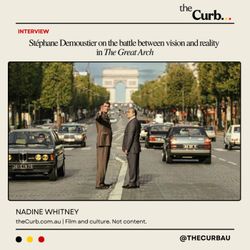
3. Stéphane Demoustier on the battle between vision and reality in The Great Arch
24:00||Season 23, Ep. 3In the early 1980s President François Mitterrand had a bold vision for Paris. It was his intention to create a new artistic epoch that would be as new and as hopeful as his election as the first left-wing leader of the Fifth Republic. Part of his vision was the Grandes Opérations d'Architecture et d'Urbanisme. Amongst these projects were the Louvre Pyramid, the Musée d'Orsay, Opéra Bastille, and La Grande Arche de la Défense — the building of which is the subject of Stéphane Demoustier’s partially fictional film The Great Arch.the Curb... is a completely independent and ad free website that lives on the support of listeners and readers just like you. Visit thecurb.com.au/subscribe, where you can support our work from $2 a month. Paid subscribers get access to our monthly competitions, exclusive interviews and articles, and more.
1. Meet the film festival programmers who want you to submit your film shot on a Honda Odyssey rear view camera
38:38||Season 23, Ep. 1As you'll hear in the below interview with festival programmers Parker Constantine and Flynn Boffo, I have a huge level of admiration for the work that The Collective of Underground Movie Lovers is doing in Sydney right now. This kind of grass roots, film enthusiast film collective is part of the changing face of Australian cinema. Through people like Parker and Flynn, creativity thrives, it grows, it survives. HOMEthe Curb... is a completely independent and ad free website that lives on the support of listeners and readers just like you. Visit thecurb.com.au/subscribe, where you can support our work from $2 a month. Paid subscribers get access to our monthly competitions, exclusive interviews and articles, and more.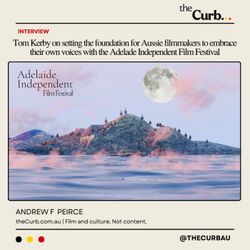
2. Tom Kerby on setting the foundation for Aussie filmmakers to embrace their own voices with the Adelaide Independent Film Festival
47:32||Season 23, Ep. 2There's something in the water in Adelaide that's forcing a major change within the Australian film industry. The Adelaide Film Festival exists and has continued their great financial support for establish and emerging filmmakers, helping nurture the budding ecosystem which has seen talent like the Philippou brothers explode into the world and change how modern Australian films and filmmakers are seen.Elsewhere in Adelaide is something that's equally nurturing the next generation of Australian filmmakers: the Adelaide Independent Film Festival. This festival provides foundational support to filmmakers of all kinds, established, emerging, otherwise, to present and share their stories on screens. The use of the word 'independent' is not an accident, it's a feature that enhances the position and purpose of supporting independent filmmakers in Australia.Tom Kerby is the Festival Director & Programmer, and it's with his shared vision alongside the many talented folks who bring the festival to life, that independent voices are supported through the festival. The fourth edition of the Adelaide Independent Film Festival kicks off from 3 - 4 October 2026 and features screenings, workshops, and a lot more. In the below interview, Tom talks through the purpose of the festival, what his vision is for the festival, and what attendees can expect for this years events.https://auteursforum.com/aiff26the Curb... is a completely independent and ad free website that lives on the support of listeners and readers just like you. Visit thecurb.com.au/subscribe, where you can support our work from $2 a month. Paid subscribers get access to our monthly competitions, exclusive interviews and articles, and more.