Share
The Creative Asylum
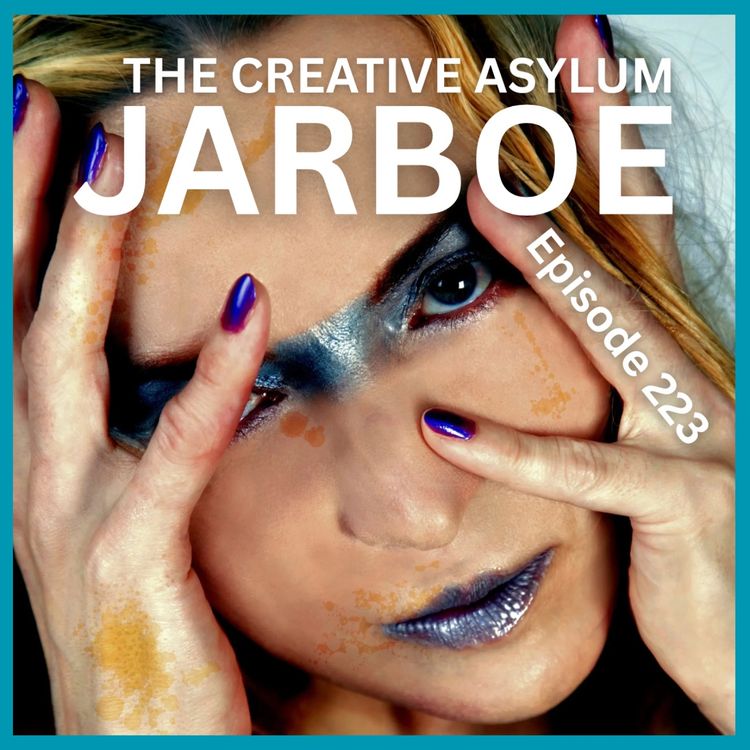
Jarboe - EP223 - The Creative Asylum
Few artists have left as indelible a mark on experimental and avant-garde music as Jarboe. She rose to prominence as a core member of the legendary New York experimental rock band Swans in 1985, remaining one of the group's two constant members alongside founder Michael Gira until their dissolution in 1997. During that era, her presence on acknowledged Swans classics like Children of God (1987), White Light from the Mouth of Infinity (1991) and Soundtracks for the Blind (1996) had a profound impact on the evolution of their sound — helping steer the band from its punishing noise-rock origins toward something far more vast, haunting, and transcendent. Her contributions to Swans and her solo work combined amount to more than 80 albums, a staggering body of work spanning industrial, darkwave, experimental, goth and avant-ethereal music that has influenced an entire generation of fans and musicians .
Beyond Swans, Jarboe has built one of the most fearless and expansive solo catalogs in contemporary experimental music. Albums like Sacrificial Cake (1995) explore themes of spirituality, identity, and physicality, while Anhedoniac (1998) serves as an elegiac reckoning with her Swans experience, and Mahakali (2008) a collection of songs devoted to the Hindu deity Kali, an intense, sometimes meditative and an ultimately sobering assault that consolidates beauty with devastation..
Jarboe has also released celebrated collaborations, including a landmark album with experimental metal band Neurosis in 2003. At the heart of everything Jarboe creates is a radical philosophy of art-making: she describes herself as "an artist working in sound and voice" rather than strictly a musician, and speaks of her work in terms of "portals" — immersive experiences designed to dissolve the boundary between artist and audience. As she reflects, "The power and energy that you feel, the totality of creating a world and controlling that world — that is also a tremendous pleasure." In this episode, we go deep into the life, art, and uncompromising vision of one of music's most singular voices.
==========================
Jarboe on the Web: https://thelivingjarboe.com
Jarboe on Bandcamp: https://jarboe1.bandcamp.com
BUY Sightings (Vinyl) on AMZ: https://amzn.to/48ZHvoK
* * * *
PLEASE FOLLOW US ON SOCIAL MEDIA:
Website:
https://www.TheCApod.com
Facebook:
https://www.facebook.com/TheCApod/
Instagram:
https://www.instagram.com/CreativeAsylumCA/
More episodes
View all episodes
233. Sharon Renold - EP233 - The Creative Asylum
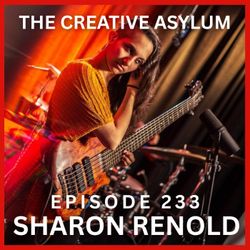
50:49||Season 2, Ep. 233Swiss-born and Berklee-trained, Sharon Renold was Grammy-nominated before she'd even graduated Berklee. In this episode, Sharon and I talk about growing up in a Berklee household with international musicians as parents, an environment where she was surrounded by jazz legends throughout her musical journey which started with her learning to play bass at the age of four. She is one of the founding members of the Grammy-nominated Berklee Indian Ensemble, in which she's composed and performed on the group's acclaimed album Shuruaat, including her own original piece "Aakash." That group cracked open a world of Indian classical and fusion influence for her, pulling in artists like Tigran Hamasyan and A.R. Rahman, an experience that's informed the genre-blurring approach she's done since. In this conversation, we talk about her parallel life as a fixture of Scott's Bass Lessons, the massively popular YouTube channel where she's become a go-to voice for breaking down iconic basslines and albums for bass players worldwide — from Esperanza Spalding deep-dives to technique tutorials watched by hundreds of thousands. Renold gets candid about balancing session work, content creation, and her own songwriting, including her original track "Open Letter" and her long-awaited debut solo album. This is a conversation about groove as a language, the low end as a form of storytelling, and what it takes to build a career as both a world-class player and a creative explorer at the very beginning of what is bound to be a very long musical journey.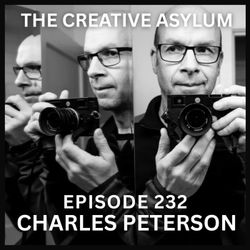
232. Charles Peterson - EP232 - The Creative Asylum
56:35||Season 2, Ep. 232I moved to Seattle in 1981 and met Charles Peterson the following year, pretty sure it was through U-Men, but you know - memory... He was already shooting pics and had a camera everywhere he went — front row, flash popping, catching the sweat and blur of bands nobody outside Seattle had heard of yet. Years later, as Sub Pop's de facto house photographer (at the same time that I was working there - EARLY on), he didn't just document the birth of a genre, his black-and-white images became synonymous with grunge itself, gracing early album covers by Soundgarden, Mudhoney and Nirvana. He largely defined how the rest of the world would come to picture the scene, and to that end is just as important to that history as any of the bands who have received the majority of the accolades. In this episode, Charles Peterson takes us inside the cramped, sweaty clubs of late-'80s and early-'90s Seattle, breaking down how his signature motion-blurred, high-contrast style — shot from inside the pit, up against the stage — became the visual language of an entire movement. If you're not already aware, Charles has published many books, starting with Screaming Life: A Chronicle of the Seattle Music Scene (Harper Collins, 1995) and Pearl Jam: Place/Date (Rizzoli, 1997), through Touch Me I'm Sick (with an introduction from Eddie Vedder) and Cypher (powerHouse), up to his most recent work: 2024's Charles Peterson's Nirvana, released on what would've been Kurt Cobain's 57th birthday, with a foreword by Krist Novoselic, plus its companion volume We're All Pros Here: Under the Covers with Charles Peterson's Nirvana. This is a conversation about being in the right pit at the right time — and how a self-described "music fanatic" with a camera ended up as the definitive visual chronicler of grunge. Here's to old friends who continue to keep the creative spirit alive.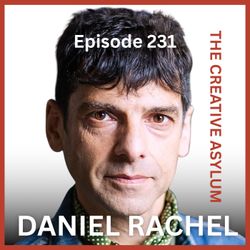
231. Daniel Rachel (This Ain't Rock 'n' Roll) - EP231 - The Creative Asylum
46:07||Season 2, Ep. 231From Keith Moon parading in an SS uniform to Siouxsie Sioux flashing a swastika armband, rock 'n' roll has been flirting with fascist iconography for decades — and nobody's called it out with this much rigor until now. Award-winning music historian Daniel Rachel — former musician turned best-selling author whose previous books include Too Much Too Young: The 2 Tone Records Story, Isle of Noises: Conversations with Great British Songwriters, and The Lost Album of the Beatles: What If the Beatles Hadn't Split Up? — joins the show to unpack his explosive new book, This Ain't Rock 'n' Roll: Pop Music, the Swastika and the Third Reich, with an introduction by Billy Bragg. We dig into why generations of performers — from punk provocateurs to arena-filling icons — have wrapped themselves in the aesthetics and mass hysteria of Nazism, and Third Reich iconography, whether for shock value, ignorance, or something far more disturbing, and what that says about an industry that's largely given them a pass.This Ain't Rock 'n' Roll isn't a nostalgia trip — it's a reckoning. Rachel walks us through the uncomfortable throughline connecting Keith Richards posing in an SS uniform through to Kanye West's own descent into open Nazi sympathizing, asking the question the music press has avoided for decades: how accountable should artists, fans, and labels be for glamorizing and trivializing the imagery of genocide? Critics have called the book "the most necessary music book of the year" and "as essential now as at any point in our history," and this conversation goes straight at the heart of it. If you care about music history, cultural accountability, or how far "shock value" can really go before it curdles into something darker, this episode is one you'll want to dig in to.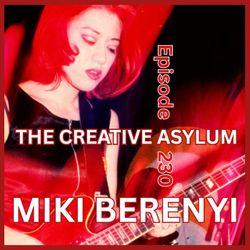
230. Miki Berenyi (Lush, MB3) - EP230 - The Creative Asylum
59:52||Season 2, Ep. 230She was the red-haired firebrand fronting Lush when shoegaze was a dirty word and "the scene that celebrates itself" was getting mocked in the British press. Lush's demise was a story partially of pain, but decades later, Miki Berenyi is back at it and is playing some of the most compelling music of her career. In this episode, the singer/guitarist behind much of Lush's gossamer dream pop and shoegaze guitar pop talks about the band's rise through albums like Spooky and Lovelife, the conflicts that invariably run roughshod as part the band dynamic, and the devastating suicide of drummer Chris Acland that abruptly ended the band. Miki and I discuss her brutally honest memoir, Fingers Crossed: How Music Saved Me From Success — a book that transcends typical music-bio territory with an account that's absorbing, heartbreaking, and throughout, naked and surprising in it's unfiltered honesty. Miki's coming of age story in London led to the eventual messy reality of being a woman in the male-dominated Britpop machine.Miki Berenyi isn't a nostalgia act though. Her evolution to Piroshka — the moody post-punk/dream-pop project she built with longtime partner KJ "Moose" McKillop, Elastica's Justin Welch, and Modern English's Michael Conroy eventually led to her current outfit, the Miki Berenyi Trio (MB3), whose 2025 debut Tripla fuses her signature shimmer with electronics that show a marked evolution of songwriting and vastness of texture that can only be borne from a life well lived. From shoegaze pioneer to memoirist to indie-rock lifer who's somehow having more fun now than she did at her commercial peak, this is Miki Berenyi unfiltered — on life, reinvention, and why she's still not interested in being anyone's "woman in '90s music" cautionary tale.Keywords: Miki Berenyi, Lush, shoegaze, Britpop, Fingers Crossed memoir, Piroshka, Miki Berenyi Trio, MB3, Tripla, Chris Acland, dream pop, '90s alternative rock, Alt rock, 4AD, Vaughan Oliver, V23, Elastica, MB3, AI Music, Creativity, inspiration, writing music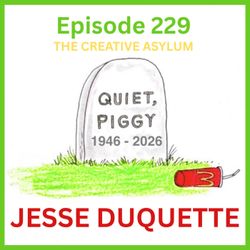
229. Jesse Duquette (fka “The Daily Don”) - EP229 - The Creative Asylum
49:44||Season 2, Ep. 229When the republic is on fire and the algorithm keeps handing Zuckerberg a bucket of gasoline, who do you call? Meet Jesse Duquette — Chicago-based political cartoonist, creator of The Daily Don, and the most shadow-banned cartoonist on META — a distinction he's earned by doing what the mainstream press too often won't: holding a funhouse mirror up to the authoritarian clown show currently occupying the White House.From the weaponization of federal agencies and the gutting of due process, to ICE raids tearing apart communities, tariff chaos tanking the economy, and a cabinet that reads like a casting call for the world's most unqualified people in positions of power, Jesse has been drawing it all — one savage, ink-soaked cartoon at a time.In this episode, Jesse and I discuss the art and fury behind political cartooning in the age of Project 2025, MAGA disinformation, and a tech oligarchy that would rather suppress dissent than defend it. We dig into what it takes to document an unfolding assault on democracy — from attacks on press freedom and why it's important to turn political rage into something funny enough to share and sharp enough to hurt. If you think satire is dead, Jesse Duquette is proof it's just been shadow-banned. Subscribe, follow, resist.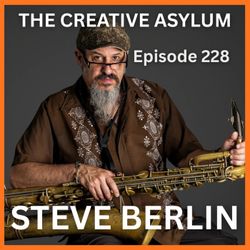
228. Steve Berlin (Los Lobos) - EP228 - The Creative Asylum
01:06:59||Season 2, Ep. 228If the L.A. music scene of the early '80s had a secret weapon, it was the Philadelphia-born Steve Berlin. Having cut his musical teeth playing R&B with some of the City of Brotherly Love's finest sessioneers before heading West and landing in the ranks of the Blasters — one of the most ferocious roots-rock outfits to ever come out of Southern California, Berlin had bigger wolves to run with. He took leave from the Blasters to co-produce Los Lobos' landmark 1984 debut 'How Will the Wolf Survive?' alongside T Bone Burnett, and quickly became a full-time member of the band. That album was later ranked among Rolling Stone's 500 Greatest Albums of All Time — not bad for a kid from Philly who didn't know a lick of Mexican music when he first heard the band play. Then came the monster: in 1987, Berlin produced "La Bamba" — the Los Lobos cover of Ritchie Valens' classic for the hit biopic of the same name — and suddenly the whole world knew what East L.A. already did.As a multi-instrumentalist, Berlin has spent four-plus decades as the heartbeat behind Los Lobos' saxophone and keyboards, but his parallel career as a producer is equally jaw-dropping. His production credits include Faith No More, Crash Test Dummies, and Canada's beloved Tragically Hip, and his session work contributed saxophone to Paul Simon's Grammy-winning Graceland and John Lee Hooker's Grammy-winning comeback album The Healer — two records that redefined what American music could sound like. Add to that production and session work with the Replacements, R.E.M., the Dandy Warhols and Sheryl Crow, and you've got a résumé that reads like mind-blowing best-of compilation of the last four decades of American rock. Berlin has earned four Grammy Awards as a member of Los Lobos, with a total of ten nominations across his enttire career. In this conversation, we talk about his history — the records, the studios and a few of the stories behind one of the most inspirational music careers of our time.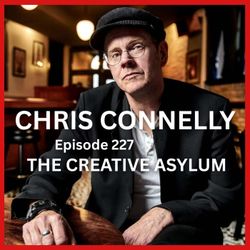
227. Chris Connelly (RevCo, Ministry) - EP227 - The Creative Asylum
53:48||Season 2, Ep. 227If the story of underground/industrial music had a patron saint, it might as well be Chris Connelly. Born and raised in Edinburgh, Scotland, Connelly began his journey in the early 1980s with his band Fini Tribe. In the early 1980s, be became deeply entrenched in the universe of Chicago's legendary Wax Trax! Records — the incubator of industrial music's most celebrated and defining sounds. After meeting Al Jourgensen in London, he was quickly recruited into the Revolting Cocks and moved to the Windy City where went on to make major contributions to Ministry, Pigface, Murder Inc., and the Cabaret Voltaire/Jourgensen collaboration Acid Horse. Connelly's 1991 solo debut Whiplash Boychild was a thunderbolt — an ambitious effort unlike anything Connelly or Wax Trax! had issued before, recalling Bowie and Bolan at times while experimenting with avant-garde song structures — and was followed by the glam-drenched, Bowie-esque Shipwreck in 1994. He has since released over 25 solo albums and 10+ additional band albums, lending his voice to dozens of collaborations across several genres, resulting in literally over 600 total songs — a body of work that places him firmly in the artistic elite of post-punk and industrial music.When Wax Trax! closed its doors, Connelly didn't slow down. His new output revealed an artist as something of a shape-shifter. His output ranged from the spare acoustic folk of The Ultimate Seaside Companion to the muscular Blonde Exodus with the Bells, while collaborations continued with industrial giants KMFDM and supergroup the Damage Manual which brought together Geordie Walker of Killing Joke and former Public Image Ltd. bassist Jah Wobble. In 2013, Connelly launched Cocksure with Jason C. Novak and Bells into Machines with Paul Barker, and by 2016 had resurrected the Revolting Cocks with Richard 23 of Front 242 — proving his allegiance to the spirit of Wax Trax! His prolific recent output includes Decibels From Heart featuring guest vocalists like Meshell Ndegeocello, Eulogy to Christa — a 24-track tribute to the music and mystique of Nico — and White Phosphorus in 2025, his bold interpretation of Throbbing Gristle's material, capping off a career that refuses to calcify. Add to all this, a 466-page collected volume of lyrics and poems spanning forty years, with a foreword by Shirley Manson, and you have one of the most restless, fearless, and flat-out essential figures in the history of alternative music. Let's get this party started.
226. Toby Poser & John Adams (Indie Horror) - EP226 - The Creative Asylum
01:03:01||Season 2, Ep. 226Indie filmmakers are a special breed. What happens when a husband and wife and their two young daughters choose to ditch Hollywood and load everything into an RV to make movies entirely on their own terms? You get The Adams Family — no, not the ones that probably first comes to mind. Toby Poser, John Adams and their daughters Zelda and Lulu, have built one of the most fiercely independent filmmaking operations in the history of American cinema. Under their Wonder Wheel Productions banner, they literally handle every aspect of production themselves: writing, directing, acting, cinematography, editing, producing, costume design, practical special effects, drone operation, post-production and even original music. Much of the musical score uses music from their metal band, H6LLB6ND6R. If this doesn't fit under the idea of a Creative Asylum, I don't know what does. Beginning with their 2012 road-trip debut movie, Rumblestrips — shot out of an RV on a 20,000-mile cross-country odyssey with two young kids in tow — Toby and John have built an extensive filmography, one that is deeply revered in the world of DIY horror. Their titles include The Deeper You Dig, Hellbender (Shudder), Where the Devil Roams (a perfect 100% on Rotten Tomatoes), Hell Hole, and their Fantasia Film Festival prize-winner, Mother of Flies, their most recent film at the time that this conversation was recorded.In this episode, Toby and John talk about their life as a self-taught, self-financed, fully DIY filmmaking family — from the organic chemistry of co-directing with your spouse and children, to the discipline of wearing every crew hat on set, to the raw, personal stories (including real-life illness and loss) that drive their work. We go deep on their evolution from indie drama to supernatural horror, the punk ethos that runs through every frame they shoot, and how building their own creative ecosystem — outside Hollywood, outside the rules, deep in the woods of the Catskill Mountains — has earned them a devoted cult following that grows deeper with every new film. If you have a fondness for independent filmmaking, DIY horror, family collaboration, practical special effects, or just stories about creative people who have no interest in waiting for permission from the established industry — this one's for you.
225. Chet Zar (Dark Arts Society) - EP225 - The Creative Asylum
53:23||Season 2, Ep. 225Before he ever put brush to canvas, Chet Zar was building monsters for Hollywood. Over a career spanning more than two decades, Zar worked as a makeup effects artist, sculptor, painter, digital effects artist, and creature designer, racking up credits on some of the most visually iconic films of his era — Hellboy I & II, The Ring I & II, X-Men 3, Planet of the Apes, and Men in Black II. He also served as special makeup effects supervisor for many of Tool's critically acclaimed music videos and created digital 3D visuals for the band's live performances. But Hollywood's endless compromises and creative politics took their toll — as Zar grew tired with the artistic concessions he was forced to make, he walked away from the film industry at age 33 to follow his bliss — and the art world has never been the same. What emerged from that leap of faith was something genuinely singular: empathetic oil paintings of monsters that invite viewers to connect with their own shadow sides — brooding, haunting, darkly beautiful portraits that speak to the fears and anxieties we all carry but rarely confront. His work has been exhibited alongside legends like H.R. Giger, Zdzisław Beksiński, and Clive Barker, and is held in the collections of Guillermo del Toro, Tool guitarist Adam Jones, and Jonathan Davis of Korn. His 2012 retrospective Black Magick: The Art of Chet Zar featured contributions from del Toro himself, cementing Zar's place as a true pillar of the dark art movement. Now, as founder of the Dark Art Society and host of its long-running podcast — a wide-ranging conversation series covering dark art, literature, film, music, philosophy, paranormal experiences, and the occult — Zar has become one of the genre's most vital voices. Don't miss this deep dive into the mind of a man who turned Hollywood's nightmares into his own visual masterpieces. Like, subscribe, and follow us for more conversations with the artists who dare to go to the fantastic new places.