Share
The Creative Asylum
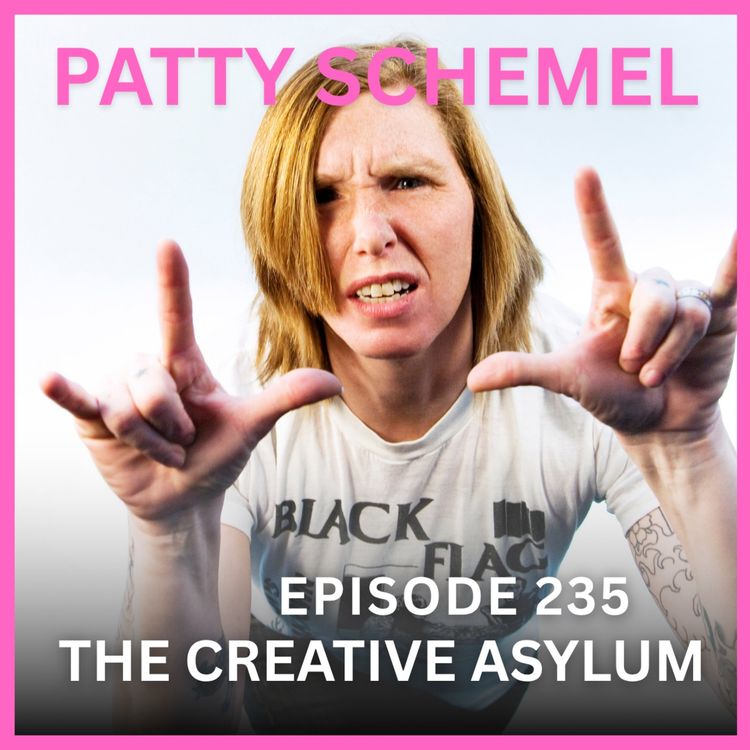
Patty Schemel (Hit So Hard) - EP235 - The Creative Asylum
Prior to Grohl, Patty Schemel was Kurt Cobain's choice as Nirvana's (new) drummer. She ended up playing in Hole and changed the band's trajectory with a power and determination that anchored the band's music on stage. Outside of life in the studio and on the road, Patty was also fighting a war that most fans never saw. She was a powerhouse drummer (just listen to 'Live Through This' if you have any doubt), but as with so many others from the Seattle music scene, also found the allure of hard drugs, which sadly led to her departure from music and a brutal stretch of homelessness, living on the streets of L.A. for over a year.
It's all laid out with unflinching honesty in the documentary 'Hit So Hard' from 2011 and the acclaimed memoir (from Da Capo Press) of the same name that followed.
Now over a decade living clean and sober, Patty is living a stable and happy life, is working on new craetive projects and is working in addiction recovery with homeless women from those same streets of Los Angeles.
* * * *
PLEASE FOLLOW US ON SOCIAL MEDIA:
Website:
https://www.TheCApod.com
Facebook:
https://www.facebook.com/TheCApod/
Instagram:
https://www.instagram.com/CreativeAsylumCA/
More episodes
View all episodes
242. Tim Kerr (Big Boys, Poison 13) - EP242 - The Creative Asylum
52:57||Season 2, Ep. 242As founding guitarist of Austin's Big Boys, Tim Kerr helped invent a distinct flavor of punk-funk in real time, fusing a DIY aesthetic with skater energy and horn-driven grooves that influenced everything from grunge to garage rock, a history that is documented in the new film, You Can Color Outside the Lines. In this episode, we explore Tim's kinetic path through different musical outfits . After Big Boys broke up in 1984, he played in the gospel-inflected garage blues of Poison 13, the raw alt-funk of Bad Mutha Goose, the garage-blues swagger of the Monkeywrench (alongside members of Mudhoney and Gas Huffer), plus Jack O' Fire, Lord High Fixers, and his current old-time and acoustic folk project, Up Around the Sun. The other area that cannot be ignored when having a conversation with Tim is his parallel — and arguably primary — identity as a visual artist. An art-trained outsider painter and photographer who studied under Garry Winogrand, Kerr has built a raw, primitive-style body of work spanning album covers, gig posters, skateboard graphics, and gallery paintings shown in museums worldwide, much of it collected in a career-spanning art book reissued by Monofonus Press. We talk about why music and painting have always just been the same impulse toward self-expression, an urge that is as natural as breathing itself.
241. Melissa Monroe - EP241 - The Creative Asylum
37:22||Season 2, Ep. 241Melissa Monroe is arguably Portland, Oregon's most playful outsider artist, creating work that is both whimsical and joyous. The self-taught artist picked up painting in 2013, went full time in 2014, and has since made and sold over 1,500 pieces. Her masks, sculptures, textiles, and acrylic paintings are loud with color and pattern, but there's also something tender and heavy underneath. She describes the work as a mask that radiates beauty while holding life's harsher truths, with sadness, love, and joy all vibrating together just below the surface. What started with paint, eventually shifted to working with yarn as sculpture, and now Melissa has become one of the leading names in the contemporary tufting movement. What's tufting you ask? Watch this conversation and you'll know more than when you started. Melissa first got involved in tufting in 2021 and in making the shift, she applied her painting approaches and her love of abstraction, antiques and nature into a tactile artform that feels musical and childlike. Her work has been featured on Oregon Art Beat and in Hi-Fructose, Fiber Art Now, American Craft, and the Tuft the World book, and has shown at the Outsider Art Fair in New York, SCOPE Miami, and the Seattle Art Fair. This is a conversation about following your own weird instincts and building a full creative life around those instincts, never second-guessing the inspiration that comes to you and through you unexpected. This are exactly the kind of process that Melissa Monroe embraces , and the result is a pure delight.https://shop.melissamonroeart.com
240. Larry Crane (Tape OP) - EP240 - The Creative Asylum
01:02:41||Season 2, Ep. 240Larry Crane started out scrappy, playing bass for the Chico, CA-based Indie-darling band, Vomit Launch. The band called it quits and Larry moved to Portland, where he became a producer and engineer, and was also where he founded Tape Op Magazine, a publication devoted to the process of making records and the creativity that goes into the process of recording. Hi interviews include conversations with John Cale, Steve Albini, Talking Heads' Jerry Harrison, Herb Alpert and Danny Elfman just to name a few, His recording credits stack up just as impressively: Elliott Smith, Sleater-Kinney, The Decemberists, Cat Power, Stephen Malkmus, Quasi, Jenny Lewis, M. Ward, the Go-Betweens and so many more. We explore what it takes to earn trust from artists across many decades, and—as the archivist for the Estate of Elliott Smith—his examination of the history that he's played a part in.Tape Op is released six times a year and is essential reading for musicians, producers, and engineers, specifically if you want to explore how others think about how they capture their creative output in the studio. This is a conversation with an old friend who has a deep appreciation for the values of building community tempered with the perspective of working DIY and the understanding that sometimes you have to be open to stepping beyond your tribe, because sometimes you're forced to work with other kinds of interests that arrive with a different set of expectations.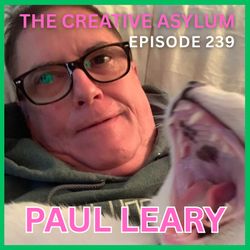
239. Paul Leary (Butthole Surfers) - EP239 - The Creative Asylum
52:10||Season 2, Ep. 239Paul Leary co-founded one of the most gleefully deranged bands in American rock history — and came out the other end living a decades-long career producing other bands. As guitarist and de facto sonic architect of the Butthole Surfers, Leary helped build a catalog of cult-classic noise-punk landmarks throughout the '80. From Psychic Powerless...Another Man's Sac to Hairway to Steven and the band's brief brush with mainstream success via their song "Pepper," the Butthole Surfers left behind a stream of chaos that can only be celebrated for it's sheer audacity and mayhem.In this conversation, Paul dips his toe into how two Trinity University accounting students turned into art-punk provocateurs. The band's outrageous, legendary live shows are documented in the new documentary Butthole Surfers: The Hole Truth and Nothing Butt, directed by Tom Stern, which traces the band's history and cultural impact through interviews, archival footage, and multimedia elements. We also discuss Leary's parallel life and subsequent career as an alt-rock producer, with an impressive resume including bands like Sublime, Meat Puppets, Daniel Johnston, Reverend Horton Heat, the Toadies, U2, Weezer, and Jane's Addiction. In his current place in life as a "boring adult," we talk about what it takes to bring order in the studio after building a career on total chaos in his own band. This is a conversation about weirdness as a discipline, the accidental producer, and staying gleefully uncategorizable for over four decades.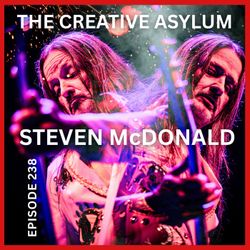
238. Steven McDonald (Redd Kross, Melvins) - EP238 - The Creative Asylum
01:06:30||Season 2, Ep. 238Steven McDonald picked up a bass at age 11, and along with his older brother Jeff, co-founded Redd Kross. Redd Kross made their live debut opening for Black Flag while basically still being in Jr. High. In this conversation, Steven and I discuss the creative process, the dynamics of juggling two bands at once, the brilliance of the Beatles and Redd Kross' 2024 self-titled double album, which is—in my opinion—one of the best records of the band's entire career.Steven and I talk about his parallel life as the touring and recording bassist for the Melvins since 2015, with King Buzzo and Dale Crover while Redd Kross is never that far in the shadows. For a period of time, Steven played in and was a founding member of Keith Morris's hardcore outfit OFF! from 2009 to 2021. We also dip into Born Innocent: The Redd Kross Story, director Andrew Reich's documentary tracing the band's four-decade history, and what it's been like having a camera crew — and now an audience — finally reckon with a career this tumultuous and this undeniably good. This is a candid conversation about being a lifer, a brother, a parent and a bass player who's somehow made it look easy since before he could drive. Photo of Steve McDonald by the inimitable Master Jaron: https://www.instagram.com/masterjaron/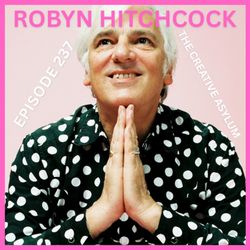
237. Robyn Hitchcock - EP237 - The Creative Asylum
49:55||Season 2, Ep. 237Robyn Hitchcock has spent five decades making music with the kind of color and whimsy that sounds like musical paintings as much as being any kind of standard for quirky British art-rock. He's always been surreal, wry, and stubbornly uninterested in trends. As co-founder and songwriter for the critically influential Soft Boys (1976–81), Hitchcock helped forge an influential art-rock touchstone that outlasted the lifespan of the band itself. Decades later, the jangly, off-kilter psychedelia of the Soft Boys have influenced R.E.M., the Replacements, Uncle Tupelo, and a generation of songwriters who came after.In addition to being a musical painter, Hitchcock has also been an avid explorer of the written word, having penned TWO two acclaimed memoirs, both of which are available from Akashic Books: 1967: How I Got There and Why I Never Left, a hallucinatory account of the year he turned 14 and discovered Pink Floyd and Sgt. Pepper's while stuck at boarding school, and the recent follow-up, Stranded in the Future, which picks up the story from 1968 and continues through to 1978. the book chronicles his self-taught songwriting, doomed romances, and the formation of the Soft Boys against the backdrop of London as punk was taking hold and changing the very foundation upon which popular culture was being built. We talk about writing, music and the surreal experience of life itself. Robyn's remained one of the most singular, unclassifiable voices in British music, and with that' the Creative Asylum is lucky to have him on!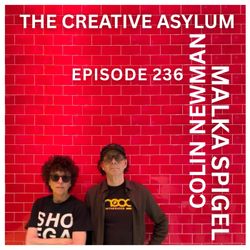
236. Colin Newman & Malka Spigel - EP236 - The Creative Asylum
51:47||Season 2, Ep. 236Few couples have lived in the world of independent music from as many angles as Colin Newman and Malka Spigel have. Colin is the co-founder, voice and guitarist behind Wire, the art-punk originators whose austere, angular sound still sound pioneering today , even decades after their formation in the 1970s. Malka was the bassist for Minimal Compact, the Tel Aviv-born post-punk outfit that became a cornerstone of the '80s European underground. In this episode, I get to have a conversation with these two artists who have been together for decades now and have built a remarkable shared body of work including their long-running duo, Immersion, their collaborative project Nanocluster and their band - about to be revived - Githead. They are more independent that they've ever been, running their own record label, swim~. We spend most of the conversation talking about where they are now: Immersion, the electronic duo Newman and Spigel formed in 1994, built on a genuinely collaborative process where the music comes first and the ideas evolve organically between them. We also talk about their ongoing Nanocluster series — a rotating-cast collaboration project pulling in artists like Laetitia Sadier of Stereolab, Ulrich Schnauss, Scanner, and ambient trio SUSSThis is a conversation about staying restless after 40-plus years in music, and what it actually looks like to build a life and a body of work with your partner, and why neither of them has any interest in coasting on legacy. VISIT https://immersionhq.uk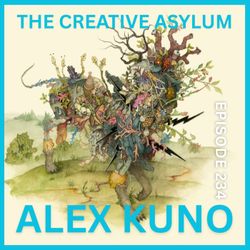
234. Alex Kuno - EP234 - The Creative Asylum
48:24||Season 2, Ep. 234Working out of his studio in the Arts District of Saint Paul, Minnesota, Alex Kuno has spent over two decades building a visual language all his own. Alex's figures look like they wandered out of a medieval medical textbook and into a fairy tale gone strange. His characters sprout, mutate, and dissolve into hybrid states — part specimen, part storybook creature, wild and often as organic as the flora in the frame. Kuno works primarily in oils these days, but we discuss a time in his development when he was experimenting with watercolor and colored-pencils as well as with acrylic. Adam Jones from TOOL noticed Kuno's remarkable work and has used his images on over a dozen concert posters.Alex Kuno has one of the most distinct visual styles in contemporary lowbrow and pop-surrealist art. It's dark, but maintains an element of humor, and it never quite explains itself. This is a conversation about making weird, personal work and building a career out of a life that is dedicated to making art.