Share
The Business of Fashion Podcast
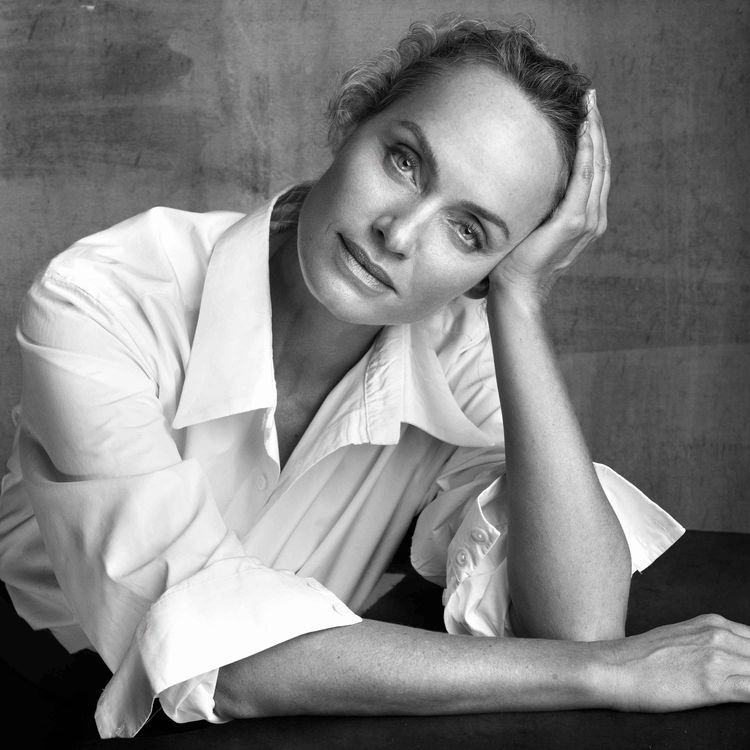
Amber Valletta: ‘Do What You Love. Serve a Higher Purpose.’
Amber Valletta grew up in Tulsa, Oklahoma, spending time on her grandparents’ farm. Her childhood was defined by open fields, a freshwater creek and a simple rule from her mother: go outside and use your imagination.
At 15, a local modelling class set her on an unexpected path that would take her first to Milan, and then around the world. Within a few years, Amber became one of the defining faces of 1990s fashion — the Tom Ford Gucci era, the great editorials and the campaigns that shaped a generation’s idea of beauty.
But by her mid-20s, success had taken its toll. Amber stepped away from modelling, got sober, became a mother, pursued acting and found purpose in environmental advocacy. Today, as a United Nations Environment Programme goodwill ambassador, she’s using her influence to push for real change on climate, biodiversity and pollution.
“I don’t make my life all about me,” she told me. “I make it about other people too — about connection and love. When you have that, life is so much more enjoyable.”
This week on The BoF Podcast, BoF founder Imran Amed sits down with Amber Valletta to trace her journey from Tulsa to the world’s fashion capitals, how sobriety transformed her life at 25 and why she believes fashion must finally take responsibility for its impact on the planet.
Key Insights:
- Valletta’s childhood in nature forged a creative compass and the ability to adapt anywhere.That self-reliance became a career asset when she landed in Europe as a teenager: “I have this strange thing that I’ve always had — it’s like wherever you plant me, I grow. I’m like a weed or something, like an Oklahoma weed.” Those early years also taught her to observe and self-teach: “No one taught me. I just started figuring it out … you look, you watch, you listen.”
- Opening Tom Ford’s Gucci Fall/Winter 1995 show gave Valletta a once-in-a-career jolt. “When I walked out on the runway, it was probably one of the few times I’ve had that adrenaline rush … that spotlight came on and boom,” Valletta recalls. The moment was so impactful because it diverged from what dominated the time: “Nothing looked like that … it was like a shot of adrenaline for everybody,” she says.
- Valletta was recently named UN Environment Programme goodwill ambassador, where she is focused on climate change, biodiversity loss and on “fashion’s role as one of the biggest polluters.” The brief is practical: “We need to invest in innovation and investment in decarbonisation … We need all hands on deck. We need collaboration,” she says, warning, “If it doesn’t change, we’re going to implode on ourselves.”
- Valletta’s guidance for a fulfilling life is simple: “Do what you love. Serve a higher purpose. Enjoy the moment. Enjoy where you’re at.” She couples that with practical habits for staying power. “I ask questions, I show up with a lot of gratitude … I try not to do too much so that when I show up to work, I’m fully present for everybody.”
Additional Resources:
More episodes
View all episodes

Why Colleen Allen Turns Away Retailers That Won't Pay Deposits
46:45|Colleen Allen learned to sew sitting on her grandmother's lap, holding the fabric while her grandmother worked the pedal. Growing up in the Midwest, far from the industry, she found her way in through magazines, fashion blogs and old McQueen shows on YouTube.Allen studied menswear at Parsons, moved to London for a semester abroad at Central Saint Martins and asked to stay on to complete her degree. She landed her first job designing menswear at The Row but then something shifted. She decided to venture out on her own and create a womenswear label in 2024. Since then, Allen says the business has grown by triple digits year over year, with no outside investment and no full-time team other than herself. So how did she do it?This week on The BoF Podcast, Allen joins BoF founder Imran Amed to talk about the making of a womenswear label, the discipline behind self-funded growth and what she's building next. This conversation was recorded ahead of the LVMH Prize final in Paris, where Allen was one of nine finalists.Key Insights: A blog-era education: With no connections to the industry, Allen taught herself fashion through magazines, hand-me-downs and, later, fashion blogs. She describes Alexander McQueen's Plato's Atlantis livestream as a formative moment: "It just totally blew my mind that there was still something to be discovered and something new and something transformative."Advocating for herself at Central Saint Martins: After a single semester abroad, Allen asked to stay at CSM and was told no. "I thought, no, I'm going to figure it out. I'm going to find a way to stay," she says — and by the end of the year, the head of menswear invited her to remain in the programme.Leaving menswear to design for her own body: After years designing menswear at The Row, Allen realised she had "no connection to my femininity, to my body" — and that the only way to process that was through her own work. "The only way I was going to be able to create that space for myself and my sort of own becoming into myself was to be creative, to work through fashion," she says.Disciplined cash flow management : Entirely self-funded, Allen has grown her business by only working with retail partners willing to pay a deposit upfront — even if it means turning some away. “We are really only working with people on a deposit basis. Otherwise it's impossible. And so I'm very grateful that within the current retail clients, people have been accommodating for those terms because it's the only way it works.” she says.Building a world, not just a product: Looking ahead, Allen wants to reinvest wholesale revenue into her direct-to-consumer business while continuing to expand the creative universe around the brand — campaign imagery, casting and, eventually, a runway show. "It's about bringing people into the world and creating more than just the product, but like who our woman is," she says. Two Books Colleen Allen Recommends: Red Comet by Heather Clark Gods and Kings by Dana Thomas Additional Resources:What to Look Out for at New York Fashion Week | BoFLVMH Announces Young Designers’ Prize Semifinalists for 2026 | BoFNew York Fashion Week’s Identity Crisis | BoF
Has Fashion Had Enough of AI?
18:36|For many shoppers, fashion is now experienced primarily through a screen — discovered on social media, watched on runway livestreams and purchased from a product photo. Fashion critic Eugene Rabkin argues in his new book that this shift has left the industry prioritising a garment's image over the garment itself, hollowing out creativity and quality along the way. At the same time, as AI generated imagery floods the feed, a counter-movement is emerging: luxury brands are commissioning painters and illustrators, hosting phone-free dinners and building hands-on experiences designed to pull customers back into the physical world.In this episode, senior correspondent Sheena Butler-Young is joined by Diana Pearl, BoF's US Editor, and Marc Bain, BoF's UK Editor and technology correspondent, to discuss whether this renewed emphasis on human creativity and craft is a meaningful response to fashion's image-first culture — or just the next trend cycle.Key Insights:As consumers increasingly interact with clothing through small screens rather than in person, Bain explains that subtler markers of quality have lost their power to communicate value. "As we interact more with clothing through imagery rather than the physical garments themselves, the logo becomes more important... Now the logo is just the easiest thing to identify. And that has become the most important thing on a garment."Drawing on a concept borrowed from French theory, Bain says the gap between a product's online image and its physical reality has left some shoppers disillusioned — a dynamic he says extends well beyond fast fashion. "It doesn't just apply to Shein..Eugene Rabkin's argument is that it's come to apply to a whole lot of fashion, including luxury fashion... There's been this decline in quality over the years."Bain says and Rabkin are careful not to cast technology as the villain, noting that AI's impact depends entirely on how brands choose to use it. " Technology is amoral. It's a tool..And it's really how it's used that is more important."Pearl points to a wave of luxury brands hiring painters, illustrators and sculptors as a direct response to overly polished, perfected imagery that technology has made ubiquitous — a trend only accelerated by AI. e. "Being perfect and having just this picture-perfect imagery is no longer seen as aspirational. It's actually seen as, ‘slop’ … having that human-made art... is what feels now aspirational and special."As brands pull back from influencer-driven content blitzes in favour of intimate, phone-free events, Pearl says the playbook for measuring success has changed. . "It's all representative of this bigger shift that we're seeing away from volume and just get as much content as possible... towards the depth of connection."Additional Resources:Is Fashion Stuck in Its Simulation Era? | BoFAs AI Floods the Feed, Fashion Marketers Tap Artists | BoFLogging Off Is the New Luxury. How Can Brands Adapt? | BoF
W. David Marx: Fashion Is Bigger Than Ever — but Worse at Rewarding Invention
59:44|In the summer of 2007, BoF founder Imran Amed landed in Tokyo for the first time. A young American writer named W. David Marx took him on a menswear tour of the city's back streets of Shibuya and Harajuku. That trip would eventually lead Marx to become BoF's first contributor — apart from Amed himself.Nearly 20 years on, Marx is still in Tokyo, watching a city that experienced three of fashion's biggest shifts before anywhere else: luxury as a middle-class product, the rise — and now retreat — of streetwear and menswear as a global obsession. Marx is the author of three books on Japanese and global culture. The first, “Ametora,” is about how Japan absorbed, and then improved, American style. The most recent, “Blank Space,” is a cultural history of the 21st century, arguing that something has gone missing from the way we make culture today.Amed sat down with Marx in Tokyo to discuss all of this and more in what is a fascinating conversation about the state of global culture and global fashion today, and how Japan’s place in it has changed. Key Insights: Japan taught the luxury industry that luxury could be a mass-market business. Marx traces Japan's luxury boom back to the 1970s, when newly wealthy Japanese travellers began bringing home souvenirs from Paris. He argues Japan is where brands like Louis Vuitton first learned that "luxury could become a middle class market," building duty-free stores in airports rather than relying solely on flagship boutiques for old-money customers — a model since exported across the world.Tokyo Was the Origin Point of the Global Streetwear Boom: Marx lays out how Bathing Ape's underground Tokyo stores became a phenomenon so outsized it reshaped how the rest of the world thought about streetwear. He recalls a Stüssy veteran saying, "Bathing Ape blew streetwear out of the water."Luxury's growth problem is structural, not cyclical. Marx argues luxury goods are fundamentally different from something like an iPhone, because "for every additional handbag you sell to a new consumer, you do decrease the value of the handbag that you sold originally." That tension between scarcity and growth, he says, “is at the root of the industry's current slump”.Culture Has a ‘Blank Space’ Where Invention Used to Be: Marx’s central argument is that value shifts, not a lack of talent, have pushed culture away from art for art's sake. He points to hip-hop and graffiti as movements built by outsiders pursuing invention for its own sake, contrasting that with today's incentives: "If you are making things to get attention, if you're making things to make money, it's just very unlikely that your strategy's going to be to be the most inventive as it could possibly be."Three Books W. David Marx RecommendsFashion is Spinach, by Elizabeth Hawes On Human Finery, by Quentin Bell For a Critique of the Political Economy of the Sign, by Jean BaudrillardAdditional Resources:Streetwear’s First IPO, Explained | BoFHow Big Luxury Is Rewiring for the Future | BoFHow BAPE Kept Its Cool for Decades | BoF
Who’s Winning and Losing in Beauty’s First Half
27:24|Beauty has long been one of the industry’s most reliable growth engines — fragrance boomed post-pandemic, prestige beauty held up better than other categories, and value-driven brands like e.l.f. proved that sharp pricing and marketing could keep consumers spending. But a slowdown that began last year and has only become more pronounced since has challenged that thinking.In this episode, senior correspondent Sheena Butler-Young is joined by BoF senior beauty correspondent Daniela Morosini to unpack the first half's earnings across the beauty conglomerates — from Estée Lauder and Shiseido to L'Oréal, Beiersdorf and E.l.f. — and identify what’s still driving growth and what’s stalling, as well as what investors will be watching for next.Key Insights: Selective Spending, Not Shrinking Wallets: Consumers haven't stopped buying beauty — they've become pickier about where they spend and what they’re purchasing. "People are just getting a little bit more selective," said Morosini. Shopping itself is shifting, too: "Maybe it's not always Sephora and Ulta. Maybe it's TikTok Shop."Skincare Results, Injectables and the Price-Value Equation: Affordable, results-driven skincare brands are outperforming, while medical aesthetics are surging in parallel. Morosini points specifically to "the derm-backed skincare brands or the dermatological brands, the more affordable ones like CeraVe and La Roche-Posay, alongside the growing pull of the lasers and the injectables."Hair's Unexpected Boom: Hair has emerged as one of the biggest bright spots this earnings season, driven equally by innovation and a cultural shift around hair loss. Morosini notes, "hair loss has just become so much more of a hot topic and I think a lot of stigma has been removed," while also crediting brands like K18 and Olaplex that “have increased what we expect hair products to do for us."Estée Lauder's Momentum Question: Lauder posted a 17 percent stock jump on its first results under new leadership, but Morosini cautions the win may be borrowed. "The question is how much has Estée Lauder improved its brand's desirability and how much has it benefited from a rising tide," she says, adding that stripped of Amazon Prime Day effects, US growth was closer to "about two percent."The Danger of the One-Hero Brand: From E.l.f.'s reliance on Rhode to Beiersdorf's dependence on Nivea, this earnings season exposed how a single hero product can mask underlying weakness. "When that's basically all concentrated around one brand, that makes investors a little bit nervous," Morosini says, noting the read-through for M&A: “At a certain point you have to buy the growth."Additional Resources:Beauty Is Growing. Not Everyone’s Benefitting. | BoFCan Estée Lauder Turn a Moment Into Momentum? | BoFBeauty Is Betting on Fragrance. Why Isn’t Shiseido? | BoF
Inside James Whitner's Purpose-First Retail Playbook
40:19|Earlier this month, A Ma Maniére — one part of James Whitner's The Whitaker Group — was named one of BoF's Best Fashion Stores in the World, our definitive global list of retailers with the most distinctive edits and experiences.Whitner has spent twenty years building an independent retail business that operates more than 20 stores across 16 US cities — many of them in Black neighbourhoods that mainstream retail had overlooked — based on the feeling he got hanging out in barbershops and sneaker spots growing up in Pittsburgh.“The best things happen in the barbershop — the most interesting conversations on the block are in the barbershop,” Whitner says. “And once I got some money, going shopping … [was about] how you were serviced, the relationships you had with those people and how good you felt entering and exiting the space. The social currency tied to looking good was about feeling good.”Back in February 2025, James spoke to me about the discipline behind the business, how he's built brand partnerships that actually last, and why he believes community development, not just retail, is where he needs to head next. Key Insights: Learning to Operate Before Chasing Scale: Whitner is candid about the unglamorous groundwork behind Whitaker Group's growth — five years learning to operate, and then another five building brand partnerships. "You have got to understand how to keep costs down, how to build an infrastructure while keeping costs down," he says. Brand Partners Who Play the Long Game: Whitner is blunt about who he'll work with. "If you want to work with brands who want to be for everybody, that means you're for nobody," he says. On scaling a business built on cultural credibility: "This is an industry that you can scale, but it's not built for scale."Nike and the Trust in Storytelling: Whitner credits an authentic relationship with Nike for the Whitaker Group's most successful drops. "Nike loves us because we're uniquely us for them... nothing scales better than a great story," he says, previewing a tighter, more intentional distribution strategy.From Retail to Real Community Development: Community development has become central to Whitner's business, with completed projects including Social Status Detroit — a $5.5 million redevelopment on the city's east side — and The Collective on Tuckaseegee, a ten-space retail compound in Charlotte. "At some point, realising that we needed to be the developer that helped shape the community," he says. “It's more important for us to drive connections and just try to help people who want to help people."Additional Resources:The Best Fashion Stores in the World | BoFThe Independent Retailer Built on Prioritising Black Buying Power | BoFThe Whitaker Group Expands With New Women-Centric Retailer Jaide | BoF
Why Upcycling Is Suddenly Everywhere in Fashion
28:24|For a long time, upcycling sat on the fringes of the fashion industry, a tactic used primarily by small independent designers, niche sustainability labels and in one-off capsule collections. That's changing. At Paris Couture Week this spring, Swiss designer Kevin Germanier closed the season with a collection made entirely from excess inventory across seven LVMH-owned brands. Coach is turning used denim into new bags, and Uniqlo is remaking unsellable and used garments under its RE label.In this episode, senior correspondent Sheena Butler-Young speaks to senior editorial associate Shayeza Walid to explore why upcycling brands are increasingly marketing upcycling through creativity and individuality rather than sustainability alone, and what's really driving the shift from new EU regulations to a changing consumer mindset.Key Insights:Selling Creativity, Not Just Conscience: Walid points to a fundamental shift in how upcycling is marketed. It's no longer framed primarily as an environmental fix, but as a source of design distinction and story. "It felt like the term was becoming ubiquitous across marketing," she says, noting that upcycling has moved from something "relegated to a certain type of consumer or a certain type of brand" to being claimed by some of the industry's biggest names.Regulation Is Quietly Doing the Heavy Lifting: Walid connects the timing of the boom to the EU's ban on the destruction of unsold goods, which came into force in July. She notes that Kevin Germanier's LVMH-backed couture collection was deliberately built from unsold stock, not deadstock fabric — a distinction he emphasised on stage. "It also means that they'll have to figure out sustainable and approved ways for using their excess stock, and upcycling is one of the methods for that."Deadstock vs. Textile Waste — Not the Same Debate: Walid unpacks a live tension among practitioners: using deadstock fabric is being challenged by some critics as not addressing overproduction, since it still puts commercial value on excess production. "With deadstock, it's the same as using new fabric in the sense that they're rolls of fabric... that's not necessarily what upcycling is about," while brands like E.L.V. Denim work directly with used, discarded garments instead.The Infrastructure Is Finally Catching Up: Sorting, collecting and sourcing — the industry's biggest upcycling bottleneck — is improving. Walid cites organisations like Fashion for Good working on AI-assisted sorting, and platforms such as Nona Source and The Materialist connecting brands to deadstock fabric. "There's a greater design interest in it now more than there's ever been," she says of the shift she's tracked through conversations with suppliers.The Consumer Wants Range, Not a Label: Walid argues the audience for upcycled product has broadened well beyond the sustainability shopper. "You could have an upcycled Miu Miu product today, and maybe that says that you like high fashion... but also you think it's cool that your product is from an upcycled material," she says, describing a consumer who wants variety in their closet rather than to be defined by one aesthetic or ethic.Scale Remains the Unsolved Problem: Despite the momentum, there are limits. Sizing and colour inconsistency frustrate wholesale buyers, the process is inherently slower than working with virgin material, and export bans on used textiles in countries like Bangladesh complicate sourcing. She also flags that upcyclers in the Global South — in markets like Kantamanto in Ghana — have done this sort of work for generations but remain largely excluded from the value chain brands are now building.Additional Resources:Why So Many Fashion Brands Are Upcycling | BoFWhy Fashion’s Economics Work Against Sustainable Brands | BoFCan the EU Ban on Destroying Unsold Goods Actually Work? | BoF
Nick Knight Is Building His Own AI
39:09|I've been interviewing Nick Knight for more than 15 years. This is our fourth in-depth, sit-down interview. At this stage, it's become something closer to a running conversation about how technology is reshaping fashion.This time around, I wanted to know where Nick is focusing his energy now. It turns out, he is building his own AI datasets from scratch — photographing a model over and over so the machine sees the world only through his references, and never scrapes the internet for somebody else's. He takes his own still image and asks the AI to make it move, producing something that is neither a photograph nor a film. I also asked him for the advice he'd give to young image-makers starting out today, in the age of AI. This week on The BoF Podcast, Nick and I get into what happened to the metaverse, how Nick believes AI is creating an entirely new medium somewhere between photography and film, and what fulfilment really means to one of fashion's defining image-makers.Key Insights: The Metaverse Didn't Disappear, It Rebranded: Knight argues the concept never really went away, but was tainted by association once Facebook was renamed Meta. He says, "I don't think it's necessarily drifted away. I think the term's been, to some degree, cancelled because it had too many bad connotations,” he said. "The metaverse is just a digital version of life, that's absolutely happening."Building Proprietary Datasets to Escape the Echo Chamber: Knight's studio creates its own AI models rather than pulling from tools trained on the wider internet, specifically to avoid reproducing past photographers' work. He explains the method: "We've done a conventional session where I photographed the model lots and lots of times, and lots and loads of clothes, et cetera, and that's my data set," which is then fed into the AI, "so it sees the world only through those references."Referencing Isn't Plagiarism, Copying Is: Knight pushes back on the idea that AI imagery is inherently derivative, arguing that all creative work draws on a subconscious library of influence — human or artificial. "When you walk around a museum, go around the V&A, you are taking in Botticellis, and you're taking in 20th century furniture... they go into your brain... so it's your frame of reference. AI does the same sort of thing." But he draws a hard line at direct imitation: "There's no satisfaction in copying an existing piece of work."Fashion Models Should Own Their Own Digital Likeness: Knight argues that AI could extend a fashion model's career well beyond its traditionally short, youth-focused span — but only if the model, not the agency or brand, controls the rights. "I think that fashion models need to own their own digital likeness. Now, I've spoken to a lot of model agencies and there is virtually nothing happening to make sure that happens," he says, adding that agencies have little financial incentive to invest in it. Fame, Money and Power Are "False Goals": Asked what he's chasing if not happiness, Knight rejects the premise outright. "Fame is a false goal. Money is a false goal. Power is a false goal. He locates his own fulfilment elsewhere: "My interaction with people in the studio, my interaction with my wife and my family... it comes from the human interaction with all people around me."Additional Resources: Nick Knight Says Heart and Mind are the Key to Fashion Imagemaking | BoFThe BoF Podcast | Inside The Future of Fashion Image Making with Nick Knight The BoF Podcast | Nick Knight on Why the Metaverse Is Fashion's Next Frontier | BoF
The Influencer Follower-Count Era Is Ending
23:25|For years, follower count was the clearest shorthand for a creator's value — more followers meant more reach, more brand deals, more money. But social media doesn't work that way anymore. TikTok's For You page, Instagram's suggested posts and other algorithmically curated feeds mean creators can reach huge audiences without those people ever following them. At the same time, affiliate marketing platforms like LTK and ShopMy are giving brands a much clearer picture of who actually drives sales, with smaller creators often outperforming bigger names. In this episode, senior correspondent Sheena Butler-Young talks to BoF US Editor Diana Pearl about how brands and creators are rethinking the value of an audience, and where creator value is headed next.Key Insights:A huge following no longer guarantees cultural weight. Pearl points to the gap between raw numbers and actual impact: "You look at someone like Dixie D'Amelio, who has almost 54 million followers on TikTok... but I would not say [she is] as culturally relevant as someone like Alex Earle, who has not even 9 million followers on TikTok."New platforms have made it possible to see exactly who is driving sales, not just who has the biggest audience. As Pearl explains, "ShopMy really changed that — they offer brands a lot more insight into which creators are actually driving sales, even if they're not running a paid partnership."TikTok's For You page and Instagram's suggested posts have done more than any other shift to break the link between followers and visibility. "Those are the two primary factors that have really diminished the importance of follower count," she says, "because you can have someone with 300 followers who goes viral."The single most important quality a creator can build today resists easy measurement. "Trust is the number one most important thing that an influencer or creator can curate today," Pearl says, "and that trust is not something that can necessarily be measured by metrics on a spreadsheet."Chasing every viral trend is a losing strategy — consistency is what builds a durable audience. "Playing the long game is really the best strategy," she says. "Staying true to who you are — that's how you build that community. That is how you built that trust in that community."Additional Resources:Why Follower Count Matters Less Than Ever | BoFNot All Creators Convert. Here's How to Find Those That Do. | BoFFrom Hype to Discipline: The New World of Influencer Marketing | Case Study | BoF
Kelly Wearstler on What Waiting Tables Taught Her About Design
57:11|When the designer Kelly Wearstler was five or six years old, she made little drawings and small sculptures out of cans and cartons, laid them out on the table at family gatherings, and put price tags on them.She grew up in Myrtle Beach, South Carolina, raised by what she calls fiercely independent women who took her to thrift stores, flea markets and auctions. She got her first job at 13. She studied graphic design in Boston, apprenticed in New York with Milton Glaser, the designer behind the I Love New York logo, and then moved to Los Angeles where she waited tables at a Beverly Hills restaurant until one of her regulars became her first client.Today her design studio runs to 60 people and six verticals — interiors, architecture, licensing, creative direction, a gallery and a Substack newsletter. And next month she launches a 29-piece collection with H&M Home: the first time the retailer has put furniture into a designer collaboration, and the first time it has worked with one designer across both home and fashion.This week on The BoF Podcast, Kelly joins Amed to talk about advocating for herself before she had any track record, what waiting tables taught her about designing restaurants and how she is using AI inside her studio.Key Insights:A Design Education Built on Flea Markets, Not Classrooms: Wearstler's earliest design instincts weren't taught — they were foraged. Without the money to buy expensive pieces, she and her family combed thrift stores and auctions for scarves, magazines and furniture. "I think that really kind of educated my eye in so many different elements of design," she says. "I love typography and I think that really came from the magazines and what really resonated with me and evoked an emotion."Advocating for Herself: Wearstler talked her way into designing her first hotel despite having no commercial design experience, on the condition she partnered with an architecture firm that had. Asked where she found the confidence to push for it, she traces it straight back to her upbringing: "It really went back to my childhood, like both my grandmothers worked. They were so independent... whatever you want to do, you can accomplish. It's hard work. It's not gonna be easy. And it has to be fuelled with passion and curiosity, period." She simply refused to let the "no" stick: "I just kept on going. I really wanted this project."A "Why" Rooted in How Spaces Make People Feel: Asked what drives her, Wearstler points to the emotional residue her spaces leave behind. "There's nothing better than to go into one of the lobbies of the hotels that we worked in," she says. "We used to see people coming back over and over again. And they always tell me how they love being in this space. It makes them feel so good."Fashion and Design as One Continuous Language: Wearstler doesn't separate how a home is curated from how a person dresses — both are storytelling. "It's like how you dress and your design, your home, your curation style really is a form of self-expression," she says. "I really don't see design and fashion living in separate rooms."Legitimising Mass Market Through Design Pedigree: For Wearstler, H&M's history of designer collaborations — not its price point — made the partnership make sense. "If you look just like in the past, I remember early 2000 when they did the Karl Lagerfeld collaboration ... They're really the pioneers of collaborating with designers," she says, citing Margiela's archival collection as another reference point. She argues scale and craft aren't opposed: "It's all in the economies of scale ... You have to really be a great designer, know how to take perhaps a humble material and make it shine."Additional Resources:The Acts of Love Behind Milan Design Week | BoFBoF VOICES 2023: An Inflection Point for AI | BoFWhat Stood Out at Salone | BoF