The Business of Fashion Podcast
All Episodes

Olivier Bron on Making Bloomingdale’s Desirable Again
56:19|For most of the last 30 years, the American department store has been a story of decline: store closures, bankruptcies, endless discounting and floors packed with racks that looked the same from one store to the next.Bloomingdale’s is starting to tell a different story. Last quarter, its comparable sales grew more than 11 percent, its second consecutive quarter of double-digit growth, at a moment when much of the luxury industry is struggling to grow at all.The man behind that turnaround is Olivier Bron, who arrived in New York nearly three years ago to become the CEO of the venerable department store chain that had lost its lustre. Bron believes that Bloomingdale’s can still matter to shoppers and to brands, but only if it gives people a reason to walk in. This week, Bron joins Imran Amed to talk about how you make a brand every American knows desirable again, and why some of luxury’s biggest brands are wrestling with exactly the same question.Key Insights:Art, science and care: Bron’s retail philosophy, distilled from his years at Bain & Company, rests on balancing instinct with data. “The magic is happening when you have this touch of inspiration and point of view that you don’t get with just data,” he says, adding that the second ingredient is simpler: “You need to care for others. You need to like serving others and helping people by bringing joy.”Execution is essential: Asked about the biggest lesson from turning around Galeries Lafayette’s 70-store network, Bron points not to vision but to delivery. “You can have the best strategy, but if you fail in execution, then your experience will land flat,” he says.Fewer brands, more space: Bloomingdale’s has deliberately shrunk its brand count to deepen its relationships with the ones that remain. “We probably have 10 percent less brands, but probably expressed in a better way,” Bron says of the store’s luxury renovation.The US market keeps getting wealthier: Bloomingdale’s wealthiest base of customers is not only expanding but also spending more. “We’re seeing more wealthy people and the already wealthy people have become wealthier,” he says, though he acknowledges the midterm elections and AI-driven market jitters as real risks.Awareness isn’t desirability: Bron draws a sharp distinction between the two, and applies it as freely to his own brand as to European luxury houses. “Everyone knows about Bloomingdale’s, everyone. In the US, the awareness is very, very strong. But the desirability, the credibility of the brand in this luxury world is not where it should be,” he says. “We were so obsessed about financial returns, about short term performance that you lose ground on this long term perspective.Top personal shoppers run businesses inside the business: Bron says Bloomingdale's incentive for its personal shoppers is having the brands, inventory, systems and space for them to maximise sales. Home has widened what each associate can sell: “When a customer is spending millions in fashion, I can tell you that these customers are spending millions on their homes as well.”Additional Resources:Bloomingdale’s CEO on the Future of American Department Stores | BoFLuxury Brands Target ‘Desirability First’ — But How to Measure It? | BoFPete Nordstrom on the Enduring Power of Retail’s ‘Best Mousetrap’ | The BoF Podcast
The Generation Fashion Forgot
27:48|Fashion has long been obsessed with youth, treating young shoppers as both trendsetters and the engine of growth. Yet brands including Evereve, Ulla Johnson, Frances Valentine and Poppy & Peonies are finding opportunities in catering to women in their 40s, 50s and beyond, a demographic with significant spending power and brand loyalty that rarely features prominently in fashion campaigns.On this week's episode of The Debrief, senior correspondent Sheena Butler-Young and US editor Diana Pearl examine why brands are still afraid to make the older shopper the face of a campaign, what “multi-generational selling” actually requires, and how founders, sales associates and even a customer’s own social circle can become a brand’s most powerful marketing tool.Key Insights: Young consumers may drive fashion’s cultural conversation, but older shoppers wield significant purchasing power. As Pearl puts it: “What [youth] don’t often have is the spending power... there’s so much discussion about how boomers are the wealthiest generation.”Brands will chase an older customer’s wallet but hesitate to put her face on a billboard. Pearl traces this to “a lot of ingrained misogyny in not just fashion, but in our society,” where women over 40 are seen as less interesting to market to — even though, she argues, “when [we] see older women who are chic, who are beautiful, stylish, who are successful, there’s an aspirational element to that.”The brands succeeding aren’t just targeting a specific age cohort— they’re building for mothers, daughters and grandmothers at once. “If you can sell to the mother, the daughter, the grandmother... that just gives you access to such a wide swath of consumers,” Pearl says, dubbing it a brand’s “superpower” because it builds “long-term loyalty and deep connection with the brand.”Long before the creator economy, community tastemakers shaped what women bought — they just weren’t on Instagram. “There’s always been that girl... who always had the best product recommendations, always knew of the hot new cool brands,” says Pearl. Those women, she says, were the nano-influencers of their time — holding “an immense amount of sway over their friends and their communities.”Many of the brands successfully courting older shoppers are founder-led, with personal connections playing a central role in building customer loyalty. For brands looking to replicate those relationships at scale, store associates can play a critical role. Pearl’s advice: “really educating... store teams, particularly store managers, and empowering them to empower their associates, to build those relationships.”Additional Resources:Fashion’s Next Growth Opportunity Isn’t Gen Z | BoFFashion Wakes Up to the ‘Silver Generation’ Opportunity | BoFWhy Brands Cast Older Celebrities to Court Younger Consumers | BoF
Ask Imran Anything: Vanity Metrics, Creativity and Commerce, Gucci’s Future
32:33|This week, by popular demand, we are back for the third installment of Ask Me Anything, where listeners from around the world send in their most pressing questions about what is happening in the fashion business.This time, the conversation jumps off from the latest season of shows, specifically what’s actually happening at Gucci, whether metrics like Earned Media Value (EMV) and Media Impact Value (MIV) are worth anything at all, how brands can strike the right balance between creativity and commerce, and where human judgement still remains integral, even as AI becomes part of everyday creative work.Key Insights:Gucci’s creative direction has sharpened, but the business case hasn’t. After several collections that felt disjointed, Amed sees Demna’s most recent Milan show as the clearest statement yet of his vision for the house. “This most recent show, The Store, just kind of clicked.” But Amed is not ready to call it a fix: “The remaining question I have is, is it enough in this very challenging market where the luxury industry is not growing?”Brand-measurement metrics deserve scepticism: Asked whether scores like Earned Media Value (EMV) and Media Impact Value (MIV) actually mean anything, Amed argues they’re built to serve a different purpose than the one marketed. “Honestly, these are vanity metrics,” he says, noting they’re often “designed for marketing teams to ask for money from finance people.” His test for any brand: “Long-term brand health and commercial performance, that matters.”Creative success depends on alignment between designer and business: Comparing the current moment at Balenciaga and Chanel, Amed suggests the difference isn’t talent but clarity of the brief. On Balenciaga: “I get the sense that the brief was a bit disjointed ... can you mine the heritage of Cristóbal Balenciaga ... and then can you also keep the customers that Demna managed to attract ... Are those things even compatible?” At Chanel, by contrast: “They’re all singing from the same hymn sheet about what Chanel is trying to do now ... When it works like it’s working at Chanel, it does feel like magic.”AI changes how humans create, not whether they’re needed. Amed pushes back on the idea that AI can generate campaigns or strategy on its own. “I don’t think AI on its own can generate beautiful campaigns ... it still requires a human to work with it.” His advice to anyone starting out: build real-world taste and judgement, “because that’s going to be priceless in the age of AI.”Crediting artisans is what separates collaboration from appropriation. Weighing the recent Prada and Fendi controversies over Indian craftsmanship, Amed draws a clear line between the two. On Fendi’s long relationship with Mumbai atelier Chanakya: “Maria Grazia is investing in and spending time with the artisans ... that for me is an example of how these things should work.” On Prada’s uncredited Kolhapuri sandals: “That felt like a real case of appropriation.” His broader principle: “If you’re going to take something from a culture, credit the people, make sure they’re properly compensated.”Additional Resources:Has Demna Solved Gucci’s Identity Crisis? | BoFChanel: The Designer Revamp That Worked | BoFDid Fendi Commit Cultural Appropriation in India? It’s Not That Simple | BoF
Who’s to Blame for Bad Customer Service?
29:02|A $15,000 mechanical bird named Molly has become an unlikely flashpoint for retail. After pop star Kelly Clarkson accused Brooklyn boutique Art of Play of treating her “like Julia Roberts’ character” in Pretty Woman, the dispute ignited a much bigger debate about customer service, training and who bears the brunt of bad retail experiences.In this episode, senior correspondent Sheena Butler-Young is joined by Jessica Kwon, who recently examined why poor customer service remains so pervasive across retail, and retail editor Cathaleen Chen, who spearheaded BoF’s coverage of the world’s best independent stores. Together, they explore why retailers struggle to get service right — and what it takes to deliver a better shopping experience.Key Insights:Kwon connects the Clarkson incident to a longer pattern of retail profiling. “There’s a reason there’s this dedicated phrase, ‘shopping while Black’, that points to this phenomenon of Black customers being disproportionately scrutinized and surveilled,” she says, noting Oprah, Cardi B and Savannah James have all described similar treatment.Chen is skeptical of the theory that cold treatment drives luxury sales. “I personally find that very hard to believe,” she says, arguing the opposite is now true: “I don’t think that a true luxury shopping environment should make anyone feel intimidated or condescended upon.”For Chen, salaried-plus-commission models — like those at Elyse Walker — build loyalty because staff see a path up. “The CEO of Aritzia – she started at that company as a sales associate,” she says, tying good service to employees who “feel like they have a stake in the store.”Chen points to average tenures of five to six months as the real culprit behind inconsistent service. “It’s really not enough time... to soak up the culture of the brand and feel like you are a part of this environment,” she says.Kwon links pandemic-era social isolation to a generational shift in what good service looks like. “A lot of young people want to be left alone,” she says, adding that attentive service can now read as “a little obsequious.”Additional Resources:Why Is It Still So Painful to Shop in Stores? | BoFThe Best Fashion Stores in the World | BoFHow to Build the Retail Customer Service Dream Team | BoF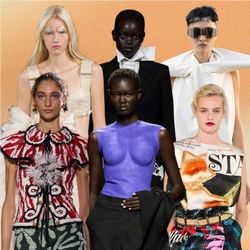
How Independent Thinking Powered the Spring/Summer 2027 Shows
01:08:40|Tim Blanks, editor-at-large at The Business of Fashion, joins Imran Amed for their seasonal review of the Spring/Summer 2027 shows. In London, Simone Rocha and Erdem delivered what Blanks calls career heights, and Christopher Kane made his debut at Mulberry, which brought the label back to the London schedule. In Milan, Demna presented his third show for Gucci, and Miuccia Prada and Raf Simons built Prada’s collection almost entirely around the skirt. In Paris, Anthony Vaccarello staged his final show for Saint Laurent, a collection built around gold. Kering confirmed his departure on Oct. 9.But the thread Blanks and Amed kept coming back to was bigger than any one show. In an industry dominated by giant groups trying to meet quarterly targets, there is a renaissance of independent designers and independent thinking. Blanks says independence is the theme he expects to return. He describes fashion at its best as an “individual idiosyncratic statement, this passion, and that applies not just to the designers but to the people who sell the designers.” Amed adds that independent stores around the world are looking for designers who offer something customers can’t find everywhere.Key Insights:London finds its feet again: Blanks saw two of the city's established names reach new heights. "I saw designers who are really part of the establishment, like Simone Rocha and Erdem, who reached career heights," he says, pointing to a mood of "anything goes, reckless" confidence. "I thought Erdem's show had a particularly wanton quality that was quite enthralling ... you do feel a volcanic force building sometimes, and in this show there was just this explosion of subversive energy."Demna's Gucci moment: After two seasons spent researching the house, Blanks felt Demna's third Gucci collection finally delivered clarity. "I really liked this show," he says, noting the designer "explored all those different elements — that hyper-bourgeois element, the Tom Ford element ... he really needed to find his way through Gucci." Prada doing Prada: Miuccia Prada's return to the main collection, built around 63 skirts and her own maxim — "the skirt is my T-shirt" — struck Blanks as a necessary reassertion rather than a retreat. "It totally resonated with me as a reflection of her golden era ... I felt it was a necessary reassertion. I think that anyone who loves Prada would love this collection."Rick Owens' new alchemy: Owens' Paris show marked a genuine shift for a designer whose idea of beauty is usually challenging. "This time, it was beautiful," Blanks says. "Those gowns at the beginning — they were woven from seatbelt material ... he is like an old-time alchemist, making extraordinary things out of actually quite banal things."Saint Laurent's gilded goodbye: Witnessing Anthony Vaccarello's final show after 10 years at the house, the collection was built entirely around gold. "This is his farewell to Saint Laurent ... the single-mindedness of his vision is quite overwhelming. It's imperial fashion," Blanks says. "The clothes were like a coronation."Chanel as "an Act of Faith": Matthieu Blazy's Chanel collection led Blanks to a bigger point about belief and independence inside a giant, privately-held house. "Fashion is an act of faith," he says. "It's something that people have to believe in for it to work ... [criticism] destroys the illusion." He frames Blazy's process as fundamentally independent: "The sheer joy in the making ... that's kind of really independent thinking. You know, when he says, 'I want something that's unknittable,' and comes up with knittable sequins."Additional Resources:Miuccia Prada: Future-Proofing a Fashion DynastyChristopher Kane Opens New Era at Mulberry Satoshi Kondo: Crafting Issey Miyake’s Comeback
The Verdict on Luxury Fashion’s Designer Reset
36:52|Fashion's biggest wave of creative-director musical chairs is now a year or so in, and the early read is starting to emerge. Over a dozen major houses have brought in new leadership, and while the broader luxury market is still sluggish, the areas designers can actually move — product, image, storytelling — are showing real signs of life. On a global scale, Chanel is seeing an immediate commercial payoff under Matthieu Blazy, Gucci looks to be stabilising under Demna, and at Dior, Jonathan Anderson's vision is starting to take shape.In this episode, senior correspondent Sheena Butler-Young is joined by BoF's Chief Luxury Correspondent Robert Williams, who has spent the last few weeks on the ground in Milan and Paris covering the shows. Williams runs through the designer reboots at Chanel, Gucci, Dior, Celine, Loewe, Givenchy, Balenciaga and Saint Laurent — and separates the resets that are paying off from the ones still searching for a formula.Key Insights: Williams calls Chanel's revamp under Matthieu Blazy the standout of the cycle, with sales up around 16 percent in the first half of the year. "It's very easy to understand, to digest. It's very visually him, it's very Chanel," he says. The house’s next challenge, Williams says, is balancing the consistency Blazy has established with newness and innovation: :"There needs to be some kind of a formula... at the same time, they need to always make sure they're investing in having new ideas."After a polarizing debut in February, Demna's September show for Gucci clicked. "He was able to bring what he's really good at, which is documenting the way people dress in real life," Williams says, though he's candid that the product left a bit more to be desired: "I'm not sure that the product has caught up with the vision... the collection still has a little bit of a ways to go."At Dior, Jonathan Anderson has sharpened the brand's image quickly, but the clothes are proving trickier to land. Where previous collections felt overcomplicated to some, he sees progress this season: "It felt more cohesive to me and it felt refreshingly just pretty."At Celine, Michael Rider has taken a more evolutionary approach to the house after Hedi Slimane. Williams says Rider has brought “something looser, more playful … a bit more of a focus on design.” Loewe’s JackMcCollough and Lazaro Hernandez, meanwhile, also resisted a wholesale reinvention after Jonathan Anderson: “They've managed to keep the brand pillars going, but rather than the focus being so much about innovation and intellect, they've moved it to the body, to the senses,” Williams says.At Balenciaga, as reports mount that Pierpaolo Piccioli could already be on the way out, Williams argues the house got its strategy inverted: "They kept a lot of the merchandising plan, but they changed the message, the values."At Saint Laurent, with Anthony Vaccarello reportedly exiting after nearly a decade of laser-focused vision, Williams calls it one of the most compelling stories to watch: As luxury fashion became obsessed with relatability and lifestyle, “Vaccarello was running in the opposite direction" The opportunity, and the risk, lies in broadening that identity: "How to build on that without upsetting the apple cart is going to be really risky but also hugely interesting to watch."Additional Resources:Fashion’s Designer Reset (Kind of) Worked | BoFLuxury’s Mid-Year Review | BoFHas Demna Solved Gucci’s Identity Crisis? | BoF
Marc Jacobs: 'I Don't Think That The Creative Is to Blame'
17:24|Today, we introduced The BoF 500 Class of 2026: 100 new members added to our ever-growing index of people shaping the global fashion industry. This year’s BoF 500 cover stories feature Miuccia Prada, Marc Jacobs, Givenchy’s Sarah Burton and Issey Miyake’s Satoshi Kondo, examining the ineffable creative quotient that turns clothes into things of desire.But creativity is just one part of the fashion equation. It is not something managers can simply turn on like a light switch. Designers also need sufficient time and resources, and teams that know how to translate their visions into commercial products — not to mention the best factories, strong retail networks and so on — to make a fashion business tick.Recently, Marc Jacobs has been grappling with some big changes at his namesake brand, opening a new chapter under new owners WHP and G-III which closed a deal to acquire the Marc Jacobs business from LVMH in September.Over the summer, Jacobs met with BoF contributor Eric Wilson in New York to discuss life after LVMH — and whether he can work with his new business partners without losing his soul. The full story is out on BoF on Oct. 7.After the cover shoot, Jacobs sat down with Imran Amed to talk about what’s next for his business and reflect on the ongoing fashion slump. “What I see is a bunch of non-creative people thinking that this all hangs on a creative person,” Jacobs says. “And I think it's just a big mistake.”Key Insights:The LVMH ceiling: Jacobs is candid that LVMH's backing came with a ceiling. “We might have a tote bag that's successful and we might have our show that's been applauded … [but] LVMH was not going to open stores or pour money into this place,” he says. Under his new owners WHP and G-III, he sees uncertainty paired with possibility: “There's an opportunity for something to change and grow, which certainly wasn't the case if we remained at LVMH. It would have just been a maintenance program, which is all that's really been in the past decade plus.”Changing the designer as a fix: Asked about last year’s wave of creative changes across the industry, Jacobs pushes back on the idea that just swapping out a designer fixes everything. “You can put a different logo over a designer's head or you can change the store that clothes are available in, but there’s an exhaustion, I think, from all of this stuff. And I don't know that the world even knows who's where at any given point,” he says.Instinct over advice: Jacobs resists offering advice to emerging designers, instead emphasising lived experience: “You do your best to trust your instincts and to go with your instincts in the gut ... I've been up and down and out, and I just never lose this desire to make things and be a part of this fashion world.”Additional Resources:Marc Jacobs | BoF 500 | The People Shaping the Global Fashion Industry Introducing The BoF 500 Class of 2026 Miuccia Prada, Marc Jacobs, Sarah Burton and Satoshi Kondo Are 2026’s BoF 500 Cover Stars Marc Jacobs Approaches a New Era
Luxury’s Italian Supply Chain Reckoning Isn’t Over
26:40|In 2024, Milan prosecutors uncovered sweatshop-like conditions within the Italian supply chains of major luxury brands, revealing that workers faced degrading living conditions, low pay, and 15-hour workdays. Nearly two years later, despite brands strengthening internal controls, increasing audits, and restricting subcontracting, labour groups report little fundamental change on the ground.This week, BoF’s Sarah Kent and Sheena Butler-Young explore whether the luxury sector's response has addressed the root causes of this exploitation, or merely added layers of compliance to the same flawed business model.Key Insights:Luxury’s supply chain problems are structural, not isolated. The 2024 investigations exposed more than a handful of bad factories. Kent says exploitative suppliers had become an “open secret” within parts of Italy’s manufacturing ecosystem, enabled by a fragmented supply chain and commercial pressure for low prices, speed and flexibility. “Everyone knows, no one tells because it is convenient to have them exist,” says Kent. “At its heart, when you really press people, they say it’s because of the price brands are willing to pay for products and the speed and flexibility at which they want them produced.”Brands have tightened oversight but audits are creating new pressure on suppliers. Luxury companies have increased inspections, consolidated suppliers and restricted subcontracting. But because each brand often uses a different audit system, manufacturers can face overlapping checks and conflicting requirements at a time when margins are already under pressure. “It’s a time cost, a financial cost, and a big burden to have this quite diversified system of audits that’s hitting suppliers at the moment,” Kent says.Despite tighter controls, there is little evidence that conditions have meaningfully improved for workers. According to Kent, labour groups report little change on the ground, while the luxury slowdown and falling orders are adding more pressure to manufacturers. “ From what I understand from labour groups, there is not a sense that a huge amount has changed on the ground, and I think that's partly because it's quite a complex situation that isn't only linked to luxury supply chains,” Kent says. Without changes to commercial practices that shape working conditions, improvements could remain limited.Compliance alone cannot fix the economics that helped create the problem. For years, luxury positioned craftsmanship, quality and responsible production as part of what justified premium prices. The investigations exposed significant blind spots in that narrative, particularly where brands knew which factories were producing their goods but focused on product quality rather than labour conditions. “It is very interesting to me that for luxury in particular, which has long spoken about issues of labour abuse or environmental degradation as being a fast fashion issue, to have such apparent blind spots when it comes to its own supply chain,” Kent says.Industry-wide solutions remain limited by fragmented standards and voluntary participation. Efforts such as the Milan Protocol aim to create common standards and a database of vetted suppliers. But participation remains voluntary and limited geographically, while brands have struggled to align around a single auditing framework. Kent questions: “If everyone’s not on it, and everyone’s not using it, and they don’t have to be on it and they don’t have to use it, how useful is it?”Additional Resources:Has Fashion Fixed Its Italian Supply Chain Problems? | BoF Inside Luxury’s Italian Sweatshops Problem | BoF Is Luxury Finally Set for a Sustainability Reckoning? | BoF
Feed Me's Emily Sundberg on How Fashion Underestimates Its Customers
01:02:11|Every weekday morning, a certain slice of New York opens the same e-mail. Lawyers, bankers, editors, restaurateurs: some of the city's most plugged-in people read Feed Me, the daily newsletter written by Emily Sundberg.In a few short years, Sundberg has turned a newsletter she started at her desk into one of the most talked-about new media publications in New York. She has built it herself, with a paywall from day one and no outside investors. Feed Me now includes contributing columnists, reader events, merchandise and a podcast.Her readers are exactly the people fashion brands are trying hardest to reach: smart, sceptical and very aware of how they are being marketed to. That makes Sundberg one of the sharpest outside observers of the industry today."I just never underestimate how clued in and informed my audience is, and I never want to speak down to them."Sundberg joins Amed to talk about building a media business on instinct, and capturing the attention of fashion's most sought after customers.Key Insights:Fashion's customers know exactly how they are being sold to: Sundberg notes that when a strong campaign lands on Instagram, the compliment is increasingly about the marketing itself. "They're in on the bit. They know that they're being sold to," she says. She tells brands to stop recycling the same models and copy, and to assume every campaign will be "dissected, potentially dunked on, on X or Substack or Instagram."Pushing a single product can backfire: Sundberg has noticed brands putting all their marketing behind one hero item, such as J.Crew's pink shrunken sweater or a Free People coat she saw 20 women promoting on her feed. "Why would I want to buy that coat if you're pushing it so hard?" she says. Sundberg cites shoppers booking flights to buy Chanel's new collection as "the best case scenario."Menswear is how fashion reaches readers who don't work in it: "Almost half my readers are men," Sundberg says, and many of them "actually geek out a lot about how they get dressed every day." Her male readers follow how their favourite clothing companies have changed through bankruptcies, investments and new creative directors. "There's a way to talk about fashion and style to non-fashion people," she says. "And that has become really important."Fashion media lacks the independent, authoritative voices that other fields have: Sundberg has trusted experts for restaurants, tech and books, but says: "I don't feel like I have as many of those voices right now in fashion." She worries that people starting Substacks and podcasts aren't being edited. When Amed says fashion media sits too close to the brands it covers, she agrees that too much of it runs on the "same press releases" and is "scared of advertisers."Three Books Emily Sundberg Recommends:Scribble Scribble: Notes on the Media, by Nora EphronThe Official Preppy Handbook, by Lisa BirnbachThe Shards, by Bret Easton Ellis
loading...