Share
The Archaeologist's Notebook
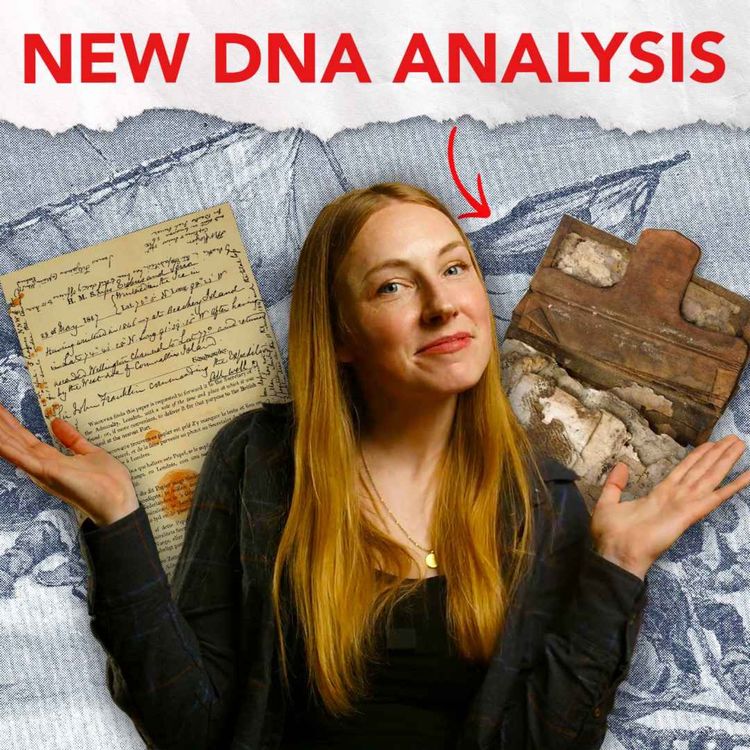
Have archaeologists just solved the mystery of the Franklin Expedition?
Season 1, Ep. 16
•
The Franklin Expedition is considered one of the worst exploration disasters in history. After 170 long years, more scientific evidence is coming out to help figure out what actually happened to these men.
In today's episode, new DNA evidence is found from the infamous Franklin Expedition, 2,000-year-old Roman bread, and a Roman well made of wood found at Rolls-Royce: Giselle has three exciting new stories in the world of archaeology to share with you!
More episodes
View all episodes
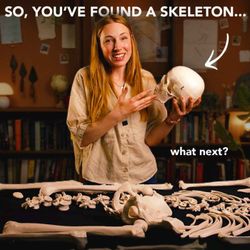
16. How archaeologists analyse human remains
22:20||Season 1, Ep. 16What can you learn about a person from their skeleton? What do you do if you find a dead body? And how much do your bones really reveal about your life, health, and death? In today's video, Giselle (with the help of Patrice) walks you through how you can become an osteologist too by learning to read bones!Breaking down the expert forensic techniques used on dig sites and police cases to analyze human remains, Giselle reveals how specialists determine age, sex, and stature, identify ancient diseases like scurvy and rickets, and detect gruesome trauma like sword wounds and decapitations! You can become a certified Dirt Nerd by becoming a channel member here: https://www.youtube.com/channel/UCCJyzOQzeHJfZJMZ9-r_h3A/join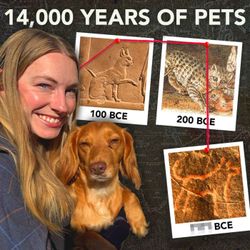
15. The Archaeological History of Pets
24:01||Season 1, Ep. 15Humans have had beloved animal companions for longer than you think! When did humans start treating animals as true family? Today, Giselle explores the deep, thousands-of-years-old history of human-pet relationships. From 14,000-year-old puppies nursed through severe illness to the oldest cat with a name, the archaeological record proves that our bond with animals goes far beyond work and utility!Thank you to History Hit for sponsoring this video! Sign up to History Hit and start watching today: https://eu1.hubs.ly/H0gFQZ50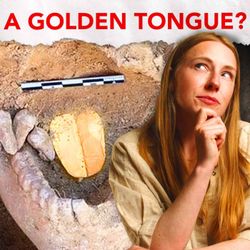
14. Why Do These Egyptian Mummies Have Gold Tongues?
25:56||Season 1, Ep. 14Why were ancient mummies buried with golden foil tongues inside their mouths? What hidden Iron Age secrets lie trapped inside a fused 2,000-year-old block of soil and copper? And how did a metal detectorist in Norway stumble upon the largest Viking silver hoard discovered in over a century? In today’s video, Giselle digs deep into three remarkable archaeological breakthroughs that are reshaping our understanding of the ancient world. Join Giselle and historian Tristan Hughes (host of ‘The Ancients’ podcast) to discuss “one of the most amazing discoveries in Britain”! You can become a certified Dirt Nerd by becoming a channel member here: https://www.youtube.com/channel/UCCJyzOQzeHJfZJMZ9-r_h3A/joinSource Materials:AlamyEgyptian Ministry of Tourism and AntiquitiesAnne Engesveen, Innlandet County CouncilInnlandet County CouncilMay-Tove Smiseth, Innlandet County Council1,700-year-old sock by Manchester Museum (https://multilingualmuseum.manchester.ac.uk/object/1700-year-old-sock/) License: CC 4.0 International Attribution https://creativecommons.org/licenses/by/4.0/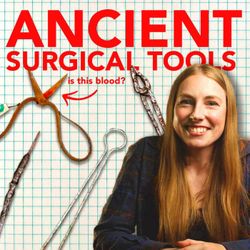
13. These artefacts changed everything we knew about ancient doctors
22:39||Season 1, Ep. 13What are the greatest archaeological discoveries in medicine? In today's episode, Giselle breaks down how archaeologists have made groundbreaking discoveries in revealing how doctors practiced surgery thousands of years ago. From a 2,000-year-old skeleton unearthed in Hungary with a complete set of Roman surgical tools to a perfectly preserved doctor's toolkit found in the ruins of Pompeii, these remains offer an incredible look into how medicine was practiced in the ancient world.What are the greatest archaeological discoveries in medicine? In today's episode, Giselle breaks down how archaeologists have made groundbreaking discoveries in revealing how doctors practiced surgery thousands of years ago. From a 2,000-year-old skeleton unearthed in Hungary with a complete set of Roman surgical tools to a perfectly preserved doctor's toolkit found in the ruins of Pompeii, these remains offer an incredible look into how medicine was practiced in the ancient world. You can become a certified Dirt Nerd by becoming a YouTube channel member here: https://www.youtube.com/channel/UCCJyzOQzeHJfZJMZ9-r_h3A/join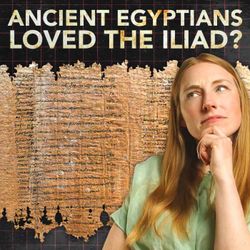
12. Why Was This Mummy Buried With Homer's Iliad?
21:05||Season 1, Ep. 12Was the mystery of the Neolithic population collapse caused by an ancient plague long before the Black Death? Join archaeologist Giselle as we explore three revolutionary archaeological discoveries that are changing our understanding of ancient burials, Greco-Egyptian mummification, and prehistoric epidemics.Thank you to History Hit for sponsoring this video! Sign up to History Hit and start watching today: https://eu1.hubs.ly/H0gFQZ50 You can become a certified Dirt Nerd by becoming a channel member here: https://www.youtube.com/channel/UCCJyzOQzeHJfZJMZ9-r_h3A/join--Source Materials:Images & Videos Courtesy of AlamyEgyptian Ministry of Tourism and AntiquitiesEygpt Exploration Society / Faculty of ClassicsUniversity of Oxford & Oxford Cotswold ArchaeologySeersholm, F.V., Sjögren, KG., Koelman, J. et al. Repeated plague infections across six generations of Neolithic Farmers. Nature 632, 114–121 (2024). https://doi.org/10.1038/s41586-024-07651-2UB_IPOA / Professor Ignasi-Xavier Adiego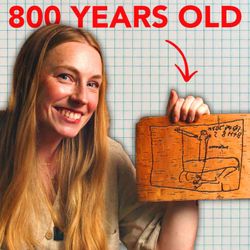
Archaeologist Recreates 800-Year-Old Medieval Child's Drawings
20:21|In 1951, archaeologists in Russia made a startling discovery in Novgorod: over 1,200 incredibly preserved birch bark letters dating back to the 12th century. Among these 800-year-old artefacts are the charming drawings and schoolwork of a six-year-old boy named Onfim. These rare texts changed what we know about medieval literacy, revealing that everyday people—and children—were reading and writing long before paper became common. Join Giselle as she investigates these rare remains and attempts to recreate an 800-year-old birch bark drawing herself!Thank you to History Hit for sponsoring this video! Sign up to History Hit and start watching today: https://eu1.hubs.ly/H0gFQZ50
10. The Bizarre Victorian Craze For Mummy Unwrapping Parties
17:11||Season 1, Ep. 10Why did Europeans spend centuries eating ancient Egyptian mummies? Today, Giselle delves into the dark history of Europe’s obsession with Ancient Egypt, from medieval apothecary remedies to the high-society mummy unwrapping parties of Victorian London.Learn the true story behind the discovery of King Tutankhamun’s tomb by Howard Carter, how Harry Burton’s iconic photography shaped modern Egyptology, and how the legend of the Pharaoh's Curse forced archaeologists to abandon tomb raiding in favour of modern scientific preservation.