Share
Tech and Science Daily | The Standard
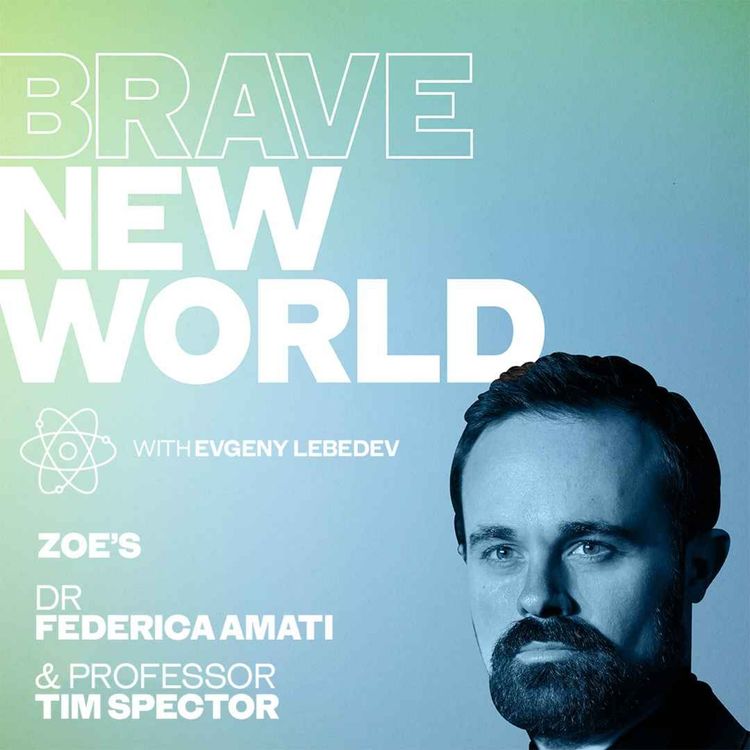
Professor Tim Spector and Dr Federica Amati on Brave New World (Preview)
On our sister podcast Brave New World, Host Evgeny Lebedev is joined by Professor Tim Spector and Dr Federica Amati — two of the leading scientific voices behind personalised nutrition company ZOE — to rethink everything we’ve been told about food. From the myths around “good” and “bad” fats to calorie-counting obsessions, they explain why so much nutritional advice is outdated, oversimplified, and in some cases actively harmful. They also explore the impact of ultra-processed foods on gut health, question whether breakfast really is the most important meal of the day, and unpack how time-restricted eating could help optimise daily health.
Here’s your special preview. To hear the full episode, just search Brave New World Evening Standard on your podcast app.
More episodes
View all episodes
Is it easier than ever to build a start up now? With AXA Startup Angel Competition judges
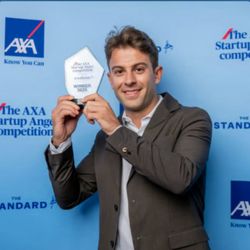
20:52||Season 1Small and medium-sized enterprises accounted for 99.9% of the UK’s 5.7 million new companies last year. So what does it really take to build a business from scratch today, and how easy is it to secure funding?In this episode, host Tamara Kormornick sits down with Raphael Sofoluke, the founder of the UK Black Business Show and UK Black Business Week, and Izzy Obeng, the founder and CEO of Foundervine. Both guests are on the judging panel for the AXA Startup Angel Competition from AXA Business Insurance - in partnership with the Standard - and in a couple of months they will select impressive entrepreneurs to win top prizes, including £25,000, expert mentoring, plus business insurance for a year. Together, they discuss what it takes to be a founder, including the most common mistakes, tips on how to impress investors, and how to build a supportive business network that pays dividends in the long run.Competition entries close on 21 June 2026. For more information and to enter this year's AXA startup Angel competition, visit https://axastartupangel.standard.co.uk/
Pesticide “Safe Levels” Questioned, SpaceX Falcon Heavy Scrubbed, and Diablo IV’s Lord of Hatred Lands — Al’s Final Episode
05:57||Season 1It’s the final show with Alan Leer, and we’re not going out quietly. A major study is mapping pesticide exposure against cancer hotspots and raising awkward questions about what “safe” even means when chemicals mix in the real world. Meanwhile SpaceX tries to get Falcon Heavy back up, but the weather does what it does. Back home, London gets a proper academic flex out of UCL, and in gaming, Diablo IV drops Lord of Hatred — the kind of expansion that eats your evening and asks for seconds. For the full reads, it’s all on standard.co.uk — and cheers for listening.
London’s new Imperial–Lenovo AI hub, Apple’s iPhone privacy patch, and Nintendo hit with a tariff refund lawsuit
06:05||Season 1Al’s on for your Monday commute as White City gets a fresh AI flex — Imperial and Lenovo are launching a new London AI Technology Centre aimed at turning big-model theory into real deployments. Then we pivot to your iPhone, because Apple’s patched a privacy flaw tied to message notifications that really shouldn’t have been hanging around. And in gaming, Nintendo’s dealing with a class-action headache as gamers argue tariff refunds should trickle down to customers — not just sit on a balance sheet. Plus, Motorola’s teasing a new Razr launch this week, because foldables refuse to die and honestly… fair enough.
London recycling robots bought, volcanic lightning explained, Cisco’s quantum switch, Assassin’s Creed Black Flag Resynced, and DJI Lito drones
06:05||Season 1Al’s in your ears for the Friday commute, because London’s recycling future just got a bit more robotic — Imperial-linked Recycleye has been acquired, and the bin-sorting glow-up continues. Then it’s proper science cinema: researchers get closer to explaining why volcanoes throw lightning tantrums mid-eruption. After the break, Cisco shows off a universal quantum switch prototype — basically plumbing for the quantum internet — and in gaming, Ubisoft finally leans into the “we know you know” era with Assassin’s Creed Black Flag Resynced. Plus, DJI drops new beginner drones with UK pricing that’s dangerously convincing. More on all of it at standard.co.uk
Fleming Centre approved in Paddington, UK ramps up AI cyber defence, and Xbox teases new Discord Game Pass perk
06:34|Alan Leer in your ear for the Thursday commute, because London’s just green-lit a new research hub in Paddington aimed at taking on antimicrobial resistance — the superbug problem that makes modern medicine quietly terrifying. Then it’s CyberUK season: ministers want AI companies helping build national cyber defence, while security chiefs warn the worst threats are coming from hostile states. After that, science goes full sci-fi with extreme laser work, plus a space project you can join from your sofa — Euclid wants your eyes on gravitational lenses. And in gaming, Xbox is teasing another Discord link-up for Game Pass. More on everything at standard.co.uk — and follow Tech and Science Daily from The Standard for your weekday hit.
PlayStation age verification hits the UK, UCL bowel cancer trial follow-up, and London’s Open Science week at the Crick
06:15||Season 1London’s open-science crowd takes over the Francis Crick Institute, UCL and UCLH share a seriously encouraging bowel cancer trial follow-up, and Sony starts nudging UK PlayStation users toward age verification ahead of June. Plus, Oppo’s next flagship tees up its UK arrival, and Fallout 76 gets its latest tune-up. Read more at standard.co.uk — and follow Tech and Science Daily from The Standard for your weekday briefing.
London Parkinson’s gut-bacteria clue, UK robotics adoption hubs, Hubble’s Trifid Nebula anniversary
04:31||Season 1Al’s on the mic with a tight commute sprint: London-led researchers say gut bacteria could help flag Parkinson’s risk years before symptoms — then it’s a UK move to get robots out of the lab and into actual workplaces, with “one-stop shop” adoption hubs. After the break, Hubble celebrates 36 years with a gorgeous Trifid Nebula update. More at standard.co.uk — follow Tech and Science Daily from The Standard for your weekday briefing.
BAFTA Games winners in London, Tesco’s QR-code barcodes, Breakthrough Prize gene therapy, and a new clue to finding rare earth minerals
04:45||Season 1Al’s back with a tight commute sprint: London rolls out the red carpet for the BAFTA Games Awards, as Clair Obscur: Expedition 33 nabs Best Game and Dispatch hoovers up the craft gongs. Then Tesco quietly tries to bin the barcode — swapping in QR codes on sausage packs, because even your weekly shop is basically software now. We’ve also got a proper science win as Luxturna’s sight-restoring gene therapy team bags a Breakthrough Prize, plus a geology breakthrough that could help locate the rare earth minerals powering everything from phones to clean tech. Read more at standard.co.uk — and follow Tech and Science Daily from The Standard for your weekday briefing.
OpenAI’s London office move, UK emergency-response robots, and Pragmata finally launches
06:50||Season 1Al’s in your ears with a proper commute sprint: OpenAI locks in a permanent London office for 2027, the UK trials robots for the kind of hazardous incidents you really don’t want humans walking into first, and a major immunity study hints at how the post-Covid landscape could shape the next outbreak response. After that, gaming gets loud — Pragmata finally lands — and Fortnite quietly opens up Save the World for free. Plus, DJI teases the next Osmo Pocket, because London pavements are basically a stabilisation test course. More on everything at standard.co.uk — and follow Tech and Science Daily from The Standard for your weekday briefing.