Share
Talking Techniques
AI & Antibodies miniseries | Balancing binding affinity and therapeutic practicality
In episode two of our AI & Antibodies mini-series, we speak to Ryan Emerson, Senior Vice President of Data Science at A-Alpha Bio, to discuss AlphaBind, A-Alpha Bio’s antibody-antigen binding-affinity prediction model.
We discuss how this model was trained, how it operates and how it has enabled researchers to test mutations designed to optimize an antibody candidate for critical quality attributes computationally, assessing their likely impact on binding affinity, before returning to the wet lab. The conversation also explores the future of AI in antibody engineering and the critical role of high-quality data in advancing the field.
[02:20] Current challenges in antibody sequence design
[04:20] Presenting AlphaBind
[08:40] Demonstrating AlphaBind’s effectiveness
[11:40] Benefits of AlphaBind and it’s applications
[16:05] How to make the most of AlphaBind
[19:25] Current use of AlphaBind
[23:00] Predictions for the impact of AI in antibody engineering
[25:40] A brief detour into the uses of AI in drug design (See this story for more detail)
[26:45] What wish could be granted to improve AI in antibody design?
More episodes
View all episodes
6. AI & Antibodies miniseries | The series concludes: our review with Guest Advisor Pin-Kuang Lai
10:41||Season 8, Ep. 6In this final episode of our miniseries covering the mAbs journal article collection on artificial intelligence and machine learning in antibody development, we speak to Pin-Kuang Lai, Assistant Professor at Stevens Institute of Technology and co-Guest Advisor for the collection.Pin-Kuang reflects on the remarkable success of this collection, considering why it has proven so popular, detailing the key themes that emerged throughout it – from the rapid adoption of deep learning and foundation models to the growing emphasis on developability prediction and data integration – and highlighting how the field has changed even over the course of the collection. Catch this short episode to hear more about Pin-Kuang's vision of AI use in the near future, where multi-modal AI frameworks, physics-informed models, and AI as an experimental planning partner become a mainstay in the development of safer, more effective antibody therapeutics.Contents[00:00] Introductions[01:40] Exploring the landscape of AI in antibody discovery and the aims of the article collection[03:15] Achieving the aims of the article collection[04:40] Highlights from the collection[06:00] Key themes from the article collection[07:10] Areas to explore further[08:10] What is next for the field of AI in antibody therapeutic development?
5. AI & Antibodies miniseries | Nanobody thermostability prediction and the great data challenge
29:33||Season 8, Ep. 5In this episode, the fifth in our miniseries covering the mAbs journal article collection on artificial intelligence and machine learning in antibody development, we speak to Aubin Ramon, Postdoctoral Research Associate in the Sormanni Lab at Imperial College London (UK), about his paper in the collection: Prediction of protein biophysical traits from limited data: a case study on nanobody thermostability through NanoMelt.Aubin addresses one of the most persistent challenges in applying AI to specialized fields like antibody therapeutics: the scarcity of high-quality training data. Through the development of NanoMelt, he demonstrates how a combination of sophisticated modeling approaches, general protein stability prediction models, and robust validation pipelines can achieve meaningful predictions with training datasets of just 600-700 sequences.Together, we explore why data quality often matters more than quantity, the counterintuitive finding that general protein models can outperform antibody-specific ones, and how NanoMelt is already being applied in synthetic library design and therapeutic development, with exciting improvements on the horizon in NanoMelt 2.Contents[01:40] The data availability problem in AI and a novel solution for it[06:05] Achieving accuracy with small data sets[09:05] Is this model accurate enough to be truly useful?[12:50] General vs highly specific models for themostabilty prediction[15:40] The limits of just generating more data[19:20] Adapting the model for more complex/full length antibodies[21:05] Advice for using NanoMelt for your own work[24:15] Applications of NanoMelt in current research and announcing NanoMelt2
4. AI & Antibodies miniseries | Designing smart antibodies in the age of AI
19:58||Season 8, Ep. 4In this episode, the fourth in our miniseries covering the mAbs journal article collection on artificial intelligence and machine learning in antibody development, we speak to Andrew Buchanan, Senior Vice President of Discovery at a biotech company currently in stealth mode, and former Principle Scientist at AstraZeneca, about his paper in the collection: How to think about designing smart antibodies in the age of GenAI: integrating biology, technology, and experience.Andrew provides a holistic overview of how AI and machine learning are transforming the design of smart antibodies – the more complex evolution of monoclonal antibodies that can bind multiple receptors and utilize different mechanisms of action. Together, we explore the critical role of establishing robust candidate drug target profiles (CDTPs), the current capabilities and limitations of AI in structural antibody design, and how the simultaneous rise of multi-specificity and AI-driven approaches is reshaping the field.Contents[02:10] Exploring the simultaneous rise of AI and multi-specificity in therapeutic antibody design[04:20] Establishing a candidate drug target profile with AI[06:50] Limitations of AI in the development of a CDTP[08:20] AI in practical therapeutic antibody design[10:45] How industry and academia can work together to overcome current limitations in the use of AI in antibody therapeutic design[13:45] Exciting recent applications of AI in antibody design[16:32] Predictions for the next 5 years of AI in antibody design[18:10] If I could grant you a wish to improve the abilities of AI in antibody development, what would it be?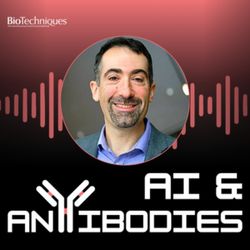
3. AI & Antibodies miniseries | Reducing antibody viscosity to improve subcutaneous delivery
28:27||Season 8, Ep. 3In Episode 3 of our AI in Antibodies mini-series, we speak to Peter Tessier, the Albert M. Mattocks Professor of Pharmaceutical Sciences and Chemical Engineering at the University of Michigan, about his groundbreaking work in the application of machine learning to predict and improve the formulation and delivery of therapeutic antibodies. Subcutaneous delivery of antibody therapeutics offers patients the convenience of at-home administration, but high-concentration formulations create viscosity challenges that limit practical delivery. Here, Peter explains how his team developed machine learning models that predict antibody viscosity and self-association, reveals surprising discoveries about formulation properties and shares practical guidance for antibody developers.Contents:[01:00] Pros and cons of subcutaneous delivery [03:30] Favorable antibody characteristics for subcutaneous delivery[05:20] Predicting viscosity[10:10] Zooming in on self-association for antibodies[15:10] Predicting sell-association based on antibody characteristics and external factors and formulation properties.[22:00] Advice for antibody therapeutics developers[24:45] Closing remarks and final requests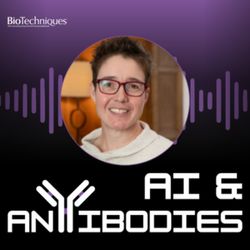
1. AI & Antibodies mini-series | An artificial approach to humanization
15:16||Season 8, Ep. 1We have teamed up with the journal mAbs to cover their article collection on artificial intelligence and machine learning in antibody development. In this, the first episode of the series, we speak to Charlotte Dean, Professor of Structural Bioinformatics in the Department of Statistics at the University of Oxford, about her paper in the collection: Humatch - fast, gene-specific joint humanization of antibody heavy and light chains.Charlotte takes us through a critical issue in the development of antibody therapeutics – humanization – and reveals how new AI-based software can improve our solutions to this long-held problem in the field.Contents[0:47] Please can you tell us a little bit about yourself and your lab?[1:16] You authored a paper in the article collection, Artificial Intelligence and Machine Learning in Antibody Development. What was it that attracted you to that collection? And why did you think it was important to contribute to?[2:36] What other antibody characteristics make for a good drug?[3:36] Why do we need to humanize antibodies? How hard is it to achieve? How many drugs or potential drug candidates are limited by a lack of humanization?[5:43] Can you tell us a bit more about Humatch? How does it work and how does it deliver this sort of humanization?[7:10] Do you have any advice for anyone who might be using Humatch for the first time or is looking to implement it in their own research?[9:18] Your paper was released at the end of 2024. Have you been able to implement this tool in your own research or seen any particularly exciting applications of this platform in the wider research space?[10:20] What are your predictions for the impact of AI in this space in the next five years?[12:20] If there was one thing that you could ask for to help advance the design of antibody therapeutics, what would it be?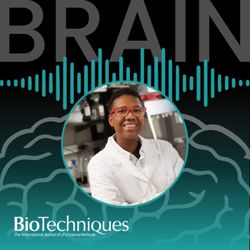
3. The BRAIN miniseries | Exploring the neuropathogenesis of HIV and mentoring the next generation of scientists
37:30||Season 7, Ep. 3In our third episode of the BRAIN (Black Researchers Addressing Inequalities in Neuroscience) podcast miniseries, we're exploring the research being done at the intersection of neuroscience, immunology and pharmacology to investigate HIV. Our guest is Dionna Williams, an Associate Professor at Emory University whose research centers on the neuropharmacology and neuroimmunology of HIV, identifying mechanisms by which HIV antiretroviral therapies cross the blood-brain barrier, the capacity of the brain as a drug-metabolizing organ, and the impact of substance use on treating the brain during HIV. Dionna's group is also evaluating whether cannabinoids can be used to modulate immune responses to HIV and restore neurologic health. Furthermore, Dionna incorporates studies evaluating biologic contributors that perpetuate HIV health disparities into their research program. Beyond research, Dionna is passionate about supporting trainees from marginalized groups in their scientific journeys.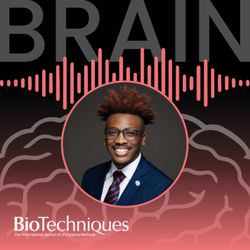
2. The BRAIN miniseries | Investigating the link between vascular health and neurodegeneration in underrepresented populations
32:57||Season 7, Ep. 2In our second episode of the BRAIN (Black Researchers Addressing Inequalities in Neuroscience) podcast miniseries, we explore the lab techniques and interdisciplinary approaches being leveraged to understand how vascular health impacts neurodegeneration, particularly in underrepresented populations. Our guest is Cellas Hayes, a neuroepidemiologist and postdoctoral researcher at Stanford University School of Medicine (CA, USA), whose work traverses brain aging, Alzheimer's disease and vascular health, with a particular focus on blood-based biomarkers, white matter disease and cognitive aging across diverse populations. Using large, deeply phenotyped cohorts, Cellas studies how different modifiable and cardiometabolic risk factors shape brain health long before clinical dementia emerges. Beyond research, Cellas is strongly engaged in mentorship, grant writing and building equitable pathways in aging and neuroscience research.
1. The BRAIN miniseries | Meet the neuroengineer building brain-monitoring devices and thriving communities
17:55||Season 7, Ep. 1In our first episode of the BRAIN (Black Researchers Addressing Inequalities in Neuroscience) podcast miniseries, we dive into the research world of neuroengineering to gain an insight into the innovative devices being developed to monitor neurological disorders in addition to highlighting organizations that are playing a crucial role in supporting Black academics. Our guest is De-Shaine Murray, a Wu Tsai Institute Postdoctoral Fellow at Yale University (CT, USA), working at the intersection of biomedical engineering and neuroscience to make devices to monitor disorders such as traumatic brain injury, stroke and brain cancers. He is also interested in using these same techniques for sweat monitoring, women's health, and lab-on-a-chip applications. His academic career began at the University of Birmingham (UK) in chemistry, but has since moved into neurotechnology and bioengineering at Imperial College London (UK), the University of Cambridge (UK) and Yale. During that time, De-Shaine has been an instrumental community builder, founding organizations to support Black students in academia, participating in outreach and using his voice to create change in neuroscience.