Share
Talk Design
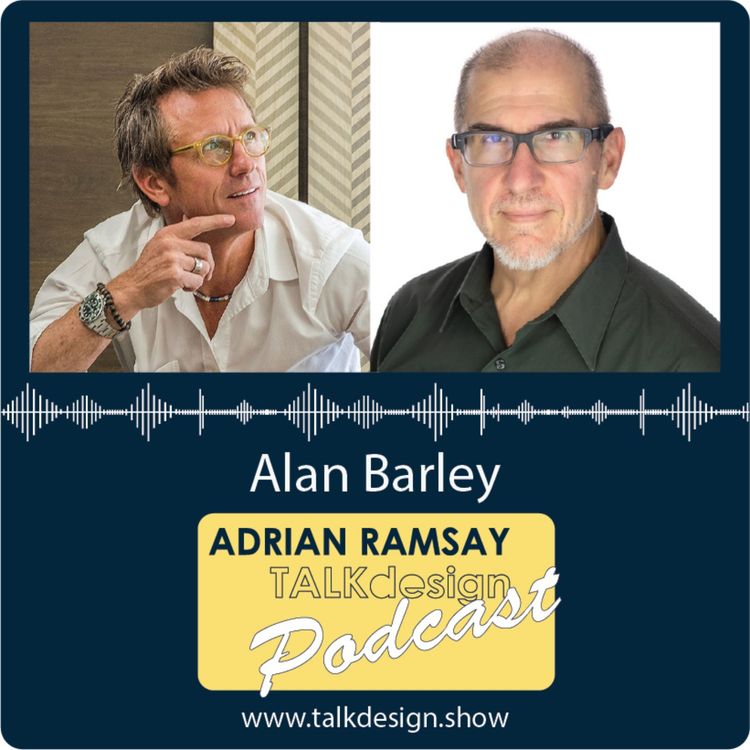
Alan Barley
Alan Keith Barley is the Co-owner and Principal of Barley|Pfeiffer Architecture. Barley|Pfeiffer Architecture was founded in 1989 by principals Alan K. Barley and Peter L. Pfeiffer. Bringing different strengths to bear, Alan’s ability to hear what clients want and his ability to use innovative ideas to create elegant spaces compliment Peter’s strong building-science background and practical approach to construction. BPA is a LEED-certified firm that practices Green By Design. Believing that 90% of effective green building decisions happen in the first 10% of the design process supports the importance of regionally appropriate design decisions and building systems integration. Rather than simply making sustainable material choices we go beyond the present green building paradigm.
Alan’s career began in San Antonio, working for local firms while an architectural student at San Antonio College. He was fortunate to work with well-known architects Richard Mogas and Joe Stubblefield who mentored him for several years. Under their tutelage, he developed a keen appreciation for utilizing regionally appropriate natural materials which has imbued his work with a distinctively central Texas flare. This background reinforces the Barley|Pfeiffer Architecture commitment to the number one premise of sustainable architecture – regionally appropriate design.
Alan continued his education at the University of Texas at Austin, graduating in 1985 with a Bachelor of Architecture Degree. To add depth to his commercial experience, Alan joined the Austin Group Architects in 1986 where he helped design and produce several commercial offices, warehouse structures, business parks, and apartment complexes. He was one of the principal designers in the Cedar Park City Hall competition, winning first place.
Venturing on his own in 1987, Alan completed projects for noted games software designer Richard Garriott, and the World of Pentecost Sanctuary expansion. He joined forces with Peter Pfeiffer in 1989 to form Barley|Pfeiffer Architecture. Since then, the firm’s architectural projects have been featured nationally in Fine Homebuilding, USA Today, Better Homes and Gardens, Natural Home & Garden, Environmental Design & Construction as well as in regional publications including Texas Architect, the Dallas Morning News, Austin Monthly, the Austin American Statesman, and Tribeza.
To date, more than a third of all the highest-rated (Five Star) homes in the history of the Austin Green Building Program – the nation’s most established – have been designed by Alan.
More episodes
View all episodes
Dr. Masi Reynolds—The 7 Keys to Unlocking Faster Recovery
02:02:46|What if your MRI is showing a problem, but your body isn't feeling it? In this episode of Talk Design, I welcome Dr. Masi Reynolds, an orthopedic surgeon and sports medicine physician who's redefining how we think about injury, recovery, and long-term performance. Dr. Reynolds is fellowship-trained in sports medicine and advanced arthroscopy, and he works with athletes at every level—from Red Bull-sponsored athletes to professional surfers and mountain bikers—while also treating everyday patients who simply want to keep moving.What makes this conversation so empowering is Dr. Reynolds's shift from a purely surgical, reactive approach to a holistic, proactive one. He explains why the traditional "siloed" model of healthcare—treating one joint or one symptom in isolation—misses the bigger picture. Through powerful examples, he reveals that imaging like MRIs often tells a different story from what patients actually feel, which means healing requires more than just fixing what's broken. It requires understanding the whole person: cellular health, mindset, nutrition, recovery, and movement patterns.Throughout the episode, Dr. Reynolds breaks down his seven core cellular domains, explaining how everything from mitochondrial health to gut microbiome to joint function works together. He shares how this philosophy shaped North Performance, his supplement company built with Mike Lucas and other founders, which simplifies the overwhelming world of supplementation into two effervescent tablets that support your foundation—so you can build from there. Whether you're an elite athlete, a weekend warrior, or someone just starting to prioritize your health, this episode offers a clear, practical framework for showing up better in your own life.⏯️ TIMESTAMPS02:15 - The Mindset of High Performers vs. Everyday Athletes07:40 - Dr. Masi Reynolds: From Orthopedic Surgery to Proactive Medicine14:20 - The Problem with Siloed Healthcare: Why Treating Single Joints Fails22:10 - MRI vs. Reality: Why Your Scan Doesn't Tell the Whole Story31:05 - Shifting from Reactive Repair to Longevity & Performance40:15 - Cellular Health & the Missing Link in Recovery51:30 - The 7 Core Cellular Domains Breakdown01:05:20 - How Gut Health, Inflammation, and Joint Function Connect01:18:45 - Cutting Through the Supplement Noise01:30:10 - Designing North Performance: Simplifying Your Daily Foundation01:42:15 - Practical Daily Movement & Recovery Strategies01:53:00 - Showing Up Better: Redefining Health, Performance, and Life02:00:45 - Closing Thoughts & Architectural Adventures with Adrian Ramsay
Shaun Lockyer—What Happens When a Master Architect Finally Designs His Own Home
01:54:21|What happens when award-winning architect Shaun Lockyer designs his own home? Discover his 80/20 design rule, client dynamics, and creating spaces that make your heart sing.In this episode of TALKdesign, I sit down with my good friend Shaun Lockyer (Principal of Shaun Lockyer Architects and AIA Fellow) inside his personal Brisbane sanctuary, Judy's House. Together, we explore what it truly takes to craft a home that supports the way you live, calms the inner critic, and reflects your personal story.From viewing design as "beautiful maths" to the 33% project equation, Shaun shares 30 years of wisdom on why great design is about human connection, intentional details, and letting go of ego to create something enduring.✨ WHAT YOU’LL DISCOVER IN THIS EPISODE:• The 80/20 Design Rule: Reengineering 80% of what works while innovating 20% (the Porsche 911 approach)• The 33% Equation: Why the client, builder, and designer must work in harmony for true project success• "Beautiful Maths": How Shaun's analytical background transforms functional details into poetic spaces• The Ensuite Sanctuary: How intentional design turns daily routines into moments of peace and quiet• Letting Go & Trust: Why surrendering control to master craftspeople yields extraordinary results
Why This Architect's "Messy" Sketches Win Clients—Hamish Muir
01:13:21|How do hand-drawn sketches help architects win clients? In this episode, Hamish Muir of Mason & Wales Architects explains how "messy" sketches foster vulnerability and empathy, allowing clients to feel more engaged in the design process than they do with rigid CAD renders.Discover the strategic benefits of working in scale and why traditional drawing boards remain a powerhouse in modern architectural firms. We dive deep into the design of Hawk’s Nest House, exploring how to balance extreme South Island climates with a "resort-style" family legacy home. This session provides a masterclass on navigating client briefs, managing multi-generational needs, and the importance of "very good" architecture over outlandish design.⏩ EPISODE CHAPTERS:02:21 - Hamish Muir’s journey: Growing up in an architect’s life04:33 - The disconnect between architecture school and practice08:47 - The responsibility of siting a house: "Don’t bugger it up"14:12 - Why young architects lose proportion by not working in scale25:12 - Keeping clients in the conceptual phase longer with pencil39:40 - The rising cost of what we build vs. the cost of building42:55 - Case Study: Hawk’s Nest House & Lake Wakatipu design55:10 - Incorporating North American and Australian lifestyle cues01:03:51 - Designing for "everything to someone"01:12:03 - Join an Architectural Adventure with Adrian Ramsay
The THREE THINGS Every Home Renovation Needs with Nick Horvath
01:37:30|How can you renovate your home without losing your budget, sanity, or the design magic?In this episode of TALKdesign, Adrian Ramsay sits down with London architect Nick Horvath (co-founder of Momo and Co Design) to uncover the secrets of a successful build.Nick shares his journey from high-end corporate architecture to designing luxury ski chalets and London additions, revealing why traditional education often fails homeowners in the real world. We dive into the Build Ready framework—a structured approach to eliminating grey areas, gaining budget clarity, and choosing the right builder before you even start digging.In this episode, you’ll learn:✅ Why asking the right questions early saves thousands in the long run.✅ How to balance "strict financial boundaries" with the design elements that bring daily joy.✅ The hidden traps that cause most home builds to derail.Adrian and Nick also explore the art of balancing budget discipline with design impact, showing homeowners how to identify key features that deliver maximum emotional value without compromising overall financial health. Grounded in practical wisdom from over two decades in the design industry, this episode provides actionable strategies for anyone looking to execute a home transformation with total confidence and clarity.⏩ EPISODE CHAPTERS:03:20 - Meet Nick Horvath: From High-End London Design to Expert Panels06:40 - The "Aha" Moment: Seeing Developer Margins and Switching Gears12:00 - How 20-Somethings are Changing the Luxury Property Market16:10 - The Hidden Value of Storytelling and Physical Presence in Design22:00 - Working Globally: Moving to Canada While Managing UK Projects25:50 - The Power of Video Presentations and Priming Your Clients30:40 - Guiding the Dream: Why Design is a Journey of Discovery38:00 - Case Study: Transforming a Dark London Basement into a Light-Filled Home49:00 - Historical Secrets: Finding Wine Tunnels and Coach House History55:00 - Introducing "Build Ready": A Framework for Renovation Success1:10:00 - Achieving Budget Clarity and Avoiding "Subterranean" Feelings1:21:00 - How to Vet Your Builder and Avoid On-Site Red Flags
Helen Thompson - The Architecture Lesson Hidden in Desert Homes | TALKdesign #Podcast
01:44:02|On this episode of TALKdesign, Adrian Ramsay sits down with celebrated design author Helen Thompson for a captivating journey through the stories, landscapes, and creative minds that shaped American Desert Modernism. Long before writing defining books like Marfa Modern, Texas Made Texas Modern, Santa Fe Modern, and Private Aspen, Helen was an imaginative only child pulling clothes from her closet to build miniature room structures. That early curiosity led her to investigative journalism, where a single magazine assignment inside an Austin home sparked a lifelong passion for discovering what makes people fall in love with built spaces.Throughout their conversation, Helen shares rich stories from her career, including an adventurous eight-hour drive across West Texas with photographer Casey Dunn to capture Marfa’s remote architectural gems just as the town was becoming an international art destination. She uncovers the cultural forces behind Western design, from Donald Judd’s insistence on site-specific art to the Bauhaus movement brought to Aspen by Walter Paepcke and Herbert Bayer. Adrian and Helen share a mutual appreciation for how rugged terrain, limestone aquifers, and pioneer heritage force designers to drop their ego and listen to what the land has to say.The dialogue turns delightfully personal when Adrian guides Helen through his 'My Emotional Floorplan' approach, discovering why her home bathroom serves as her ultimate private sanctuary for reading, reflection, and creative ideas. They reflect on how true luxury is never about constructing a massive monument to oneself, but about crafting an authentic environment that offers privacy, restoration, and emotional comfort. It is a warm, story-filled conversation celebrating the deep connection between human behaviour, personal history, and the places we call home.✅ EPISODE CHAPTERS:00:02:01 — Introducing Helen Thompson (Marfa Modern, Santa Fe Modern, Private Aspen)00:03:39 — The Global Cultural Impact of Prada Marfa00:04:22 — Helen’s Origin Story: From Texas Monthly Reporter to Architectural Writer00:07:27 — Marfa Modern & Site-Specific Design Philosophy00:09:20 — East vs. West: European Status Symbols vs. American Regional Modernism00:10:18 — Frank Lloyd Wright, Donald Judd & Designing for Light and Air00:16:16 — Photography vs. Experience: "Architecture Can’t Move; We Get It to Move"00:20:00 — Texas Regional Modernism & The 90-Year O'Neil Ford to Lake|Flato Legacy00:27:18 — Post-COVID Design, Outdoor Living & Dogtrot Breezeways00:37:40 — Emotional Floorplans: Masculine vs. Feminine Energy in Home Design00:45:33 — Land Whispering & The Geology of Site Selection00:51:39 — Santa Fe Modern & Deep Regional Roots in Desert Architecture01:04:32 — Private Aspen & The Bauhaus Migration to the American West01:11:00 — Architecture as Living Art: Creating for Truth Over the Marketplace01:17:28 — The Ideal Client-Designer Partnership: Curiosity, Self-Awareness & Push-and-Pull01:24:28 — Geopathic Lines & The Magnetic Energy of Santa Fe01:29:16 — Helen's Emotional Floorplan: The Bathroom as a Sacred Retreat & Creative Sanctuary01:40:00 — Closing Thoughts & Where to Find Helen’s Work📚 FEATURED BOOKS BY HELEN THOMPSON:• Private Aspen: Modernism in the Mountains —https://www.phaidon.com/en-int/products/private-aspen-modernism-in-the-mountains• Santa Fe Modern: Contemporary Design in the High Desert —https://www.phaidon.com/en-int/products/santa-fe-modern-contemporary-design-in-the-high-desert• Texas Made / Texas Modern: The House and the Land —https://www.phaidon.com/en-us/products/texas-made-texas-modern-the-house-and-the-land• Marfa Modern: Artistic Interiors of the West Texas High Desert —https://www.phaidon.com/en-us/products/marfa-modern-artistic-interiors-of-the-west-texas-high-desert
Travis Price - The Architect Who Got Approved In 28 Seconds
02:02:30|Welcome to the TALKdesign Podcast. Today, I have the absolute pleasure of sitting down with the incredible Travis Price. Travis is a Washington DC-based architect, philosopher, and explorer who has spent his life building spaces that deeply connect with the human spirit. We explore what it means to truly understand the spirit of place and how our homes can tell our deepest, most personal stories.Travis shares his journey from growing up in Georgia and lying under pine trees to coining the term "passive solar" and writing a book on conservation for the president. His career is a beautiful testament to seeing the world differently. He explains how he envisions buildings in the fifth dimension before he ever puts a pen to paper, and this approach allows him to create architecture that feels entirely alive. We also talk about how the land itself gives us clues, and when we listen closely, we can create spaces that integrate perfectly with nature.We dive into the story of his personal home, a stunning treehouse of rock hanging on a cliffside, and the fascinating way a single metaphor gained him instant approval from a strict historical committee. This conversation is a wonderful reminder that when we trust our intuition and jump, the net will appear. I hope this episode leaves you inspired to look at your own spaces with a renewed sense of wonder and possibility.
Jason Boyer - How Constraints Make Better Homes
01:51:22|Discover how embracing strict physical site constraints and moving from traditional open-plan layouts to an innovative "broken plan" design can unlock ultimate design freedom and preserve long-term property value.If you believe that great architecture should touch the soul and leave a permanent imprint on the people who inhabit it, this episode is required listening. In this conversation, I am joined by design-forward real estate developer Jason Boyer to deliver a masterclass on how physical site constraints can be leveraged to generate exceptional design breakthroughs. We place the focus directly on the shift from traditional open-plan residential layouts to the innovative concept of a "broken plan"—creating a space that feels right for you and allows a home to flow seamlessly from boundary to boundary while offering distinct pockets of absolute privacy and social scale.Core Architectural & Development InsightsThe "Broken Plan" Layout: Moving beyond traditional open-plan living to establish a design that connects with who you are, balancing shared social spaces with deep, acoustic privacy.The Four-Times Exit Formula: Unpacking the specific structural and financial metrics that govern high-end property development and land capitalization.Navigating Site Constraints: The precise engineering calculations used to depress living spaces into a sloped wash site, effortlessly working within a strict 20-foot municipal height limit while capturing eastern views of Camelback Mountain.Climate-Responsive Design: How intentional shade orientation, natural cooling breezes, and native vegetation transform a property into a responsive sanctuary that improves with age.Risk Mitigation & Asset ProtectionWe also discover a highly practical approach to asset protection and risk mitigation in real estate. Jason explains how retaining architectural documentation and establishing structured, programmed property management frameworks can protect long-term property values. Whether you are an aspiring developer looking to build your first investment capital pool or a homeowner wanting to optimize your primary suite layout, this conversation provides clear, actionable insights on the intersection of human biology, spatial control, and creating a place that feels deeply personal, functional, and alive.
How One Man Turned Crisis Into Purpose - Andrew White
02:05:40|What happens when a successful career suddenly takes a sharp turn, forcing you to rebuild your life from the ground up? In this captivating session of the Talk Design Podcast, Adrian Ramsay welcomes Andrew "Andy" White to discuss resilience, healing, and the power of authentic living. Moving from the UK to Australia with very little to his name, Andy eventually rose to become the National Teacher of the Year in 2014, only to find himself later confronting intense workplace adversity and a near-fatal bout of septic shock that changed his entire worldview.Instead of letting these profound struggles break him, Andy used his recovery as a catalyst to study human physiology and launch his growing movement, Leading Our Own Way. He shares raw, memorable stories from his health journey, explaining the exact physical and mental habits that allowed him to manage an autoimmune spine condition. Listeners will learn about his unique "morning smile" hack, the deliberate use of morning cold plunges to train the nervous system against anxiety, and the thermal regulations required to unlock restorative sleep cycles.The narrative expands into the workplace, showcasing how genuine human connection can completely transform struggling team dynamics. Adrian shares a powerful story from his own leadership past, illustrating how a simple, high-trust shorthand signaling system allowed an employee facing severe personal health battles to feel entirely seen, heard, and valued. This moving conversation serves as a beautiful reminder that true self-leadership and growth require breaking down broken concepts completely so that we can return to clean, foundational principles.
Alexander Josephson: The 5-Year Test That Built a Masterpiece
01:57:47|What does it take to create architecture that genuinely matters?In this episode of TALKdesign, Adrian Ramsay sits down with Alexander Josephson, co-founder of PARTISANS, for a wide-ranging conversation about creativity, resilience, politics, leadership, and the realities of architectural practice.Alexander shares his unconventional path into architecture, from a dyslexic and ADHD child growing up in Toronto to leading one of Canada's most recognised design studios. Yet this conversation quickly moves beyond biography and into the ideas that shape his work.Together they explore why architecture is fundamentally a political act, why great projects are never the result of a lone genius, and why the profession requires far more persistence than most people realise. From international competitions and visionary clients to the challenges of bringing ambitious projects into reality, Alexander offers a candid look at the forces that shape the built environment.The discussion also touches on sustainability, beauty, stewardship, AI, and the responsibility designers carry to leave places better than they found them.This is a thoughtful conversation about architecture, and equally about people, courage, collaboration, and the pursuit of meaningful work.