Latest episode
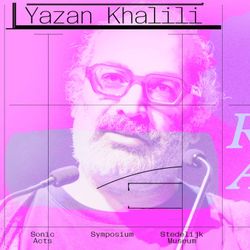
Yazan Khalili, 'Radio Alhara, a Communal Media'
30:53|Artist, researcher, and cultural activist Yazan Khalili presents the lecture about Radio Alhara, but his talk primarily focuses on cultural structures and organisations – institutional and other – how they are built, funded, maintained, managed, etc. Drawing on his role as co-founder of this Palestine-based radio station – and his artistic practice in which he examines institutions as politicised entities – he talks about how digital radio can function as a structure of cultural production. What can radio offer as an infrastructure of connectivity, solidarity, and cultural exchange?Radio Alhara emerged during the covid-19 lockdown as a way of staying connected across physical distance, growing through networks of friendship, trust, and shared labour. These relationships became part of its infrastructure, alongside a collective, non-individualised mode of listening that differs from the algorithmic and data-driven structures of social media. The concept of ‘communal media’ emerges from this position between conventional radio and social media, proposing digital media rooted in collective presence and shared infrastructures. The Sonic Liberation Front further demonstrates the potential of digital radio as an alternative network of connection, with stations around the world mirroring broadcasts from Palestine.-Sonic Acts Biennial 2026 was a citywide arts manifestation taking place from 5 February to 29 March across 23 locations in Amsterdam. Titled Melted for Love, the programme was visited by more than 21.000 people and featured cutting-edge performances, contemporary sound experiments, and multidisciplinary art by over 200 international artists.The Symposium, which took place at Stedelijk Museum Amsterdam on 28 February and 1 March 2026, brought together performances and lectures by Yuk Hui, Flavia Dzodan, Steve Goodman (Kode9), Eleni Ikoniadou, Salomé Voegelin, Ayesha Hameed & Aimée Theriot, Margarida Mendes, Yazan Khalili, pantea, Lawrence Abu Hamdan, Busher Kanj, Amr Mdah & Fabio Cervi, and ILYICH.→ Continue reading at 2026.sonicacts.comThis podcast is produced by Sonic Acts and realised as part of New Perspectives for Action, a project by Re-Imagine Europe, co-funded by the European Union.
More episodes
View all episodes
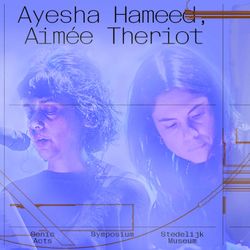
Ayesha Hameed & Aimée Theriot, 'Ex Aqua'
22:17|Ex Aqua is a live improvisational performance by theorist and poet Ayesha Hameed and musician Aimée Theriot. Their piece invites the audience into what Palestinian artist Bint Mbareh calls ‘aggressive listening’, exploring the concept of ‘exaqua’ – a term coined by poet M. NourbeSe Philip in Zong! to describe a watery equivalent of exhumation, or the act of reclaiming from the earth. Through poetry and sound, this reclamation process splinters and disperses, bearing witness to destruction on scales ranging from genocide to intimate grief and loss.Working with voice, sound, and improvisation, Hameed and Theriot create a space in which fragments of language and sound surface, overlap, and dissolve. Hameed’s engagement with water, displacement, memory, and the legacies of slavery meets Theriot’s practice of treating sound as a vibrational and sculptural medium. Together, they explore listening as a way of attending to what has been submerged, dispersed, or lost, allowing grief and remembrance to emerge through the unstable materiality of sound.Sonic Acts Biennial 2026 was a citywide arts manifestation taking place from 5 February to 29 March across 23 locations in Amsterdam. Titled Melted for Love, the programme was visited by more than 21.000 people and featured cutting-edge performances, contemporary sound experiments, and multidisciplinary art by over 200 international artists.The Symposium, which took place at Stedelijk Museum Amsterdam on 28 February and 1 March 2026, brought together performances and lectures by Yuk Hui, Flavia Dzodan, Steve Goodman (Kode9), Eleni Ikoniadou, Salomé Voegelin, Ayesha Hameed & Aimée Theriot, Margarida Mendes, Yazan Khalili, pantea, Lawrence Abu Hamdan, Busher Kanj, Amr Mdah & Fabio Cervi, and ILYICH.→ Continue reading about the Sonic Acts Biennial 2026 at 2026.sonicacts.comThis video is produced by Sonic Acts and realised as part of New Perspectives for Action, a project by Re-Imagine Europe, co-funded by the European Union.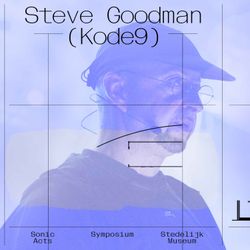
Steve Goodman (Kode9), 'Sonic Warfare 2026'
55:16|Drawing from his forthcoming text Notes on the Third Ear (to be published by Urbanomic in 2026), musician, artist, and theorist Steve Goodman (Kode9) updates latent themes from his influential book Sonic Warfare to reflect on the politics of vibration within, poised upon, and beyond thresholds of audibility. From sonic booms and drone warfare to acoustic detection and machine listening, Goodman traces an evolving ‘sonic ecology of fear’ in which sound becomes entangled with anticipation, prediction, and pre-emption.Moving between warfare, sound art, and technological listening, Goodman considers how the effects of sound extend beyond the initial event, shaping bodies, environments, memory, and perception. He examines how sounds can become atmospheres, how technological ears increasingly detect and anticipate threats, and how artists have sought to appropriate and transform the sounds of conflict. The lecture concludes with the ‘third ear’: a mode of listening that extends beyond conventional hearing into memory, anticipation, bodily sensation, and technological forms of sensing, asking whether, in an era of planetary machine listening, there is still a third ear – or whether we are already ‘all ears’.-Sonic Acts Biennial 2026 was a citywide arts manifestation taking place from 5 February to 29 March across 23 locations in Amsterdam. Titled Melted for Love, the programme was visited by more than 21.000 people and featured cutting-edge performances, contemporary sound experiments, and multidisciplinary art by over 200 international artists.The Symposium, which took place at Stedelijk Museum Amsterdam on 28 February and 1 March 2026, brought together performances and lectures by Yuk Hui, Flavia Dzodan, Steve Goodman (Kode9), Eleni Ikoniadou, Salomé Voegelin, Ayesha Hameed & Aimée Theriot, Margarida Mendes, Yazan Khalili, pantea, Lawrence Abu Hamdan, Busher Kanj, Amr Mdah & Fabio Cervi, and ILYICH.→ Continue reading about the Sonic Acts Biennial 2026 at 2026.sonicacts.comThis podcast is produced by Sonic Acts and realised as part of New Perspectives for Action, a project by Re-Imagine Europe, co-funded by the European Union.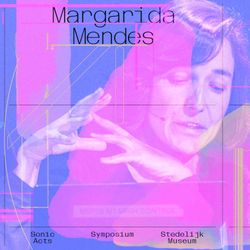
Margarida Mendes, 'Deep Time Soundings'
42:34|In her performative lecture Deep Time Soundings, researcher, curator, artist, and educator Margarida Mendes traces the rapidly changing ecology of Portugal’s Tagus River – a landscape marked by pollution, dam control, and eucalyptus monocultures that alter the river’s hydrology and desiccate surrounding lands. Developed with the Natural Contract Lab and in consultation with ProTejo, her research follows activists who monitor the river around Vila Velha de Rodão, an epicentre of environmental crime. Through field recordings, voice, and testimonies from river guardians, Mendes creates a multisensory account of an ecosystem in deep transformation, offering a study of environmental mourning and the fragile ties between landscape and community.Moving between geological deep time and the rhythms of rivers, bodies, and other forms of life, Mendes considers how ecological loss becomes inscribed in bodies and landscapes. The changing flow of the river, the disappearance of species, and the memories of local communities become forms of environmental evidence, raising questions about how we record change, sense extinction, and listen for what is absent as well as what remains.-Sonic Acts Biennial 2026 was a citywide arts manifestation taking place from 5 February to 29 March across 23 locations in Amsterdam. Titled Melted for Love, the programme was visited by more than 21.000 people and featured cutting-edge performances, contemporary sound experiments, and multidisciplinary art by over 200 international artists.The Symposium, which took place at Stedelijk Museum Amsterdam on 28 February and 1 March 2026, brought together performances and lectures by Yuk Hui, Flavia Dzodan, Steve Goodman (Kode9), Eleni Ikoniadou, Salomé Voegelin, Ayesha Hameed & Aimée Theriot, Margarida Mendes, Yazan Khalili, pantea, Lawrence Abu Hamdan, Busher Kanj, Amr Mdah & Fabio Cervi, and ILYICH.→ Continue reading about the Sonic Acts Biennial 2026 at 2026.sonicacts.comThis podcast is produced by Sonic Acts and realised as part of New Perspectives for Action, a project by Re-Imagine Europe, co-funded by the European Union.
Flavia Dzodan, 'Affective Logistics'
30:54|Sonic Acts Biennial 2026SymposiumStedelijk Museum Amsterdam, 28 February 2026Writer and theorist Flavia Dzodan presents Affective Logistics, a research project examining how computational infrastructures precondition, capture, and route emotion as logistical matter. Tracing genealogies from military command systems and Taylorist models of efficiency to domestic technologies of optimisation, she reveals how contemporary architectures turn affect into data for circulation and control. Through writing, video, and sound, Dzodan treats latency as a signal of deferred presence that speaks to diasporic experience and to forms of feeling that cannot be fully measured or contained.In Affective Logistics, Dzodan explores how infrastructures not only register emotion, but increasingly shape and anticipate it. From Cold War military interfaces to the like button, AI companions, and domestic spaces, she traces how systems designed for efficiency and frictionless interaction turn affect into something that can be measured, classified, and routed. Against this drive towards seamlessness, Dzodan turns to latency – delay, drift, and deferred presence – as a way of making room for ambiguity and forms of feeling that cannot be easily measured or contained. These interruptions connect the technical experience of delayed signals to longing, mourning, and diasporic experience.-Sonic Acts Biennial 2026 was a citywide arts manifestation taking place from 5 February to 29 March across 23 locations in Amsterdam. Titled Melted for Love, the programme was visited by more than 21.000 people and featured cutting-edge performances, contemporary sound experiments, and multidisciplinary art by over 200 international artists.The Symposium, which took place at Stedelijk Museum Amsterdam on 28 February and 1 March 2026, brought together performances and lectures by Yuk Hui, Flavia Dzodan, Steve Goodman (Kode9), Eleni Ikoniadou, Salomé Voegelin, Ayesha Hameed & Aimée Theriot, Margarida Mendes, Yazan Khalili, pantea, Lawrence Abu Hamdan, Busher Kanj, Amr Mdah & Fabio Cervi, and ILYICH.→ Continue reading about the Sonic Acts Biennial 2026 at 2026.sonicacts.comThis podcast is produced by Sonic Acts and realised as part of New Perspectives for Action, a project by Re-Imagine Europe, co-funded by the European Union.
pantea, 'Maram-Nameh'
28:31|Sonic Acts Biennial 2026SymposiumStedelijk Museum Amsterdam, 1 March 2026How can we understand speech and sound as situated? And how might we speak, write, and listen across our mother tongues?In her talk, pantea (Pantea Armanfar) shares a process of developing Maram-Nameh – an evolving, multilingual guide and living archive that partially traces silences across histories and geographies, engaging endangered and suppressed languages and the fragile worlds they hold. Through fragments, words, and collective storytelling, the work explores how sound carries memory, loss, and cultural persistence, inviting restoration as resonance rather than reconstruction. An inquiry into relation, care, and ethical attunement, Maram-Nameh was partly developed in February 2026 during The Walls Have Ears, a sound studies writing residency organised by Sonic Acts and De Ateliers/Woonhuis in Amsterdam. It is a living written-and-sonic work that is being developed within Khamoosh – a collective archiving Iranian sonic heritage through everyday sounds.pantea is a cultural worker, artist, and writer from Iran whose practice explores how sound translates ecological connection, collaborative survival, and the unheard. Her work spans listening, walking, writing, cooking, and making – gestures that nurture relationships and forms of hospitality. -Sonic Acts Biennial 2026 was a citywide arts manifestation taking place from 5 February to 29 March across 23 locations in Amsterdam. Titled Melted for Love, the programme was visited by more than 21.000 people and featured cutting-edge performances, contemporary sound experiments, and multidisciplinary art by over 200 international artists.The Symposium, which took place at Stedelijk Museum Amsterdam on 28 February and 1 March 2026, brought together performances and lectures by Yuk Hui, Flavia Dzodan, Steve Goodman (Kode9), Eleni Ikoniadou, Salomé Voegelin, Ayesha Hameed & Aimée Theriot, Margarida Mendes, Yazan Khalili, pantea, Lawrence Abu Hamdan, Busher Kanj, Amr Mdah & Fabio Cervi, and ILYICH.→ Continue reading at 2026.sonicacts.comThis podcast is produced by Sonic Acts and realised as part of New Perspectives for Action, a project by Re-Imagine Europe, co-funded by the European Union.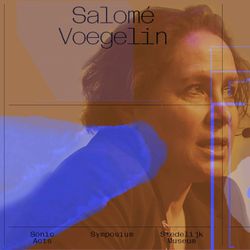
Salomé Voegelin, 'Politics and Desire, Violence and a Governance of Love'
29:28|Sonic Acts Biennial 2026SymposiumStedelijk Museum Amsterdam, 28 February 2026In the performance lecture Politics and Desire, Violence and a Governance of Love, Salomé Voegelin asks whether love and political leadership can coexist, or whether political desire is always drawn toward violence and control. Taking the rise of contemporary authoritarian figures as a starting point, she questions why firm and unambiguous leadership feels so persuasive, and whether this desire inevitably pulls us towards ‘voluntary servitude’ and, ultimately, fascism. Drawing on the work of bell hooks, Hannah Arendt, David Graeber, and others, Voegelin considers how desire might be understood not as a force driven by lack and competition, but as a relational flow between bodies, communities, and the world.Through readings and sound, Voegelin stages ideas and their counters, testing whether a sonic sensibility – attentive, relational, and fluid – might shift political desire away from domination and separation, towards forms of leadership grounded in relation. Against the desire for authoritarian certainty and political servitude, Voegelin proposes a sonorous politics of love: one grounded in reciprocity, incompleteness, and the possibility of imagining new forms of collective life.-Sonic Acts Biennial 2026 was a citywide arts manifestation taking place from 5 February to 29 March across 23 locations in Amsterdam. Titled Melted for Love, the programme was visited by more than 21.000 people and featured cutting-edge performances, contemporary sound experiments, and multidisciplinary art by over 200 international artists.The Symposium, which took place at Stedelijk Museum Amsterdam on 28 February and 1 March 2026, brought together performances and lectures by Yuk Hui, Flavia Dzodan, Steve Goodman (Kode9), Eleni Ikoniadou, Salomé Voegelin, Ayesha Hameed & Aimée Theriot, Margarida Mendes, Yazan Khalili, pantea, Lawrence Abu Hamdan, Busher Kanj, Amr Mdah & Fabio Cervi, and ILYICH.→ Continue reading at 2026.sonicacts.comThis podcast is produced by Sonic Acts and realised as part of New Perspectives for Action, a project by Re-Imagine Europe, co-funded by the European Union.